I den här roliga och lättlästa boken delar den bästsäljande författaren och internationellt erkände framgångscoachen Michael Neill med sig av hemligheterna bakom hur du transformerar både ditt eget liv och livet för dem som du bryr dig allra mest om – din familj, dina vänner, dina kolleger och dina klienter. Detta får du lära dig: • Hemligheten bakom ekonomisk framgång. • Enkla sätt att skapa livaktiga relationer. • Beprövade tekniker som ger dramatiska förändringar hos dig själv och andra. • Hur du slutar tänka som ett offer. • Nycklarna till livslång lycka. • Strategier för att öka produktiviteten, energin, välbefinnandet och mycket mer.
Vill du uppleva en häpnadsväckande klarhet, sinnesro och frihet - även när livets utmaningar känns som allra tuffast? I denna banbrytande bok delar supercoachen Michael Neill med sig av en häpnadsväckande och ny förståelse om hur livet fungerar som ställer den traditionella psykologin på huvudet. Detta revolutionerande förhållningssätt bygger på tre enkla principer som förklarar hur våra känslor uppstår och hur vår upplevelse av livet kan transformeras till det bättre på bara några ögonblick. När du förstår dessa principer kan du börja dra nytta av den djupare intelligensen bakom livet. Du kommer att kunna leva med mindre stress mer välbefinnande och en känsla av samhörighet med livet. Välkommen till en plats där mirakler sker... Michael Neill är en internationellt erkänd transformativ coach, radiovärd och bästsäljande författare till ett flertal böcker. Han har i mer än 20 år verkat som coach, rådgivare, mentor och kreativ rådgivare åt kändisar, företagsledare och kungligheter.
Available in English for the first time, we read the heart-warming, moving and intensely personal letters that the young soldiers wrote home from the battlefield. The uniquely Jewish viewpoint they express, and the strong traditional elements in their religion, bring the conflict between the inhumane war, and religious belief into sharp contrast. The young mens' attempts to adhere to their faith and rituals during the violent horror of trench warfare are touching, and often tinged with self-deprecating humour. The immense pain, the keenly-felt loss of comrades and a yearning for home and loved ones shine through the soldiers' words One great leitmotiv runs through the letters: the hope for equality. The war letters are a unique insight into life, battle and death on the enemy front lines, and the extraordinary Jewish experience in particular.
Survive and Thrive in Our Uncertain and Turbulent New Normal“You are about to embark on a hero’s journey.” -Michael Neill, author of The Inside Out Revolution and The Space WithinJoseph Bailey (licensed clinical psychologist for over 40 years) helped pioneer a new paradigm of resilience called “Three Principles Psychology”. Those who have learned this new understanding of resilience develop an inner strength that enables them to live in the “eye of the hurricane”, even in the most challenging situations.What is the Transformation Principle? The Transformation Principle is a realization of the fundamental way our mind works, bringing about a “transformative resilience” and radically shifting the way we understand ourselves and our chaotic world. It creates an inner strength that enables us to see that it is our thinking that creates our experience and the quality of our lives.Burnout prevention and resilience in a changing world. As a leader in the field of addiction therapies and strategies for overcoming fear and burnout, Joseph Bailey has piloted a number of programs on transformative resilience at the Mayo Clinic, The University of Minnesota Medical School, addiction treatment centers, and healthcare facilities. Thousands of students, clients, and professionals have been inspired and educated by his Transformation Principle. He has provided his program of practical tips and proven methods to first responders and a variety of professions including businesses, social service agencies, hospitals, universities, and school communities.In this ground-breaking book:Realize you are the author of your own realityRediscover your innate mental healthBuild your inner strengthIf you learned from books like Addicted to the Monkey Mind, The New Normal, or Leverage Your Mindset, you’ll love Thriving in the Eye of the Hurricane. Also enjoy Joseph Bailey’s Slowing Down to the Speed of Life (co-author Dr. Richard Carlson).
It’s taken yoga several thousand years to journey from a handful of monasteries dotting the Himalayas to the myriad studios of London, Lower Manhattan, and beyond. Whether bathing with holy men in the Ganges or joining the chorus of a thousand voices chanting “om,” photographer Michael O’Neill decided to devote himself to experiencing and recording the world of yoga at this critical juncture in its history. The result is a powerful photographic tribute to the age-old discipline turned global phenomenon, with over 250 million practitioners united in physical, spiritual, and mindful practice worldwide. Famous for his photographs of the famous, O’Neill first set out to make portraits of the most influential yogis of our time—B. K. S. Iyengar, T. K. V. Desikachar, and Gurmukh Kaur Khalsa, among others—as well as those known for integrating yoga into their high-profile lives, such as Donna Karan, Sting, and Trudie Styler. But as his yoga and meditation practice deepened, so did his drive to look past the personalities and the poses to document the roots of yoga. Over ten years O’Neill trekked beyond the traditional epicenters to meditate with monks in the Tibetan Plateau, live with sadhus in their tents at the Kumbh Mela, and marvel at the boys who practice the little known discipline of Mallakhamba at the wrestling grounds in Kochi. This extraordinary body of work tells the story of yoga as it’s never been told before, with nearly 200 photographs. Two of O’Neill’s most important subjects, meditation master His Holiness Swami Chidanand Saraswatiji and yogi Eddie Stern, join the conversation with their essays on the role of yoga in contemporary culture, the history of the practice from the time of Patanjali, and the healing power of “the architecture of peace,” a series of postures that bring the practitioner closer to touching the infinite.
In this wide-ranging study Michael O'Neill examines the phenomenon of the `self-conscious poem' - that is, a poem concerned with poetry or, more centrally if often connectedly, a poem that displays awareness of itself as a poem - in the work of the major Romantic poets: Blake, Wordsworth, Coleridge, Byron, Shelley, and Keats. The book freshly illuminates many famous lyrics and longer poems and revalues less regarded works such as The Excursion. For O'Neill, self-consciousness is allied to the new status granted to poetry by the Romantics. His closely attentive readings suggest that self-consciousness in Romantic poetry often accompanies exploration of, even anxiety about, poetry's significance. Yet his emphasis falls on the imaginatively productive ends to which such exploration and anxiety are put. An extended coda looks at the bequest of Romantic self-consciousness to post-Romantic writers; it offers chapters comparing Yeats and Stevens, discussing later Auden's scepticism about poetry, and exploring the affecting intricacies of Amy Clampitt's `Voyages: A Homage to John Keats'. Throughout, O'Neill challenges recent accounts of Romanticism by placing at the centre of his study poetry's imaginative and aesthetic value.
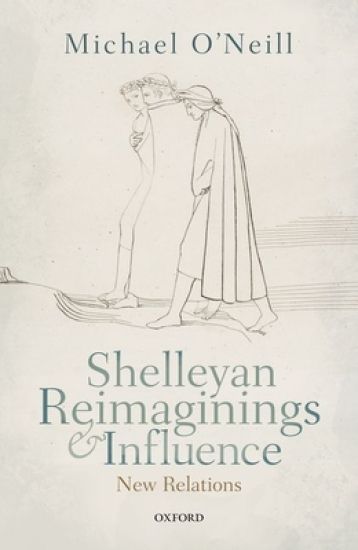
Through attuned close readings, this volume brings out the imaginative and formal brilliance of Percy Bysshe Shelley's writing as it explores his involvement in processes of dialogue and influence. Shelley recognizes that poetic individuality is the reward of connectedness with other writers and cultural influences. 'A great Poem is a fountain forever overflowing with the waters of wisdom and delight', he writes, 'and after one person and one age has exhausted all its divine effluence which their peculiar relations enable them to share, another and yet another succeeds, and new relations are ever developed, the source of an unforeseen and an unconceived delight' (A Defence of Poetry). He is among the major Romantic poetic exponents and theorists of influence, because of his passionately intelligent commitment to the onward dissemination of ideas and feelings, and to the unpredictable ways in which poets position themselves and are culturally positioned between past and future. The book has a tripartite structure. The first three chapters seek to illuminate his response to representative texts, figures, and themes that constitute the triple pillars of his cultural inheritance: the classical world (Plato); Renaissance poetry (Spenser and Milton); Christianity and, in particular, the concept of deity and the Bible. The second and major section of the book explores Shelley's relations and affinities with, as well as differences from, his immediate predecessors and contemporaries: Hazlitt and Lamb; Wordsworth; Coleridge; Southey; Byron; Keats (including the influence of Dante on Shelley's elegy for his fellow Romantic) and the great painter J. M. W. Turner, with whom he is often linked. The third section considers Shelley's reception by later nineteenth-century writers, figures influenced by and responding to Shelley including Beddoes, Hemans, Landon, Tennyson, and Swinburne. A coda discusses the body of critical work on Shelley produced by A. C. Bradley, a figure who stands at the threshold of twentieth-century thinking about Shelley.
Through attuned close readings, this volume brings out the imaginative and formal brilliance of Percy Bysshe Shelley's writing as it explores his involvement in processes of dialogue and influence. Shelley recognizes that poetic individuality is the reward of connectedness with other writers and cultural influences. 'A great Poem is a fountain forever overflowing with the waters of wisdom and delight', he writes, 'and after one person and one age has exhausted all its divine effluence which their peculiar relations enable them to share, another and yet another succeeds, and new relations are ever developed, the source of an unforeseen and an unconceived delight' (A Defence of Poetry). He is among the major Romantic poetic exponents and theorists of influence, because of his passionately intelligent commitment to the onward dissemination of ideas and feelings, and to the unpredictable ways in which poets position themselves and are culturally positioned between past and future. The book has a tripartite structure. The first three chapters seek to illuminate his response to representative texts, figures, and themes that constitute the triple pillars of his cultural inheritance: the classical world (Plato); Renaissance poetry (Spenser and Milton); Christianity and, in particular, the concept of deity and the Bible. The second and major section of the book explores Shelley's relations and affinities with, as well as differences from, his immediate predecessors and contemporaries: Hazlitt and Lamb; Wordsworth; Coleridge; Southey; Byron; Keats (including the influence of Dante on Shelley's elegy for his fellow Romantic) and the great painter J. M. W. Turner, with whom he is often linked. The third section considers Shelley's reception by later nineteenth-century writers, figures influenced by and responding to Shelley including Beddoes, Hemans, Landon, Tennyson, and Swinburne. A coda discusses the body of critical work on Shelley produced by A. C. Bradley, a figure who stands at the threshold of twentieth-century thinking about Shelley.
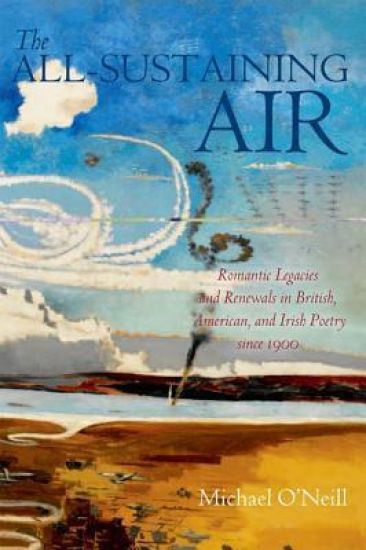
Drawn from Shelley's Prometheus Unbound, the title of this book suggests the cultural and literary persistence of the Romantic in the work of many British, American, and Irish poets since 1900. Allowing for and celebrating the multiple, even fractured nature of Romantic legacies, Michael O'Neill focuses on the creative impact of Romantic poetry on twentieth- and twenty-first century poetry. Individual chapters embrace numerous authors and texts, and span different cultures; the intention is not the forlorn hope of completeness, but the wish to open up possibilities and intersections, and there is a strong sense throughout of poetry serving as a subtle and profound form of literary criticism. A wide-ranging introduction analyses the persistence of the Romantic in poets such as Ted Hughes, Wilfred Owen, Robert Frost, Denise Levertov, Robert Lowell, and others, and sets the scene for subsequent discussions. Chapter 1 dwells on images of 'air', using these to understand the efforts of a number of twentieth-century poets to 'sustain' Romanticism, or forms of it. Chapters 2 and 3 focus on Yeats and Eliot, respectively, the latter apparently shunning the Romantic, the former seeming to embrace it, but both responding with subtlety and individuality to the Romantic bequest. Chapter 4 argues that Wallace Stevens's 'Esthétique du Mal' should be read as a work that illuminates the writings of the major Romantics, especially about evil and suffering. Chapter 5 discusses the work of W. H. Auden and Stephen Spender, exploring the complex response of both poets to the Romantic, Auden complicated in his post-Romantic attitudes, Spender daring in his attempts to renew a Romantic lyricism in a post-Romantic age. Chapter 6 returns to a broader sweep as it investigates the response of a range of contemporary poets from Northern Ireland, including Heaney, Kavanagh, Mahon, and Carson, to Romantic poetry. Chapter 7 sustains the Irish connection, discussing Paul Muldoon's dealings with Byron and other Romantics, especially in Madoc. And Chapter 8 focuses on Geoffrey's Hill's tense and tensed relations with Romantic poetry, and on Roy Fisher's sense of being a 'gutted Romantic', in order to illustrate two diverse ways of being post-Romantic in contemporary culture.
Drawn from Shelley's Prometheus Unbound, the title of this book suggests the cultural and literary persistence of the Romantic in the work of many British, American, and Irish poets since 1900. Allowing for and celebrating the multiple, even fractured nature of Romantic legacies, Michael O'Neill focuses on the creative impact of Romantic poetry on twentieth- and twenty-first century poetry. Individual chapters embrace numerous authors and texts, and span different cultures; the intention is not the forlorn hope of completeness, but the wish to open up possibilities and intersections, and there is a strong sense throughout of poetry serving as a subtle and profound form of literary criticism. A wide-ranging introduction analyses the persistence of the Romantic in poets such as Ted Hughes, Wilfred Owen, Robert Frost, Denise Levertov, Robert Lowell, and others, and sets the scene for subsequent discussions. Chapter 1 dwells on images of 'air', using these to understand the efforts of a number of twentieth-century poets to 'sustain' Romanticism, or forms of it. Chapters 2 and 3 focus on Yeats and Eliot, respectively, the latter apparently shunning the Romantic, the former seeming to embrace it, but both responding with subtlety and individuality to the Romantic bequest. Chapter 4 argues that Wallace Stevens's 'Esthétique du Mal' should be read as a work that illuminates the writings of the major Romantics, especially about evil and suffering. Chapter 5 discusses the work of W. H. Auden and Stephen Spender, exploring the complex response of both poets to the Romantic, Auden complicated in his post-Romantic attitudes, Spender daring in his attempts to renew a Romantic lyricism in a post-Romantic age. Chapter 6 returns to a broader sweep as it investigates the response of a range of contemporary poets from Northern Ireland, including Heaney, Kavanagh, Mahon, and Carson, to Romantic poetry. Chapter 7 sustains the Irish connection, discussing Paul Muldoon's dealings with Byron and other Romantics, especially in Madoc. And Chapter 8 focuses on Geoffrey's Hill's tense and tensed relations with Romantic poetry, and on Roy Fisher's sense of being a 'gutted Romantic', in order to illustrate two diverse ways of being post-Romantic in contemporary culture.
In keeping with increasing professionalism in nonprofits Michael O'Neill and Dennis R. Young have as editors produced a book, Educating Managers of Nonprofit Organizations, that seeks the best ways to educate the persons who are rising to the top in charitable enterprises. Apprenticeships still retain a high value, say some of the contributors to the book, but they are not often practical. Nonprofit management as an academic specialty is considered at length, and on-the-job course work is examined. In the course of the discussion the management of nonprofits is carefully dissected, and some of its most troublesome areas are revealed. LRC NewsbriefEducating Managers of Non-Profit Organizations examines the question of how to most productively train managers for these complex and diverse organizations whose non-profit basis makes them unsuited to many of the traditional business programs. The presentations are broad-based yet detailed, making this volume valuable to a wide range of readers: managers and policy-makers of non-profit organizations, scholars of managerial education, management program funders, consulting and technical service groups, as well as non-profit organization leaders. The editors have assembled 15 papers from highly prestigious scholars, practitioners, and researchers to present a clear and thorough coverage of the topic. Included are expert articles discussing: the types of non-profit managers; curricula for such managers; differences between non-profit and traditional organizations; the non-profit organization's place in higher education.
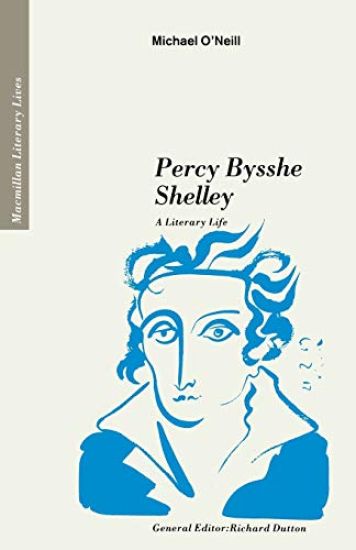
In 'Percy Bysshe Shelly: A Literary Life' , Michael O'Neill gives a knowledgeable and balanced account of Shelley's literary career from his earliest published work to his last unfinished masterpiece, The Triumph of Life . The book draws on recent research about the poet and his age, but its sense of the ways in which texts and contexts interact is sharply independent. Issues discussed include Shelley's social background, his radical politics and his complex response to Enlightenment rationalism. O'Neill stresses Shelley's often disappointed search for an audience, connecting it with the growing sophistication of his poetry and poetics. For Shelley, a poet was the 'combined product' of 'internal powers' and 'external influences' (Preface to Prometheus Unbound ); this book explores how such a combination manifests itself in his own writings.
In 'Percy Bysshe Shelly: A Literary Life' , Michael O'Neill gives a knowledgeable and balanced account of Shelley's literary career from his earliest published work to his last unfinished masterpiece, The Triumph of Life . The book draws on recent research about the poet and his age, but its sense of the ways in which texts and contexts interact is sharply independent. Issues discussed include Shelley's social background, his radical politics and his complex response to Enlightenment rationalism. O'Neill stresses Shelley's often disappointed search for an audience, connecting it with the growing sophistication of his poetry and poetics. For Shelley, a poet was the 'combined product' of 'internal powers' and 'external influences' (Preface to Prometheus Unbound ); this book explores how such a combination manifests itself in his own writings.
The European Union (EU) Constitution was one of the most important developments in the history of the EU, aiming to make the EU more transparent, relevant and accountable to the citizens of its member states. Current anxieties over the pace and direction of EU integration place this comprehensive study at the forefront of the EU governance debate. O’Neill goes far beyond a simple account of the EU Constitution, focussing also on the response to the current crisis of confidence between the Union and its citizens and how those in power have responded to the challenge. Making a substantial contribution to literature on the EU, key discussion points include: The political crisis behind the Constitution The power politics at work in the negotiations How the Constitution affects EU policymaking The impact on the citizens of the EUThis is essential reading for all those wishing to understand the background to one of the key areas within European Politics.Michael O’Neill is Jean Monnet Professor in EU Politics at Nottingham Trent University.
The European Union (EU) Constitution was one of the most important developments in the history of the EU, aiming to make the EU more transparent, relevant and accountable to the citizens of its member states. Current anxieties over the pace and direction of EU integration place this comprehensive study at the forefront of the EU governance debate. O’Neill goes far beyond a simple account of the EU Constitution, focussing also on the response to the current crisis of confidence between the Union and its citizens and how those in power have responded to the challenge. Making a substantial contribution to literature on the EU, key discussion points include: The political crisis behind the Constitution The power politics at work in the negotiations How the Constitution affects EU policymaking The impact on the citizens of the EUThis is essential reading for all those wishing to understand the background to one of the key areas within European Politics.Michael O’Neill is Jean Monnet Professor in EU Politics at Nottingham Trent University.
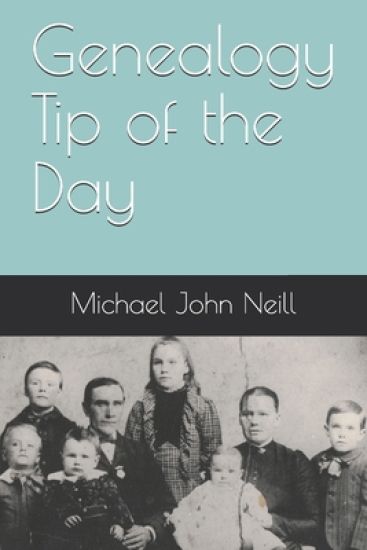
Genealogy can be confusing and sometimes what the family historian needs is something short and to-the-point that can help them get their research back on track. That's the intent of "Genealogy Tip of the Day." Long-time genealogist Michael John Neill uses his thirty years of research experience to remind readers of things they had forgotten, make them aware of things they did not know, and encourage them to increase their research and analytical skills. This is not a typical how-to book that has a chapter for each content topic. Topics are spread throughout the book. Tips are based on actual research, actual families, and actual problems. Each day's tip is meant to be a relatively short read, is engaging, accurate, and occasionally funny. Tip of the Day can be read front-to-back or browsed through at the reader's whim. Tips are about genealogical sources, pitfalls, and procedures based on Michael's extensive experience researching ancestors in the United States and abroad. Tips are practical, easy-to-understand, and applicable to those with ancestors in a variety of locations. Tips have been edited for clarity and updated when necessary. Any content that was time-sensitive has been removed. What's left is research advice and suggestions with some humor thrown in. Table of Contents: How Grandma Said it, Pond Crossing, Lying, and MoreGrains of Truth, Reversed Names, and Date FudgingLinks, Cutting off, Soundex, Perspective, and InfantsContemporary, "Paper or Plastic," and Eternal NeighborsUndoing, Discrepancies, Math, and Avoiding CourtReused Names, Absolute Relationships, Leave the 21st CenturyNicknames, Endogamy, Census Bridges, and VacuumsPopularity, Wrong Grandmas, New WifePortable Ancestors, First Purchases, and Cousin KenDead Reasons, Getting and Giving, Just Me, and Death Names100%, Errors, Rushing Structure, and Homemade AbbreviationsSpousal Origins, Patronyms, and Death CausesValidation, Copyright, Life EstatesMerging Saints, Circle Searching, Flukes, and Running HomeSelf-Checking, Boarders, Farmed Out, and Widow PowerAll I Need Is Love, Crossing a Line, and Joseph ConversionsLeaving Family, Dead Proofing, One Little Entry Genealogy Tip of the Day can help fill in those gaps in your genealogical skill set without being overly academic or tedious.