

Kirjahaku
Etsi kirjoja tekijän nimen, kirjan nimen tai ISBN:n perusteella.
1000 tulosta hakusanalla Nicholas Hudson
Nicholas
GHOSTWRITY
2023
pokkari
Any female unmated and of age with any sense did her best toremain undesirable and inconspicuous, she kept her head low andher mouth shut. If you didn't attract attention, perhaps what mightbe your future mate wouldn't see you. Wouldn't notice you. Youmight survive another year.

Nicholas Craigdon always thought the reason he was continuously overlooked by his father was because he's the fourth-born son. Now he's discovered the truth. Henry Craigdon treated him so unfairly because Henry always believed Nicholas wasn't his. Now Henry has issued the final insult on his deathbed. He's given the family company Nicholas put his heart and soul into to someone else.Logan Craigdon has never had any interest in his uncle's company. He's as shocked as anyone when Henry leaves the company to him. Logan knows how much the company means to his cousin. He agrees to hand over the day-to-day running of Craigdon Enterprises to Nicholas.Grateful for the opportunity afforded by Logan, Nicholas is determined to put his own stamp on the company. Going through some of his father's papers, he's disturbed to discover his father had a practice of buying social housing apartments with a view to redeveloping them. Henry dealt with the existing tenants by raising the rents to levels they couldn't afford and would then forcibly evict them.Harper Wyburn grew up in one of the social housing apartments Henry Craigdon purchased. At the age of fourteen, she and her mother were evicted. They spent years living on the streets. Eventually her mother died. Harper blamed Henry for her death.Determined to get her revenge on the man who destroyed her life, Harper tracks down Henry Craigdon and demands retribution. Henry laughs in her face. Incensed, Harper vows to destroy him. When Henry dies unexpectedly, Harper's plan is momentarily sent awry. Then she comes up with a new plan. She'll destroy the company Henry Craigdon loved so much. The same company Nicholas has just taken over control.When Harper meets Nicholas, she's immediately attracted to his good-looking, quiet strength. But he's the son of Henry Craigdon. Nothing else matters. He must pay for his father's sins...The Craigdon Family Dynasty series follows the lives and loves of the Craigdon Family and the fallout they all experience when the patriarch of the family dies. Henry Craigdon was worth billions. He was also a man with many secrets. He's divided up his estate between his wife and six children, but not all of them have been treated fairly...Come on an adventure filled with drama and intrigue with USA Today bestselling author Chris Taylor and ride the highs and lows of a family in turmoil, the secrets, the deception, the lies...and the inevitable ties of love and loyalty that bind this family together, no matter what.

Heir to the Bellefonte earldom, Nicholas Haddonfield has made a promise to his dying father that he'll marry before the Season's over. When Nick meets Lady Leah Lindsey, he realizes he's found not only a damsel in need of rescuing, but also a perfect countess of convenience. Then he spoils everything by falling in love with his wife...the one woman he can never, ever have.

Doctor Perricone reveals how poor diet, excessive sun exposure, environmental pollutants and other skin irritants cause facial skin to wrinkle, form lines and sag. Using his dietary suggestions and exercises over a 28 day period aims to result in a noticeable difference in appearance and general health.
Build your child’s reading confidence at home with books at the right level Orphans Nicholas and Kate arrive in London to find help from their uncle, but his cold-hearted, cruel attitude sets the siblings on a course that will change their lives forever. Immerse yourself in this beautiful adaptation of one of Charles Dickens’ best-known novels by Julie Berry. Pearl/Band 18 books offer fluent readers a complex, substantial text with challenging themes to facilitate sustained comprehension, bridging the gap between a reading programme and longer chapter books.Text type:Curriculum links:
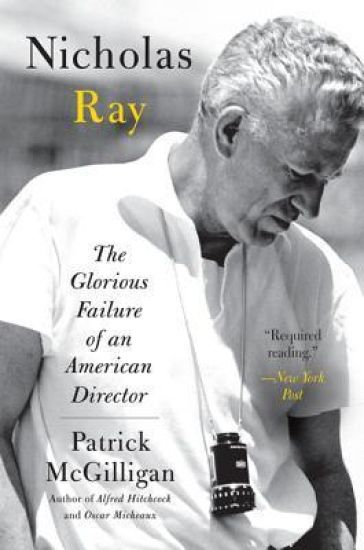
"The cinema is Nicholas Ray". (Jean-Luc Godard). The visionary filmmaker Nicholas Ray spent his lifetime creating films that were dark, emotionally charged, and haunted by social misfits and bruised young people consumed by private anguish. Notoriously self-destructive, even in his youth, Ray empathized with the broken and misunderstood - the alcohol, drugs, and rage that ate away at his core translated into characters with unrivaled depth on-screen. Beloved by critics, peers, and audiences alike, Nicholas Ray created a vision of the modern teenage experience with "Rebel Without a Cause" (1955) and reinvented the western with "Johnny Guitar" (1954). Yet, in one of the most dramatic Hollywood stories on record, Ray's meteoric rise to fame was rivaled only by his dramatic fall from grace. Now, in time for the celebration of Ray's 100th birthday, preeminent American film biographer Patrick McGilligan offers the first comprehensive, full-length biography of Nicholas Ray - a man whose troubled life was punctuated by moments of creative genius. Meticulously detailed, yet compulsively readable, "Nicholas Ray: The Glorious Failure" delves into Ray's fascinating life story in and out of the spotlight - from his small-town roots in Galesville, Wisconsin, to his four marriages, drug and alcohol addictions, his sexual relationships with actors (including both James Dean and Natalie Wood), and his ultimate banishment from the Hollywood community that helped foster his growth as a director. Thirty-one years after his death, Nicolas Ray's body of work remains as a celebrated testament to the troubled director's struggle to create meaning from an otherwise shattered existence. In this unparalleled look into the dark moments of Ray's history and secrets of his creative process, Patrick McGilligan tells the full captivating story of an American film great.

'The novel has everything: absorbing melodrama, with a supporting cast of heroes, villains and eccentrics' The TimesWhen Nicholas's father dies he, his mother and sister are left penniless. To earn his keep, Nicholas becomes a tutor at Dotheboys Hall but soon discovers that the headmaster, Wackford Squeers, is a one-eyed tyrant who insists on a harsh regime. Nicholas embarks on an adventure that takes him from loathsome boarding schools to the London stage. Dickens confronts issues of neglect and cruelty in this blackly comic masterpiece.
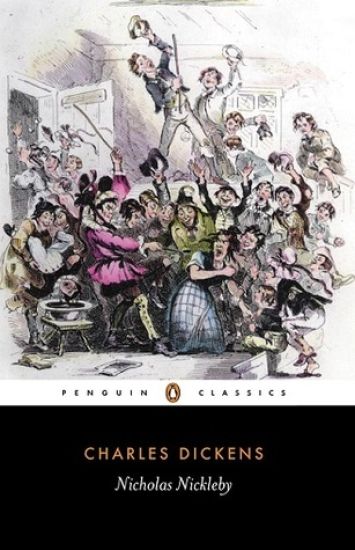
'A revelation ... as well as being sympathetic to the plight of children, it is hilarious' A. N. WilsonThe hero of Dickens's flamboyantly exuberant novel, Nicholas Nickleby, is left penniless after his father's death and forced to make his own way in the world. His adventures give Dickens the opportunity to portray an extraordinary gallery of rogues and eccentrics: Wackford Squeers, the tyrannical headmaster of Dotheboys Hall; the tragic orphan Smike, rescued by Nicholas; and the gloriously theatrical Mr and Mrs Crummle and their daughter, the 'infant phenomenon'. Nicholas Nickleby is characterized by Dickens's outrage at social injustice, but it also reveals his comic genius at its most unerring.Edited with an Introduction by Mark Ford

One of the world's preeminent historians, Marc Ferro is a leading member of the Annales School of France and a recognized authority on early twentieth-century European history. For well over two decades, in volumes such as The February Revolution of 1917 and October 1917, he has demonstrated an unsurpassed skill in capturing the social and political forces that led to the Russian Revolution. Now Ferro turns his considerable talents to the biography of one of the pivotal figures of that era, Nicholas II, the last Tsar of Russia. For this important new biography, Ferro has searched extensively in Russian archives to illuminate Nicholas's character. What emerges is a vivid portrait of a reluctant leader, a young man forced by the death of his father into a role for which he was ill-equipped. A conformist and traditionalist, Nicholas admired the order, ritual, and ceremony identified with the intangible grandeur of autocracy, and he hated everything that might shake that autocracy--the intelligentsia, the Jews, the religious sects. His reign, as Ferro documents, was one of continual trouble: a humiliating war with Japan; the 1905 revolution that forced Nicholas to accept a constitutional assembly, the Duma; the international crisis of 1914, leading to World War I; and finally the Revolution of 1917, forcing his abdication. Throughout, we see a Tsar who was utterly opposed to change and to the ferment of ideas that stirred his country, who felt it was his duty to preserve intact the powers God had entrusted in him. Ferro also provides an intimate portrait of Nicholas's personal life: his wife Alexandra; his four daughters, Olga, Tatiana, Maria, and Anastasia, sisters so close they signed letters "OTMA," the initials of their Christian names; his son and heir Alexis, who suffered from hemophilia; and the various figures in the court, most notably Rasputin, whose ability to revive the frequently ailing Alexis made him indispensable to the Tsaritsa. (Ferro recounts that, when Alexandra heard of Rasputin's murder, she collapsed in anguish, certain her son was lost; but when Nicholas heard the news while with the army, he simply walked off whistling cheerfully.) Perhaps most intriguing is Ferro's chapter on the fate of the Tsar and his family, examining all the rumors and contradictory testimony that swirl around this still cloudy event. Ferro concludes that Alexandra and her daughters may have survived the revolution, and the woman who later surfaced in Europe claiming to be Anastasia may well have been so. This authoritative biography by one of the world's great historians shines a bright light on an ordinary man raised to an extraordinary station, who carried an unwanted burden, which crushed him.
Nicholas Harpsfield
Oxford University Press
1932
sidottu
Nicholas Kaldor (1908-1986) was one of this century's most original thinkers on economics, his influence on British economic policy second only to that of Keynes. This book traces the development of Kaldor's thought as it underwent a remarkable evolution from his membership of the Austrian neoclassical school to his embracing of radical Keynesianism. He was also extremely quick to grasp essential changes in economic reality and to forge analytical tools to explain them. Although he was innovative from 1938 onwards, much of his seminal work belongs to a coherent project of research which made him, together with Joan Robinson and Michal Kalecki, a leading representative of the post-Keynesian school, an outstanding critic of the neoclassical theory of equilibrium, growth, and distribution, and a convinced opponent of the monetarist school. The book also seeks to show how economic policy and political economy were closely connected in Kaldor's work. It was this that made Kaldor one of the most lucid and radical champions of the economic policies which, by blending political freedom with social justice, have been the outstanding feature of the great European tradition of social democracy.
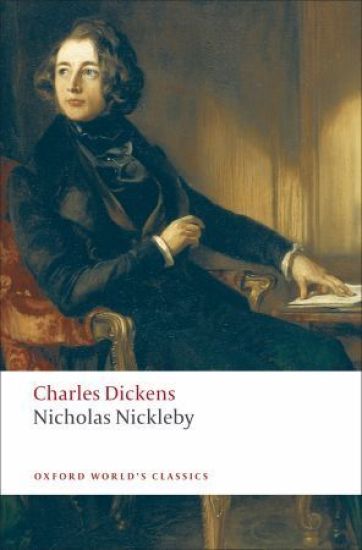
Our hero confronts a large and varied cast, including Wackford Squeers, the fantastic ogre of a schoolmaster, and Vincent Crummles, the grandiloquent ham actor, on his comic and satirical adventures up and down the country. Punishing wickedness, befriending the helpless, strutting the stage, and falling in love, Nicholas shares some of his creator's energy and earnestness as he faces the pressing issues of early Victorian society. ABOUT THE SERIES: For over 100 years Oxford World's Classics has made available the widest range of literature from around the globe. Each affordable volume reflects Oxford's commitment to scholarship, providing the most accurate text plus a wealth of other valuable features, including expert introductions by leading authorities, helpful notes to clarify the text, up-to-date bibliographies for further study, and much more.
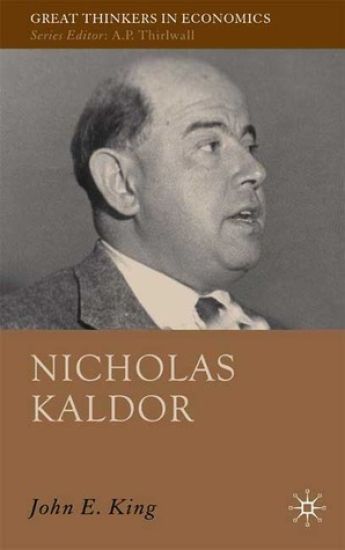
This book explores the life and work of Nicholas Kaldor, examining the influences that shaped and inspired his writings, and looks in detail at the crucial part he played in twentieth-century economics. Offering a comprehensive intellectual portrait of Kaldor, this book explains this great economist's importance in his own time and in ours.

To those who loved him, like Teddy Roosevelt, he was "Nicholas Miraculous," the fabled educator who had a hand in everything; to those who did not, like Upton Sinclair, he was "the intellectual leader of the American plutocracy," a champion of "false and cruel ideals." Ezra Pound branded him "one of the more loathsome figures" of the age. Whether celebrated or despised, Nicholas Murray Butler (1862-1947) was undeniably an irresistible force who helped shape American history. With wit and irony, Michael Rosenthal traces Butler's rise to prominence as president of Columbia University, which he presided over for forty-four years and developed into one of the world's most distinguished institutions of research and teaching. Butler also won the Nobel Peace Prize and headed both the Carnegie Endowment and the American Academy of Arts and Letters, among innumerable other organizations. In 1920, he sought the Republican nomination for president, managing to garner more votes on the first ballot than the eventual winner, Warren Harding. Rosenthal's richly detailed, elegantly crafted narrative captures the mania and genius that propelled Butler to these extraordinary achievements and more. Thick with social, cultural, and political history, Nicholas Miraculous recreates Butler's prodigious career and the dynamic age that nourished him.
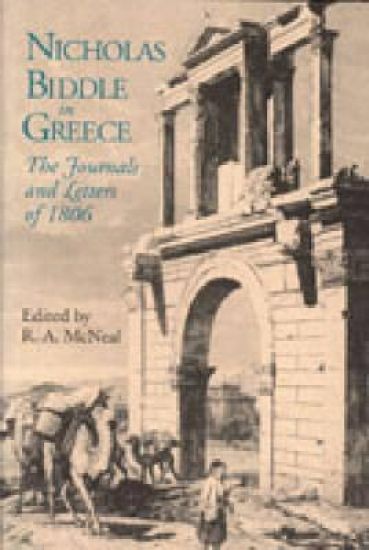
Nicholas Biddle in Greece
Pennsylvania State University Press
1993
sidottu
Nicholas Biddle (1786–1844) was a noted politician and financier in early nineteenth-century America. At eighteen, he went to Europe as the secretary of the American minister to France. He also made the acquaintance of James Monroe when Monroe was the American ambassador to London. He was later elected to the state legislature and senate of Pennsylvania. Ultimately he became a director and then the president of the Bank of the United States. In the course of a sojourn to Europe, Biddle sailed to Greece, then a part of the Ottoman Empire. Half of the journal he kept on the trip has only recently been discovered, and the other half is known to only a few people because it is still in private hands. Taken together, these two journals (plus the four extant letters that Biddle wrote to his family in Philadelphia) are a mine of information about the formative influences on his career, about the politics and personalities of Napoleon's Europe, about the condition of Greece and its ancient monuments under the Turkocratia, and even about the American naval war against the Barbary pirates. Despite being written by a twenty-year old, these journals are remarkable for their literary quality and their general liveliness. Perhaps because they were not written to be published, they have a freshness and honesty lacking in more formal works of travel. McNeal's extensive introduction illuminates the early nineteenth-century background of Biddle's journals.

Nicholas Biddle in Greece
Pennsylvania State University Press
1993
pokkari
Nicholas Biddle (1786–1844) was a noted politician and financier in early nineteenth-century America. At eighteen, he went to Europe as the secretary of the American minister to France. He also made the acquaintance of James Monroe when Monroe was the American ambassador to London. He was later elected to the state legislature and senate of Pennsylvania. Ultimately he became a director and then the president of the Bank of the United States. In the course of a sojourn to Europe, Biddle sailed to Greece, then a part of the Ottoman Empire. Half of the journal he kept on the trip has only recently been discovered, and the other half is known to only a few people because it is still in private hands. Taken together, these two journals (plus the four extant letters that Biddle wrote to his family in Philadelphia) are a mine of information about the formative influences on his career, about the politics and personalities of Napoleon's Europe, about the condition of Greece and its ancient monuments under the Turkocratia, and even about the American naval war against the Barbary pirates. Despite being written by a twenty-year old, these journals are remarkable for their literary quality and their general liveliness. Perhaps because they were not written to be published, they have a freshness and honesty lacking in more formal works of travel. McNeal's extensive introduction illuminates the early nineteenth-century background of Biddle's journals.

This book is a scholarly, comprehensive, and critical biography of Nicholas II from his birth in 1868 to his execution in 1918. It features a chronological narrative emphasizing the political aspects of the Tsar's reign rather than details from his personal life—although new information about his life is revealed. Nicholas II is portrayed as a conscientious and reasonably intelligent ruler whose reign was marred by inept statesmanship and a stubborn determination to uphold the autocratic tradition of the Romanov dynasty even though he was forced to grant major political concessions in 1905. His imprudent foreign policy in East Asia precipitated a losing war with Japan. But a more cautious policy in Europe nevertheless involved Russia in a far greater conflict in 1914 that resulted in enormous casualties, economic hardship, and the collapse of the monarchy in 1917. As an individual, Nicholas was gentle and benevolent (except towards political dissidents) and proved to be a good husband and father. The serenity of his family life was disrupted by his son and heir's hemophilia, and the ensuing Rasputin scandal impaired the Tsar's image and contributed to his unpopularity. A final chapter examines his legacy and provides a theory of revolutionary causation.

The diverse works of architect Nicholas Hawksmoor (?1661–1736) ranged from small architectural details to ambitious urban plans, from new parish churches to work on the monument of his age, St. Paul’s Cathedral. As a young man Hawksmoor assisted Christopher Wren and John Vanbrugh, emerging from these formidable apprenticeships to design some of the most vigorous and dramatic buildings in England. In this engaging book, architectural historian Vaughan Hart presents a fresh view of Hawksmoor’s built and planned work. In addition, Hart offers the first coherent explanation of Hawksmoor’s theory of architecture.The book explains why Hawksmoor’s buildings look the way they do, what contemporary events influenced his work, and how such ancient buildings as Solomon’s temple and Mausolus’s tomb inspired him. Underscoring the unique qualities of the architect’s accomplishments and aspirations, Hart establishes with new clarity Hawksmoor’s vital role in the development of English architecture.

This illustrated biography follows Nicholas Hilliard’s long and remarkable life (c. 1547–1619) from the West Country to the heart of the Elizabethan and Jacobean courts. It showcases new archival research and stunning images, many reproduced in color for the first time. Hilliard’s portraits—some no larger than a watch-face—have decisively shaped perceptions of the appearances and personalities of many key figures in one of the most exciting, if volatile, periods in British history. His sitters included Elizabeth I, James I, and Mary, Queen of Scots; explorers Sir Francis Drake and Sir Walter Raleigh; and members of the emerging middle class from which he himself hailed. Hilliard counted the Medici, the Valois, the Habsburgs, and the Bourbons among his Continental European patrons and admirers. Published to mark the 400th anniversary of Hilliard’s death, this is the definitive biography of one of Britain’s most notable artists.Published in association with the Paul Mellon Centre for Studies in British Art