Kirjojen hintavertailu. Mukana 11 244 527 kirjaa ja 12 kauppaa.

Kirjahaku

Etsi kirjoja tekijän nimen, kirjan nimen tai ISBN:n perusteella.

1000 tulosta hakusanalla Nicholas Muskovac

Nicholas Miraculous

Nicholas Miraculous

Michael Rosenthal; Patricia O'Toole

Columbia University Press
2015
pokkari
To those who loved him, like Teddy Roosevelt, he was "Nicholas Miraculous," the fabled educator who had a hand in everything; to those who did not, like Upton Sinclair, he was "the intellectual leader of the American plutocracy," a champion of "false and cruel ideals." Ezra Pound branded him "one of the more loathsome figures" of the age. Whether celebrated or despised, Nicholas Murray Butler (1862-1947) was undeniably an irresistible force who helped shape American history. With wit and irony, Michael Rosenthal traces Butler's rise to prominence as president of Columbia University, which he presided over for forty-four years and developed into one of the world's most distinguished institutions of research and teaching. Butler also won the Nobel Peace Prize and headed both the Carnegie Endowment and the American Academy of Arts and Letters, among innumerable other organizations. In 1920, he sought the Republican nomination for president, managing to garner more votes on the first ballot than the eventual winner, Warren Harding. Rosenthal's richly detailed, elegantly crafted narrative captures the mania and genius that propelled Butler to these extraordinary achievements and more. Thick with social, cultural, and political history, Nicholas Miraculous recreates Butler's prodigious career and the dynamic age that nourished him.
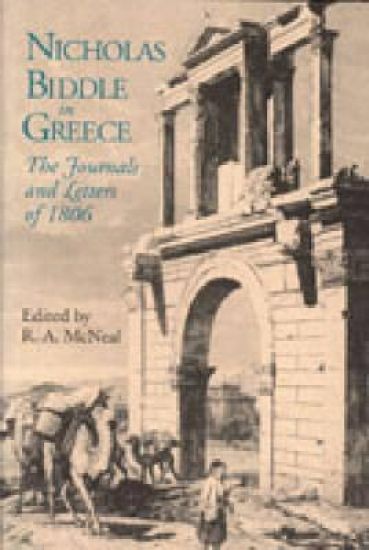
Nicholas Biddle in Greece

Nicholas Biddle in Greece

Pennsylvania State University Press
1993
sidottu
Nicholas Biddle (1786–1844) was a noted politician and financier in early nineteenth-century America. At eighteen, he went to Europe as the secretary of the American minister to France. He also made the acquaintance of James Monroe when Monroe was the American ambassador to London. He was later elected to the state legislature and senate of Pennsylvania. Ultimately he became a director and then the president of the Bank of the United States. In the course of a sojourn to Europe, Biddle sailed to Greece, then a part of the Ottoman Empire. Half of the journal he kept on the trip has only recently been discovered, and the other half is known to only a few people because it is still in private hands. Taken together, these two journals (plus the four extant letters that Biddle wrote to his family in Philadelphia) are a mine of information about the formative influences on his career, about the politics and personalities of Napoleon's Europe, about the condition of Greece and its ancient monuments under the Turkocratia, and even about the American naval war against the Barbary pirates. Despite being written by a twenty-year old, these journals are remarkable for their literary quality and their general liveliness. Perhaps because they were not written to be published, they have a freshness and honesty lacking in more formal works of travel. McNeal's extensive introduction illuminates the early nineteenth-century background of Biddle's journals.
Nicholas Biddle in Greece

Nicholas Biddle in Greece

Pennsylvania State University Press
1993
pokkari
Nicholas Biddle (1786–1844) was a noted politician and financier in early nineteenth-century America. At eighteen, he went to Europe as the secretary of the American minister to France. He also made the acquaintance of James Monroe when Monroe was the American ambassador to London. He was later elected to the state legislature and senate of Pennsylvania. Ultimately he became a director and then the president of the Bank of the United States. In the course of a sojourn to Europe, Biddle sailed to Greece, then a part of the Ottoman Empire. Half of the journal he kept on the trip has only recently been discovered, and the other half is known to only a few people because it is still in private hands. Taken together, these two journals (plus the four extant letters that Biddle wrote to his family in Philadelphia) are a mine of information about the formative influences on his career, about the politics and personalities of Napoleon's Europe, about the condition of Greece and its ancient monuments under the Turkocratia, and even about the American naval war against the Barbary pirates. Despite being written by a twenty-year old, these journals are remarkable for their literary quality and their general liveliness. Perhaps because they were not written to be published, they have a freshness and honesty lacking in more formal works of travel. McNeal's extensive introduction illuminates the early nineteenth-century background of Biddle's journals.
Nicholas II

Nicholas II

Robert D. Warth

Praeger Publishers Inc
1997
sidottu
This book is a scholarly, comprehensive, and critical biography of Nicholas II from his birth in 1868 to his execution in 1918. It features a chronological narrative emphasizing the political aspects of the Tsar's reign rather than details from his personal life—although new information about his life is revealed. Nicholas II is portrayed as a conscientious and reasonably intelligent ruler whose reign was marred by inept statesmanship and a stubborn determination to uphold the autocratic tradition of the Romanov dynasty even though he was forced to grant major political concessions in 1905. His imprudent foreign policy in East Asia precipitated a losing war with Japan. But a more cautious policy in Europe nevertheless involved Russia in a far greater conflict in 1914 that resulted in enormous casualties, economic hardship, and the collapse of the monarchy in 1917. As an individual, Nicholas was gentle and benevolent (except towards political dissidents) and proved to be a good husband and father. The serenity of his family life was disrupted by his son and heir's hemophilia, and the ensuing Rasputin scandal impaired the Tsar's image and contributed to his unpopularity. A final chapter examines his legacy and provides a theory of revolutionary causation.
Nicholas Hawksmoor

Nicholas Hawksmoor

Vaughan Hart

Yale University Press
2008
pokkari
The diverse works of architect Nicholas Hawksmoor (?1661–1736) ranged from small architectural details to ambitious urban plans, from new parish churches to work on the monument of his age, St. Paul’s Cathedral. As a young man Hawksmoor assisted Christopher Wren and John Vanbrugh, emerging from these formidable apprenticeships to design some of the most vigorous and dramatic buildings in England. In this engaging book, architectural historian Vaughan Hart presents a fresh view of Hawksmoor’s built and planned work. In addition, Hart offers the first coherent explanation of Hawksmoor’s theory of architecture.The book explains why Hawksmoor’s buildings look the way they do, what contemporary events influenced his work, and how such ancient buildings as Solomon’s temple and Mausolus’s tomb inspired him. Underscoring the unique qualities of the architect’s accomplishments and aspirations, Hart establishes with new clarity Hawksmoor’s vital role in the development of English architecture.
Nicholas Hilliard

Nicholas Hilliard

Elizabeth Goldring

Yale University Press
2019
sidottu
This illustrated biography follows Nicholas Hilliard’s long and remarkable life (c. 1547–1619) from the West Country to the heart of the Elizabethan and Jacobean courts. It showcases new archival research and stunning images, many reproduced in color for the first time. Hilliard’s portraits—some no larger than a watch-face—have decisively shaped perceptions of the appearances and personalities of many key figures in one of the most exciting, if volatile, periods in British history. His sitters included Elizabeth I, James I, and Mary, Queen of Scots; explorers Sir Francis Drake and Sir Walter Raleigh; and members of the emerging middle class from which he himself hailed. Hilliard counted the Medici, the Valois, the Habsburgs, and the Bourbons among his Continental European patrons and admirers. Published to mark the 400th anniversary of Hilliard’s death, this is the definitive biography of one of Britain’s most notable artists.Published in association with the Paul Mellon Centre for Studies in British Art
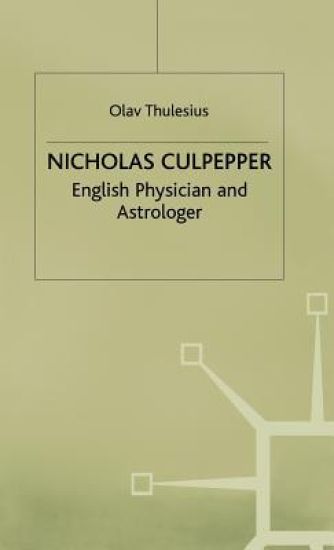
Nicholas Culpeper

Nicholas Culpeper

Olav Thulesius

Palgrave Macmillan
1992
sidottu
'Olav Thulesius sets out to resurrect the sullied reputation of one of the most prolific writers of medical works during the Interregnum. - Thulesius has given us a welcome beginning of a study of a fascinating and neglected figure who made serious contributions to mid-seventeenth-century medicine while always living on the fringes of the established and licensed medical community.' - Martha Baldwin, Journal of the History or Medicine Was Nicholas Culpeper (1616-54) the father of English herbal medicine or a quacksalver and charlatan astrologer? This first modern biography shows a more complex picture. For example during the Civil War the Puritan Culpeper was wounded while fighting on the Parliamentarian side, as a physician of the poor, he had a burning desire to explain the secrets of medicine to ordinary people, He was not only the author of the famous herbal The English Physician but he also wrote the first book on midwifery and childcare and translated The London Pharmacopoeia.
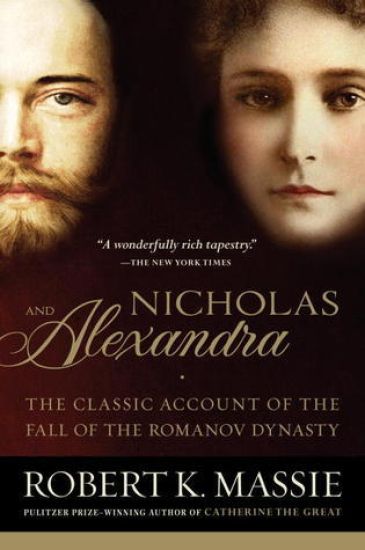
Nicholas and Alexandra

Nicholas and Alexandra

Robert K. Massie

Ballantine Books Inc.
2000
pokkari
Massie offers a moving, tragic, and unforgettable account of the extraordinary Imperial dynasty of Tsar Nicholas II, his doomed empire, and a revolution that would inexorably change the world forever. "A larger than life drama."--Saturday Review
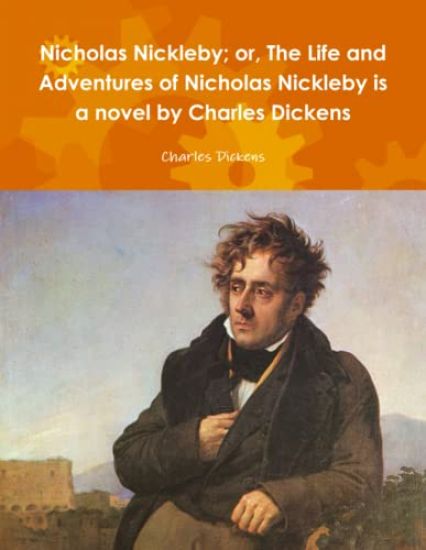
Nicholas Nickleby; or, The Life and Adventures of Nicholas Nickleby is a novel by Charles Dickens
Nicholas Nickleby; or, The Life and Adventures of Nicholas Nickleby is a novel by Charles Dickens. Originally published as a serial from 1838 to 1839, it was Dickens's third novel. The novel centres on the life and adventures of Nicholas Nickleby, a young man who must support his mother and sister after his father dies. Nicholas Nickleby is Charles Dickens's third published novel. He returned to his favourite publishers and to the format that was considered so successful with The Pickwick Papers. The story first appeared in monthly parts, after which it was issued in one volume. The style is considered to be episodic and humorous, though the second half of the novel becomes more serious and tightly plotted. Dickens began writing Nickleby while still working on Oliver Twist and while the mood is considerably lighter, his depiction of the Yorkshire school run by Wackford Squeers is as moving and influential as those of the workhouse and criminal underclass in Twist.
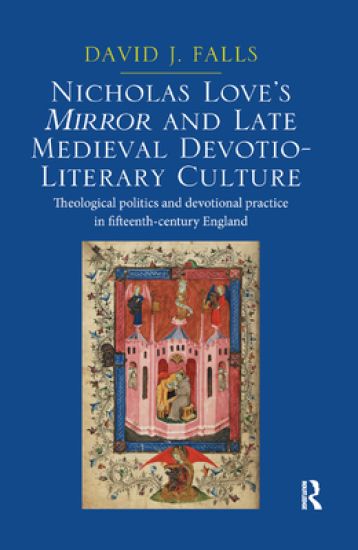
Nicholas Love's Mirror and Late Medieval Devotio-Literary Culture
Surviving in 59 complete manuscript versions, few English texts of the late medieval period seem to have achieved the popularity of Nicholas Love's fifteenth-century translation and adaptation of the Latin Meditationes Vitae Christi - The Mirror of the Blessed Life of Jesus Christ. The Mirror has received surprisingly little scholarly attention and is often contextualized in terms of its role in the theological conflict between English ecclesiastical orthodoxy and the teachings of heresiarch John Wycliff. David Falls presents a new account of the text's history which de-centralises, but does not disregard, the influence of the Wycliffite controversy. Falls interrogates preconceptions and investigates new possibilities for understanding the composition, circulation, function and use of Love's Mirror by examining both the textual modifications and additions made by Love in his adaptation of the Latin, and places these alterations in context by examining individual copies of the Mirror. The manuscript copies are read as both sites of literary consumption and nexuses of textual transition, demonstrating that it was Love's ability to inscribe his work with "functional diversity" which explains the Mirror's popularity. This book presents a nuanced picture not only of the Mirror's production, circulation and function, but also the dynamic and flourishing devotio-literary culture of late medieval England in which Love's text operated.
Nicholas I and Official Nationality in Russia 1825 - 1855

Nicholas I and Official Nationality in Russia 1825 - 1855

Nicholas V. Riasanovsky

University of California Press
1969
pokkari
Nicholas I and Official Nationality in Russia, 1825 - 1855 developed from a much more modest interest in Uvarov's doctrine of "Orthodoxy, autocracy, and nationality." During the author's study of the Slavophiles in particular, he became increasing aware of the paucity of our knowledge of this so-called Official Nationality frequently combined with a deprecating attitude toward it. Unable to find a satisfactory analysis of the subject, the author proceeded to write his own. This book largely organized itself: an exposition and discussion of the ideology naturally occupied the central position, preceded by a brief treatment of its proponents. But Official Nationality reached beyond intellectual circles, lectures and books; indeed, for thirty years it ruled Russia. Therefore, the author found it necessary to write a chapter on the emperor who, in effect, personally dominated and governed the country throughout his reign; to add a section on the imperial family, the ministers, and some other high officials to an account of the intellectuals who supported the state; and to sketch the application of Official Nationalty both in home affairs and in foreign policy. In this manner this title is able to bring the state doctrine and its role in Russian history into proper focus.
Nicholas of Cusa: The Catholic Concordance

Nicholas of Cusa: The Catholic Concordance

Nicholas of Cusa

Cambridge University Press
1991
sidottu
Now available in paperback, this is the first English translation of the most important work of political thought of the fifteenth century. The Catholic Concordance is the first major treatise to argue for consent through representative councils as a major prerequisite for legitimate law and government, and is the most learned and original work associated with the conciliar movement in the late medieval church. Cusa’s arguments influenced such thinkers as Luther, Bruno and Locke, and Professor Sigmund’s introduction places his work in its full historical and philosophical context. The volume contains all the standard series features including a chronology, note on sources and bibliography, and as one of the earliest formulations of the view that political legitimacy rests on consent, The Catholic Concordance will be of interest to a wide range of scholars and students of the history of European ideas.
Nicholas of Cusa: The Catholic Concordance
Now available in paperback, this is the first English translation of the most important work of political thought of the fifteenth century. The Catholic Concordance is the first major treatise to argue for consent through representative councils as a major prerequisite for legitimate law and government, and is the most learned and original work associated with the conciliar movement in the late medieval church. Cusa’s arguments influenced such thinkers as Luther, Bruno and Locke, and Professor Sigmund’s introduction places his work in its full historical and philosophical context. The volume contains all the standard series features including a chronology, note on sources and bibliography, and as one of the earliest formulations of the view that political legitimacy rests on consent, The Catholic Concordance will be of interest to a wide range of scholars and students of the history of European ideas.