Kirjojen hintavertailu. Mukana 11 717 486 kirjaa ja 12 kauppaa.

Kirjahaku

Etsi kirjoja tekijän nimen, kirjan nimen tai ISBN:n perusteella.

1000 tulosta hakusanalla Nicholas P. Miller

Rise of Yeast: How the Sugar Fungus Shaped Civilization
The great Victorian biologist Thomas Huxley once wrote, "I know of no familiar substance forming part of our every-day knowledge and experience, the examination of which, with a little care, tends to open up such very considerable issues as does yeast." Huxley was right. Beneath the very foundations of human civilization lies yeast--also known as the sugar fungus. Yeast is responsible for fermenting our alcohol and providing us with bread--the very staples of life. Moreover, it has proven instrumental in helping cell biologists and geneticists understand how living things work, manufacturing life-saving drugs, and producing biofuels that could help save the planet from global warming. In The Rise of Yeast, Nicholas P. Money--author of Mushroom and The Amoeba in the Room--argues that we cannot ascribe too much importance to yeast, and that its discovery and controlled use profoundly altered human history. Humans knew what yeast did long before they knew what it was. It was not until Louis Pasteur's experiments in the 1860s that scientists even acknowledged its classification as a fungus. A compelling blend of science, history, and sociology The Rise of Yeast explores the rich, strange, and utterly symbiotic relationship between people and yeast, a stunning and immensely readable account that takes us back to the roots of human history.
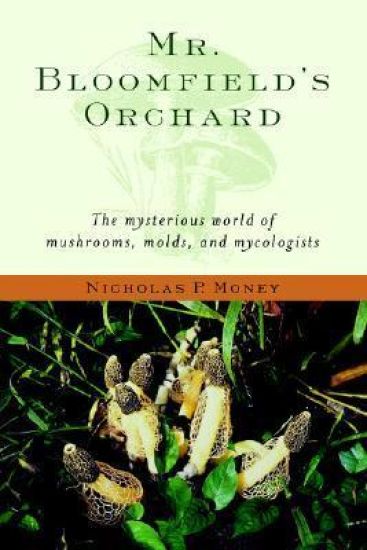
Mr. Bloomfield's Orchard

Mr. Bloomfield's Orchard

Nicholas P. Money

Oxford University Press Inc
2004
nidottu
Stinkhorns, puffballs, the "corpse finder," deadly Galerina, Satan's bolete, birch conks, black mold, the old man of the woods--the world of fungi is infinitely varied and not a little weird. Now, in Mr. Bloomfield's Orchard, Nicholas Money introduces readers to a dazzling array of fungi, from brewer's yeast and Penicillium to the highly lethal death cap. We learn of Madurella, which can erode bones until they look moth-eaten; Cordyceps, which wracks insects with convulsions, kills them, then sends a stalk out of the insect's head to release more infectious spores; and Claviceps, the poisonous ergot fungus, which causes hallucinations. Money also showcases the lives of famed mycologists--including Reginald Buller who wore horse blinders as he walked to work, the better to study luminescent fungi in his dark lab, and Charles Tulasne, the Audubon of fungi, whose illustrations of specimens border on art. And he recounts his own childhood introduction to fungi in Mr. Bloomfield's orchard, where trees and fruit were devoured by a rogue's gallery of bitter rot, canker, rust, powdery mildew, rubbery wood, and scab. Replete with historical photographs and simple yet effective illustrations, told with a refreshing sense of humor,Mr. Bloomfield's Orchard will fascinate anyone interested in the natural world.
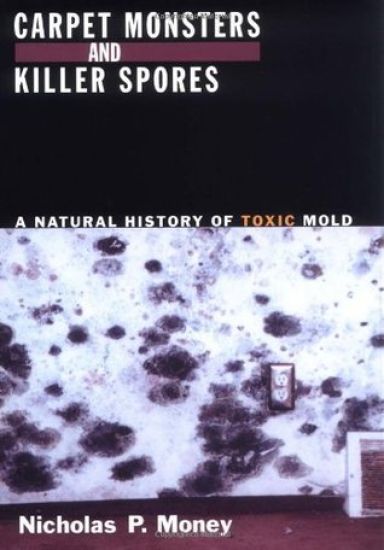
Carpet Monsters and Killer Spores

Carpet Monsters and Killer Spores

Nicholas P. Money

Oxford University Press Inc
2004
sidottu
Molds are everywhere: we inhale their microscopic spores from birth to death. But when an investigation in Ohio revealed that babies suffering from a serious lung illness had been exposed to a toxic black mold in their homes, millions of Americans became nervous about patches of mold in their own basements and bathrooms. Before long, lawsuits were filed by the residents of mold-contaminated homes in every state. By failing to address water damage, building contractors, plumbers, and insurance agents were held liable for exposing families to an unprecedented microbiological hazard. The mold crisis soon developed into a fully-fledged media circus. In Carpet Monsters and Killer Spores, Nicholas Money explores the science behind the headlines and courtroom dramas, and profiles the toxin-producing mold that is a common inhabitant of water-damaged buildings. Nicholas Money tells the most important mycological story since potato blight, with his inimitable style of scientific clarity and dark humor.
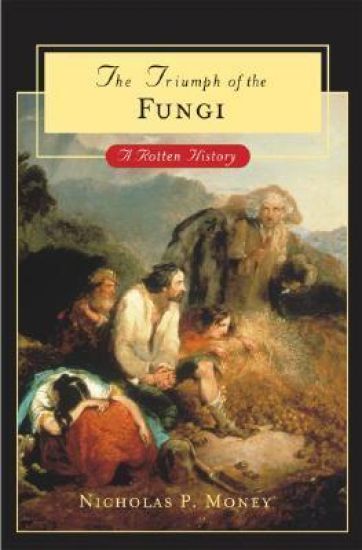
Triumph of the Fungi

Triumph of the Fungi

Nicholas P. Money

Oxford University Press Inc
2006
sidottu
This book is concerned with the most devastating fungal diseases in history. These are the plagues of trees and crop plants, caused by invisible spores that have reshaped entire landscapes and decimated human populations. The Triumph of the Fungi focuses on the fascinating biology of the well- and lesser-known diseases, and also tells the stories of the scientists involved in their study, and of the people directly impacted by the loss of forest trees like the chestnut, and cash crops such as coffee and cacao. In a surprisingly brief time, human knowledge of the fungi that infect plants has evolved from Biblical superstition, to the recognition of the true nature of plant disease, and, more recently, to a sense of awe for the sophistication of these microbes. The crucial issue of human culpability in these fungal epidemics is addressed in the books closing chapter.
Why Have You Come Here?

Why Have You Come Here?

Nicholas P. Cushner

Oxford University Press Inc
2006
nidottu
Christian evangelism was the ostensible motive for much of the early European interaction with the indigenous population of America. The religious orders of the Catholic Church were the front-line representatives of Western culture and the ones who met indigenous America face-to-face. They were also the primary agents of religious change. In this book, Nicholas Cushner provides the first comprehensive overview and analysis of the American missionary activities of the Jesuits. From the North American encounter with the Indians of Florida in 1565, through Mexico, New France, the Paraguay Reductions, Andean Perus, to contact with Native Americans in Maryland on the eve of the American Revolution, members of the order interacted with both native elites and colonizers. Drawing on the abundant documentation of and scholarship about these encounters, Cushner examines how the Jesuits behaved toward the indigenous population and analyzes the way in which native belief systems were replaced by Christianity. He seeks to understand how and why the initial European-Indian encounter changed not only the religion of the natives, but also their material culture, economic activity, social organization, and even their sexual behavior. Always sensitive to the influence of European "cultural filters" on Jesuit accounts, Cushner attempts as far as possible to discover the authentic voices of the Native Americans with whom they interacted. The result is a fascinating and highly accessible introduction to the earliest colonial encounters in the Americas.
The Rise of Yeast

The Rise of Yeast

Nicholas P. Money

Oxford University Press
2018
sidottu
From breakfast toast to evening wine, yeast is the microscopic thing that we cannot live without. We knew what yeast did as an invisible brewer and baker long before we had a clue about the existence of microorganisms. Ten thousand years ago, our ancestors abandoned bush meat and wild fruit in favor of farming animals and cultivating grain. Leaving the forests and grasslands, our desire for beer and wine produced by the fungus was a major stimulus for agricultural settlement. It takes a village to run a brewery or tend a vineyard. We domesticated wild yeast and yeast domesticated us. With the inevitable escape of the fungus from beer vats into bread dough, our marriage with yeast was secured by an appetite for fresh loaves of leavened bread. Over the millennia, we have adapted the technologies of brewing, winemaking, and baking and have come to rely on yeast more and more. Yeast produces corn ethanol and other biofuels and has become the genetically-modified darling of the pharmaceutical business as a source of human insulin and a range of life-saving medicines. These practical uses of yeast have been made possible by advances in our understanding of its biology, and the power of genetic engineering has been used to modify the fungus to do just about anything we wish. We know more about yeast than any other organism built from complex cells like our own. To understand yeast is to understand life. In this book Nicholas P. Money offers a celebration of our favorite microorganism.
The Amoeba in the Room

The Amoeba in the Room

Nicholas P. Money

Oxford University Press
2014
sidottu
Animals and plants rule the world - or do they? A cup of seawater contains 100 million cells which are preyed upon by billions of viruses; a pinch of soil swarms with cryptic microbes whose activities are a mystery; 50 million tons of fungal spores are released into the atmosphere every year and affect the weather; and, human beings are mobile ecosystems that farm, and are farmed by, vast populations of bacteria and viruses involved with almost every aspect of our wellbeing. These are the vast, unnoticed, unmentioned 'elephants in the room' of planet earth. The more we learn about microbial biodiversity, the less important do animals and plants become in our understanding life on earth. The flowering of microbial science is revolutionizing biology and medicine in ways unimagined even a decade or two ago, and is inspiring a new view of what it means to be human. Nicholas P. money explores the extraordinary breadth of the microbial world and the vast swathes of biological diversity that are now becoming recognized using molecular methods. Money argues for nothing less than a revolution in our perception of the living world: the big lumbering forms we see are just froth on a vast ocean of single-celled protists, bacteria, and viruses that constitute most of life on earth.
Microbiology

Microbiology

Nicholas P. Money

Oxford University Press
2014
nidottu
In recent decades we have come to realize that the microbial world is hugely diverse, and can be found in the most extreme environments. Fungi, single-celled protists, bacteria, archaea, and the vast array of viruses and sub-viral particles far outnumber plants and animals. Microbes, we now know, play a critical role in ecosystems, in the chemistry of atmosphere and oceans, and within our bodies. The field of microbiology, armed with new techniques from molecular biology, is now one of the most vibrant in the life sciences. In this Very Short Introduction Nicholas P. Money explores not only the traditional methods of microscopy and laboratory culture but also the modern techniques of genetic detection and DNA sequencing, genomic analysis, and genetic manipulation. In turn he demonstrates how advances in microbiology have had a tremendous impact on the areas of medicine, agriculture, and biotechnology. ABOUT THE SERIES: The Very Short Introductions series from Oxford University Press contains hundreds of titles in almost every subject area. These pocket-sized books are the perfect way to get ahead in a new subject quickly. Our expert authors combine facts, analysis, perspective, new ideas, and enthusiasm to make interesting and challenging topics highly readable.
Fungi

Fungi

Nicholas P. Money

Oxford University Press
2016
nidottu
The variety of the mycological world is far greater than most people imagine. Tens of thousands of fungal species have been described and many more are known only from the abundance of their genes in soil and water. Fungi are hugely important as agents of wood decay in forests, and, as parasites, they have caused the deaths of millions of people by ravaging crops and reshaping natural ecosystems. Fungi perform a variety of essential functions in ecosystems, and are important to both agriculture and biotechnology. Their importance is now becoming better appreciated among scientists, though there is much still to be understood concerning their taxonomy and evolution. This Very Short Introduction highlights the variety and extraordinary natures of fungi, revealing the remarkable facts of fungal biology and the global significance of these enchanting organisms. ABOUT THE SERIES: The Very Short Introductions series from Oxford University Press contains hundreds of titles in almost every subject area. These pocket-sized books are the perfect way to get ahead in a new subject quickly. Our expert authors combine facts, analysis, perspective, new ideas, and enthusiasm to make interesting and challenging topics highly readable.
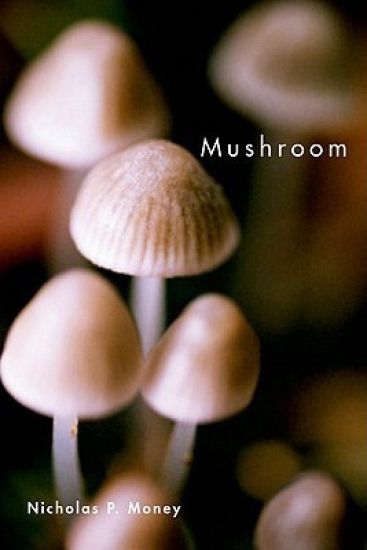
Mushroom

Mushroom

Nicholas P. Money

Oxford University Press Inc
2012
sidottu
The overnight appearance of mushrooms in a meadow or on a suburban lawn is a marvelous sight. It is one of many awe-inspiring, magical processes that have evolved among the fungi, yet this group remains the least studied and most poorly understood kingdom of organisms. In Mushroom, Nicholas Money offers a vibrant introduction to the world of mushrooms, investigating the science behind these organisms as well as their enduring cultural and imaginative appeal. Beginning with the basics of mushroom biology, Money leads us through a history of mushroom research, painting portraits of the colorful characters involved in their study--among them, Beatrix Potter, the celebrated author and creator of Peter Rabbit, and Captain Charles McIlvaine, a Civil War veteran who engaged in a dangerous quest to determine the edibility of every mushroom in North America. Money also discusses the uses of mushrooms today, exploring their importance as food and medicine, their use as recreational drugs, and as the cause of horrific poisonings. A cultural, natural, and scientific history in one, Mushroom is a must-read for mycophiles, mushroom gatherers, and nature lovers alike.
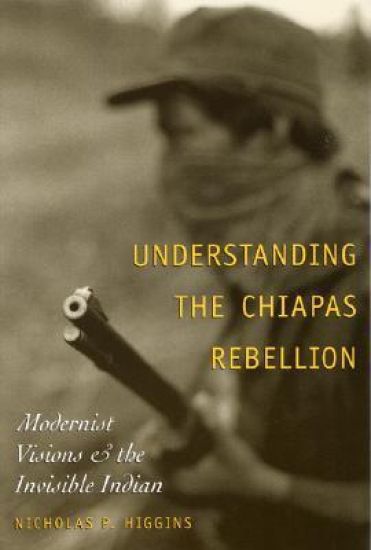
Understanding the Chiapas Rebellion

Understanding the Chiapas Rebellion

Nicholas P. Higgins

University of Texas Press
2004
pokkari
To many observers in the late 1980s and early 1990s, Mexico appeared to be a modern nation-state at last assuming an international role through its participation in NAFTA and the OECD (Organization of Economic Cooperation and Development). Then came the Zapatista revolt on New Year's Day 1994. Wearing ski masks and demanding not power but a new understanding of the indigenous peoples of Mexico, Subcomandante Marcos and his followers launched what may be the first "post" or "counter" modern revolution, one that challenges the very concept of the modern nation-state and its vision of a fully assimilated citizenry. This book offers a new way of understanding the Zapatista conflict as a counteraction to the forces of modernity and globalization that have rendered indigenous peoples virtually invisible throughout the world. Placing the conflict within a broad sociopolitical and historical context, Nicholas Higgins traces the relations between Maya Indians and the Mexican state from the conquest to the present-which reveals a centuries-long contest over the Maya people's identity and place within Mexico. His incisive analysis of this contest clearly explains how the notions of "modernity" and even of "the state" require the assimilation of indigenous peoples. With this understanding, Higgins argues, the Zapatista uprising becomes neither surprising nor unpredictable, but rather the inevitable outcome of a modernizing program that suppressed the identity and aspirations of the Maya peoples.
Practical Guide to Industrial Safety

Practical Guide to Industrial Safety

Nicholas P. Cheremisinoff

CRC Press
2019
nidottu
A practical guide to industrial safety. It seeks to assist specialists in managing operations in industrial settings, including high-risk personal exposure such as inhalation hazards and direct chemical contact. It covers hazards in the chemical process industries, inhalation hazards in refineries, indoor air quality management, personal protective equipment, process safety emergency preparedness, safety in the laboratory, and more. There are Web site listings, NFPA hazard ratings, and other sources of information.
Elastomer Technology Handbook

Elastomer Technology Handbook

Nicholas P. Cheremisinoff; Paul N. Cheremisinoff

CRC Press
2019
nidottu
Elastomer Technology Handbook is a major new reference on the science and technology of engineered elastomers. This contributed volume features some of the latest work by international experts in polymer science and rubber technology. Topics covered include theoretical and practical information on characterizing rubbers, designing engineering elastomers for consumer and engineering applications, properties testing, chemical and physical property characterization, polymerization chemistry, rubber processing and fabrication methods, and rheological characterization. The book also highlights both conventional and emerging market applications for synthetic rubber products and emphasizes the latest technology advancements. Elastomer Technology Handbook is a "must have" book for polymer researchers and engineers. It will also benefit anyone involved in the handling, manufacturing, processing, and designing of synthetic rubbers.
Engineering Mathematics and Statistics

Engineering Mathematics and Statistics

Nicholas P. Cheremisinoff; Paul N. Cheremisinoff

CRC Press
2019
nidottu
This pocket handbook is intended as a handy reference guide for engineers, scientists and students on widely used mathematical relationships, statistical formulas and problem-solving methods, including illustrated examples for problem-solving methods.
Practical Statistics for Engineers and Scientists

Practical Statistics for Engineers and Scientists

Nicholas P. Cheremisinoff; Louise Ferrante

CRC Press
2020
nidottu
This book provides direction in constructing regression routines that can be used with worksheet software on personal computers. The book lists useful references for those readers who desire more in-depth understanding of the mathematical bases, and is helpful for science and engineering students.
Handbook of Pollution Prevention Practices

Handbook of Pollution Prevention Practices

Nicholas P. Cheremisinoff

CRC Press
2020
nidottu
This text provides approaches and methodologies for implementing pollution prevention (P2) and waste minimization programmes to reduce manufacturing operational costs significantly. It focuses on reducing manufacturing and environmental compliance costs by instituting feedstock substitution, improved operational schemes, recycling and by-product recovery, waste minimization, and energy efficiency policies, and offers project cost accounting tools that assist in evaluating money-saving P2 options.
Mathematical Topics Between Classical and Quantum Mechanics

Mathematical Topics Between Classical and Quantum Mechanics

Nicholas P. Landsman

Springer-Verlag New York Inc.
1998
sidottu
Subject Matter The original title of this book was Tractatus Classico-Quantummechanicus, but it was pointed out to the author that this was rather grandiloquent. In any case, the book discusses certain topics in the interface between classical and quantum mechanics. Mathematically, one looks for similarities between Poisson algebras and symplectic geometry on the classical side, and operator algebras and Hilbert spaces on the quantum side. Physically, one tries to understand how a given quan­ tum system is related to its alleged classical counterpart (the classical limit), and vice versa (quantization). This monograph draws on two traditions: The algebraic formulation of quan­ tum mechanics and quantum field theory, and the geometric theory of classical mechanics. Since the former includes the geometry of state spaces, and even at the operator-algebraic level more and more submerges itself into noncommutative geometry, while the latter is formally part of the theory of Poisson algebras, one should take the words "algebraic" and "geometric" with a grain of salt! There are three central themes. The first is the relation between constructions involving observables on one side, and pure states on the other. Thus the reader will find a unified treatment of certain aspects of the theory of Poisson algebras, oper­ ator algebras, and their state spaces, which is based on this relationship.
A Guide to Safe Material and Chemical Handling

A Guide to Safe Material and Chemical Handling

Nicholas P. Cheremisinoff; Anton Davletshin

John Wiley Sons Inc
2010
sidottu
There have been many volumes written that claim to be the most "comprehensive" compendium or handbook on chemical data. These wieldy volumes are often too big and extraneous to be useful to the practicing engineer. This new volume aims to be the most useful "go to" volume for the working engineer, scientist, or chemist who needs quick answers to daily questions about materials or chemicals and doesn't want to go on long searches through voluminous tomes or lengthy internet searches. Covering only the most commonly used chemicals in the most important processes in industry, A Guide to Safe Material and Chemical Handling includes industrial chemicals, such as gases, fuels, and water, which are not incorporated in most "comprehensive" books on materials and chemical properties. Safety plans and procedures that can be implemented by any engineer or plant manager by following the easy, step-by-step instructions in the book are also provided.