Kirjojen hintavertailu. Mukana 12 390 323 kirjaa ja 12 kauppaa.

Kirjahaku

Etsi kirjoja tekijän nimen, kirjan nimen tai ISBN:n perusteella.

1000 tulosta hakusanalla Nicholas P. Money

How to Get Started Making Money with an Online Business: A Blueprint for Making Money in the Digital Age
How to Get Started Making Money with an Online Business Looking to Start an Online Business Here is your blueprint to get your online business started. It's based on years of working with small and medium sized business owners that have found success on the Internet. You Will Discover How to Choose a Profitable Market What Kind of Product You Want to Offer What You Need for Your Online Presence How to Promote Your Online Products How You Get Paid And Much, Much More
The Optimum Quantity of Money

The Optimum Quantity of Money

Nicholas Eberstadt; Milton Friedman

Routledge
2017
sidottu
This classic set of essays by Nobel Laureate and leading monetary theorist Milton Friedman presents a coherent view of the role of money, focusing on specific topics related to the empirical analysis of monetary phenomena and policy. The early chapters cover factors determining the real quantity of money held in a community and the welfare implications of policies that affect the quantity held. The following chapters formally restate why quantity analysis has become central to the science of economics. Friedman's presidential address to the American Economic Association, included here, provides a general summary of his views on the role of monetary policy, with an emphasis on its limitations and its possibilities. This theoretical framework is used in examining a number of empirical problems: the demand for money, the explanation of price changes in wartime periods, and the role of money in business cycles. These essays summarize some of the most important results of Friedman's extensive research over the course of his lifetime. The chapters on policy that follow survey the positions of earlier economists and deal with the importance of lags and the implications of destabilizing speculation in foreign markets. Taken as a whole, The Optimum Quantity of Money provides a comprehensive view of the body of monetary theory developed in leading centers of monetary analysis. This work is essential reading for economists and graduate students in the field. The volume will be no less important for practicing business and banking personnel as well. The new statement by Michael Bordo, a student of Friedman's and an expert in the field, provides a sense of where the field now stands in the economy and academy.
The Optimum Quantity of Money

The Optimum Quantity of Money

Nicholas Eberstadt; Milton Friedman

AldineTransaction
2005
nidottu
This classic set of essays by Nobel Laureate and leading monetary theorist Milton Friedman presents a coherent view of the role of money, focusing on specific topics related to the empirical analysis of monetary phenomena and policy. The early chapters cover factors determining the real quantity of money held in a community and the welfare implications of policies that affect the quantity held. The following chapters formally restate why quantity analysis has become central to the science of economics. Friedman's presidential address to the American Economic Association, included here, provides a general summary of his views on the role of monetary policy, with an emphasis on its limitations and its possibilities. This theoretical framework is used in examining a number of empirical problems: the demand for money, the explanation of price changes in wartime periods, and the role of money in business cycles. These essays summarize some of the most important results of Friedman's extensive research over the course of his lifetime. The chapters on policy that follow survey the positions of earlier economists and deal with the importance of lags and the implications of destabilizing speculation in foreign markets. Taken as a whole, The Optimum Quantity of Money provides a comprehensive view of the body of monetary theory developed in leading centers of monetary analysis. This work is essential reading for economists and graduate students in the field. The volume will be no less important for practicing business and banking personnel as well. The new statement by Michael Bordo, a student of Friedman's and an expert in the field, provides a sense of where the field now stands in the economy and academy.
The War on Dirty Money

The War on Dirty Money

Nicholas Gilmour; Tristram Hicks

Bristol University Press
2023
nidottu
Billions of dollars are wasted each year trying to prevent ‘dirty money’ entering a financial system that is already awash with it. The authors challenge the global approach, arguing that complacency, self-interest and misunderstanding have now created long-standing absurdities. International and government policy makers inadvertently facilitate tax evasion, corruption, environmental and organised crime by separating crime from its root cause. The handful of crime fighters that do exist are starved of resources while an army of compliance box tickers are prevented from truly helping. The authors provide a toolbox of evidence-based solutions to help the frontline tackle financial crime.
Money Laundering - An Endless Cycle?
This book provides a detailed examination of anti-money laundering policies and legislative frameworks in a number of jurisdictions and considers how successful these jurisdictions have been in implementing international measures to combat money laundering. Looking at the instruments and proposals put in place by a number of institutions including the United Nations (UN), the Financial Action Task Force (FATF) and the European Union, the book begins by reclassifying and expanding the traditional global anti-laundering policy to include aspects such as having a national money laundering strategy in place, the implementation of international instruments and the role of government and regulatory agencies. Ryder then offers a comparative analytical review of the anti-money laundering policies adopted in the United States of America, Canada, the United Kingdom and Australia and considers to what extent they have followed and implemented the identified global anti-money laundering policy. Money Laundering – An Endless Cycle? will be of particular interest to academics and students in the fields of Law, Finance, Banking and Criminology.
Money Laundering – An Endless Cycle?
This book provides a detailed examination of anti-money laundering policies and legislative frameworks in a number of jurisdictions and considers how successful these jurisdictions have been in implementing international measures to combat money laundering. Looking at the instruments and proposals put in place by a number of institutions including the United Nations (UN), the Financial Action Task Force (FATF) and the European Union, the book begins by reclassifying and expanding the traditional global anti-laundering policy to include aspects such as having a national money laundering strategy in place, the implementation of international instruments and the role of government and regulatory agencies. Ryder then offers a comparative analytical review of the anti-money laundering policies adopted in the United States of America, Canada, the United Kingdom and Australia and considers to what extent they have followed and implemented the identified global anti-money laundering policy. Money Laundering – An Endless Cycle? will be of particular interest to academics and students in the fields of Law, Finance, Banking and Criminology.
Inventing Money

Inventing Money

Nicholas Dunbar

John Wiley Sons Inc
2000
nidottu
LTCM was the fund that was too big to fail, the brightest star in the financial world. Built on genius, by legends of Wall Street and two Nobel laureates, it spiralled to ever greater heights, commanding unimaginable wealth. When it fell to earth in Spetember 1998 it shook the world. This is the story of the rise and fall of LTCM and the legends behind it. "Inventing Money is a brave and ambitious book....a highly readable account of a financial drama of the highest kind." The Independent "Nicholas Dunbar's fascinating book is a well-writen chronicle of these events....a book to enjoy." Times Higher Educational Supplement "A substantial primer on the history of financial theory, not least because of Mr Dunbar's knack for colourful parallels that illuminate his arguments." New York Times "...not the last word on the subject, but it is a good start." The Economist "Dunbar's is....a highly readable introduction to the origins of alternative strategies employed throughout the industry today." Portfolio International "...a fascinating account of this spectacular episode." CIB News "A well researched book...very readable." Investors Chronicle "...a penetrating look at this enthralling story, stripping away the shroud of mystery surrounding the drama that rocked the financial world........Dunbar tells the full story of this most public of financial disasters, unveiling previously undisclosed information, in captivating and accessible terms." Euro Business "...a fast moving and readable account that explains the development of finance over the centuries before recounting the brief but eventful life of LTCM. It gives a strong flavour of the people and the times, their resentments and motivations." Risk "...an essential insight into the development of financial markets and the history of man's attempt to predict investor behaviour....It should be required reading for anyone considering investing in financial markets." Allianz Global Risk Report
Democracy and Money

Democracy and Money

George C. Bitros; Emmanouil M. L. Economou; Nicholas C. Kyriazis

TAYLOR FRANCIS LTD
2022
nidottu
The authors of this book argue that post-war fiscal and monetary policies in the U.S. are prone to more frequent and more destabilizing domestic and international financial crises. So, in the aftermath of the one that erupted in 2008, they propose that now we are sleepwalking into another, which under the prevailing institutional circumstances could develop into a worldwide financial Armageddon.Thinking ahead of such a calamity, this book presents for the first time a model of democratic governance with privately produced money based on the case of Athens in Classical times, and explains why, if it is conceived as a benchmark for reference and adaptation, it may provide an effective way out from the dreadful predicament that state managed fiat money holds for the stability of Western-type democracies and the international financial system. As the U.S. today, Athens at that time reached the apex of its military, economic, political, cultural, and scientific influence in the world. But Athens triumphed through different approaches to democracy and fundamentally different fiscal and monetary policies than the U.S. Thus the readers will have the opportunity to learn about these differences and appreciate the potential they offer for confronting the challenges contemporary democracies face under the leadership of the U.S.The book will find audiences among academics, university students, and researchers across a wide range of fields and subfields, as well as legislators, fiscal and monetary policy makers, and economic and financial consultants.
Democracy and Money

Democracy and Money

George C. Bitros; Emmanouil M. L. Economou; Nicholas C. Kyriazis

Routledge
2020
sidottu
The authors of this book argue that post-war fiscal and monetary policies in the U.S. are prone to more frequent and more destabilizing domestic and international financial crises. So, in the aftermath of the one that erupted in 2008, they propose that now we are sleepwalking into another, which under the prevailing institutional circumstances could develop into a worldwide financial Armageddon.Thinking ahead of such a calamity, this book presents for the first time a model of democratic governance with privately produced money based on the case of Athens in Classical times, and explains why, if it is conceived as a benchmark for reference and adaptation, it may provide an effective way out from the dreadful predicament that state managed fiat money holds for the stability of Western-type democracies and the international financial system. As the U.S. today, Athens at that time reached the apex of its military, economic, political, cultural, and scientific influence in the world. But Athens triumphed through different approaches to democracy and fundamentally different fiscal and monetary policies than the U.S. Thus the readers will have the opportunity to learn about these differences and appreciate the potential they offer for confronting the challenges contemporary democracies face under the leadership of the U.S.The book will find audiences among academics, university students, and researchers across a wide range of fields and subfields, as well as legislators, fiscal and monetary policy makers, and economic and financial consultants.
The Fungi

The Fungi

Sarah C. Watkinson; Lynne Boddy; Nicholas Money

Academic Press Inc
2015
nidottu
The Fungi, Third Edition, offers a comprehensive and thoroughly integrated treatment of the biology of the fungi. This modern synthesis highlights the scientific foundations that continue to inform mycologists today, as well as recent breakthroughs and the formidable challenges in current research. The Fungi combines a wide scope with the depth of inquiry and clarity offered by three leading fungal biologists. The book describes the astonishing diversity of the fungi, their complex life cycles, and intriguing mechanisms of spore release. The distinctive cell biology of the fungi is linked to their development as well as their metabolism and physiology. One of the great advances in mycology in recent decades is the recognition of the vital importance of fungi in the natural environment. Plants are supported by mycorrhizal symbioses with fungi, are attacked by other fungi that cause plant diseases, and are the major decomposers of their dead tissues. Fungi also engage in supportive and harmful interactions with animals, including humans. They are major players in global nutrient cycles. This book is written for undergraduates and graduate students, and will also be useful for professional biologists interested in familiarizing themselves with specific topics in fungal biology.
Rafael Moneo

Rafael Moneo

Francisco González de Canales; Nicholas Ray

Yale University Press
2015
sidottu
A critical look at the life, work, and influence of the important and award-winning Spanish architect Rafael Moneo The Spanish architect Rafael Moneo (b. 1937) has won numerous awards (including the prestigious Pritzker Architecture Prize), yet this publication is the first to offer a critical study of his career as a whole—not only his many built works and projects but also his contributions to teaching and his writings. The book begins with a comprehensive biography, covering Moneo’s education, teaching appointments, and encounters with historians and architects in Europe and the United States, such as Peter Eisenman, Jørn Utzon, and Bruno Zevi. Also included is a discussion of some of the buildings that he has designed, notably the Prado Museum extension and Atocha Station in Madrid. The following section examines in more detail seven key buildings chosen to illustrate crucial developments in Moneo’s thinking, from the Bankinter, Madrid, to the Cathedral of Our Lady of the Angels, Los Angeles. The last and most extensive section considers his architectural philosophy: his design approach, his idea of the canon, his theory of composition, his notion of form, and his confrontation with reality—in construction and context.
Why Have You Come Here?

Why Have You Come Here?

Nicholas P. Cushner

Oxford University Press Inc
2006
nidottu
Christian evangelism was the ostensible motive for much of the early European interaction with the indigenous population of America. The religious orders of the Catholic Church were the front-line representatives of Western culture and the ones who met indigenous America face-to-face. They were also the primary agents of religious change. In this book, Nicholas Cushner provides the first comprehensive overview and analysis of the American missionary activities of the Jesuits. From the North American encounter with the Indians of Florida in 1565, through Mexico, New France, the Paraguay Reductions, Andean Perus, to contact with Native Americans in Maryland on the eve of the American Revolution, members of the order interacted with both native elites and colonizers. Drawing on the abundant documentation of and scholarship about these encounters, Cushner examines how the Jesuits behaved toward the indigenous population and analyzes the way in which native belief systems were replaced by Christianity. He seeks to understand how and why the initial European-Indian encounter changed not only the religion of the natives, but also their material culture, economic activity, social organization, and even their sexual behavior. Always sensitive to the influence of European "cultural filters" on Jesuit accounts, Cushner attempts as far as possible to discover the authentic voices of the Native Americans with whom they interacted. The result is a fascinating and highly accessible introduction to the earliest colonial encounters in the Americas.
The Religious Roots of the First Amendment

The Religious Roots of the First Amendment

Nicholas P. Miller

Oxford University Press Inc
2012
sidottu
Traditional understandings of the genesis of the separation of church and state rest on assumptions about 'Enlightenment' and the republican ethos of citizenship. Nicholas Miller does not seek to dislodge that interpretation but to augment and enrich it by recovering its cultural and discursive religious contexts - specifically the discourse of Protestant dissent. He argues that commitments by certain dissenting Protestants to the right of private judgment in matters of Biblical interpretation, an outgrowth of the doctrine of the priesthood of all believers, helped promote religious disestablishment in the early modern West. This movement climaxed in the disestablishment of religion in the early American colonies and nation. Miller identifies a continuous strand of this religious thought from the Protestant Reformation, across Europe, through the English Reformation, Civil War, and Restoration, into the American colonies. He examines seven key thinkers who played a major role in the development of this religious trajectory as it came to fruition in American political and legal history: William Penn, John Locke, Elisha Williams, Isaac Backus, William Livingston, John Witherspoon, and James Madison. Miller shows that the separation of church and state can be read, most persuasively, as the triumph of a particular strand of Protestant nonconformity - that which stretched back to the Puritan separatist and the Restoration sects, rather than to those, like Presbyterians, who sought to replace the 'wrong' church establishment with their own, 'right' one. The Religious Roots of the First Amendment contributes powerfully to the current trend among some historians to rescue the eighteenth-century clergymen and religious controversialists from the enormous condescension of posterity.
Understanding the Chiapas Rebellion

Understanding the Chiapas Rebellion

Nicholas P. Higgins

University of Texas Press
2004
pokkari
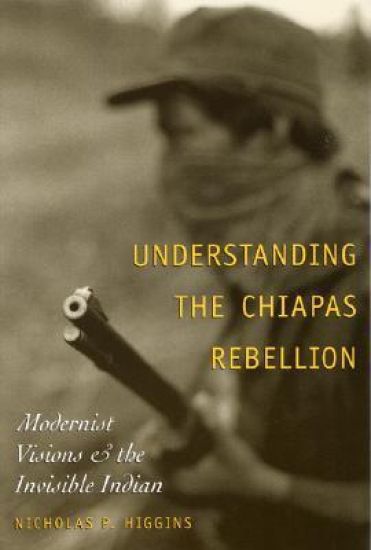
To many observers in the late 1980s and early 1990s, Mexico appeared to be a modern nation-state at last assuming an international role through its participation in NAFTA and the OECD (Organization of Economic Cooperation and Development). Then came the Zapatista revolt on New Year's Day 1994. Wearing ski masks and demanding not power but a new understanding of the indigenous peoples of Mexico, Subcomandante Marcos and his followers launched what may be the first "post" or "counter" modern revolution, one that challenges the very concept of the modern nation-state and its vision of a fully assimilated citizenry. This book offers a new way of understanding the Zapatista conflict as a counteraction to the forces of modernity and globalization that have rendered indigenous peoples virtually invisible throughout the world. Placing the conflict within a broad sociopolitical and historical context, Nicholas Higgins traces the relations between Maya Indians and the Mexican state from the conquest to the present-which reveals a centuries-long contest over the Maya people's identity and place within Mexico. His incisive analysis of this contest clearly explains how the notions of "modernity" and even of "the state" require the assimilation of indigenous peoples. With this understanding, Higgins argues, the Zapatista uprising becomes neither surprising nor unpredictable, but rather the inevitable outcome of a modernizing program that suppressed the identity and aspirations of the Maya peoples.
Practical Guide to Industrial Safety

Practical Guide to Industrial Safety

Nicholas P. Cheremisinoff

CRC Press
2019
nidottu
A practical guide to industrial safety. It seeks to assist specialists in managing operations in industrial settings, including high-risk personal exposure such as inhalation hazards and direct chemical contact. It covers hazards in the chemical process industries, inhalation hazards in refineries, indoor air quality management, personal protective equipment, process safety emergency preparedness, safety in the laboratory, and more. There are Web site listings, NFPA hazard ratings, and other sources of information.