Kirjojen hintavertailu. Mukana 11 244 527 kirjaa ja 12 kauppaa.

Kirjahaku

Etsi kirjoja tekijän nimen, kirjan nimen tai ISBN:n perusteella.

1000 tulosta hakusanalla Nicholas Royle

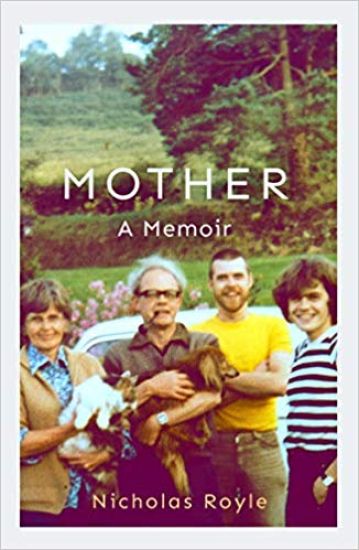
Mother: A Memoir

Mother: A Memoir

Nicholas Royle

Myriad Editions
2020
nidottu
In this touching, funny and beautifully written portrait of family life, mother-son relationships and bereavement, Nicholas Royle captures the spirit of post-war parenting as well as of his mother whose dementia and death were triggered by the tragedy of losing her other son-Royle's younger brother-to cancer in his twenties. At once poetic and philosophical, this extraordinary memoir is also a powerful reflection on climate crisis and 'mother nature', on literature and life writing, on human and non-human animals, and on the links between the maternal and memory itself.
Finders, Keepers

Finders, Keepers

Nicholas Royle

SALT PUBLISHING
2026
pokkari
Finders, Keepers tells the stories that hide between the lines of the second-hand books that fill the shelves of charity shops and second-hand bookshops up and down the country. The author collects books. He collects books that contain bookmarks in the form of maps – he will read the book while walking the streets depicted on the map, provided he doesn't have to get on a plane to get there. He collects books given as Christmas presents. He collects books that have the same title as other books – he'll read both books and compare them. He might wonder – he might even ask – which one has the greater claim on the title. He collects books that he finds with business cards in them – instead of reading the book, he sends it to the individual named on the business card and asks them to read it instead. He collects ex-library books. He collects free books. Well, he looks at the books that people leave out on their garden wall in the rain and photographs then and mostly leaves them where they are.
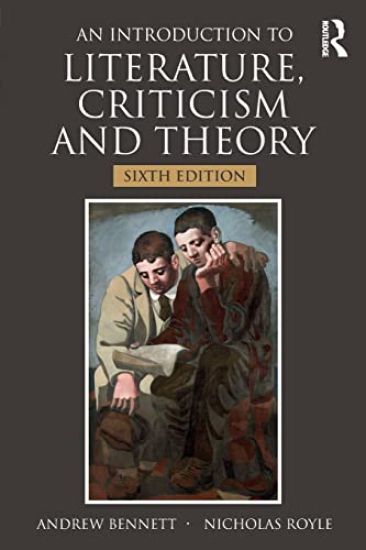
An Introduction to Literature, Criticism and Theory

An Introduction to Literature, Criticism and Theory

Andrew Bennett; Nicholas Royle

TAYLOR FRANCIS LTD
2023
nidottu
Lively, original and highly readable, An Introduction to Literature, Criticism and Theory is the essential guide to literary studies. Starting at ‘The Beginning’ and concluding with ‘The End’, chapters range from the familiar, such as ‘Character’, ‘Narrative’ and ‘The Author’, to the more unusual, such as ‘Secrets’, ‘Pleasure’ and ‘Ghosts’. Now in its sixth edition, Bennett and Royle’s classic textbook successfully illuminates complex ideas by engaging directly with literary works, so that a reading of Jane Eyre opens up ways of thinking about racial difference, for example, while Chaucer, Monty Python and Hilary Mantel are all invoked in a discussion of literature and laughter.The sixth edition has been revised and updated throughout. In addition, four new chapters – ‘Literature’, ‘Loss’, ‘Human’ and ‘Migrant’ – engage with exciting recent developments in literary studies. As well as fully up-to-date further reading sections at the end of each chapter, the book contains a comprehensive bibliography and an invaluable glossary of key literary terms. A breath of fresh air in a field that can often seem dry and dauntingly theoretical, this book will open the reader’s eyes to the exhilarating possibilities of reading and studying literature.
An Introduction to Literature, Criticism and Theory

An Introduction to Literature, Criticism and Theory

Andrew Bennett; Nicholas Royle

TAYLOR FRANCIS LTD
2023
sidottu
Lively, original and highly readable, An Introduction to Literature, Criticism and Theory is the essential guide to literary studies. Starting at ‘The Beginning’ and concluding with ‘The End’, chapters range from the familiar, such as ‘Character’, ‘Narrative’ and ‘The Author’, to the more unusual, such as ‘Secrets’, ‘Pleasure’ and ‘Ghosts’. Now in its sixth edition, Bennett and Royle’s classic textbook successfully illuminates complex ideas by engaging directly with literary works, so that a reading of Jane Eyre opens up ways of thinking about racial difference, for example, while Chaucer, Monty Python and Hilary Mantel are all invoked in a discussion of literature and laughter.The sixth edition has been revised and updated throughout. In addition, four new chapters – ‘Literature’, ‘Loss’, ‘Human’ and ‘Migrant’ – engage with exciting recent developments in literary studies. As well as fully up-to-date further reading sections at the end of each chapter, the book contains a comprehensive bibliography and an invaluable glossary of key literary terms. A breath of fresh air in a field that can often seem dry and dauntingly theoretical, this book will open the reader’s eyes to the exhilarating possibilities of reading and studying literature.
This Thing Called Literature

This Thing Called Literature

Andrew Bennett; Nicholas Royle

TAYLOR FRANCIS LTD
2024
nidottu
What is this thing called literature? Why study it? And how? Relating literature to topics such as dreams, politics, life, death, the ordinary and the uncanny, This Thing Called Literature establishes a sense of why and how literature is an exciting and rewarding subject to study. Andrew Bennett and Nicholas Royle expertly weave an essential love of literature into an account of what literary texts do, how they work and the sort of questions and ideas they provoke. The book’s three parts reflect the fundamental components of studying literature: reading, thinking and writing. The authors use helpful and wide-ranging examples and summaries, offering rich reflections on the question ‘What is literature?’ and on what they term ‘creative reading’. The new edition has been revised throughout with extensive updates to the further reading and a new chapter on creative non-fiction. Bennett and Royle’s accessible and thought-provoking style encourages a deep engagement with literary texts. This essential guide to the study of literature is an eloquent celebration of the value and pleasure of reading.
This Thing Called Literature

This Thing Called Literature

Andrew Bennett; Nicholas Royle

TAYLOR FRANCIS LTD
2024
sidottu
What is this thing called literature? Why study it? And how? Relating literature to topics such as dreams, politics, life, death, the ordinary and the uncanny, This Thing Called Literature establishes a sense of why and how literature is an exciting and rewarding subject to study. Andrew Bennett and Nicholas Royle expertly weave an essential love of literature into an account of what literary texts do, how they work and the sort of questions and ideas they provoke. The book’s three parts reflect the fundamental components of studying literature: reading, thinking and writing. The authors use helpful and wide-ranging examples and summaries, offering rich reflections on the question ‘What is literature?’ and on what they term ‘creative reading’. The new edition has been revised throughout with extensive updates to the further reading and a new chapter on creative non-fiction. Bennett and Royle’s accessible and thought-provoking style encourages a deep engagement with literary texts. This essential guide to the study of literature is an eloquent celebration of the value and pleasure of reading.
Grammatical Tone

Grammatical Tone

Nicholas Rolle

De Gruyter Mouton
2026
sidottu
This book presents a typology of grammatical tone, defined as a tonological operation restricted to the context of a specific morpheme or construction. Tone languages constitute at least half the world’s languages, and exhibit phonological properties which are particularly important to linguistic inquiry, e.g. its ability to be ‘mobile’, to interact non-locally, and to not be phonetically grounded, often radically. Grammatical tone exhibits all of these properties and more. Despite the majority of tonal languages in Africa and Central America exhibiting robust grammatical tone, no detailed study exists which details its axes of variation. This book helps to fill that gap. This book explores different ways to understand grammatical tone (as exponence vs. a process), the many types of grammatical tone (dominant vs. non-dominant), and its interaction with general tonological rules and phonological markedness. It establishes grammatical tone as crucially involving a trigger, a target, and a grammatical tune, whose interacting properties are framed here in relation to several prominent topics within linguistic theory, e.g. locality, linear directionality, hierarchical relations, modularity, cyclicity, among others. This book is written with several audiences in mind, including typologists, phonologists, syntacticians, and morphologists. In particular, it is written with non-tone specialists in mind such as fieldworkers who may be working on languages with grammatical tone.
Richard Rolle and the Invention of Authority

Richard Rolle and the Invention of Authority

Nicholas Watson

Cambridge University Press
2007
pokkari
This 1991 book is a literary study of the career of Richard Rolle (d.1349), a Yorkshire hermit and mystic who was one of the most widely read English writers of the late Middle Ages. Nicholas Watson proposes a chronology of Rolle's writings, and offers a literary analyses of a number of his works. He shows how Rolle's career, as a writer of passionate religious works in Latin and later in English, has as its principal focus the establishment of his own spiritual authority. The book also addresses wider issues, suggesting an alternative way of looking at mystical writing in general and challenging the prevailing view of the relationship between medieval and renaissance attitudes to authors and authority.
Richard Rolle and the Invention of Authority

Richard Rolle and the Invention of Authority

Nicholas Watson

Cambridge University Press
1991
sidottu
This 1991 book is a literary study of the career of Richard Rolle (d.1349), a Yorkshire hermit and mystic who was one of the most widely read English writers of the late Middle Ages. Nicholas Watson proposes a chronology of Rolle's writings, and offers a literary analyses of a number of his works. He shows how Rolle's career, as a writer of passionate religious works in Latin and later in English, has as its principal focus the establishment of his own spiritual authority. The book also addresses wider issues, suggesting an alternative way of looking at mystical writing in general and challenging the prevailing view of the relationship between medieval and renaissance attitudes to authors and authority.
The Role of Animals in World War One

The Role of Animals in World War One

Nicholas Milton

PEN SWORD BOOKS LTD
2026
sidottu
As well as over 60 million soldiers who fought in the First World War, 16 million animals also ‘served’ and suffered colossal casualties. Over 8 million horses died, as did tens of thousands of dogs, cats and pigeons. They were killed hauling guns, rescuing the wounded, controlling vermin and carrying messages. Most died without recognition, but a few survived and became animal celebrities. Warrior, ‘the luckiest horse on the Western Front’ became an equine hero, Rin Tin Tin, a German Shepherd dog, was born in the trenches and went on to star in over 30 films, Percy the cat served in one of the first tanks and Cher Ami, a messenger pigeon, rescued a United States battalion from certain death. A menagerie of other animals served included a baboon, bear, camels, donkeys, elephants, maggots, pigs, ponies, slugs and even whales. In contrast to serving, mosquitoes, lice, and rats spread disease; more men dying in Salonika from malaria than from enemy fire. At home, many families kept chickens, rabbits or pigs while elephants replaced horses in the streets and fields, pulling carts and ploughs. This book commemorates and celebrates the role of animals throughout the conflict and tells the story of how all creatures great and small helped to win the Great War.
The Role of Birds in World War One

The Role of Birds in World War One

Nicholas Milton; Beccy Speight; Ben Sheldon

PEN SWORD BOOKS LTD
2022
sidottu
The British Expeditionary Force sent to France in the late summer of 1914 has been referred to as the 'Best British Army Ever Sent to War' as it was one of the most highly trained and disciplined forces in the world. It was also the 'Best Birdwatching Army Ever Sent to War' for among its ranks were hundreds of both amateur and professional ornithologists. When not fighting, many soldiers turned to birdwatching as a way of whiling away the long hours spent on guard duty or watching over 'no man's land'. The list of birds seen by them serving in all the theatres of war was truly impressive, ranging from the common like sparrows, skylarks and swallows to the exotic like golden orioles, hoopoes and bee-eaters. It was not just at the battle front that birds found themselves in the firing line but also on the home front. For the Foreign Secretary, Edward Grey, who worked tirelessly to preserve peace but ended up convincing the House of Commons to go to war, birds were his hinterland. But as well as declaring war on Germany on 4 August 1914, the government also declared war on the humble house sparrow, farmers falsely accusing it of destroying Britain's dwindling wheat and oat supplies. From the outset the slaughter was opposed by the Royal Society for the Protection of Birds who eventually triumphed over the Board of Agriculture, becoming the powerful voice for conservation we know today. When the guns finally fell silent on 11 November 1918 and the Great War came to an ignoble end, a generation of birdwatchers lay dead. Among them were scientists, researchers, lords, librarians, artists, authors, professors, poets, lawyers, surgeons and explorers, many young men with great promise. Had they lived, the science of ornithology and the hobby of birdwatching would have undoubtedly been much the richer. In commemoration of their sacrifice a selection of them is included in the Ornithological Roll of Honour at the back of this book.
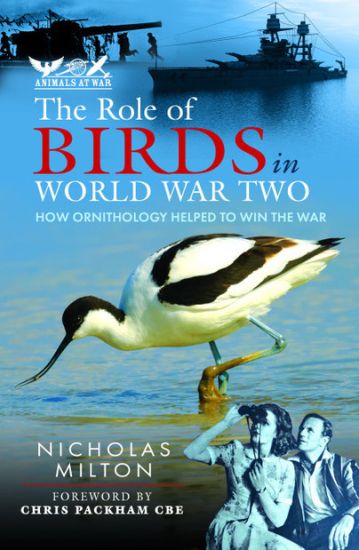
The Role of Birds in World War Two

The Role of Birds in World War Two

Nicholas Milton

PEN SWORD BOOKS LTD
2022
sidottu
A love of birds has always been an important part of the British way of life but in wartime birds came into their own, helping to define our national identity. One the most popular bird books ever, Watching Birds, was published in 1940 while songs like There'll be Bluebirds over the White Cliffs of Dover epitomized the blitz spirit. Birds even featured in wartime propaganda movies like the 1941 classic The First of the Few starring Leslie Howard where they inspired the design of the Spitfire. Along the coast flooding to prevent a German invasion helped the avocet make a remarkable return while the black redstart found an unlikely home in our bombed-out buildings. As interesting as the birds were some of the people who watched them. Matthew Rankin and Eric Duffey counted seabirds while looking for U-boats. Tom Harrisson, the mastermind behind Mass Observation, watched people 'as if they were birds' while POW Guy Madoc wrote a truly unique book on Malayan birds, typed on paper stolen from the Japanese commandant's office. For Field Marshall Alan Brooke, Britain's top soldier, filming birds was his way of coping with the continual demands of Winston Churchill. In comparison Peter Scott was a wildfowler who was roused by Adolf Hitler before the war but after serving with distinction in the Royal Navy became one of the greatest naturalists of his generation. With a foreword by Chris Packham CBE The Role of Birds in World War Two is the story of how ornithology helped to win the war.
The Role of Intuition in the Scientific Method

The Role of Intuition in the Scientific Method

Nicholas M Smith

Independently Published
2017
pokkari
I found this paper by Dr. Smith synchronistically, being a bit obsessed with the conviction that the scientific method is missing its other half; intuition. We still seem to be stuck in the age of Newtonian Materialism but Intuition is gaining. The physics nomenclature was not completely foreign to me given that I am a student of physics and other sciences myself and have a Naprapathic degree in Manual Therapy. I had fun with the bulk of the contents and view it as a hike up a science hill for a student. Your gray cells will get a workout and I recommend it. It is for that reason I put key terms in bold and key ideas in italics. Dr. Smith's biography in this booklet will tell you that he was a heavyweight in his era, 1963, but not as notable as his colleagues Physicists James Van Allen and Allison. All worked on the Manhattan Project that led to the atomic age. His conclusion is fabulous. This is only sixty-seven pages long and worth the mental exercise. Dr. Smith's dates are 1914-2003. I wrote the preface. and added pictures at the end.
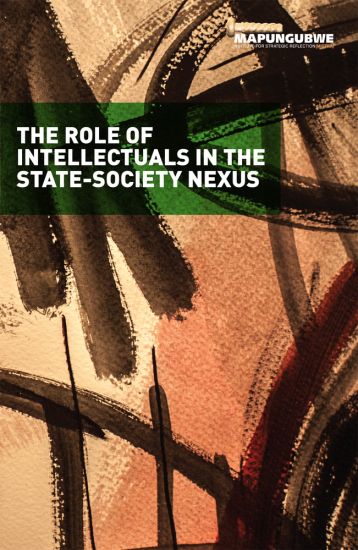
The role of Intellectuals in the state-society nexus

The role of Intellectuals in the state-society nexus

Nicholas Wolpe; Mcebisi Ndletyana; Ibbo Mandaza; Ayanda Ntsabula; Xolela Mangcu; Joel Netshitenzhe; Ben Turok; Ari Sitas; Tshilidzi Marwala; Nomboniso Gasa

Real African Publishers Pty Ltd
2016
nidottu
If we are to talk of a 'new' intellectual movement, the question is begged: what happened to the 'old' intellectual movement? What happened to the thinkers who inspired and led our struggle against colonialism, apartheid and exploitation? What has happened to the thinkers who gave substance and guidance and, in many cases, practical leadership to our attempts to undo the past and forge a new future? In pursuit of answers to these questions, the Mapungubwe Institute for Strategic Reflection (MISTRA), in partnership with the Liliesleaf Trust, hosted a roundtable in March 2015 on the theme 'The Role of Intellectuals in the State-Society Nexus'. The roundtable received inputs from a range of thinkers, including Ibbo Mandaza, Ben Turok, Ari Sitas, Ayanda Ntsaluba, Xolela Mangcu, Joel Netshitenzhe, Tshilidzi Marwala and Nomboniso Gasa, as well as provocative and piercing inputs from the attendees. This publication aims to put the contributions and debates at the roundtable further into the public domain and records the input of the main speakers, the respondents, as well as the discussion from the floor. The rigorous debate at the roundtable spilt out of the boundaries of the event itself and encouraged a number of thinkers to provide additional material for this publication: Z. Pallo Jordan, David Moore (with Tshilidzi Marwala) and Desiree Lewis.
Tabletop Role-Playing Games and the Experience of Imagined Worlds

Tabletop Role-Playing Games and the Experience of Imagined Worlds

Nicholas J. Mizer

Springer Nature Switzerland AG
2019
sidottu
In 1974, the release of Dungeons & Dragons forever changed the way that we experience imagined worlds. No longer limited to simply reading books or watching movies, gamers came together to collaboratively and interactively build and explore new realms. Based on four years of interviews and game recordings from locations spanning the United States, this book offers a journey that explores how role-playing games use a combination of free-form imagination and tightly constrained rules to experience those realms. By developing our understanding of the fantastic worlds of role-playing games, this book also offers insight into how humans come together and collaboratively imagine the world around us.
Tabletop Role-Playing Games and the Experience of Imagined Worlds

Tabletop Role-Playing Games and the Experience of Imagined Worlds

Nicholas J. Mizer

Springer Nature Switzerland AG
2020
nidottu
In 1974, the release of Dungeons & Dragons forever changed the way that we experience imagined worlds. No longer limited to simply reading books or watching movies, gamers came together to collaboratively and interactively build and explore new realms. Based on four years of interviews and game recordings from locations spanning the United States, this book offers a journey that explores how role-playing games use a combination of free-form imagination and tightly constrained rules to experience those realms. By developing our understanding of the fantastic worlds of role-playing games, this book also offers insight into how humans come together and collaboratively imagine the world around us.
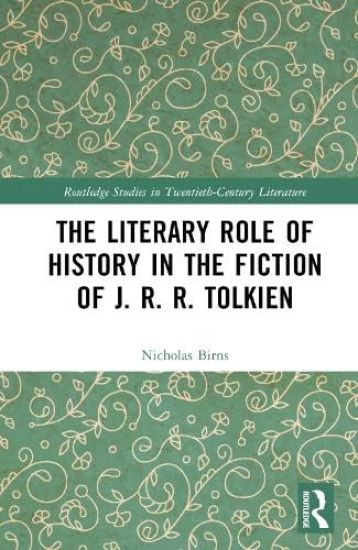
The Literary Role of History in the Fiction of J. R. R. Tolkien
This volume analyzes the literary role played by history in the works of J. R. R. Tolkien. It argues that the events of The Lord of the Rings are placed against the background of an already- existing history, both in reality and in the fictional worlds of the books. History is unfolded in various ways, both in explicitly archival annals and in stories told by characters on the road or on the fly, and in which different visions of history emerge. In addition, the history within the work can resemble, or be patterned on, histories in our world. These histories range from the deep past of prehistoric and ancient worlds to the early medieval era of the barbarian invasions and Byzantium, to the modern worlds of urbane civility and a paradoxical longing for nature, and finally to great power rivalries and global prospects. The book argues that Tolkien did not employ these histories indiscriminately or reductively. Rather, he regarded them as aspects of aesthetic and representative figuration that are above all literary. While most criticism has concentrated on Tolkien’s use of historical traditions of Northern Europe, this book argues that Tolkien also valued Southern and Mediterranean pasts and registered the Germanic and the Scandinavian pasts as they related to other histories as much as his vision of them included a primeval mythic aura.