Kirjojen hintavertailu. Mukana 11 627 516 kirjaa ja 12 kauppaa.

Kirjahaku

Etsi kirjoja tekijän nimen, kirjan nimen tai ISBN:n perusteella.

1000 tulosta hakusanalla Nicolas Damas Marchant

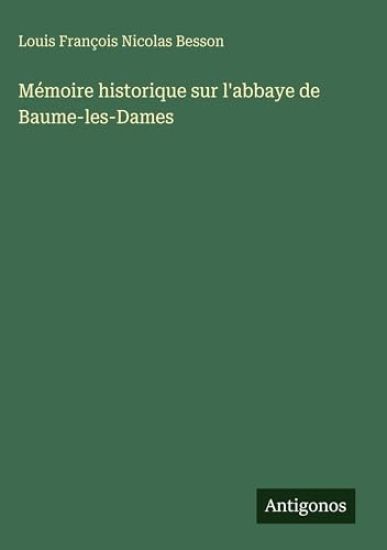
Mémoire historique sur l'abbaye de Baume-les-Dames

Mémoire historique sur l'abbaye de Baume-les-Dames

Louis François Nicolas Besson; Louis François Nicolas Besson

Antigonos Verlag
2025
pokkari
R impression inchang e de l' dition originale de 1845. La maison d' dition Antigonos est sp cialis e dans la publication de r impressions de livres historiques. Nous veillons ce que ces ouvrages soient mis la disposition du public dans de bonnes conditions afin de pr server leur patrimoine culturel.
Mémoire historique sur l'abbaye de Baume-les-Dames

Mémoire historique sur l'abbaye de Baume-les-Dames

Louis François Nicolas Besson

Antigonos Verlag
2025
sidottu
R impression inchang e de l' dition originale de 1845. La maison d' dition Antigonos est sp cialis e dans la publication de r impressions de livres historiques. Nous veillons ce que ces ouvrages soient mis la disposition du public dans de bonnes conditions afin de pr server leur patrimoine culturel.
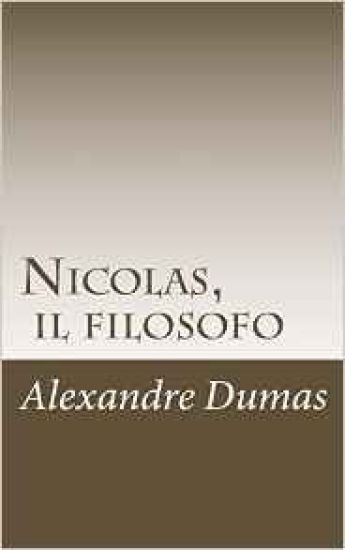
Nicolas, il filosofo

Nicolas, il filosofo

M. Taylor; Alexandre Dumas

Createspace Independent Publishing Platform
2013
nidottu
Nicolas il filosofo un racconto di Alexandre Dumas. Lavorare per un lingotto d'oro, un lingotto per un cavallo, un cavallo, una mucca, una mucca per un maiale. Questi sono gli avvenimenti che caratterizzano il ritorno di Nicolas e dopo diversi incontri e discussioni se ne torna a casa con la cosa pi inaspettata.
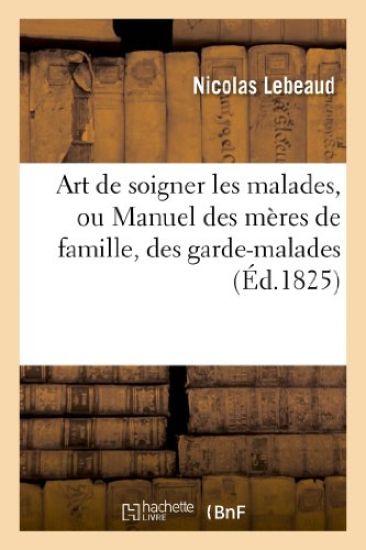
Art de Soigner Les Malades, Ou Manuel Des Mères de Famille, Des Garde-Malades, Des Dames de Charité
Art de soigner les malades, ou Manuel des meres de famille, des garde-malades, des dames de charite, des cures de campagne, etc.; contenant des instructions detaillees sur la maniere de soigner les malades en general... par Lebeaud, ...Date de l'edition originale: 1825Ce livre est la reproduction fidele d'une oeuvre publiee avant 1920 et fait partie d'une collection de livres reimprimes a la demande editee par Hachette Livre, dans le cadre d'un partenariat avec la Bibliotheque nationale de France, offrant l'opportunite d'acceder a des ouvrages anciens et souvent rares issus des fonds patrimoniaux de la BnF.Les oeuvres faisant partie de cette collection ont ete numerisees par la BnF et sont presentes sur Gallica, sa bibliotheque numerique.En entreprenant de redonner vie a ces ouvrages au travers d'une collection de livres reimprimes a la demande, nous leur donnons la possibilite de rencontrer un public elargi et participons a la transmission de connaissances et de savoirs parfois difficilement accessibles.Nous avons cherche a concilier la reproduction fidele d'un livre ancien a partir de sa version numerisee avec le souci d'un confort de lecture optimal. Nous esperons que les ouvrages de cette nouvelle collection vous apporteront entiere satisfaction.Pour plus d'informations, rendez-vous sur www.hachettebnf.fr
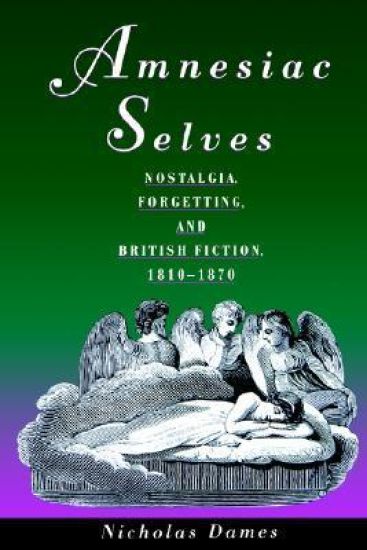
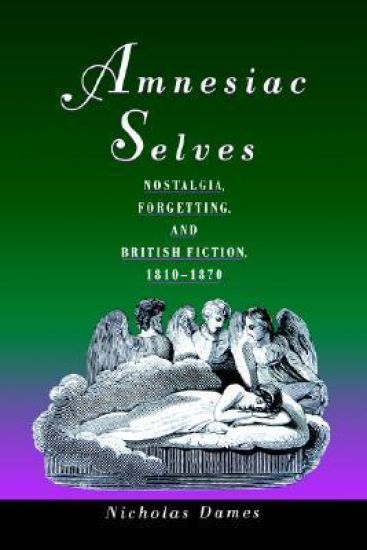
Amnesiac Selves

Amnesiac Selves

Nicholas Dames

Oxford University Press Inc
2001
sidottu
With Joyce, Proust, and Faulkner in mind, we have come to understand the novel as a form with intimate ties to the impulses and processes of memory. This study contends that this common perception is an anachronism that distorts our view of the novel. Based on an investigation of representative novels, Amnesiac Selves shows that the Victorian novel bears no such secure relation to memory, and, in fact, it tries to hide, evade, and eliminate remembering. Dames argues that the notable scarcity and distinct unease of representations of remembrance in the nineteenth-century British novel signal an art form struggling to define and construct new concepts of memory. By placing nineteenth-century British fiction from Jane Austen to Wilkie Collins alongside a wide variety of Victorian psychologies and theories of mind, Nicholas Dames evokes a novelistic world, and a culture, before modern memory - one dedicated to a nostalgic evasion of detailed recollection which our time has largely forgotten.
Amnesiac Selves

Amnesiac Selves

Nicholas Dames

Oxford University Press Inc
2003
nidottu
In its nuanced examination of a wide variety of Victorian theories of mind, including physiognomy, physiology, associationism, and cognitive philosophies, Amnesiac Selves draws a powerful portrait of the interaction between psychology and the novel in the years 1810-1870. Dames demonstrates the crucial role that novels played in forming a habit of diluting remembrance into secure, sentimental, and above all communal memories, habits that live on in the nostalgia still felt by their readers. In tracing the formative nostalgias of canonical British fiction, this study recalls for us what these novels so often ask us to forget. Provocative and original, Amnesiac Selves constitutes a major advance in studies of Victorian culture and literature.
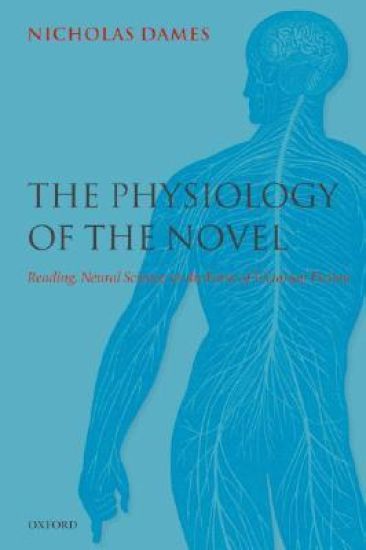
The Physiology of the Novel

The Physiology of the Novel

Nicholas Dames

Oxford University Press
2007
sidottu
How did the Victorians read novels? Nicholas Dames answers that deceptively simple question by revealing a now-forgotten range of nineteenth-century theories of the novel, a range based in a study of human physiology during the act of reading, He demonstrates the ways in which the Victorians thought they read, and uncovers surprising responses to the question of what might have transpired in the minds and bodies of readers of Victorian fiction. His detailed studies of novel critics who were also interested in neurological science, combined with readings of novels by Thackeray, Eliot, Meredith, and Gissing, propose a vision of the Victorian novel-reader as far from the quietly immersed being we now imagine - as instead a reader whose nervous system was addressed, attacked, and soothed by authors newly aware of the neural operations of their public. Rich in unexpected intersections, from the British response to Wagnerian opera to the birth of speed-reading in the late nineteenth century, The Physiology of the Novel challenges our assumptions about what novel-reading once did, and still does, to the individual reader, and provides new answers to the question of how novels influenced a culture's way of reading, responding, and feeling.
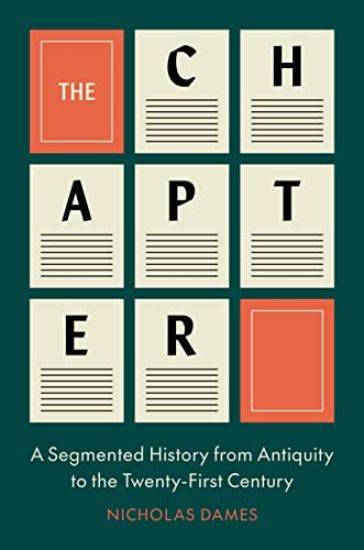
The Chapter

The Chapter

Nicholas Dames

PRINCETON UNIVERSITY PRESS
2023
sidottu
Finalist for the National Book Critics Circle Award in CriticismShortlisted for the Christian Gauss Award, Phi Beta Kappa SocietyA history of the chapter from its origins in antiquity to todayWhy do books have chapters? With this seemingly simple question, Nicholas Dames embarks on a literary journey spanning two millennia, revealing how an ancient editorial technique became a universally recognized component of narrative art and a means to register the sensation of time.Dames begins with the textual compilations of the Roman world, where chapters evolved as a tool to organize information. He goes on to discuss the earliest divisional systems of the Gospels and the segmentation of medieval romances, describing how the chapter took on new purpose when applied to narrative texts and how narrative segmentation gave rise to a host of aesthetic techniques. Dames shares engaging and in-depth readings of influential figures, from Sterne, Goethe, Tolstoy, and Dickens to George Eliot, Machado de Assis, B. S. Johnson, Agnès Varda, Uwe Johnson, Jennifer Egan, and La´szlo´ Krasznahorkai. He illuminates the sometimes tacit, sometimes dramatic ways in which the chapter became a kind of reckoning with time and a quiet but persistent feature of modernity.Ranging from ancient tablets and scrolls to contemporary fiction and film, The Chapter provides a compelling, elegantly written history of a familiar compositional mode that readers often take for granted and offers a new theory of how this versatile means of dividing narrative sculpts our experience of time.
The Chapter

The Chapter

Nicholas Dames

PRINCETON UNIVERSITY PRESS
2025
pokkari
Finalist for the National Book Critics Circle Award in CriticismShortlisted for the Christian Gauss Award, Phi Beta Kappa SocietyA history of the chapter from its origins in antiquity to todayWhy do books have chapters? With this seemingly simple question, Nicholas Dames embarks on a literary journey spanning two millennia, revealing how an ancient editorial technique became a universally recognized component of narrative art and a means to register the sensation of time.Dames begins with the textual compilations of the Roman world, where chapters evolved as a tool to organize information. He goes on to discuss the earliest divisional systems of the Gospels and the segmentation of medieval romances, describing how the chapter took on new purpose when applied to narrative texts and how narrative segmentation gave rise to a host of aesthetic techniques. Dames shares engaging and in-depth readings of influential figures, from Sterne, Goethe, Tolstoy, and Dickens to George Eliot, Machado de Assis, B. S. Johnson, Agnès Varda, Uwe Johnson, Jennifer Egan, and La´szlo´ Krasznahorkai. He illuminates the sometimes tacit, sometimes dramatic ways in which the chapter became a kind of reckoning with time and a quiet but persistent feature of modernity.Ranging from ancient tablets and scrolls to contemporary fiction and film, The Chapter provides a compelling, elegantly written history of a familiar compositional mode that readers often take for granted and offers a new theory of how this versatile means of dividing narrative sculpts our experience of time.
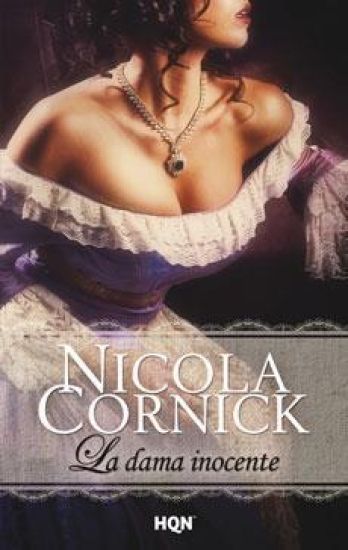
La dama inocente

La dama inocente

Nicola Cornick

Col Seleccion Historica
2018
nidottu
La se orita Lister se sent a una dama respetable. Era una l stima que fuera una antigua sirvienta convertida en heredera de una gran fortuna. Ahora, el atractivo e insoportable lord Miles Vickery estaba seguro de que pod a apropiarse de esa fortuna chantaje ndola para que se casase con l, aunque con su encanto enga oso ya le hab a roto el coraz n una vez. Sin embargo, estaba segura de que l no podr a cumplir las condiciones de su herencia. Despu s de todo, qu libertino podr a ser completamente honesto durante tres largos meses?