
Kirjahaku
Etsi kirjoja tekijän nimen, kirjan nimen tai ISBN:n perusteella.
1000 tulosta hakusanalla Olive Moss

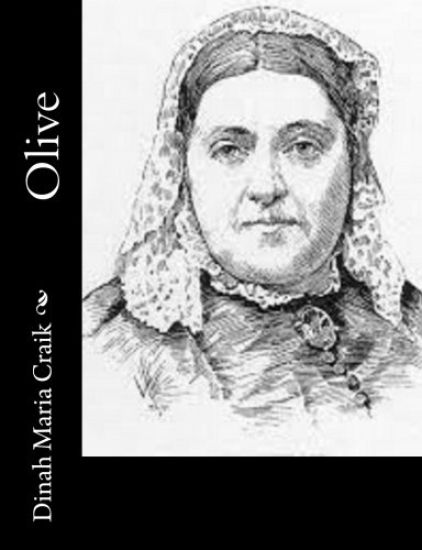
First published in 1850, Olive is a variant on the story of Jane Eyre. The titular character is not an orphan, but she suffers from a physical deformity that acts as a similar social impediment. Olive grows up sheltered, thinking nothing is wrong with her. However when her overprotective nursemaid dies, it is a great shock to her to know that she is not attractive to men and will therefore probably never marry. Even though Olive is determined to support herself and be happy in spite of her hardships, she eventually does find love in a very unlikely person. The illustrated edition includes black and white illustrations by G. Bowers. We are delighted to publish this classic book as part of our extensive Classic Library collection. Many of the books in our collection have been out of print for decades, and therefore have not been accessible to the general public. The aim of our publishing program is to facilitate rapid access to this vast reservoir of literature, and our view is that this is a significant literary work, which deserves to be brought back into print after many decades. The contents of the vast majority of titles in the Classic Library have been scanned from the original works. To ensure a high quality product, each title has been meticulously hand curated by our staff. Our philosophy has been guided by a desire to provide the reader with a book that is as close as possible to ownership of the original work. We hope that you will enjoy this wonderful classic work, and that for you it becomes an enriching experience.

This book "The olive, its processing and waste management", endeavours to cover a broad spectrum regarding different aspects of the olive oil sector. It can be classified into four main sections viz. olive tree, table olives, manufacture of extra virgin olive oil and other low-grade olive oils and treatment and management of their wastes. Starting with the main characteristics of the olive tree, types, growth, cultivation, and practical advice on fruit harvesting, harvesting time, industrial productivity, etc. are described. In the second group, a historical description and the main characteristics of table olives such as varieties, health and nutritional characteristics, etc. are detailed. Then, different methods (from squeezing the olives to the present day two-phase method) used to produce extra virgin olive oil are compared from four points of views viz. health features, environmental impact, extra virgin olive oil quality and economic yield. In addition, in this section, the industrial methods to produce low-grade olive oil (refined olive oil, olive-pomade oil, etc.) are described. In the final section, the environmental impact of the hazardous chemicals generated in the waste, taking into consideration the raw material, processing methods, etc. are detailed. Finally, in order to manage this waste in the best possible way, classical and novel methods are described.

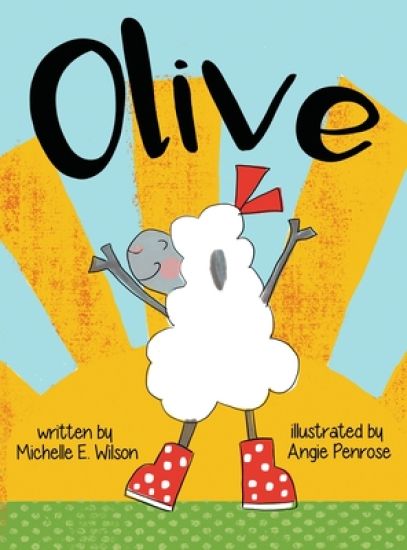
Olive is good at seeing things. At five years old, her world is cozy and small, full of her Mommy and Daddy, her grandma, and a lot of doctors. Her body does not ever do what she wants it to. Her legs don't walk, her hands shake, and when she talks, no one understands her words. Until one person does. The more Olive learns all the ways that she is different from other people, the more she realizes how much she needs that one person who always understands her, who is maybe even just like her. So what happens when that one person is suddenly gone? Olive is a thoughtful, enchanting look into the mind of a non-verbal, medically fragile girl. Through her eyes, we see the struggle of growing up without words and with a body that has to work hard for every triumph, and yet triumph she does. In "Olive", we are reminded that sometimes all it takes is one person for you to never be alone again.

It all started and ended with the accident.Olive and Carson were once a fiery, volatile couple that fueled off emotion and excitement.One rainy night as their car pummeled over a bridge, it all came to a halt.They have lost so much more than one another. And they haven't spoken since that stormy night as they'd tumbled into the river waves.Five long years after the accident, Carson finds himself with a new job at the company where Olive works. She doesn't know he's there and he struggles to live in this new world he dug for himself as he watches Olive date another man, live another life... without Carson.Coincidences bring him close. Too close. He shouldn't be near her. Not after what he'd done. But he can't help himself. The love he'd once had for her had only grown stronger as they'd been apart. Had only become more painful.The moment he steps into her office and she hears his voice for the first time in five years, will she push him away? She should. Or will the love she'd never been able to rid herself of come into play?Until they accept themselves and look beyond who they once were, Olive and Carson can truly never get over what happened.In this touching story of self-discovery and compassion, you will find forgiveness at its rawest form."I need you to see."

First published in 1850, Olive is a variant on the story of Jane Eyre. The titular character is not an orphan, but she suffers from a physical deformity that acts as a similar social impediment. Olive grows up sheltered, thinking nothing is wrong with her. However when her overprotective nursemaid dies, it is a great shock to her to know that she is not attractive to men and will therefore probably never marry. Even though Olive is determined to support herself and be happy in spite of her hardships, she eventually does find love in a very unlikely

Olive is a gentle, compassionate exploration of grief, moving on, and remembering our loved ones, this touching story reminds us all to embrace life's big changes.Lilah’s beloved cat dies and all she’s left with is an olive tree to remember her by. Seasons pass and the tree grows but Lilah is too grief stricken to see its beauty and connection to Olive. Until, one day, in the safety of the tree’s branches, and with the help of a stray cat, Lilah is ready to remember.When we open our hearts, love finds us.For age 3 and up.

Olives are at once a mythical food – bringing to mind scenes from Ancient Rome and the Bible – and an everyday one, given the ubiquity of olive oil in contemporary diets. In this original, succinct and engaging history Fabrizia Lanza traces the olive’s roots from antiquity, when olive oil was exalted for ritual purposes and used to anoint kings and athletes; to the sixteenth century, when Europeans brought the olive to the New World; to the present day, when the fruit and its oil have successfully conquered our palates, in part thanks to waves of global immigration and the popularity of the healthy Mediterranean diet.Lanza describes the role that olive trees, olives and their oil have played in myths, legends and literature, as well as in the everyday lives of people throughout the Mediterranean. A global selection of recipes featuring olives and olive oil showcases the fruit’s culinary diversity. Featuring a wealth of historical detail, this book will be a popular addition to all food lovers’ bookshelves.


Who is the real giant in this wordless retelling of Jack and the Beanstalk? Perspective is everything in this visual exploration of what big and small can mean. Olive, the little girl climbing the beanstalk, is small in comparison to the giant who lives in the clouds. Once back on earth, however, she discovers she's a giant in her own way.

Dinah Maria Craik was an English novelist and poet. Thoroughly established in public favour as a successful author, Miss Mulock took a cottage at Wildwood, North End, Hampstead, and became the ornament of a very extensive social circle. Her personal attractions were at this period of her life considerable, and her simple cordiality, staunch friendliness, and thorough goodness of heart perfected the fascination. In 1857, appeared the work by which she will be principally remembered, John Halifax, Gentleman, a very noble presentation of the highest ideal of English middle-class life, which after nearly forty years still stands boldly out from the works of the female writers of the period, George Eliot's excepted. In writing John Halifax, however, Miss Mulock had practically delivered her message, and her next important work, A Life for a Life (1859), though a very good novel more highly remunerated, and perhaps at the time more widely read, than John Halifax was far from possessing the latter's enduring charm. Mistress and Maid (1863), which originally appeared in Good Words, was inferior in every respect; and, though the lapse was partly retrieved in Christian's Mistake (1865), her subsequent novels were of no great account. The genuine passion which had upborne her early works of fiction had not unnaturally faded out of middle life, and had as naturally been replaced by an excess of the didactic element. This the author seemed to feel herself, for several of her later publications were undisguisedly didactic essays, of which A Woman's Thoughts about Women and Sermons out of Church obtained most notice. Another collection, titled The Unkind Word and Other Stories, included a scathing criticism of Benjamin Heath Malkin for overworking his son Thomas, a child prodigy who died at seven.

Olive
Outlook Verlag
2022
pokkari

Olive
Outlook Verlag
2022
sidottu

Reprint of the original, first published in 1875. The publishing house Anatiposi publishes historical books as reprints. Due to their age, these books may have missing pages or inferior quality. Our aim is to preserve these books and make them available to the public so that they do not get lost.