Kirjojen hintavertailu. Mukana 11 627 423 kirjaa ja 12 kauppaa.

Kirjahaku

Etsi kirjoja tekijän nimen, kirjan nimen tai ISBN:n perusteella.

1000 tulosta hakusanalla Oliver Michaels; Natalie Larsen

ManiCore - Folge 02

ManiCore - Folge 02

Oliver Michaelis

Michaelis Verlag
2024
pokkari
Im zweiten Teil der Reihe "ManiCore - Die Vertragsverhandlung" wird es noch verr ckter. Nachdem Dr. Victor Falk seine exzentrischen Bewerber durch absurde Bewerbungsgespr che gef hrt hat, steht nun der n chste Schritt an: die Vertragsverhandlungen. Doch wer glaubt, hier ginge es um trockene Details und juristische Klauseln, der irrt gewaltig. Dr. Falk, der sich weiterhin als CEO der mysteri sen ManiCore Group sieht, steht vor schr gen Herausforderungen: Eine Business Analystin fordert magische Bonuszahlungen f r die Teilnahme an fantastischen Sportwettk mpfen, ein Chief Legal Officer m chte keine Titel f hren, fordert jedoch handgeschriebene Visitenkarten mit einem Doktortitel, den er nie benutzt, und eine Marketingexpertin fordert magische Zusatzversicherungen, um sich gegen unerwartete Effekte ihrer Traumweberei abzusichern. Es geht um Summen, die auf zauberhafte Art und Weise verhandelt werden - mit Begr ndungen, die direkt aus der M rchenwelt stammen. W hrend die Gespr che immer absurder werden und die magischen Anforderungen der Bewerber steigen, wird Dr. Falks Kontrolle ber die Situation zunehmend surreal. Er genehmigt h here Budgets f r magische Kristalle, diskutiert ber den Einsatz von Dimensionsspringern und genehmigt m rchenhafte Altersvorsorgeprogramme. Doch hinter den skurrilen Verhandlungen verbirgt sich mehr: die allm hliche Erkenntnis, dass seine vermeintliche F hrung in Wirklichkeit Teil eines therapeutischen Rollenspiels ist - oder steckt da doch mehr hinter? "ManiCore - Die Vertragsverhandlung" setzt dort an, wo der erste Teil endete - an der Schnittstelle zwischen Fantasie und Realit t. Mit groteskem Humor und skurrilen Figuren entfaltet sich eine Geschichte ber Macht, Selbstbetrug und die skurrile Welt von Dr. Falks Fantasien. Doch auch diesmal bleibt die Frage: Wie viel davon ist real, und wie viel nur ein Konstrukt seines wahnhaften Geistes?Bereiten Sie sich auf eine surreale Reise vor, die die Grenzen des Allt glichen sprengt
Understanding Disability

Understanding Disability

Michael Oliver

Red Globe Press
2009
nidottu
In this absorbing text by a leading writer and respected activist, theory, policy, historical background and personal experience are combined to give readers a rich and illuminating picture of the key issues raised by disability. In the author's uniquely clear and lively narrative style, the book explores:the practical and political challenges that disablement presentstheoretical understandings of disabilitydisability law and the realities of policy implementationkey points of contention for the disability movementThis long-awaited new edition of a best-selling text includes new stories from the author's experience, as well as sharply framed debate aboutthe development of policy over the last decade and a half. Its expansive coverage includes discussion of welfare, rehabilitation, special education and normalization. This book is core reading for students of social work, nursing, health and applied social science taking modules in disability studies. Michael Oliver was the first Professor of Disability Studies in the United Kingdom and is Emeritus Professor of Disability Studies at the University of Greenwich, UK. He is the author of the path-breaking The Politics of Disablement and Social Work with Disabled People (in its third edition, co-authored with Bob Sapey).
Social Work with Disabled People

Social Work with Disabled People

Michael Oliver; Bob Sapey; Pam Thomas

Red Globe Press
2012
nidottu
Having gone through 30 years of development, the new edition of this highly-regarded classic is the most trusted companion for understanding and promoting the potential for social work with disabled people. It offers readers a clear introduction to the core issues of disability alongside discussion and assessment of the social worker's role.Written by an experienced and highly respected team of authors, the book reflects:- The latest updates, developments and policy changes- The broad range of areas needing to be understood for informed practice- Recent changes to the focus of social work education and practice - The Social Model of Disability, encouraging debate about its role in social work- Developments for independent living- The heightened importance of safeguarding issues, giving attention to the topical issue of disabilist hate crimeAccessible to a broad readership and respected by disabled people themselves, this text is the foundation for effective practice.
The New Politics of Disablement

The New Politics of Disablement

Michael Oliver; Colin Barnes

Red Globe Press
2012
nidottu
Disability luminary Mike Oliver is joined by Colin Barnes in this agenda-setting response to a capitalist society faced with globalisation, financial instability and lower public expenditure. A timely new edition which reignites the debate on the nature of disability and reasserts the political power of the academic field of disability studies.
Studies in Economic and Social History
This title was first published in 2002: There are few students of European economic history who will not have come across the writings of Derek H. Aldcroft. His contributions to the field of economic and social history are vast and distinguish him as one of the most prolific economic historians of the 20th century. This volume honours Derek's contribution to the literature of economic and social history and its contents reflect his wide-ranging interests, particularly on issues relating to transport history and the growth and structural change in economies. From transport in the Industrial Revolution to late 20th-century international financial architecture, the essays in this book, contributed by leading economic historians, are a tribute to a remarkable scholar.
Studies in Economic and Social History
This title was first published in 2002: There are few students of European economic history who will not have come across the writings of Derek H. Aldcroft. His contributions to the field of economic and social history are vast and distinguish him as one of the most prolific economic historians of the 20th century. This volume honours Derek's contribution to the literature of economic and social history and its contents reflect his wide-ranging interests, particularly on issues relating to transport history and the growth and structural change in economies. From transport in the Industrial Revolution to late 20th-century international financial architecture, the essays in this book, contributed by leading economic historians, are a tribute to a remarkable scholar.
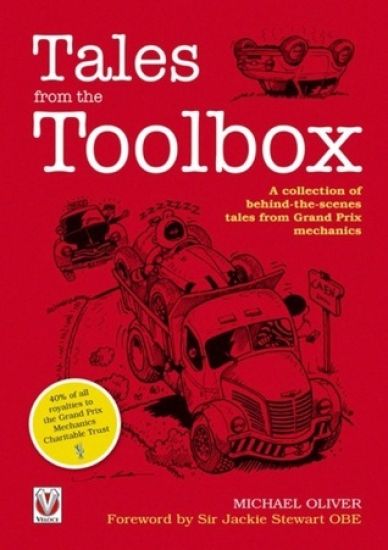
Tales from the Toolbox

Tales from the Toolbox

Michael Oliver

Veloce Publishing Ltd
2009
nidottu
“Tales from the Toolbox” is a unique collection of behind-the-scenes stories and anecdotes as told, in their own words, by former Grand Prix mechanics who have worked at the top level of the sport during the past 50 years. On the front line of the sport, mixing with drivers and team bosses, they saw a side of it that nobody else got to see and rarely gets to hear about – and this book tells their story. Chapters are themed around a particular aspect of a mechanic's life, ranging from what they consider the highs and lows of their career, to their opinions of drivers and team bosses, the all-nighters, letting off steam, the ‘Mechanic's Gallon,' nightmare journeys and customs capers. It also reveals a tale of camaraderie between teams and individual mechanics which is hard to imagine in today's highly competitive Formula One environment. The stories are supplemented by photographs from the archives and photo albums of the mechanics themselves, many of which are previously unseen.
Deconstructing Undecidability

Deconstructing Undecidability

Michael Oliver

Lexington Books/Fortress Academic
2020
sidottu
In Deconstructing Undecidability, Michael Oliver explores the problematic nature of decision, including the inherent exclusivity that accompanies any decision, and the ways in which we attempt to avoid recognizing this exclusivity. Advancing current readings of the deconstructive work of Jacques Derrida, Oliver critically examines the perennial problem of inescapable decision by focusing on two particular scenarios. In discourses where a pursuit of justice or liberation from systemic oppression is a primary concern, Oliver argues for an appreciation of the inescapability of making limited, difficult decisions for particular forms of justice. He highlights a similarly precarious predicament in the context of theological understandings and negotiations of divine decision, pointing to the impossibility of safely navigating this issue. In so doing, Oliver offers a renewed sense of undecidability that urges continued vigilance with regard to complex, difficult decisions. While wholeheartedly affirming the problem of exclusivity that inevitably accompanies decision, Oliver argues for the necessity of reckoning with difficult decisions and highlights how one only ever mistakenly inhabits the illusory position of “indecision,” i.e. standing outside the decision point, as a reflection of power and privilege. Ultimately, this book aims to gain a greater appreciation for the complexity of the problem of decision—in the contexts of justice work and theological understandings of divine decision—in order to be more rigorous and transparent in our continued engagement with it.
Deconstructing Undecidability

Deconstructing Undecidability

Michael Oliver

BLOOMSBURY PUBLISHING PLC
2022
nidottu
Advancing current readings of the deconstructive work of Jacques Derrida, Deconstructing Undecidability critically explores the problematic nature of decision, including the inherent exclusivity that accompanies any decision. In discourses where a pursuit of justice or liberation from systemic oppression is a primary concern, Michael Oliver argues for an appreciation of the inescapability of making limited, difficult decisions for particular forms of justice. Oliver highlights a similarly precarious predicament in the context of philosophical and religious negotiations of divine decision, pointing to the impossibility of safely navigating this issue. While wholeheartedly affirming the problem of exclusivity that inevitably accompanies decision, this book offers a renewed sense of undecidability that highlights a mistaken, illusory position of indecision as a reflection of power and privilege. Ultimately, this book aims to gain a greater appreciation for the complexity of the problem of decision, in order to be more rigorous and transparent in our continued engagement with it.
The New Libertarianism: Anarcho-Capitalism

The New Libertarianism: Anarcho-Capitalism

J. Michael Oliver

Createspace Independent Publishing Platform
2013
nidottu
The Ludwig von Mises Institute says (reviewer David Gordon): "...this remarkable book began as an academic thesis written in 1972, and submitted the next year for a graduate degree...The book is much more than an academic thesis, though; it is a distinguished addition to libertarian thought." The late 1960s and early 1970s marked the first wave of the libertarian movement. Ayn Rand's Objectivism had shaken mainstream philosophy with its core ideas. But Rand was a staunch advocate of limited government, a stance which distanced her from many of her own admirers and students, who saw the State not as the protector but the enemy of human society. At the same time, the political and economic thoughts of Dr. Murray Rothbard clarified the route libertarianism must take. Rand and Rothbard, two forces seemingly at odds, personally and ideologically. J. Michael Oliver, then editor of the nationally circulated objectivist-libertarian journal, "The New Banner," argued that it was a false division. Written in 1972 as an academic work but not published until now. "The New Libertarianism: Anarcho-Capitalism" inexorably links objectivist principles with anarcho-capitalism, and argues that libertarianism, both then and now, must be founded upon the bedrock of Rand's philosophy if it is to remain vital.
Blackstone's Guide to the Sentencing Code 2020 Digital Pack

Blackstone's Guide to the Sentencing Code 2020 Digital Pack

Lucy Corrin; Michael Oliver; Jack Walsh

Oxford University Press
2020
muu
The Blackstone's Guide series delivers concise and accessible books covering the latest legislative changes and amendments. Published soon after enactment, they offer expert commentary on the scope, extent, and effects of the legislation accompanying a full copy of the Act itself. The Sentencing Act 2020 is the culmination of over four years' work to identify the myriad legislative provisions which form part of the sentencing process and produce a coherent consolidation which would stand as a Code, capable of being treated and developed as a single source. The purpose of the Code is to draw together a single statement of the law that stipulates what happens to an offender who is convicted of, or has pleaded guilty to, a criminal offence. This includes the general principles of sentencing law, the orders a court may or must impose as a result of an offender's plea, conviction, or breach of an existing sentence, and any related case management functions. It represents a major landmark for the criminal justice system in England and Wales. This Guide provides an essential bridge for practitioners from the previous patchwork of sentencing procedure to the new unified Code and includes valuable checklists and tables which map the previous statutory basis for all key elements of the Code to the new Act. The enhanced digital product (included) provides both offline and online access wherever you are on OUP LawReader. Synchronize your notes and bookmarks across all of your devices, and take advantage of the quick and simple search function to find what you need, whenever you need it.