

Kirjahaku
Etsi kirjoja tekijän nimen, kirjan nimen tai ISBN:n perusteella.
1000 tulosta hakusanalla Otto Mayrhofer
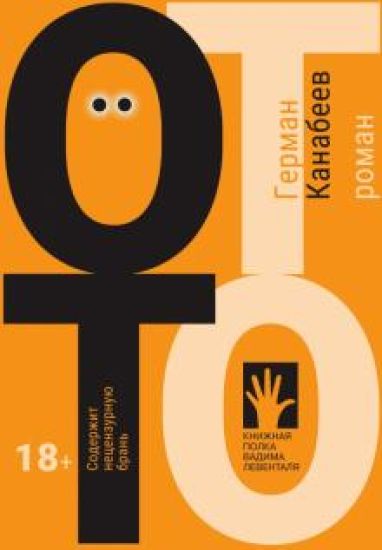
On vylez iz groba i uzhe gotov idti spasat chelovechestvo. Kogo on vozmet sebe v pomoschniki? Baryg, podpolnykh millionerov, narkomanov, samoprovozglashennykh messij, shamanov i kouchej, zhenschin slozhnoj sudby? Imenno v ikh ujutnyj mirok on vtorgnetsja i razrushit ego vo imja nasilstvennogo prosvetlenija vsekh ljudej na planete.Redaktor: Gutieva Anna, Toporova Aglaja Viktorovna

Otto
Archway Publishing
2025
sidottu

Otto
Archway Publishing
2025
pokkari
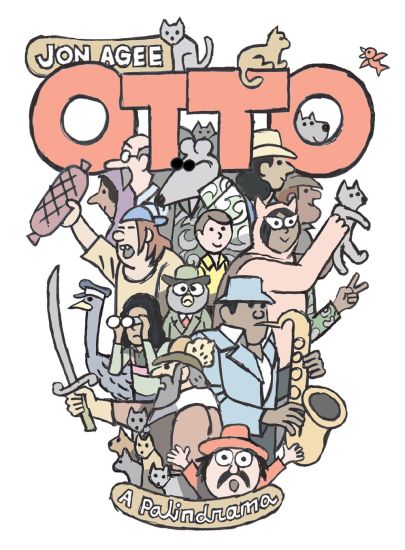
This absurdly clever and funny graphic novel, told entirely in palindromes, is created by World Palindrome Champion Jon Agee, author of Go Hang a Salami I'm a Lasagna Hog Otto is having a very palindramatic day. His pet, Pip, has gone missing, and his search for the dog leads him deeper and deeper into a strange and perplexing world--full of talking owls, stacks of cats, storms and mazes, boats and trains and automobiles . . . oh my Everything seems to be the same backward and forward, and Pip isn't sure he'll ever find his way home to Mom and Pop. But you, reader, will enjoy his Oz-like journey thoroughly.
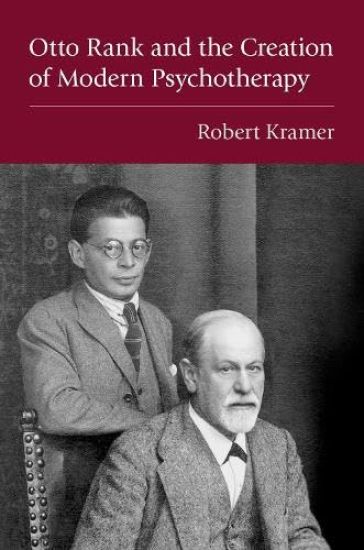
Otto Rank and the Creation of Modern Psychotherapy
Robert Kramer
OXFORD UNIVERSITY PRESS INC
2025
sidottu
Once considered Sigmund Freud's designated heir, Otto Rank was an interdisciplinary thinker and prodigious author of twenty-two books. After being expelled from Freud's inner circle in 1926--due to Freud's opposition to the pre-Oedipal thesis of The Trauma of Birth (1924)--Rank had a highly productive life as a teacher, psychotherapist, and writer. In this book, noted Rank scholar Robert Kramer argues that Rank, not Freud, created modern psychotherapy, which focuses on the therapist-client relationship. Rank's "will therapy" and his teaching on relationship and the creative will impacted not only modern psychotherapy but also social work and existential psychology. His influence can particularly be seen in the work of Carl Rogers (Psychotherapy), Jessie Taft and Virginia Robinson (Social Work), and Rollo May and Irvin Yallom (Existential Psychology). A dazzling thinker, Rank influenced many artists and writers, including Samuel Beckett, Salvador Dalí, Anaïs Nin, Henry Miller, Betty Friedan, D. W. Winnicott, and, most significantly, Ernest Becker, Pulitzer prize-winning author of The Denial of Death (1973). Kramer argues that if the 20th century was the century of Freud, the 21st century is shaping up to be the century of Rank as no other psychoanalyst's theories have ever been tested with as much empirical rigor, and across so many different cultures, as those of Rank. This book translates Rank's complex thought into language any reader can grasp easily.
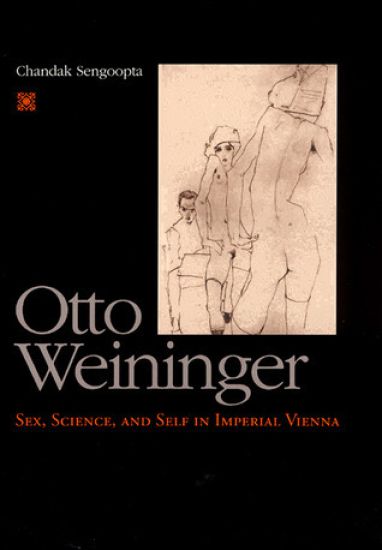
Turn-of-the-century Vienna is remembered as an aesthetic, erotic and intellectual world: the birthplace of Freud and psychoanalysis, the waltz, and the novels of Schnitzler. The contexts of this cultural vibrancy, Chandak Sengoopta argues, were darker and more complex than we might imagine. This provocative, enlightening study explores the milieu in which the philosopher Otto Weininger (1880-1903) wrote his controversial book "Sex and Character". Shortly after its publication, Weininger committed suicide at the age of 23. His book, which argued that women and Jews were mere sexual beings who lacked individuality, became a bestseller. Hailed as a genius by intellectuals such as Ludwig Wittgenstein and Karl Kraus, Weininger was admired, not for his prejudices, but for his engagement with the central issues of the time - the nature and meanings of identity. Sengoopta pays particular attention to how Weininger appropriated scientific language and data to defend his views and examines the scientific theories themselves.
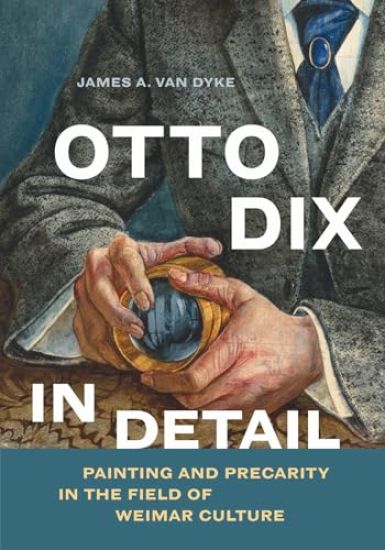
How small details in the paintings of Otto Dix materialize the realities of a modern German artist. Offering a fresh look at German art during a period of extraordinary transition and precarity, James A. van Dyke focuses on overlooked but critically significant details in works completed by Otto Dix between 1919 and 1936. A small lump of paint, a monogram, an almost invisible self-portrait, the verso of a drawing, a patch of discoloration, and a web of fine cracks—van Dyke reveals such details, hidden in plain sight, as coded dialogue through which Dix addressed audiences and art-world insiders amid the combative world of cultural production in Weimar Germany. Sly, cutting, and provocative, these are the material traces of social relationships between the painter and those who represented threats to his professional ambition: an avant-garde mentor and rival, an increasingly skeptical critic, a prominent bourgeois photographer, and a local Nazi authority. Proving that small things offer insight into the big picture, this book highlights Dix’s satirical, transgressive work as nuanced and polyvocal, reflecting the complex fields of power and economics in which the field of art is located.

Le persone che hanno apprezzato i suoi racconti su FB, dove ha scoperto la sua ""verve"" di scrittore, lo hanno invogliato a riunire tutti gli episodi in un unico fascicolo, ed nato il primo libro, largamente autobiografico: OGrani di vita giornaliera di un giovane maturo...O Da l" ha proseguito a scrivere e sono venuti alla luce questi otto brevi racconti, e tre romanzi gialli, riuniti in un unico volume, OTre rari topaziO, per meglio gustarli nella loro interezza. Come sempre il libro dedicato alla nipotina Sofia, fonte inesauribile di ispirazione e di incoraggiamento e prima estimatrice

un viaggio in treno verso Milano: persone si raccontano: una dolce ragazza ebrea scampata all'arresto. un mediatore con una pesa cosciente di fatti passati e un giovane che si sta aprendo al mondo.il colle due giovani sulle tracce di loro parenti ebrei scovano i delatori italiani che i ragazzi pensano bene di punire. Un uomo anziano ormai alla fine dei suoi giorni va a passare, accompagnato da un giovane, in una vecchia casa sulle rive di un torrente, la fine e quantomeno sorprendente. Due giovani con la moto in viaggio verso il nord, per un campeggio, due ragazze, una vicenda tragica conclude il racconto con un nuovo viaggio. A Marradi, una tenda un'osteria dove si fanno ottimi dolci, un poeta che vive ai margini della societa e custode di un segreto. un racconto che sprofonda nel passato lontano di quando ancora si sentivano gli echi della guerra e della miseria. la dolce amarezza di una brutta avventura. un pomeriggio freddo e tanti ricordi ancora una volta vissuti.

LAutore, in questa pubblicazione, ha riunito gli otto libri gialli, scritti a breve distanza luno dallaltro, per dare continuit alla lettura, pur mantenendo le singole identit.Lanziano detective, ricco di buon senso e di spiccate capacit deduttive, lo stesso per i primi tre gialli, (negli ultimi cinque cambier per non annoiare), ma lambientazione degli otto racconti avviene in epoche diverse.Unaltra differenza che nel primo romanzo tutto il preambolo iniziale per arrivare allentrata in scena delle indagini pi formale e serioso mentre lo stesso, negli altri, pi ironico e spiritoso.La seconda parte di ogni libro, infatti, sempre incalzante, coinvolgente e ricca di suspence, per cui una volta superate le prime rampe si va a ruota libera e si gusta appieno lumanit, la cultura, la spiccata abilit deduttiva dei due anziani detectives che vi terranno avvinti alla poltrona, luogo ideale per leggere questi romanzi.
Otto Julius Bierbaum Gesammelte Werke
Otto Julius Bierbaum
Creative Media Partners, LLC
2018
sidottu
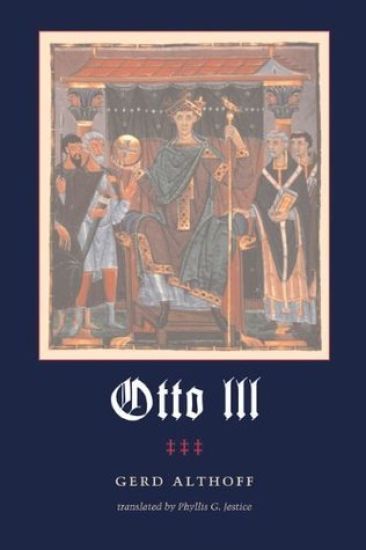
Otto III (980–1002) was one of the most powerful rulers in Europe in the late tenth century. He is also one of the most enigmatic. The son of the German emperor Otto II and the Greek princess Theophanu, he came to the throne at the age of three and was only twenty-one years old at the time of his death. Nonetheless, his reign had a lasting impact on both Germany and Italy for generations. In this book, Gerd Althoff provides a much-needed biography of this fascinating figure. In the process, he uses Otto’s life to explain how in practice early medieval kingship worked.

Otto III (980–1002) was one of the most powerful rulers in Europe in the late tenth century. He is also one of the most enigmatic. The son of the German emperor Otto II and the Greek princess Theophanu, he came to the throne at the age of three and was only twenty-one years old at the time of his death. Nonetheless, his reign had a lasting impact on both Germany and Italy for generations. In this book, Gerd Althoff provides a much-needed biography of this fascinating figure. In the process, he uses Otto’s life to explain how in practice early medieval kingship worked.
This volume, part of Greenwood's continuing series of Bio-Bibliographies in Music, provides a concise bibliographic guide to the life and career of Otto Luening. While the music of this American composer, educator, conductor, and flutist has been performed throughout the northeastern United States, his work has received little attention outside of this region. With its extensive treatment of his life and career, this book will help to bring Luening's important compositions and his contributions to American music to the attention of a much wider audience.Ralph Hartsock divides Luening's work into four main sections, each covering a specific aspect of Luening's career. The volume begins with a brief biography of the subject and is followed by a complete listing of Luening's works and performances through 1989. Prepared with the assistance of Luening himself, this section arranges its information in chronological order, and includes basic bibliographical data as well as information on the premiere of each piece and selected performances. A comprehensive discography, arranged alphabetically by title, cites both commercially produced and selected privately released recordings. Also included is a pair of annotated bibliographies, covering the years from 1921 to 1989. One contains citations of material written by Luening, while the other details the hundreds of articles written about him. The work concludes with a pair of appendixes that catalog Luening's compositions alphabetically by title and according to genre. This work will be a valuable reference source for courses in contemporary music and American music, and a worthwhile addition to the collections of public, college, and university libraries.
Revolutionary approaches to compositional practice and musicological research have been associated with Otto Laske's work for over a quarter of a century. Laske's scientific understanding of the compositional process has made it possible to systematically formalize computer-assisted and computer synthesized music. In this book, international scholars survey new directions in compositional and musicological practices as influenced by Laske's pioneering work. These two seemingly independent areas of inquiry, composition,and musicology, are presented as a comprehensive integration. The essays offer an interdisciplinary examination of issues imbued with ethnographic considerations of the musical experience, research in perception and brain functions, the design of computer-based neural networks that emulate human musical activities, investigations into the psychological make-up of artists, and a unique perspective on how computers are used in many different areas of music. Compositional and cognitive musicological research are placed in a historical perspective and accompanied with contemporary issues surrounding this research. An interview with Otto Laske and two of his own essays are also included.This study of Otto Laske will appeal to musicologists and students of music theory and composition. Its interdisciplinary content will also interest scholars in a variety of fields including electronic music, ethnomusicology, computer science, artificial intelligence and other cognitive sciences, psychology, and philosophy. Researchers will appreciate the comprehensive bibliography of Laske's compositions and writings.

In this book, Frank E. Yeomans, Diana Diamond, and Eve Caligor provide a systemic review of Otto Kernberg’s multiple contributions to psychoanalysis, psychiatry, psychology, and our understanding of the mind and group behavior.The book spans the full scope of Kernberg’s career, both highlighting the diversity of topics on which his writings have shed light and emphasizing conceptual threads that link the different areas of his work. It accessibly follows the experiences that had an impact on the development of his thought and the increasingly strong impact his writing and thinking have had on psychoanalysis and related fields. The authors draw on their decades of working closely with Kernberg to offer a unique insight into his teaching and research, focusing on his work on borderline and narcissistic pathology and the fundamental conceptualization of personality disorders.Including an overview of Kernberg’s critique and expansion of traditional psychoanalytic training, as well as his role in developing transference-focused psychotherapy, this book is an invaluable guide to students, researchers, and analysts in practice and training looking to integrate Kernberg’s ideas into their own clinical and theoretical work.

In this book, Frank E. Yeomans, Diana Diamond, and Eve Caligor provide a systemic review of Otto Kernberg’s multiple contributions to psychoanalysis, psychiatry, psychology, and our understanding of the mind and group behavior.The book spans the full scope of Kernberg’s career, both highlighting the diversity of topics on which his writings have shed light and emphasizing conceptual threads that link the different areas of his work. It accessibly follows the experiences that had an impact on the development of his thought and the increasingly strong impact his writing and thinking have had on psychoanalysis and related fields. The authors draw on their decades of working closely with Kernberg to offer a unique insight into his teaching and research, focusing on his work on borderline and narcissistic pathology and the fundamental conceptualization of personality disorders.Including an overview of Kernberg’s critique and expansion of traditional psychoanalytic training, as well as his role in developing transference-focused psychotherapy, this book is an invaluable guide to students, researchers, and analysts in practice and training looking to integrate Kernberg’s ideas into their own clinical and theoretical work.
Although Otto Neurath left his mark across an array of fields in the first half of the twentieth century, he was trained as an economist and wrote extensively about economics. He questioned the philosophical foundations of economic concepts, the fuzziness of economic terminology, the unwarranted reduction of economic theorizing to matters of price, and the misplaced reliance upon certain quantitative approaches.This book intends to find a place for Otto Neurath in the history of economic thought by examining and analyzing his economic ideas, both on their own terms, albeit with a critical perspective, and in the broader context of their impact. Neurath may be seen as a pioneer in posing ideas and approaches now considered heterodox.This book will be of interest to students and researchers of the history of economic thought, and especially those interested in the evolution of heterodox economics in the twentieth century.