Kirjojen hintavertailu. Mukana 12 390 323 kirjaa ja 12 kauppaa.

Kirjahaku

Etsi kirjoja tekijän nimen, kirjan nimen tai ISBN:n perusteella.

1000 tulosta hakusanalla Ovid

Ovid's Erotic Poems

Ovid's Erotic Poems

Ovid

University of Pennsylvania Press
2014
sidottu
The most sophisticated and daring poetic ironist of the early Roman Empire, Publius Ovidius Naso, is perhaps best known for his oft-imitated Metamorphoses. But the Roman poet also wrote lively and lewd verse on the subjects of love, sex, marriage, and adultery-a playful parody of the earnest erotic poetry traditions established by his literary ancestors. The Amores, Ovid's first completed book of poetry, explores the conventional mode of erotic elegy with some subversive and silly twists: the poetic narrator sets up a lyrical altar to an unattainable woman only to knock it down by poking fun at her imperfections. Ars Amatoria takes the form of didactic verse in which a purportedly mature and experienced narrator instructs men and women alike on how to best play their hands at the long con of love. Ovid's Erotic Poems offers a modern English translation of the Amores and Ars Amatoria that retains the irreverent wit and verve of the original. Award-winning poet Len Krisak captures the music of Ovid's richly textured Latin meters through rhyming couplets that render the verse as playful and agile as it was meant to be. Sophisticated, satirical, and wildly self-referential, Ovid's Erotic Poems is not just a wickedly funny send-up of romantic and sexual mores but also a sharp critique of literary technique and poetic convention.
Ovid: Metamorphoses I

Ovid: Metamorphoses I

Ovid

Bristol Classical Press
1991
nidottu
The first book of Ovid's Metamorphoses contains an interesting variety of material. It begins with myths related to the creation of the world and man, decline from the golden age, the flood and the story of Deucalion and Pyrrha. In the second half it deals primarily with two main metamorphosis myths - Apollo's love for Daphne and the story of Io. Guy Lee's edition, first published by CUP in 1952, supplies a detailed commentary of explanatory notes (with useful index) and, separately, a number of critical notes on the readings adopted by his text. the substantial introduction deals with Ovid himself, with the Metamorphoses and Ovid's other works; there is also a practical section on the Ovidian hexameter and (as one might expect from an editor who is himself a consummate translator of Latin poetry) a sensitive section on translations of the Metamorphoses, in particular Golding, Sandys and Dryden.
Ovid: Metamorphoses III

Ovid: Metamorphoses III

Ovid

Bristol Classical Press
1991
nidottu
This simple, utilitarian edition offers sixth-form and undergraduate students an introduction to the enchanted, sometimes violent, often sad, often funny world of the "Metamorphoses". Book III is ideal in this respect, for it possesses a homogeneity unusual among the fifteen books of the poem and follows the fortunes of the royal house of Thebes in episodes which are related at some length, allowing the reader to savour the individual quality of each story and fix its 'dramatis personae' in mind and memory. The brief introduction places the book in its ancient context. Notes serve primarily to aid comprehension of the Latin but also give aesthetic and antiquarian information. A vocabulary is included.
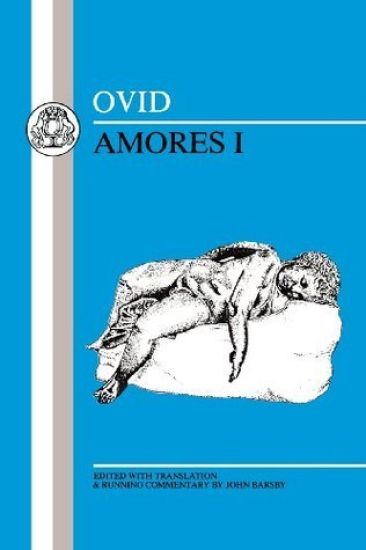
Ovid: Amores I

Ovid: Amores I

Ovid

Bristol Classical Press
1991
nidottu
This edition of the first book of Ovid's "Amores" was first published in 1973 by OUP. It has been kept in print by BCP because it remains an outstandlingly useful volume. It was one of two editions (the other being Gordon Williams' "Horace 'Odes' III", 1969) in which OUP pioneered a new kind of continuous running commentary particularly suited to short poems, one 'likely to be more illuminating than a series of disconnected notes on isolated problems, which may contribute little to the total understanding of the poem as the poet conceived it'. This approach was intended to promote in sixth-formers and undergraduates not just an understanding of the Latin but a critical appreciation of literary quality. In this aim, the edition has been a continued success.