
Kirjahaku
Etsi kirjoja tekijän nimen, kirjan nimen tai ISBN:n perusteella.
416 tulosta hakusanalla Ovidia Yu

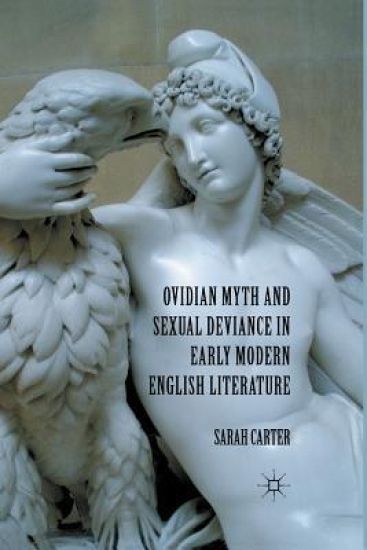
Ovidian Myth and Sexual Deviance in Early Modern English Literature
S. Carter
Palgrave Macmillan
2011
nidottu
Carter explores early modern culture's reception of Ovid through the manipulation of Ovidian myth by Shakespeare, Middleton, Heywood, Marlowe and Marston. With a focus on sexual violence, homosexuality, incest and idolatry, Carter analyses how depictions of mythology represent radical ideas concerning gender and sexuality.
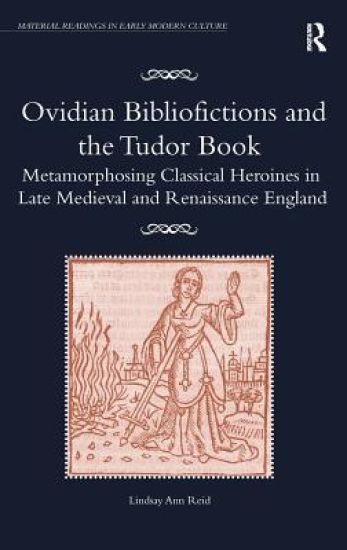
Ovidian Bibliofictions and the Tudor Book examines the historical and the fictionalized reception of Ovid’s poetry in the literature and books of Tudor England. It does so through the study of a particular set of Ovidian narratives-namely, those concerning the protean heroines of the Heroides and Metamorphoses. In the late medieval and Renaissance eras, Ovid’s poetry stimulated the vernacular imaginations of authors ranging from Geoffrey Chaucer and John Gower to Isabella Whitney, William Shakespeare, and Michael Drayton. Ovid’s English protégés replicated and expanded upon the Roman poet’s distinctive and frequently remarked ’bookishness’ in their own adaptations of his works. Focusing on the postclassical discourses that Ovid’s poetry stimulated, Ovidian Bibliofictions and the Tudor Book engages with vibrant current debates about the book as material object as it explores the Ovidian-inspired mythologies and bibliographical aetiologies that informed the sixteenth-century creation, reproduction, and representation of books. Further, author Lindsay Ann Reid’s discussions of Ovidianism provide alternative models for thinking about the dynamics of reception, adaptation, and imitatio. While there is a sizeable body of published work on Ovid and Chaucer as well as on the ubiquitous Ovidianism of the 1590s, there has been comparatively little scholarship on Ovid’s reception between these two eras. Ovidian Bibliofictions and the Tudor Book begins to fill this gap between the ages of Chaucer and Shakespeare by dedicating attention to the literature of the early Tudor era. In so doing, this book also contributes to current discussions surrounding medieval/Renaissance periodization.
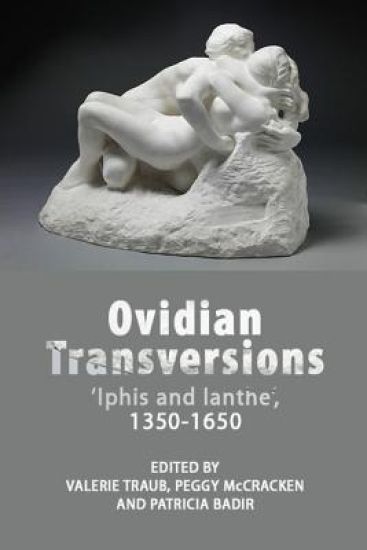
Ovidian Transversions
Edinburgh University Press
2019
sidottu
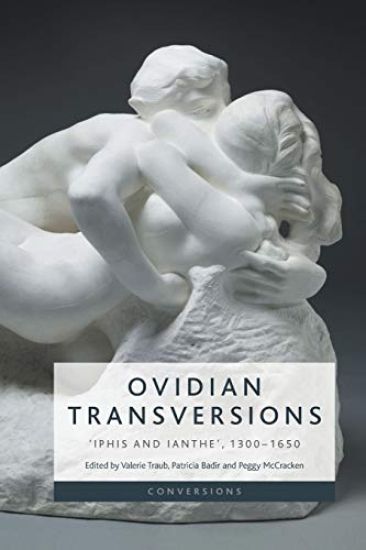
Focuses on transversions of Ovid's 'Iphis and Ianthe' in both English and French literatureMedieval and early modern authors engaged with Ovid's tale of 'Iphis and Ianthe' in a number of surprising ways. From Christian translations to secular retellings on the seventeenth-century stage, Ovid's story of a girl's miraculous transformation into a boy sparked a diversity of responses in English and French from the fourteenth to the seventeenth centuries. In addition to analysing various translations and commentaries, the volume clusters essays around treatments of John Lyly's Galatea (c. 1585) and Issac de Benserade's Iphis et Iante (1637). As a whole, the volume addresses gender and transgender, sexuality and gallantry, anatomy and alchemy, fable and history, youth and pedagogy, language and climate change. Key Features:The only scholarly monograph to focus on Ovid's 'Iphis and Ianthe'Intervenes in the history of Ovidian reception and literary history, particularly in terms of gender and sexualityBroadens readings of 'Iphis and Ianthe' beyond concerns of gender and sexualityBrings medieval and early modern, English and French appropriations of the tale into productive dialogueProvides new readings of John Lyly's Galathea and Issac Benserade's 'Iphis and Ianthe', and of medieval versions of the storyIntervenes in the history of 'trans' phenomena
Ovidian Transversions
Edinburgh University Press
2020
nidottu
Focuses on transversions of Ovid's 'Iphis and Ianthe' in both English and French literatureMedieval and early modern authors engaged with Ovid's tale of 'Iphis and Ianthe' in a number of surprising ways. From Christian translations to secular retellings on the seventeenth-century stage, Ovid's story of a girl's miraculous transformation into a boy sparked a diversity of responses in English and French from the fourteenth to the seventeenth centuries. In addition to analysing various translations and commentaries, the volume clusters essays around treatments of John Lyly's Galatea (c. 1585) and Issac de Benserade's Iphis et Iante (1637). As a whole, the volume addresses gender and transgender, sexuality and gallantry, anatomy and alchemy, fable and history, youth and pedagogy, language and climate change. Key Features:The only scholarly monograph to focus on Ovid's 'Iphis and Ianthe'Intervenes in the history of Ovidian reception and literary history, particularly in terms of gender and sexualityBroadens readings of 'Iphis and Ianthe' beyond concerns of gender and sexualityBrings medieval and early modern, English and French appropriations of the tale into productive dialogueProvides new readings of John Lyly's Galathea and Issac Benserade's 'Iphis and Ianthe', and of medieval versions of the storyIntervenes in the history of 'trans' phenomena
An edition of Ovid's Metamorphoses in Latin, in which the verses do not have line numbers. The idea behind removing the numbers is to make the reading experience less artificial and thus more enjoyable. There is no critical apparatus or introduction, just the text of the Roman poem, printed in a highly readable font. This is not a reprint but a new setting of a text of 1892. Une dition des M tamorphoses d'Ovide en latin, dans laquelle les vers ne sont pas num rot s. L'objet de cet enl vement est de rendre l'exp rience du lecteur moins artificiel et par cons quent plus agr able. Il n'y a pas d'appart critique ni d'introduction, mais tout simplement le texte du po me romain, imprim en caract res hautement lisibles. Ce n'est pas une r impression mais plut t un nouveau r glage d'un texte de 1892. Eine Ausgabe von Ovids Metamorphosen in Latein, in der die Verse keine Zeilennummern haben. Die Idee hinter diesem Entfernen der Zahlen ist, die Leseerfahrung weniger unnat rlich und deswegen angenehmer zu machen. Es gibt keinen textkritische Apparat oder Einf hrung, nur der Text des r mischen Gedichts, gedruckt in einer sehr lesbaren Schriftart. Das ist kein Nachdruck, sondern eine neue Einstellung eines Textes von 1892. Un'edizione dei Metamorfosi di Ovidio in latino, in cui i versi non sono numerati. Lo scopo di questo sequestro quello di rendere l'esperienza del lettore meno artificiale e quindi pi piacevole. Non vi alcun apparato critico o introduzione, solo il testo della poesia romana, stampato in un carattere altamente leggibile. Questa non una ristampa ma piuttosto una nuova impostazione di un testo del 1892. Una edici n de las Metamorfosis de Ovidio en lat n, en el que los versos no est n numeradas. El prop sito de esta supresi n es hacer la experiencia del lector menos artificial y por lo tanto m s agradable. No hay ning n aparato cr tico o introducci n, s lo el texto del poema romano, impreso en un tipo de letra muy legible. Esto no es una reimpresi n sino un nuevo ajuste de un texto de 1892.
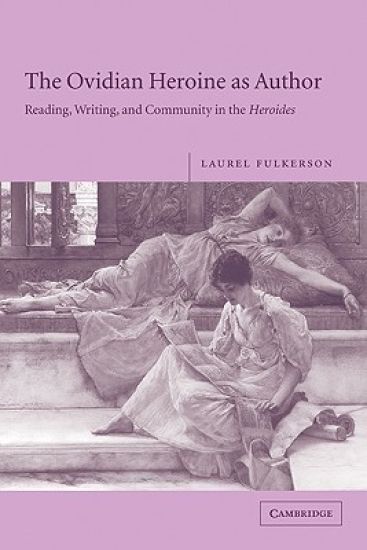
Ovid's Heroides, a catalogue of letters by women who have been deserted, has too frequently been examined as merely a lament. In a new departure, this book portrays the women of the Heroides as a community of authors. Combining close readings of the texts and their mythological backgrounds with critical methods, the book argues that the points of similarity between the different letters of the Heroides, so often derided by modern critics, represent a brilliant exploitation of intratextuality, in which the Ovidian heroine self-consciously fashions herself as an alluding author influenced by what she has read within the Heroides. Far from being naive and impotent victims, therefore, the heroines are remarkably astute, if not always successful, at adapting textual strategies that they perceive as useful for attaining their own ends. With this new approach Professor Fulkerson shows that the Heroides articulate a fictional poetic, mirroring contemporary practices of poetic composition.
Ovid's Heroides, a catalogue of letters by women who have been deserted, has too frequently been examined as merely a lament. In a new departure, this book portrays the women of the Heroides as a community of authors. Combining close readings of the texts and their mythological backgrounds with critical methods, the book argues that the points of similarity between the different letters of the Heroides, so often derided by modern critics, represent a brilliant exploitation of intratextuality, in which the Ovidian heroine self-consciously fashions herself as an alluding author influenced by what she has read within the Heroides. Far from being naive and impotent victims, therefore, the heroines are remarkably astute, if not always successful, at adapting textual strategies that they perceive as useful for attaining their own ends. With this new approach Professor Fulkerson shows that the Heroides articulate a fictional poetic, mirroring contemporary practices of poetic composition.
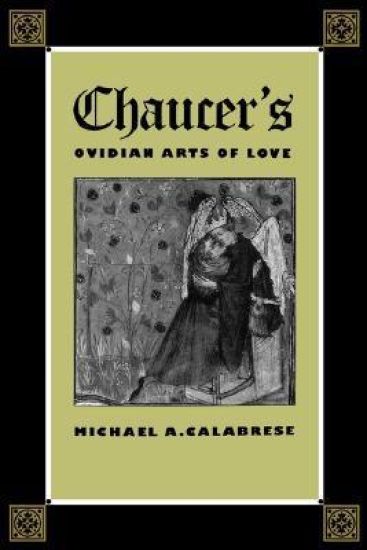
Chaucers Ovidian Arts of Love
University Press of Florida
2001
nidottu
More than any other poet in Chaucer's library, Ovid was concerned with the game of love. Chaucer learned his sexual poetics from Ovid, and his fascination with Ovidian love strategies is prominent in his own writing. This book is the fullest study of Ovid and Chaucer available and the only one to focus on love, desire, and the gender-power struggles that Chaucer explores through Ovid. Michael Calabrese begins by recounting medieval biographical data on Ovid, indicating the breadth of Ovid's influence in the Middle Ages and the depth of Chaucer's knowledge of the Roman poet's life and work. He then examines two of Chaucer's most enduring and important works--Troilus and The Wife of Bath's Prologue and Tale--in light of Ovid's turbulent corpus, maintaining that both poems ask the same Ovidian question: What can language and game do for lovers? Calabrese concludes by examining Chaucer's views of himself as a writer and of the complex relations between writer, text, and audience. "Chaucer, like Ovid, saw himself as vulnerable to the misunderstanding and woe that can befall a maker of fictions," he writes. "Like Ovid, Chaucer explores both the delights and also the dangers of being a 'servant of the servants of love.'. . . Now he must consider the personal, spiritual implications of being a verbal artist and love poet."
De Ovidii Metamorphoseon Codice Amploniano Priore
Rudolf Wilhelm Daniel Grau
Hutson Street Press
2025
sidottu
De Ovidii Metamorphoseon Codice Amploniano Priore
Rudolf Wilhelm Daniel Grau
Hutson Street Press
2025
pokkari
Publii Ovidii Nasonis Quae Extant Omnia Opera
Jean François Boissonade; Gottlieb Erdmann Gierig; Pieter Burman
Hutson Street Press
2025
sidottu
Publii Ovidii Nasonis Quae Extant Omnia Opera
Jean François Boissonade; Gottlieb Erdmann Gierig; Pieter Burman
Hutson Street Press
2025
pokkari
Comento De P. Ovidio Nason A Los Libros De Tristes, Ponto, Y Carta Ã? Livia
Publio Ovidio Nasã3n
Hutson Street Press
2025
sidottu
Comento De P. Ovidio Nason A Los Libros De Tristes, Ponto, Y Carta Ã? Livia
Publio Ovidio Nasã3n
Hutson Street Press
2025
pokkari
Publii Ovidii Nasonis Brieven, Bestaande In Klaaggedigten (1701)
Ovid; Salomon Van Rusting
KESSINGER PUBLISHING, LLC
2009
pokkari
Publii Ovidii Nasonis Heroides (1789)
Ovid; Pieter Burman; Henry Sacheverell Homer
KESSINGER PUBLISHING, LLC
2009
pokkari