

Kirjahaku
Etsi kirjoja tekijän nimen, kirjan nimen tai ISBN:n perusteella.
1000 tulosta hakusanalla Pamela Gail Johnson

"Pamela" is a collection of writings blurring a distinction between love and despair. Paul S. McCormick guides the reader through a myriad of emotions while challenging the basic construct of intimate expression. He and Pamela meander through an abstraction of personal reflection and anguish while finding solace with one another, and we (the reader) are fortunate enough to be invited into their most genuine of emotion - love.

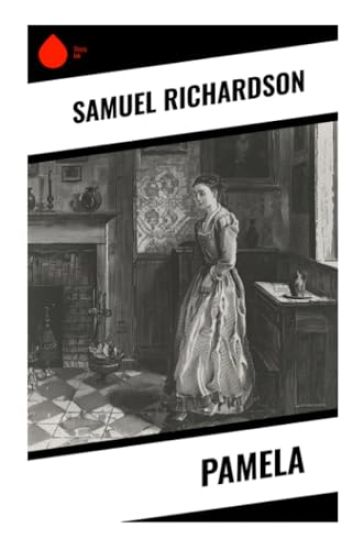
Samuel Richardson (19 August 1689 - 4 July 1761) was an 18th-century English writer and printer. He is best known for his three epistolary novels: Pamela: Or, Virtue Rewarded (1740), Clarissa: Or the History of a Young Lady (1748) and The History of Sir Charles Grandison (1753). Richardson was an established printer and publisher for most of his life and printed almost 500 different works, including journals and magazines. He was also known to collaborate closely with the London bookseller Andrew Millar on several occasions.

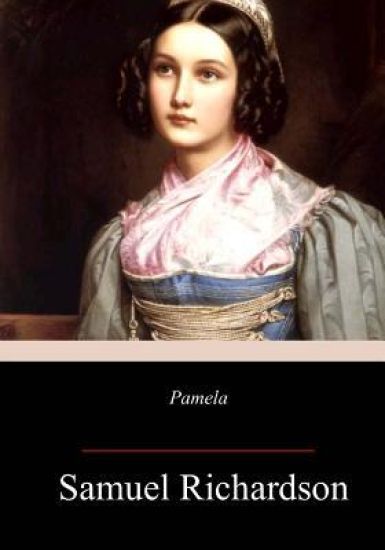
This work has been selected by scholars as being culturally important, and is part of the knowledge base of civilization as we know it. This work was reproduced from the original artifact, and remains as true to the original work as possible. Therefore, you will see the original copyright references, library stamps (as most of these works have been housed in our most important libraries around the world), and other notations in the work.This work is in the public domain in the United States of America, and possibly other nations. Within the United States, you may freely copy and distribute this work, as no entity (individual or corporate) has a copyright on the body of the work.As a reproduction of a historical artifact, this work may contain missing or blurred pages, poor pictures, errant marks, etc. Scholars believe, and we concur, that this work is important enough to be preserved, reproduced, and made generally available to the public. We appreciate your support of the preservation process, and thank you for being an important part of keeping this knowledge alive and relevant.


Reproduction of the original: Pamela by Samuel Richardson
Reproduction of the original: Pamela by Samuel Richardson

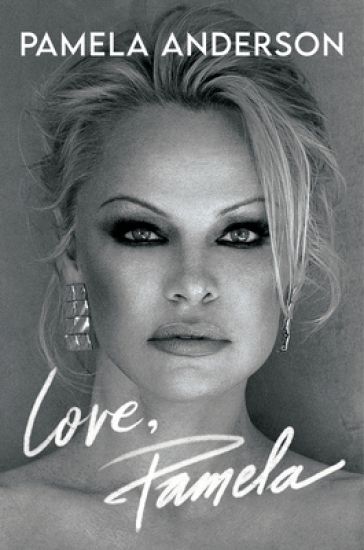
The actress, activist, and once infamous Playboy Playmate reclaims the narrative of her life in a memoir that defies expectation in both content and approach, blending searing prose with snippets of original poetry.In this honest, layered and unforgettable book that alternates between storytelling and her own poetry, Pamela Anderson breaks the mold of the celebrity memoir while taking back the tale that has been crafted about her.Her blond bombshell image was ubiquitous in the 1990s. Discovered in the stands of a football game, she was immediately rocket launched into fame, becoming Playboy's favorite cover girl and an emblem of Hollywood glamour and sexuality. But what happens when you lose grip on your own life--and the image the notoriety machine creates for you is not who you really are?Growing up on Vancouver Island, the daughter of young, wild, and unprepared parents, Pamela Anderson's childhood was not easy, but it allowed her to create her own world--surrounded by nature and imaginary friends. When she overcame her deep shyness and grew into herself, she fell into a life on the cover of magazines, the beaches of Malibu, the sets of movies and talk shows, the arms of rockstars, the coveted scene at the Playboy Mansion. And as her star rose, she found herself tabloid fodder, at the height of an era when paparazzi tactics were bent on capturing a celebrity's most intimate, and sometimes weakest moments. This is when Pamela Anderson lost control of her own narrative, hurt by the media and fearful of the public's perception of who she was...and who she wasn't.Fighting back with a sense of grace, fueled by a love of art and literature, and driven by a devotion to her children and the causes she cares about most, Pamela Anderson has now gone back to the island where she grew up, after a memorable run starring as Roxie in Chicago on Broadway, reclaiming her free spirit but also standing firm as a strong, creative, confident woman.
Instant New York Times bestsellerThe actress, activist, and once infamous Playboy Playmate reclaims the narrative of her life in a memoir that defies expectation in both content and approach, blending searing prose with snippets of original poetry."The iconic Anderson uses a mixture of poetry and prose to present an impressionistic view of a fascinating life."--Booklist (starred review)In this honest, layered and unforgettable book that alternates between storytelling and her own poetry, Pamela Anderson breaks the mold of the celebrity memoir while taking back the tale that has been crafted about her.Her blond bombshell image was ubiquitous in the 1990s. Discovered in the stands of a football game, she was immediately rocket launched into fame, becoming Playboy's favorite cover girl and an emblem of Hollywood glamour and sexuality. But what happens when you lose grip on your own life--and the image the notoriety machine creates for you is not who you really are?Growing up on Vancouver Island, the daughter of young, wild, and unprepared parents, Pamela Anderson's childhood was not easy, but it allowed her to create her own world--surrounded by nature and imaginary friends. When she overcame her deep shyness and grew into herself, she fell into a life on the cover of magazines, the beaches of Malibu, the sets of movies and talk shows, the arms of rockstars, the coveted scene at the Playboy Mansion. And as her star rose, she found herself tabloid fodder, at the height of an era when paparazzi tactics were bent on capturing a celebrity's most intimate, and sometimes weakest moments. This is when Pamela Anderson lost control of her own narrative, hurt by the media and fearful of the public's perception of who she was...and who she wasn't.Fighting back with a sense of grace, fueled by a love of art and literature, and driven by a devotion to her children and the causes she cares about most, Pamela Anderson has now gone back to the island where she grew up, after a memorable run starring as Roxie in Chicago on Broadway, reclaiming her free spirit but also standing firm as a strong, creative, confident woman.

Pamela, ou la vertu recompensée. Traduit de l'anglois. ... of 4; Volume 1
Samuel Richardson
Wentworth Press
2018
pokkari
Pamela, ou la vertu recompensée. Traduit de l'anglois. ... of 4; Volume 2
Samuel Richardson
Creative Media Partners, LLC
2018
pokkari
Pamela, ou la vertu recompensée. Traduit de l'anglois. ... of 4; Volume 2
Samuel Richardson
Wentworth Press
2018
sidottu
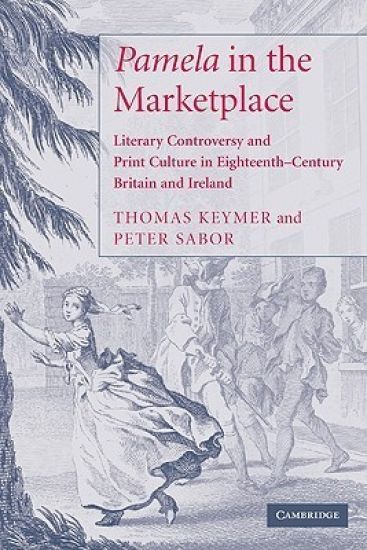
Samuel Richardson's Pamela (1740) is often regarded as the first true novel in English and a landmark in literary history. The best-selling novel of its time, it provoked a swarm of responses: panegyrics and critiques, parodies and burlesques, piracies and sequels, comedies and operas. The controversy it inspired has become a standard point of reference in studies of the rise of the novel, the history of the book and the emergence of consumer culture. In the first book-length study of the Pamela controversy since 1960, Thomas Keymer and Peter Sabor offer a definitive account of the novel's enormous cultural impact. Above all, they read the controversy as a market phenomenon, in which the writers and publishers involved were competing not only in struggles of interpretation and meaning but also in the larger and more pressing enterprise of selling print.

Samuel Richardson's Pamela (1740) is often regarded as the first true novel in English and a landmark in literary history. The best-selling novel of its time, it provoked a swarm of responses: panegyrics and critiques, parodies and burlesques, piracies and sequels, comedies and operas. The controversy it inspired has become a standard point of reference in studies of the rise of the novel, the history of the book and the emergence of consumer culture. In the first book-length study of the Pamela controversy since 1960, Thomas Keymer and Peter Sabor offer a definitive account of the novel's enormous cultural impact. Above all, they read the controversy as a market phenomenon, in which the writers and publishers involved were competing not only in struggles of interpretation and meaning but also in the larger and more pressing enterprise of selling print.