
Kirjahaku
Etsi kirjoja tekijän nimen, kirjan nimen tai ISBN:n perusteella.
1000 tulosta hakusanalla Pascal Root; Achim Schmidtmann
Pascal
Ellipses
2026
pokkari
Pascal
Creative Media Partners, LLC
2026
pokkari

This book is a study of Blaise Pascal's defence of Christian belief in the Pensées. Michael Moriarty aims to expound--and in places to criticize--what he argues is a coherent and original apologetic strategy. Setting out the basic philosophical and theological presuppositions of Pascal's project, the present volume draws the distinction between convictions attained by reason and those inspired by God-given faith. It also presents Pascal's view of the contradictions within human nature, between the 'wretchedness' (our inability to live the life of reason, to attain secure and durable happiness) and the 'greatness' (the power of thought, manifested in the very awareness of our wretchedness). His mind-body dualism and his mechanistic conception of non-human animals are discussed. Pascal invokes the biblical story of the Fall and the doctrine of original sin as the only credible explanation of these contradictions. His analysis of human occupations as powered by the twin desire to escape from painful thoughts and to gratify one's vanity is subjected to critical examination, as is his conception of the self and self-love. Pascal argues that just as Christianity propounds the only explanation for the human condition, so it offers the only kind of happiness that would satisfy our deepest longings. He thus reasons that we have an interest in investigating its truth-claims as rooted in the Bible and in history. The closing chapters of this book discuss Pascal's view of Christian morality and the famous 'wager' argument for opting in favour of Christian belief.

What if there is no strong evidence that God exists? Is belief in God when faced with a lack of evidence illegitimate and improper? Evidentialism answers yes. According to Evidentialism, it is impermissible to believe any proposition lacking adequate evidence. And if any thesis enjoys the status of a dogma among philosophers, it is Evidentialism. Presenting a direct challenge to Evidentialism are pragmatic arguments for theism, which are designed to support belief in the absence of adequate evidence. Pascal's Wager is the most prominent theistic pragmatic argument, and issues in epistemology, the ethics of belief, and decision theory, as well as philosophical theology, all intersect at the Wager. Other prominent theistic pragmatic arguments include William James's celebrated essay, 'The Will to Believe'; a posthumously published and largely ignored pragmatic argument authored by J.S. Mill, supporting the propriety of hoping that quasi-theism is true; the eighteenth-century Scottish essayist James Beattie's argument that the consoling benefit of theistic belief is so great that theistic belief is permissible even when one thinks that the existence of God is less likely than not; and an argument championed by the nineteenth-century French philosopher Jules Lachelier, which based its case for theistic belief on the empirical benefits of believing as a theist, even if theism was very probably false. In Pascal's Wager: Pragmatic Arguments and Belief in God, Jeff Jordan explores various theistic pragmatic arguments, and the objections employed against them. Jordan presents a new version of the Wager, what he calls the 'Jamesian Wager', and argues that the Jamesian Wager survives the objections hurled against theistic pragmatic arguments and provides strong support for theistic belief. In addition to arguing for a sound version of the Wager, Jordan also argues that there is a version of Evidentialism compatible with a principled use of pragmatic arguments, and that the Argument from Divine Silence fails. Objections found in Voltaire, Hume, and Nietzsche against the Wager are scrutinized, as are objections issued by Richard Swinburne, Richard Gale, and other contemporary philosophers. The ethics of belief, the many-gods objection, the problem of infinite utilities, and the propriety of a hope based acceptance are also examined.
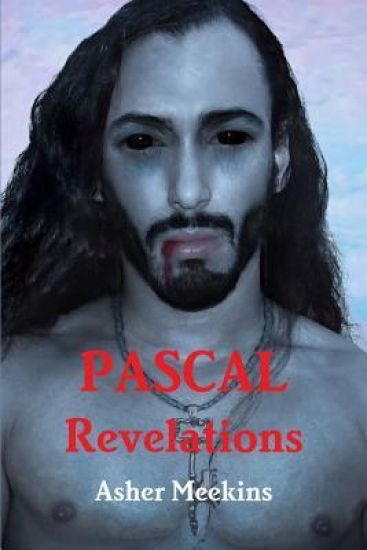
Pascal is back.Parisian life at the gothic mansion, hidden on the outskirts of Paris has calmed down, and the vampire army has returned to normal life. Queen Ammonite has managed to regain her reign as leader of this coven, is this the calm before the storm, as rumbling gossip and lies have started to emerge. Unrest begins to eat away at the covens foundations. Teardrops disappearance causes Ammonites concerns to explode into a war that will invade the haute couture Parisian streets.Pascal is to find the rogue vampire Teardrop at all costs, the hunt is on, but the hunter becomes the hunted, as underhanded tactics divide Ammonites power and the loyalty to her. Truths will be told, and again the war begins, bringing in new troops and new battlegrounds.A fast-paced sequel that will keep you on the edge of your seat, a story you won't want to put down. Pascal Revelations will take you on a wild ride of horror, laughter, tears and action.

Pascal Programming for Libraries
Charles H. Davis; Gerald Lundeen; Debora Shaw
Praeger Publishers Inc
1988
sidottu
Pascal Programming for Libraries is a practical introduction to computer programming designed specifically for library and information center applications. A graded text, this book provides detailed examples of straightforward programs, each fully illustrated and clearly explained. The examples begin with relatively simple computer code and progress to more complex examples using the highly acclaimed language TURBO Pascal, now widely used on personal computers. The applications illustrated deal with such operations as document retrieval, sorting, keyword indexing, selective dissemination of information, and rudimentary technical processes in libraries.

Published in 1950: The Penseés is a collection of philosophical fragments, notes and essays in which Pascal explores the contradictions of human nature in psychological, social, metaphysical and - above all - theological terms. Mankind emerges from Pascal's analysis as a wretched and desolate creature within an impersonal universe, but who can be transformed through faith in God's grace.

Published in 1950: The Penseés is a collection of philosophical fragments, notes and essays in which Pascal explores the contradictions of human nature in psychological, social, metaphysical and - above all - theological terms. Mankind emerges from Pascal's analysis as a wretched and desolate creature within an impersonal universe, but who can be transformed through faith in God's grace.

Pascal User Manual and Report
Kathleen Jensen; Niklaus Wirth
Springer-Verlag New York Inc.
1991
nidottu
puter system. In 1971 one computer system had a Pascal compiler. By 1974 the number had grown to 10 and in 1979 there were more than 80. Pascal is always available on those ubiquitous breeds of computer systems: personal computers andl professional workstations. Questions arising out of the Southampton Symposium on Pascal in 1977 [Reference 10] began the first organized effort to write an officially sanctioned, international Pascal Standard. Participants sought to consolidate the list of questions that naturally arose when people tried to implement Pascal compilers using definitions found in the Pascal User Manual and Report. That effort culminated in the ISO 7185 Pascal Standard [Reference 11] which officially defines Pascal and necessitated the revision of this book. We have chosen to modify the User Manual and the Report with respect to the Standard - not to make this book a substitute for the Standard. As a result this book retains much of its readability and elegance which, we believe, set it apart from the Standard. We updated the syntactic notation to Niklaus Wirth's EBNF and improved the style of programs in the User Manual. For the convenience of readers familiar with previous editions of this book, we have included Appendix E which summarizes the changes necessitated by the Standard.
This is both a first and a second level course in Pascal. It starts at an elementary level and works up to a point where problems of realistic complexity can be tackled. It is aimed at two audiences: on the one hand the computer professional who has a good knowledge of Cobol or Fortran but needs convincing that Pascal is worth learning, and on the other hand the amateur computer enthusiast who may have a smattering of Basic or may be an absolute beginner. Its approach is based on two principles that are not always widely recognized. The first is that computing is no longer a specialist subject. In the early days of computing a priesthood arose whose function was to minister to those awesome, and awesomely expensive, machines. Just as in the ancient world, when illiteracy was rife, the scribes formed a priestly caste with special status, so the programmers of yesteryear were regarded with reverence. But times are changing: mass computer literacy is on its way. We find already that when a computer enters a classroom it is not long before the pupils are explaining the finer points of its use to their teacher - for children seem to have greater programming aptitude than adults. This book, it is hoped, is part of that process of education by which the computer is brought down to earth; and therefore it attempts to divest computing of the mystique (and deliberate mystification) that still tends to surround the subject.
Pascal for Electronic Engineers
Chapman and Hall
1988
nidottu
In the last few years there has been a tremendous increase in the number of Pascal courses taught at various levels in schools and universities. Also with the advances made in electronics it is possible today for the majority of people to own or have access to a microcomputer which invariably runs BASIC and Pascal. A number of Pascal implementations exist and in the last two years a new Pascal specification has emerged. This specification has now been accepted as the British Standard BS6192 (1982). This standard also forms the technical content of the proposed International Standard IS07185. In addition to a separate knowledge of electronic engineering and programming a marriage of engineering and computer science is required. The present method of teaching Pascal in the first year of electronic engineering courses is wasteful. Little, if any, benefit is derived from a course that only teaches Pascal and its use with abstract examples. What is required is continued practice in the use of Pascal to solve meaningful problems in the student's chosen discipline. The purpose of this book is to make the use of standard Pascal (BS6192) as natural a tool in solving engineering problems as possible. In order to achieve this aim, only problems in or related to electrical and elec tronic engineering are considered in this book. The many worked examples are of various degrees of difficulty ranging from a simple example to bias a transistor to programs that analyse passive RLC networks or synthesise active circuits.


This 1993 book studies the ways in which Pascal posed and solved intellectual problems in three very different areas of his work: mathematics and mathematical physics, religious experience and theology, communication and controversy. Hugh Davidson shows how three of the classical 'liberal arts', rhetoric, dialectic and geometry, pervade Pascal's method as liberating and guiding influences in his search for truth. They appear throughout his production and are used and adapted with great skill both in his attacks on tradition in mathematics and physics and in his defences of tradition in the sphere of religion and morality. Professor Davidson throws light on both the diversity and the unity of Pascal's thought, and places it in the context of other seventeenth-century innovations in the use of traditional disciplines.
This 1993 book studies the ways in which Pascal posed and solved intellectual problems in three very different areas of his work: mathematics and mathematical physics, religious experience and theology, communication and controversy. Hugh Davidson shows how three of the classical 'liberal arts', rhetoric, dialectic and geometry, pervade Pascal's method as liberating and guiding influences in his search for truth. They appear throughout his production and are used and adapted with great skill both in his attacks on tradition in mathematics and physics and in his defences of tradition in the sphere of religion and morality. Professor Davidson throws light on both the diversity and the unity of Pascal's thought, and places it in the context of other seventeenth-century innovations in the use of traditional disciplines.

Pascal Paoli à Maria Cosway
Voltaire Foundation
2003
nidottu
Le fonds documentaire qui est à la source de cet ouvrage est conservé dans le Fondazione Maria Cosway à Lodi, en Italie. Il comprend essentiellement un corpus de cent vingt-trois lettres et billets datant de 1782 à 1803, qui constitue la correspondance active du chef corse Pascal Paoli (1725-1807) à Maria Cosway (1760-1838), l’épouse du célèbre peintre miniaturiste Richard Cosway. Chaque document, dont l’original est en italien, est retranscrit, traduit et annoté; l’édition comporte en outre une chronologie historique, une chronologie des lettres et un index.Cette correspondance éclaire sous un jour nouveau la biographie de Pascal Paoli au temps de son séjour en Angleterre, période qui constituait une lacune importante dans ce domaine. Elle précise la nature des liens entre le chef corse et la famille Bonaparte. Envers sa correspondante, l’auteur se révèle malicieux, spirituel, affectueusement ironique, moralisateur, ferme sur le décorum qu’il croit devoir maintenir, mais aussi traversé parfois par le doute, la tristesse et le découragement, voire l’angoisse métaphysique. Le portrait moral qui en ressort est celui d’un personnage amateur de littérature, de peinture et de musique, plus sensible, plus vivant, moins figé que l’image littéraire héroïsée et ‘monumentale’ du ‘champion de la liberté’ que James Boswell a laissé à la postérité dans son Account of Corsica and Memoirs of Pascal Paoli.On perçoit aussi la riche et attachante personnalité de la destinaire de ces lettres. Le seul fait que Maria Cosway ait eu le souci de conserver ces documents témoigne moins de sa vanité que de son intelligence. Un autre intérêt, et non des moindres, est la toile de fond, esquissée par les nombreuses allusions à la pléiade de célébrités du monde des lettres et des arts que Paoli côtoyait. Cette évocation illustre à quel point Londres était alors un ardent et brillant foyer de culture.