Kirjahaku
Etsi kirjoja tekijän nimen, kirjan nimen tai ISBN:n perusteella.
1000 tulosta hakusanalla Patrick E. Bryan

"We are all torn between tribal moralities, which stress differences and dangers, and imperial ethics, which attempt to overcome differences and defuse dangers. We are all tempted to breakor at least cheat onthe Social Contract." The provocative thesis of Tribe and Empire is that the nation is an unstable halfway house between the paranoid tribe, which sees all other tribes as actual or possible enemies, and the open-ended empire, which sees all people as potential subjects or citizens. Indeed, the modern nation is made up, on the one hand, of increasingly moralistic tribes from the Ku Klux Klan to the National Organization of Women that have rejected the Social Contract, and on the other, of imperial organizations from Amnesty International to Microsoft that seek to expand the Contract beyond the limits of the nation. In order to throw light upon these processes in the modern nation state, the book examines the political development of various North and South American Indian groups from the Social Contract perspective of the 17th century philosophers Thomas Hobbes, John Locke, and Jean-Jacques Rousseau.Author Biography: Patrick E. Kennon, a retired CIA analyst, is the author of The Twilight of Democracy (New York: Doubleday, 1995), Mr. Kennon lives in Falls Church, VA.

"We are all torn between tribal moralities, which stress differences and dangers, and imperial ethics, which attempt to overcome differences and defuse dangers. We are all tempted to breakor at least cheat onthe Social Contract." The provocative thesis of Tribe and Empire is that the nation is an unstable halfway house between the paranoid tribe, which sees all other tribes as actual or possible enemies, and the open-ended empire, which sees all people as potential subjects or citizens. Indeed, the modern nation is made up, on the one hand, of increasingly moralistic tribes from the Ku Klux Klan to the National Organization of Women that have rejected the Social Contract, and on the other, of imperial organizations from Amnesty International to Microsoft that seek to expand the Contract beyond the limits of the nation. In order to throw light upon these processes in the modern nation state, the book examines the political development of various North and South American Indian groups from the Social Contract perspective of the 17th century philosophers Thomas Hobbes, John Locke, and Jean-Jacques Rousseau.Author Biography: Patrick E. Kennon, a retired CIA analyst, is the author of The Twilight of Democracy (New York: Doubleday, 1995), Mr. Kennon lives in Falls Church, VA.


Central to Mercer University School of Law's mission is to help students envision their lives as lawyers and to inspire them to practice in the best traditions of the profession. Those purposes led to the creation of Mercer's ""Inside the Legal Profession"" series, a required part of the Mercer curriculum. These programs consist of hour-long interviews with distinguished members of the bench and bar, with the entire first-year class in attendance. More than one hundred lawyers and judges have participated in this program. With this book, Mercer School of Law seeks to expand the audience for these first-person stories of life in the law. We hope that aspiring lawyers, students at other schools, and practicing lawyers will all find lessons and inspiration in these pages. Presented here is a collection of eleven of the most memorable interviews in the series. In these pages, you will learn about what it is like to sit on the Supreme Court of Georgia and to preside as a trial judge on the federal and state courts. You will read about the challenges and rewards of representing indigent criminal defendants, Fortune 500 corporations, domestic violence victims, wrongfully-convicted inmates, and Guantanamo detainees. You will learn about prosecuting crimes and helping injured parties. Most importantly, you will discover in these pages the many paths to success and happiness in the law and that the undeniable challenges that come with life in the law can be met with success and joy.
The Late Bronze Age and Early Iron Ages of Centr – The Baq`ah Valley Project, 1977–1981
Patrick E. McGovern
University of Pennsylvania Museum
1987
sidottu
A critical transition period in the archaeology and history of Palestine-the Late Bronze Age and Early Iron Age-is described in detail from the perspective of a group of sites in the Baq'ah Valley. A major emphasis is on how scientific techniques, including magnetic location of undisturbed burial deposits and analytical reconstruction of very early industries, can be effectively integrated into an archaeological project. Contrary to traditional views, the evidence supports a relatively peaceful development within a single cultural tradition rather than the intrusion of a new people or segment of the existing population, by invasion, migration, or revolt.


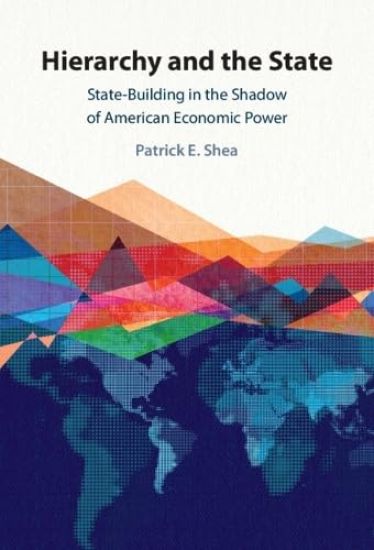
Does American influence help or hinder the capacity-building of partner states? In Hierarchy and the State, Patrick Shea challenges the conventional wisdom that US influence undermines state-building in developing countries, instead arguing that US support has actually enhanced state capacity over the past 40 years. The book asserts that American economic power plays a pivotal role in enhancing a state's ability to build and sustain itself. Tracing the evolution of US property rights promotion from 1782 to the present, it reveals the complex interplay of economic and security interests that shape American foreign policy. Through cutting-edge quantitative techniques and original data on US hierarchy, Hierarchy and the State provides robust evidence for the mechanisms linking international influence, property rights, and state-building outcomes. Its novel framework will change the way scholars examine the international politics of state-building.
Does American influence help or hinder the capacity-building of partner states? In Hierarchy and the State, Patrick Shea challenges the conventional wisdom that US influence undermines state-building in developing countries, instead arguing that US support has actually enhanced state capacity over the past 40 years. The book asserts that American economic power plays a pivotal role in enhancing a state's ability to build and sustain itself. Tracing the evolution of US property rights promotion from 1782 to the present, it reveals the complex interplay of economic and security interests that shape American foreign policy. Through cutting-edge quantitative techniques and original data on US hierarchy, Hierarchy and the State provides robust evidence for the mechanisms linking international influence, property rights, and state-building outcomes. Its novel framework will change the way scholars examine the international politics of state-building.

The History and Present Status of Golden Trout in Montana
Patrick E Marcuson
Hutson Street Press
2025
sidottu

The History and Present Status of Golden Trout in Montana
Patrick E Marcuson
Hutson Street Press
2025
pokkari
High Temperature Degradation of 5250-4 Polymer Resin
Patrick E Link
Hutson Street Press
2025
sidottu

The Eritrean and Ethiopian Conflict and the Impact on United States National Security Interests in the Horn of Africa
Patrick E Taylor
Hutson Street Press
2025
sidottu
The Eritrean and Ethiopian Conflict and the Impact on United States National Security Interests in the Horn of Africa
Patrick E Taylor
Hutson Street Press
2025
pokkari

Effects-Based Operations Versus Systemic Operational Design
Patrick E McGlade
Hutson Street Press
2025
pokkari
Airborne Platforms for Emergency Communications and Reconnaissance in Domestic Disaster Response
Patrick E Daniel
Hutson Street Press
2025
sidottu

Airborne Platforms for Emergency Communications and Reconnaissance in Domestic Disaster Response
Patrick E Daniel
Hutson Street Press
2025
pokkari