The Wisdom of Ben Sira (Ecclesiasticus) contains the sayings of Ben Sira, arguably the last of Israel's wise men and its first scribe, whose world was defined and dominated by Greek ideas and ideals. This Hellenistic worldview challenged the adequacy of the religion passed down to Palestinian Jews of the second century B.C.E. by their ancestors. Ben Sira's training in both Judaic and Hellenistic literary traditions prepared him to meet this challenge. He vigorously opposed any compromise of Jewish values; and his teaching bolstered the faith and confidence of his people.Through its elegant poetry and vehement exhortations, The Wisdom of Ben Sira exposes the ill effects of sinful behavior on one's health status, and spiritual and material well-being. Ben Sira's rigorous code of moral behavior was the measure of Jewish faithfulness in an era of ethical and religious bankruptcy.
Health workers who provide services to persons with severe mental illness are frequently under enormous stress; burnout is common. Alleviating such stress is the objective of Interactive Staff Training. The book provides rehabilitation and mental health professionals with a strategy to help them and their colleagues work as a well-integrated team. This strategy has been implemented in teams serving more than 10,000 persons with psychiatric disabilities. The text combines a careful description of the central theory behind the strategy with pleanty of clinical anecdotes that illustrate its practical, everyday benefits.
Human factors considerations are increasingly being incorporated into the product design process. Users are seen more as being important factors in the overall look and usability of products than just as passive users. We are now treated as cognitive and physical components of the person/product system. The author, who is one of the leading lights in the field of cognitive ergonomics, looks at approaches that assume that if a task can be accomplished with a reasonable degree of efficiency and within acceptable levels of comfort, then the product can be seen as fitting to the user. In this book it is argued that in practice these approaches can be dehumanizing. People are more than merely physical and cognitive processors. They have hopes, fears, dreams, values and aspirations, indeed these are the very things that make us human. Designing Pleasurable Products looks both at and beyond usability, considering how products can appeal to use holistically, leading to products that are a joy to own.
Challenging the Stigma of Mental Illness offers practical strategies for addressing the harmful effects of stigma attached to mental illness. It considers both major forms of stigma: public stigma, which is prejudice and discrimination endorsed by the general population; and self-stigma, the loss of self-esteem and efficacy that occurs when an individual internalizes prejudice and discrimination. Invaluable guide for professionals and volunteers working in any capacity to challenge discrimination against mental illnessContains practical worksheets and intervention guidelines to facilitate the implementation of specific anti-stigma approachesAuthors are highly experienced and respected experts in the field of mental illness stigma research
A true story about a young boy's life on a United States military base in Morocco in the late 1950's. The adventures are numerous, fact filled, funny and entertaining.
This work gives a broad introductory overview of the topic of usability. Firstly, usability is defined and a framework for identifying different aspects of usability is given. The main principles for creating usable designs are expounded, followed by practical advice as to how to design usable products. The book then tackles the issue of usability evaluation - a series of evaluation methods are described, followed by practical advice as to how to conduct the evaluation. The book draws on examples from software design and product design generally. This means whilst human-computer interaction HCI is a central issue in the book, other usability issues are also covered.
Human factors considerations are increasingly being incorporated into the product design process. Users are seen more as being important factors in the overall look and usability of products than just as passive users. We are now treated as cognitive and physical components of the person/product system. The author, who is one of the leading lights in the field of cognitive ergonomics, looks at approaches that assume that if a task can be accomplished with a reasonable degree of efficiency and within acceptable levels of comfort, then the product can be seen as fitting to the user. In this book it is argued that in practice these approaches can be dehumanizing. People are more than merely physical and cognitive processors. They have hopes, fears, dreams, values and aspirations, indeed these are the very things that make us human. Designing Pleasurable Products looks both at and beyond usability, considering how products can appeal to use holistically, leading to products that are a joy to own.
2014 Carol Award Winner for SpeculativeThe Fate of the Kingdom Awaits the Cast of StonesIn the backwater village of Callowford, roustabout Errol Stone is enlisted by a church messenger arriving with urgent missives for the hermit priest in the hills. Eager for coin, Errol agrees to what he thinks will be an easy task, but soon finds himself hunted by deadly assassins. Forced to flee with the priest and a small band of travelers, Errol soon learns he's joined a quest that could change the fate of his kingdom.Protected for millennia by the heirs of the first king, the kingdom's dynasty nears its end and the selection of the new king begins--but in secret and shadow. As danger mounts, Errol must leave behind the stains and griefs of the past, learn to fight, and discover who is hunting him and his companions and how far they will go to stop the reading of the stones."With an engaging, imaginative world that bristles with danger, characters that keep you guessing, and a story that sticks with you, A Cast of Stones will keep you devouring pages until the very end. I highly recommend it!" --John W. Otte, author of Failstate"Carr's debut, the first in a series, is assured and up-tempo, with much to enjoy in characterization and description--not least the homely, life-as-lived details." -Publishers WeeklyThis fast-paced fantasy debut set in a medieval world is a winner. Both main and secondary characters are fully drawn and endearing, and Errol's transformation from drunkard to hero is well plotted. Carr is a promising CF author to watch. Fans of epic Christian fantasies will enjoy discovering a new voice. "Like the preceding series title, Inescapable, this tale of suspense offers a colorful cast of characters, small-town drama, and a hint of romance. A sure bet for fans of Hannah Alexander." --Library Journal"[Good fantasy books] have to be excellent. Good storytelling and exceptional characters with circumstances that are easy enough to follow and wrap your brain around but keep you entertained and guessing... Cast of Stones has found itself firmly in that list of books. I absolutely, one hundred percent loved this book." --Radiant Lit
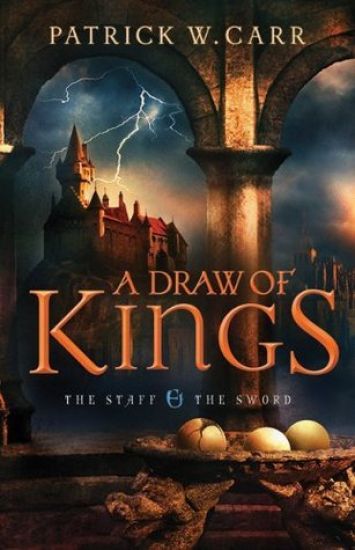
Riveting Sequel from Christian Fantasy's Most Talented New VoiceWhen Sarin Valon, the corrupt secondus of the conclave, flees Erinon and the kingdom, Errol Stone believes his troubles have at last ended. But other forces bent on the destruction of the kingdom remain and conspire to accuse Errol and his friends of a conspiracy to usurp the throne.In a bid to keep the three of them from the axe, Archbenefice Canon sends Martin and Luis to Errol's home village, Callowford, to discover what makes him so important to the kingdom. But Errol is also accused of consorting with spirits. Convicted, his punishment is a journey to the enemy kingdom of Merakh, where he must find Sarin Valon, and kill him. To enforce their sentence, Errol is placed under a compulsion, and he is driven to accomplish his task or die resisting.
Dark Forces Have Gathered and the Final Battle for Illustra Has BegunTheir journey to Merakh should have made Errol and his companions heroes of the realm. Instead, they've been branded enemies of the kingdom. In the wake of the king's death, Duke Weir is ruling the country--and he intends to marry Adora to bring an heir from the royal line. With Errol and the others imprisoned and the identity of the rightful heir to the throne still hidden in secrecy, Illustra is on the verge of civil war--and threatened by hostile forces gathering on every side.A dangerous mission to free Errol is attempted, but the dangers facing the kingdom mount with every passing moment. The barrier has fallen, ferrals are swarming toward the land, and their enemies draw ever closer. Will the discovery of the true heir turn back the tide of Illustra's destruction?Praise for The Staff and the Sword series"This fast-paced fantasy debut set in a medieval world is a winner. Both main and secondary characters are fully drawn and endearing...Fans of epic Christian fantasies will enjoy discovering a new voice."Library Journal (starred review) on A Cast of Stones "The adrenaline level remains high..." Publishers Weekly on The Hero's Lot"The Hero's Lot is a spellbinding, edge-of-your-seat thrill ride that will leave you breathless and reeling from the truly masterful and immensely pleasurable writing of Patrick W. Carr."Radiant Lit
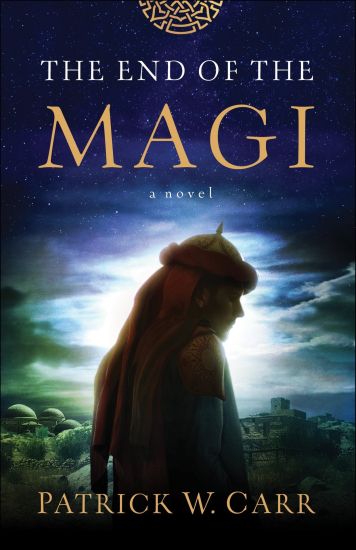
Following his vision of the coming Messiah, the prophet Daniel creates a select group of men who will count down the calendar to the arrival of Israel's promised king. Centuries later, as the day nears, Myrad, a young magi acolyte, flees for his life when his adoptive father and others are put to death by a ruthless Parthian queen. Having grabbed only a few possessions, Myrad escapes the city, and searching for a way to hide from the soldiers scouring the trade routes, he tries to join the caravan of the merchant Walagash. The merchant senses that Myrad is hiding secrets, but when the young man proves himself a valuable traveler, an epic journey filled with peril, close escapes, and dangerous battles begins. With every day that passes, the calendar creeps closer to the coming Messiah. And over everything shines the dream of a star that Myrad can't forget and the promise that the world will never be the same.
Moe is a huge cultural phenomenon and one of the driving forces behind the enormous success of Japanese anime and manga--not just in Japan but now throughout the world.In Japan, avid fans of manga comics, anime films and video games use the term Moe to refer to the strong sense of emotional attachment they feel for their favorite characters. These fans have a powerful desire to protect and nurture the youthful, beautiful and innocent characters they adore--like Sagisawa Moe in Dinosaur Planet and Tomoe Hotaru in Sailor Moon. They create their own websites, characters, stories, discussion groups, toys and games based on the original manga and anime roles. Author Patrick Galbraith is the world's acknowledged expert on Moe and a journalist based in Tokyo. For this book, he interviewed twenty important figures in the world of Japanese manga and anime to gain their insights on the Moe phenomenon. These interviews provide us with the first in-depth survey of this subject. Galbraith uncovers how Moe is influencing an entire generation of manga artists and readers. For those new to anime, manga, and youth culture in Japan, he discusses what constitutes the ideal Moe relationship and why some fans are even determined to marry their fictional sweethearts. He reveals key moments in the development of Moe, and current and future trends in the spread of Moe works and characters from Japan to other parts of the world.The Moe Manifesto provides an insider's look at the earliest Moe characters such as Ayame by Tezuka Osamu. The book has over 100 illustrations of the most famous Moe characters, many in color, and it is sure to delight manga and anime fans of every age.
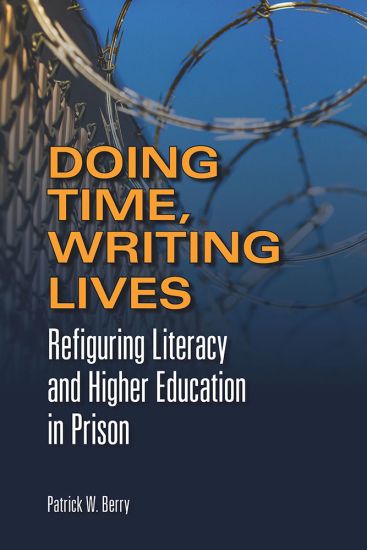
Doing Time, Writing Lives offers a much-needed analysis of the teaching of college writing in U.S. prisons, a racialized space that – despite housing more than 2.2 million people –remains nearly invisible to the general public. Through the examination of a college-in-prison program that promotes the belief that higher education in prison can reduce recidivism and improve life prospects for the incarcerated and their families, author Patrick W. Berry exposes not only incarcerated students’ hopes and dreams for their futures but also their anxieties about whether education will help them.Beginning by exploring the need to move beyond narratives of hope when discussing literacy initiatives within prisons, Berry then illustrates how teachers and students frequently hold on to different beliefs about literacy and its power in the world. After discussing the possibilities and limitations of professional writing courses in prisons, the author argues that we need to pay greater attention to teachers and their motivations in prison education initiatives. Finally, he offers a case study of one formerly imprisoned student who uses writing in his current life and how this does (and does not) connect with what he learned in his prison education program.Combining case studies and interviews with the author’s own personal experiences teaching writing in prison, Doing Time, Writing Lives chronicles how incarcerated students attempt to write themselves back into a society that has erased their lived histories. It challenges polarizing rhetoric often used to describe what literacy can and cannot deliver, suggesting more nuanced and ethical ways of understanding literacy and possibility in an age of mass incarceration.
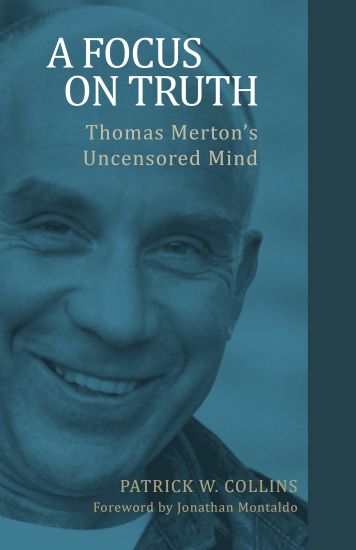
The published writings of the Trappist monk Thomas Merton were always censored from two sources during his lifetime. First, by Merton himself, as he certainly didn’t write everything down or share all of what he included in his drafts. He selected carefully what he considered appropriate for publication. Second, Thomas Merton was extensively censored by his religious superiors. They regularly judged that things Merton chose to write should not be made available in print. This was not infrequently a source of great frustration to Merton.In this book, Fr. Patrick W. Collins presents an uncensored view of the life and thoughts of Thomas Merton by plumbing his correspondence with family, friends, and colleagues over the years. Merton’s personal and professional correspondence was previously published by Farrar, Straus, and Giroux. In this volume, Collins extracts and organizes from these sources many of the significant subjects about which Merton wrote and presents each topic chronologically. In this way, readers can easily follow the development of Merton's thoughts, feelings, intuitions, and impressions over the years on a variety of topics of concern to him.
Originally published in 1979 by the Southern Illinois University Press, this volume is a narrative and interpretive account of the struggle between President Andrew Johnson and Congress over the nature of the Constitution and the Union, the meaning of Black freedom, and reconstruction policy during a crucial time in the early post-Civil War era. Written for both the specialist and the general reader in Reconstruction history, Riddleberger's clear narrative of national politics in 1866 and his synthesis and criticism of Beale's work and the works of such revisionist historians as Eric McKitrick, Lawanda and John Cox, W.R. Brock, and Stanley Coben make this book a solid contribution to the current reappraisal of the presidency of Andrew Johnson and the events of that critical year.
Now that the church in the West lives within a post-Christendom context, how should preaching look different? What homiletical assumptions arose within Christendom but are no longer relevant for a missionary church? InThe Mission of Preaching, Patrick W. T. Johnson develops the first missional homiletic, a model for preaching determined by the missionary encounter between the gospel and Western culture. Mobilizing the latest resources in homiletical theory and missional theology, he argues that preaching is a major form of the church's witness to Jesus Christ, equipping the congregation for its witness to the world."
A study of the manuscripts, relics and historical traditions of Anglo-Saxon Exeter before Leofric moved the see of Devon and Cornwall there in 1050. In his search for an historical context for the famous Exeter Book of Old English poetry, Dr Conner's examination of the archaeological and textual records of Exeter have led him to significant new conclusions about the city's tenth century monastic culture. He posits the existence of a large library dating from the time of King Æthelstan, an active scriptorium from at least the mid-century period, and suggests that five other important manuscripts may have originated at Exeter c.950-c.990.A codicological examination of the Exeter Book draws fresh conclusions about its composition and its literary context. Anglo-Saxon Exeterconcludes with six appendices in which many documents important to the early history of the city are edited, including its relic-lists, the records for moving the see from Crediton to Exeter, Leofric's Inventory, a series of legal records which survive on a single leaf of an8th-century lectionary, and a study of the history of the Exeter Book from 1050 to the present. PATRICK CONNER is Professor in the department of English at West Virginia University.
What great adventure will we go on today?Wyatt had heard of Fairies before but not Gremmies. His mommy used to read him books that had fairies in them, but he never thought fairies were real, until one day when he saw his first Gremmie.Were these the little guys responsible for all the things breaking in the house? Where did they come from? Where do they live?Wyatt was ready to find the answers to these questions, and he was about to begin one of many great adventures.
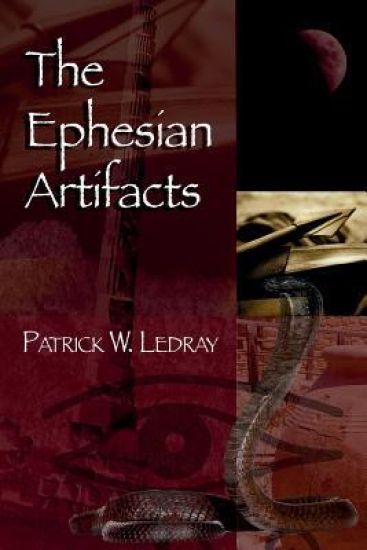
"The Ephesian Artifacts" is a blend of history, action and adventure featuring the death of Cleopatra, the fall of Saigon, and the search for artifacts hidden beneath the sands of the ancient city of Ephesus, Turkey. The race for the priceless artifacts pits the Black Pope ( head of the Jesuits) against modern-day Amazons and artifact seekers from Austria and the United States. The bones of the Virgin Mary, the Artemis star, and the writings of Jesus are believed to have been hidden centuries ago in Ephesus, which is visited by over a million tourists each year. Praise for The Ephesian Artifacts: "...It kept me enthralled...particularly the Knights Templar and the various machinations of the Roman Catholic Church in relation to its inception and early history....smooth, a nice balance of detail and rumination....The narrative carried me, the story was complex and provided a wonderful jigsaw puzzle on an imaginary table I found hard to leave....I would love to congratulate the writer for a work that has been so carefully conceived and structured and created." Dan Odegard, writer, agent, editor, consultant, bookseller and publisher.
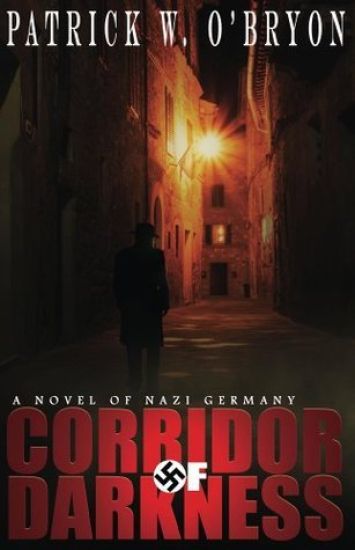
1930's Berlin is unrestrained, decadent, and torn by political and social strife. Young American reporter Ryan Lemmon intends to savor every thrilling moment and loses himself in the dark underbelly of the German capital. Then a violent death brings him face-to-face with the growing Nazi menace. As Hitler's stranglehold further grips the nation, Ryan helps an ex-lover steal intelligence which may save innumerable lives, but only should it reach the right hands in Washington. First they must escape a nightmarish pursuit by a sadistic foe and his all-powerful Gestapo. Inspired by the contemporary journals of the author's late father, Corridor of Darkness evokes the cruel heart of pre-World War II Germany, where any missed beat could be the protagonists' last."The novel is rife with historical intrigue and captures the flavor of mid-century Europe...a keen eye for detail... An intriguing early WWII spy yarn set in a well-researched, authentic Germany." -Kirkus ReviewsCorridor of Darkness has received the AIA Gold Seal of Excellence, the B.R.A.G. Medaillion, and a bronze medal in the international 2014 Independent Publisher Book Awards.