Kirjojen hintavertailu. Mukana 11 244 527 kirjaa ja 12 kauppaa.

Kirjahaku

Etsi kirjoja tekijän nimen, kirjan nimen tai ISBN:n perusteella.

1000 tulosta hakusanalla Patrik Sampler

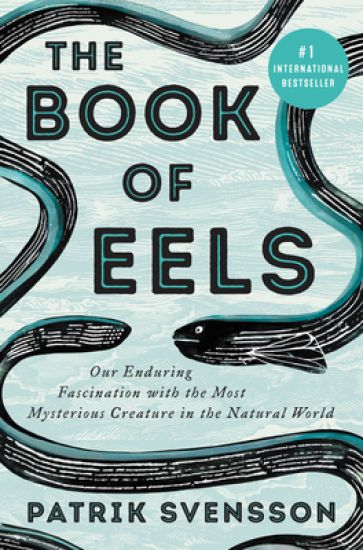
The Book of Eels: Our Enduring Fascination with the Most Mysterious Creature in the Natural World
Part H Is for Hawk, part The Soul of an Octopus, The Book of Eels is both a meditation on the world's most elusive fish--the eel--and a reflection on the human conditionRemarkably little is known about the European eel, Anguilla anguilla. So little, in fact, that scientists and philosophers have, for centuries, been obsessed with what has become known as the "eel question" Where do eels come from? What are they? Are they fish or some other kind of creature altogether? Even today, in an age of advanced science, no one has ever seen eels mating or giving birth, and we still don't understand what drives them, after living for decades in freshwater, to swim great distances back to the ocean at the end of their lives. They remain a mystery.Drawing on a breadth of research about eels in literature, history, and modern marine biology, as well as his own experience fishing for eels with his father, Patrik Svensson crafts a mesmerizing portrait of an unusual, utterly misunderstood, and completely captivating animal. In The Book of Eels, we meet renowned historical thinkers, from Aristotle to Sigmund Freud to Rachel Carson, for whom the eel was a singular obsession. And we meet the scientists who spearheaded the search for the eel's point of origin, including Danish marine biologist Johannes Schmidt, who led research efforts in the early twentieth century, catching thousands upon thousands of eels, in the hopes of proving their birthing grounds in the Sargasso Sea.Blending memoir and nature writing at its best, Svensson's journey to understand the eel becomes an exploration of the human condition that delves into overarching issues about our roots and destiny, both as humans and as animals, and, ultimately, how to handle the biggest question of all: death. The result is a gripping and slippery narrative that will surprise and enchant.A Finalist for the Los Angeles Times Book PrizeNational BestsellerWinner of the National Outdoor Book AwardLonglisted for the Andrew Carnegie Medal for Excellence in NonfictionA New York Times Notable BookOne of TIME's 100 Must Read Books of the YearOne of The Washington Post's 50 Notable Nonfiction Books of the YearOne of Smithsonian Magazine's 10 Best Science Books of the Year One of Publishers Weekly's Best Nonfiction Books of the YearA New York Times Editor's Choice
The Book of Eels

The Book of Eels

Patrik Svensson

Ecco Press
2021
nidottu
Part H Is for Hawk, part The Soul of an Octopus, The Book of Eels is both a meditation on the world's most elusive fish--the eel--and a reflection on the human conditionRemarkably little is known about the European eel, Anguilla anguilla. So little, in fact, that scientists and philosophers have, for centuries, been obsessed with what has become known as the "eel question" Where do eels come from? What are they? Are they fish or some other kind of creature altogether? Even today, in an age of advanced science, no one has ever seen eels mating or giving birth, and we still don't understand what drives them, after living for decades in freshwater, to swim great distances back to the ocean at the end of their lives. They remain a mystery.Drawing on a breadth of research about eels in literature, history, and modern marine biology, as well as his own experience fishing for eels with his father, Patrik Svensson crafts a mesmerizing portrait of an unusual, utterly misunderstood, and completely captivating animal. In The Book of Eels, we meet renowned historical thinkers, from Aristotle to Sigmund Freud to Rachel Carson, for whom the eel was a singular obsession. And we meet the scientists who spearheaded the search for the eel's point of origin, including Danish marine biologist Johannes Schmidt, who led research efforts in the early twentieth century, catching thousands upon thousands of eels, in the hopes of proving their birthing grounds in the Sargasso Sea.Blending memoir and nature writing at its best, Svensson's journey to understand the eel becomes an exploration of the human condition that delves into overarching issues about our roots and destiny, both as humans and as animals, and, ultimately, how to handle the biggest question of all: death. The result is a gripping and slippery narrative that will surprise and enchant.
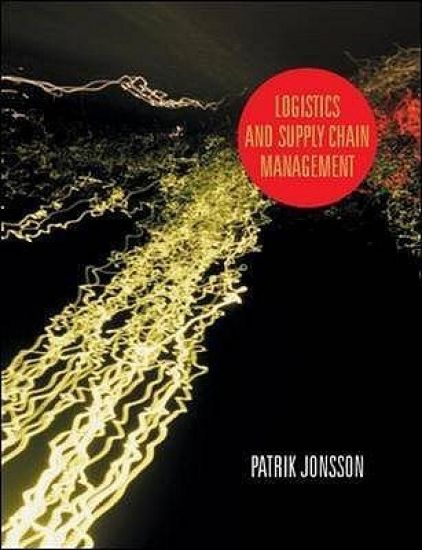
Logistics and Supply Chain Management

Logistics and Supply Chain Management

Patrik Jonsson

McGraw Hill Higher Education
2008
nidottu
Logistics and Supply Chain Management is a comprehensive new text that explains the fundamentals of the subject to help students understand the game rules, goals and objectives when designing, planning and controlling efficient and effective logistics systems in supply chains. It also includes coverage of information technology, the impact of manufacturing and product structures on logistics and supply chain systems, and the environment.Designed specifically with the student in mind, this book is the perfect companion for introductory courses in logistics and supply chain management. Key Features:The book contains many mini cases to illustrate current practice.Discussion tasks have been included to help facilitate effective learning and provide reinforcement. A comprehensive glossary has been included at the end of the book. Key terms are defined at the end of each chapter. Where appropriate, quantitative examples and exercises have been included to help students understand planning and control concepts and analysis tools. Full solutions are provided in the appendix.
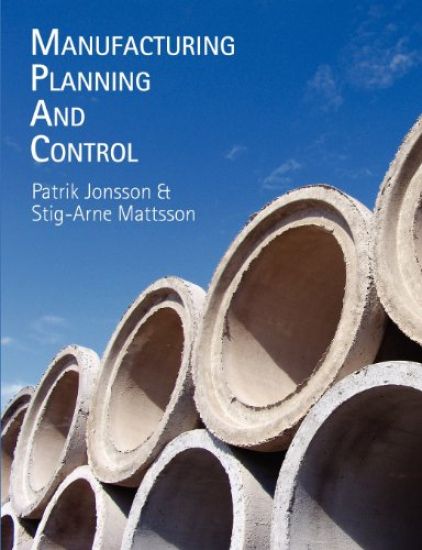
Manufacturing Planning and Control

Manufacturing Planning and Control

Patrik Jonsson; Stig-Arne Mattsson

McGraw Hill Higher Education
2009
nidottu
Manufacturing Planning and Control by Patrik Jonsson and Stig-Arne MattssonThis new book takes a comprehensive look at manufacturing planning and control from the manufacturing company’s perspective but the focus is both on the intra-organisational system and on the supply chain as a whole.With its unique focus on understanding the characteristics of planning processes, methods and techniques and how to design and use processes, methods and techniques in various planning environments, this book has an important relevance from an applied industry point of view. It provides you with knowledge and guidelines on how to develop the planning environment, and how to design and use planning processes and methods efficiently and effectively in operational practice. This book is an important learning tool for undergraduates and postgraduates and will help them develop an understand of manufacturing planning and control that goes beyond statistics and calculation, and provides knowledge and frameworks for designing planning processes in different industrial environments. This book supports all modules on APICS's CPIM certification program.Key Features: Problems, Exercises ExamplesMany of the chapters feature problems and exercises to help explain concepts. Examples of how methods and concepts are used in practice are integrated throughout the text. Discussion Tasks This feature encourages you to review and apply the knowledge you have acquired from each chapter. Cases and Discussion Questions End of chapter cases illustrate current practice and key concepts defined and described in the book. Each case is followed by a set of questions to help you critically apply your understanding and further develop some of the topics introduced to you. Patrik Jonsson is Professor of operations and supply chain management at Chalmers University of Technology, Sweden.Stig-Arne Mattsson has 30 years of industry experience in operations management, supply chain management and information systems. He has also been Adjunct Professor in supply chain management, first at Växjö University and later at Lund University.
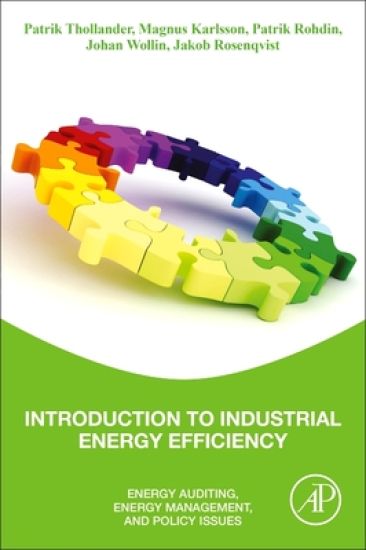
Introduction to Industrial Energy Efficiency

Introduction to Industrial Energy Efficiency

Patrik Thollander; Magnus Karlsson; Patrik Rohdin; Johan Wollin; Jakob Rosenqvist

Academic Press Inc
2020
nidottu
Introduction to Industrial Energy Efficiency: Energy Auditing, Energy Management, and Policy Issues offers a systemic overview of all key-aspects involved in improving industrial energy efficiency in various industry sectors. It is organized in three parts, each dealing with a particular perspective needed to form a complete view of related issues. Sections focus on energy auditing and improved energy efficiency of companies from a predominantly technical perspective, shed light on energy management and factors that hinder or drive the adoption of energy efficiency practices in the manufacturing industry, and explore energy efficiency policy instruments and how they are designed, implemented and evaluated. Practicing engineers in the field of energy efficiency, engineering and energy researchers coming into the field, and graduate students will find this book to be an invaluable reference on the fundamental knowledge they need to get started in this area.
Uncertainty

Uncertainty

Patrik Aspers

OXFORD UNIVERSITY PRESS INC
2024
sidottu
This is an open access title available under the terms of a CC BY-NC-ND 4.0 International licence. It is free to read on the Oxford Academic platform and offered as a free PDF download from OUP and selected open access locations. In Uncertainty, Patrik Aspers provides detailed analysis of publicly available means of uncertainty reduction. Drawing on phenomenology, social constructionism, and the sociology of knowledge, Aspers considers the meaningful differences between uncertainty and risk, the different ways people cope and have coped with uncertainty through history, the importance of knowledge and science to reducing uncertainty, and the trade-offs involved in reducing forms of uncertainty while leaving open opportunities for others. People may have access to unique and private knowledge that reduces their uncertainty when making decisions. Publicly available knowledge is central for building a society that enables communication based on shared ideas and understanding, instead of falling into bubbles, echo chambers, and private truths. Examples include institutions, laws, standards, evaluation, competition, and ranking. The book addresses how these reduce uncertainty and how these ways are created. Examining what people can and in fact do to reduce uncertainty, Aspers addresses the existential dimension of uncertainty, the collective efforts and socially produced outcomes that lead to reduced uncertainty, and the social order that results.
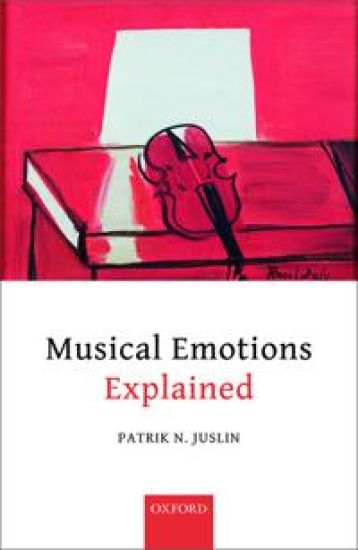
Musical Emotions Explained

Musical Emotions Explained

Patrik N. Juslin

Oxford University Press
2019
sidottu
Can music really arouse emotions? If so, what emotions, and how? Why do listeners respond with different emotions to the same piece of music? Are emotions to music different from other emotions? Why do we respond to fictional events in art as if they were real, even though we know they're not? What is it that makes a performance of music emotionally expressive? Based on ground-breaking research, Musical Emotions Explained explores how music expresses and arouses emotions, and how it becomes an object of aesthetic judgments. Within the book, Juslin demonstrates how psychological mechanisms from our ancient past engage with meanings in music at multiple levels of the brain to evoke a broad variety of affective states - from startle responses to profound aesthetic emotions. He also explores why these mechanisms respond to music. Written by one of the leading researchers in the field, the book is richly illustrated with music examples from everyday life, and explains with clarity and rigour the manifold ways in which music may engage our emotions. Advance praise Musical Emotions Explained is a magnificent publication that has been painstakingly researched to illuminate the many, varied ways music can express and arouse emotions. It provides the most authoritative single authored text on the topic so far. As a highly readable and informative publication, it superbly unlocks the secrets of musical affect for experienced researchers through to lay readers alike. Gary E. McPherson, Ormond Chair of Music and Director, Melbourne Conservatorium of Music, Australia Anyone who wants to understand more about the most essential quality of music - its ability to move us - needs to read this book. Juslin's writing is gripping and thoughtful as he takes us on a journey through the latest research on this most interesting intersection between science and art. Daniel J. Levitin, Author of This Is Your Brain on Music and The World in Six Songs. Music Emotions Explained is a tour de force. In this extraordinary book, written with passion and humor, Patrik Juslin shares insights gleaned from decades of ground-breaking research. Breadth and depth are nicely balanced as grand, over-arching themes are richly supported by systematic and detailed research findings. This book will serve as an inviting introduction to students or interested laypersons but also as a touchstone to which professionals will return frequently for guidance and inspiration. Donald A. Hodges, Professor Emeritus, University of North Carolina at Greensboro, USA Patrik Juslin here deftly synthesizes several decades of psychological research, much of it his own, on how music both expresses emotion and moves us emotionally, in the course of developing an empirically grounded, evolutionarily based, philosophically informed theory of the phenomenon in question, doing so with style and wit. Musical Emotion Explained is wide ranging, engagingly written, full of arresting claims, and studded with telling anecdotes. It is a book that everyone who has ever marveled at the affective power of music should read. Jerrold Levinson, Distinguished University Professor, Department of Philosophy, University of Maryland, USA Musical Emotions Explained is essential reading that sets the new gold standard resource for understanding the delicious pleasures of music experience. Using lucid, witty and compelling arguments, Patrik Juslin illustrates a set of core mechanisms that collectively account for music-evoked emotions. Scholars, general readers and musicians will be inspired by this landmark work, which will stimulate research for decades to come. Bill Thompson, Distinguished Professor, Macquarie University, Sydney, Australia It goes without saying that Patrik Juslin is one of the world's top experts on the science of musical emotion. What this book reveals is that he is a hugely persuasive and accessible interlocutor. It really feels as though one is in conversation with a friend who is thinking issues and arguments through with the reader, step by step. Of course all the important literature is covered, but this is far from a dry literature review. Juslin's book should excite and stimulate layreaders and professional colleagues alike to deepen their understanding of what makes music emotional. John Sloboda, Research Professor, Guildhall School of Music & Drama, London, UK The best comprehensive and critically explanatory tome to-date on one of the most fascinating and still poorly understood topics in music research, written by the foremost international expert on music and emotion. A treasure for decades to come. Michael Thaut, Professor of Music, Neuroscience and Rehabilitation Science, University of Toronto, Canada In Musical Emotions Explained, Patrik Juslin probes and proffers many psychological and philosophical concepts of musical emotions toward unpacking numerous mysteries surrounding the arousal and expression of musical affect. The results of his meticulous research have profound implications for experiencing, creating, valuing, and teaching music. Written with great care and passion, this brilliant book is a must-read for anyone who takes a serious interest in the nature and values of music in people's lives. David Elliott, Professor of Music and Music Education, New York University, USA Patrik Juslin has been at the forefront of research into music and emotion for more than 20 years. Adding to what is already an astonishing body of work, this hugely impressive monograph is the culmination of that remarkable programme of research. Witten in an accessible and engaging style, and covering a huge range of perspectives, this is a book that will undoubtedly become a classic in the psychology of music, an indispensable resource for researchers in the field, and a fascinating read for those who may be new to the topic. Eric Clarke FBA, Heather Professor of Music, University of Oxford, UK
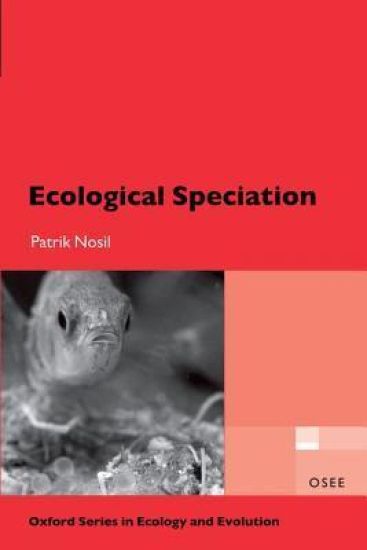
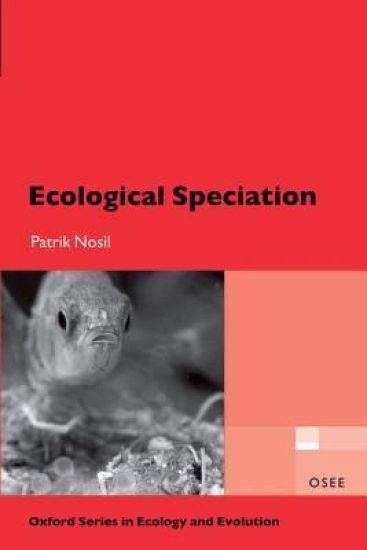
Ecological Speciation

Ecological Speciation

Patrik Nosil

Oxford University Press
2012
sidottu
The origin of biological diversity, via the formation of new species, can be inextricably linked to adaptation to the ecological environment. Specifically, ecological processes are central to the formation of new species when barriers to gene flow (reproductive isolation) evolve between populations as a result of ecologically-based divergent natural selection. This process of 'ecological speciation' has seen a large body of particularly focused research in the last 10-15 years, and a review and synthesis of the theoretical and empirical literature is now timely. The book begins by clarifying what ecological speciation is, its alternatives, and the predictions that can be used to test for it. It then reviews the three components of ecological speciation and discusses the geography and genomic basis of the process. A final chapter highlights future research directions, describing the approaches and experiments which might be used to conduct that future work. The ecological and genetic literature is integrated throughout the text with the goal of shedding new insight into the speciation process, particularly when the empirical data is then further integrated with theory.
Ecological Speciation

Ecological Speciation

Patrik Nosil

Oxford University Press
2012
nidottu
The origin of biological diversity, via the formation of new species, can be inextricably linked to adaptation to the ecological environment. Specifically, ecological processes are central to the formation of new species when barriers to gene flow (reproductive isolation) evolve between populations as a result of ecologically-based divergent natural selection. This process of 'ecological speciation' has seen a large body of particularly focused research in the last 10-15 years, and a review and synthesis of the theoretical and empirical literature is now timely. The book begins by clarifying what ecological speciation is, its alternatives, and the predictions that can be used to test for it. It then reviews the three components of ecological speciation and discusses the geography and genomic basis of the process. A final chapter highlights future research directions, describing the approaches and experiments which might be used to conduct that future work. The ecological and genetic literature is integrated throughout the text with the goal of shedding new insight into the speciation process, particularly when the empirical data is then further integrated with theory.
The Asceticism of Isaac of Nineveh

The Asceticism of Isaac of Nineveh

Patrik Hagman

Oxford University Press
2010
sidottu
The ascetic tracts of 7th century writer Isaac of Nineveh (Isaac the Syrian) provide a wealth of material to better understand early Christian asceticism. By focusing on the role of the body in various ascetic techniques, such as fasting, vigils and prayer, as well as on the way the ascetic relates to the society a picture of asceticism as political activity emerges. For Isaac, the ascetic was to function as something like an icon, an image that showed the world the reality of God's Kingdom already in this life, by clearly indicating the difference between God's ways and men's. Patrik Hagman reviews the scholarly discussion on asceticism of the last three decades, and then proceeds to analyse the texts of Isaac to reveal an emphasis on asceticism as a practice that is at the same time performative, transformative and bodily. This contrasts with the long-established conception of asceticism as based on a negative view of the body. Isaac displays a profound understanding of the way body and soul are related, demonstrating how the body can be used to transform the personality of the ascetic, and to communicate the change to the world, without the use of words. The writings of Isaac offer a rare example of an extensive discussion of asceticism by a person who lived a radical ascetic life himself. Hagman's new study brings Isaac's fresh perspective to bear on an important, yet often overlooked, aspect of the Christian tradition.
Ethics in Biodiversity Conservation

Ethics in Biodiversity Conservation

Patrik Baard

TAYLOR FRANCIS LTD
2021
sidottu
This book examines the role of ethics and philosophy in biodiversity conservation. The objective of this book is two-fold: on the one hand it offers a detailed and systematic account of central normative concepts often used, but rarely explicated nor justified, within conservation biology. Such concepts include ‘values’ (both intrinsic, instrumental, and, more recently, relational), ‘rights’, and ‘duties’. The second objective is to emphasize to environmental philosophers and applied ethicists the many interesting decision-making challenges of biodiversity conservation. The book argues that a nuanced account of instrumental values provides a powerful tool for reasoning about the values of biodiversity. It also scrutinizes relational values, the concept of rights of nature, and risk, and show how moral philosophy proves indispensable for these concepts. Consequently, it engages with recent suggestions on normative aspects of biodiversity conservation, and show the need for moral philosophy in biodiversity conservation. The overriding aim of this book is to provide conservation biologists and policy-makers with a systematic overview of concepts and assessments of the reasons for reaching prescriptive conclusions about biodiversity conservation. This will prove instrumental in clarifying the role of applied ethics and a refined understanding of the tools it can provide. This title will be of interest to students and scholars of conservation biology, conservation policy, environmental ethics and environmental philosophy.
Ethics in Biodiversity Conservation

Ethics in Biodiversity Conservation

Patrik Baard

TAYLOR FRANCIS LTD
2023
nidottu
This book examines the role of ethics and philosophy in biodiversity conservation. The objective of this book is two-fold: on the one hand it offers a detailed and systematic account of central normative concepts often used, but rarely explicated nor justified, within conservation biology. Such concepts include ‘values’ (both intrinsic, instrumental, and, more recently, relational), ‘rights’, and ‘duties’. The second objective is to emphasize to environmental philosophers and applied ethicists the many interesting decision-making challenges of biodiversity conservation. The book argues that a nuanced account of instrumental values provides a powerful tool for reasoning about the values of biodiversity. It also scrutinizes relational values, the concept of rights of nature, and risk, and show how moral philosophy proves indispensable for these concepts. Consequently, it engages with recent suggestions on normative aspects of biodiversity conservation, and show the need for moral philosophy in biodiversity conservation. The overriding aim of this book is to provide conservation biologists and policy-makers with a systematic overview of concepts and assessments of the reasons for reaching prescriptive conclusions about biodiversity conservation. This will prove instrumental in clarifying the role of applied ethics and a refined understanding of the tools it can provide. This title will be of interest to students and scholars of conservation biology, conservation policy, environmental ethics and environmental philosophy.
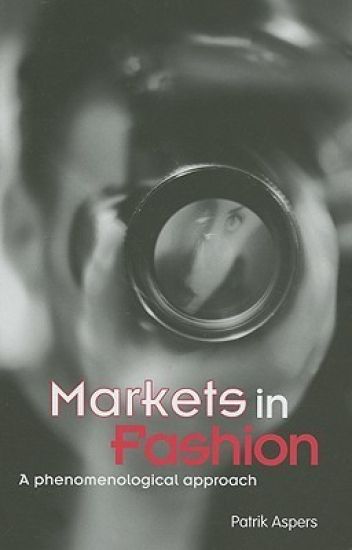
Markets in Fashion

Markets in Fashion

Patrik Aspers

Routledge
2005
sidottu
Interest in contemporary cultural industries has grown in the past decade, as they take on a greater significance in our increasingly consumer-led society. Focusing on the world of fashion photography, this book presents an interdisciplinary approach in which this and other aesthetic markets, such as advertising, modelling, art, music and more, can be viewed.The main thrust of this groundbreaking book, is in developing a theory for these cultural markets, characterized by insecurity, and where status and aesthetic diversity generate order and price differentiation. In these industries, services and products are offered that are a mix of the aesthetic and the economic, and for fashion photographers such as those studied here, it is necessary to carefully position themselves in the market by developing unique photographic styles and separating themselves from competitors. Yet the markets in which these industries operate differ from the type of exchange markets depicted by neoclassical economists, and therefore cannot be considered using such modes of analysis. Instead Aspers conducts his study using empirical phenomenology, an original approach presented here for the first time, which can be easily used in other empirical studies. He draws on original empirical material; participant observation and interviews generated in New York and Stockholm; which bring a depth of analysis and a relevance to this book which academics, researchers and those with a vested interest in such industries will value. Written by one of the world's brightest young economic sociologists, this fascinating book (previously published in Sweden and enthusiastically received) is endorsed by recognized industry authorities. A noteworthy book, it provides a foothold in the burgeoning sub discipline of economic sociology, and a significant analysis of the economics of the fashion photography industry.
Pension Politics

Pension Politics

Patrik Marier

Routledge
2008
sidottu
Population ageing and slower economic growth have raised serious questions about the willingness and ability of governments to maintain current social policies. Within this new reality, discussions on the future of public pensions have been predominant in political debates across Europe. This book explains why certain countries have been able to radically transform their pension system while others have simply altered parameters. To answer this question an extensive comparative analysis, including more than 60 interviews, was conducted in Belgium, France, Sweden and the UK. This empirical data provides an interesting contrast between reforms. Parametric reforms have stemmed from the creation of pension administrations outside the traditional state apparatus in France and Belgium and the resulting inclusion of social partners; while the state administrations of Sweden and the UK where debates have been internalised have led to programmatic reforms. Two controversial findings of this book include an explanation for the lack of influence on the part of the labour movement in the 1994/98 Swedish reform and a rejection of arguments claiming that policy change will be minimal with coalition governments. Finally the conclusion seeks to extend the applicability of the model to other industrialized countries.This book will be of interest to students and scholars of public policy, specifically social policy, political economy, the welfare state and comparative politics.
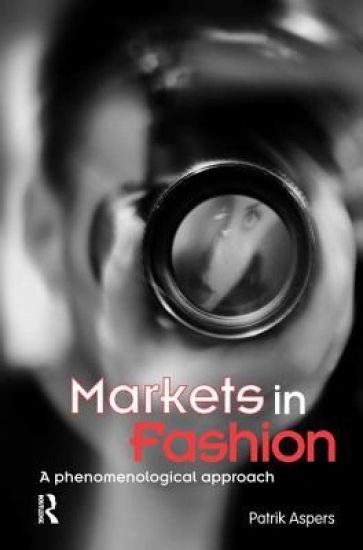
Markets in Fashion

Markets in Fashion

Patrik Aspers

Routledge
2011
nidottu
Interest in contemporary cultural industries has grown in the past decade, as they take on a greater significance in our increasingly consumer-led society. Focusing on the world of fashion photography, this book presents an interdisciplinary approach in which this and other aesthetic markets, such as advertising, modelling, art, music and more, can be viewed.The main thrust of this groundbreaking book, is in developing a theory for these cultural markets, characterized by insecurity, and where status and aesthetic diversity generate order and price differentiation. In these industries, services and products are offered that are a mix of the aesthetic and the economic, and for fashion photographers such as those studied here, it is necessary to carefully position themselves in the market by developing unique photographic styles and separating themselves from competitors. Yet the markets in which these industries operate differ from the type of exchange markets depicted by neoclassical economists, and therefore cannot be considered using such modes of analysis. Instead Aspers conducts his study using empirical phenomenology, an original approach presented here for the first time, which can be easily used in other empirical studies. He draws on original empirical material; participant observation and interviews generated in New York and Stockholm; which bring a depth of analysis and a relevance to this book which academics, researchers and those with a vested interest in such industries will value. Written by one of the world's brightest young economic sociologists, this fascinating book (previously published in Sweden and enthusiastically received) is endorsed by recognized industry authorities. A noteworthy book, it provides a foothold in the burgeoning sub discipline of economic sociology, and a significant analysis of the economics of the fashion photography industry.
Pension Politics

Pension Politics

Patrik Marier

Routledge
2011
nidottu
Population ageing and slower economic growth have raised serious questions about the willingness and ability of governments to maintain current social policies. Within this new reality, discussions on the future of public pensions have been predominant in political debates across Europe. This book explains why certain countries have been able to radically transform their pension system while others have simply altered parameters. To answer this question an extensive comparative analysis, including more than 60 interviews, was conducted in Belgium, France, Sweden and the UK. This empirical data provides an interesting contrast between reforms. Parametric reforms have stemmed from the creation of pension administrations outside the traditional state apparatus in France and Belgium and the resulting inclusion of social partners; while the state administrations of Sweden and the UK where debates have been internalised have led to programmatic reforms. Two controversial findings of this book include an explanation for the lack of influence on the part of the labour movement in the 1994/98 Swedish reform and a rejection of arguments claiming that policy change will be minimal with coalition governments. Finally the conclusion seeks to extend the applicability of the model to other industrialized countries.This book will be of interest to students and scholars of public policy, specifically social policy, political economy, the welfare state and comparative politics.
The Autopoiesis of Architecture, Volume II

The Autopoiesis of Architecture, Volume II

Patrik Schumacher

John Wiley Sons Inc
2012
nidottu
This is the second part of a major theoretical work by Patrik Schumacher, which outlines how the discipline of architecture should be understood as its own distinct system of communication. Autopoeisis comes from the Greek and means literally self-production; it was first adopted in biology in the 1970s to describe the essential characteristics of life as a circular self-organizing system and has since been transposed into a theory of social systems. This new approach offers architecture an arsenal of general comparative concepts. It allows architecture to be understood as a distinct discipline, which can be analyzed in elaborate detail while at the same time offering insightful comparisons with other subject areas, such as art, science and political discourse. On the basis of such comparisons the book insists on the necessity of disciplinary autonomy and argues for a sharp demarcation of design from both art and engineering. Schumacher accordingly argues controversially that design as a discipline has its own sui generis intelligence – with its own internal logic, reach and limitations. Whereas the first volume provides the theoretical groundwork for Schumacher’s ideas – focusing on architecture as an autopoeitic system, with its own theory, history, medium and its unique societal function – the second volume addresses the specific, contemporary challenges and tasks that architecture faces. It formulates these tasks, looking specifically at how architecture is seeking to organize and articulate the complexity of post-fordist network society. The volume explicitly addresses how current architecture can upgrade its design methodology in the face of an increasingly demanding task environment, characterized by both complexity and novelty. Architecture’s specific role within contemporary society is explained and its relationship to politics is clarified. Finally, the new, global style of Parametricism is introduced and theoretically grounded.
The Autopoiesis of Architecture, Volume I

The Autopoiesis of Architecture, Volume I

Patrik Schumacher

John Wiley Sons Inc
2010
nidottu
Take a theoretical approach to architecture with The Autopoiesis of Architecture, which presents the topic as a discipline with its own unique logic. Architecture's conception of itself is addressed as well as its development within wider contemporary society. Author Patrik Schumacher offers innovative treatment that enriches architectural theory with a coordinated arsenal of concepts facilitating both detailed analysis and insightful comparisons with other domains, such as art, science and politics. He explores how the various modes of communication comprising architecture depend upon each other, combine, and form a unique subsystem of society that co-evolves with other important autopoietic subsystems like art, science, politics and the economy. The first of two volumes that together present a comprehensive account of architecture's autopoiesis, this book elaborates the theory of architecture?s autopoeisis in 8 parts, 50 sections and 200 chapters. Each of the 50 sections poses a thesis drawing a central message from the insights articulated within the respective section. The 200 chapters are gathering and sorting the accumulated intelligence of the discipline according to the new conceptual framework adopted, in order to catalyze and elaborate the new formulations and insights that are then encapsulated in the theses. However, while the theoretical work in the text of the chapters relies on the rigorous build up of a new theoretical language, the theses are written in ordinary language ? with the theoretical concepts placed in brackets. The full list of the 50 theses affords a convenient summary printed as appendix at the end of the book. The second volume completes the analysis of the discourse and further proposes a new agenda for contemporary architecture in response to the challenges and opportunities that confront architectural design within the context of current societal and technological developments.
The Autopoiesis of Architecture, Volume I

The Autopoiesis of Architecture, Volume I

Patrik Schumacher

John Wiley Sons Inc
2010
sidottu
Take a theoretical approach to architecture with The Autopoiesis of Architecture, which presents the topic as a discipline with its own unique logic. Architecture's conception of itself is addressed as well as its development within wider contemporary society. Author Patrik Schumacher offers innovative treatment that enriches architectural theory with a coordinated arsenal of concepts facilitating both detailed analysis and insightful comparisons with other domains, such as art, science and politics. He explores how the various modes of communication comprising architecture depend upon each other, combine, and form a unique subsystem of society that co-evolves with other important autopoietic subsystems like art, science, politics and the economy. The first of two volumes that together present a comprehensive account of architecture's autopoiesis, this book elaborates the theory of architecture?s autopoeisis in 8 parts, 50 sections and 200 chapters. Each of the 50 sections poses a thesis drawing a central message from the insights articulated within the respective section. The 200 chapters are gathering and sorting the accumulated intelligence of the discipline according to the new conceptual framework adopted, in order to catalyze and elaborate the new formulations and insights that are then encapsulated in the theses. However, while the theoretical work in the text of the chapters relies on the rigorous build up of a new theoretical language, the theses are written in ordinary language ? with the theoretical concepts placed in brackets. The full list of the 50 theses affords a convenient summary printed as appendix at the end of the book. The second volume completes the analysis of the discourse and further proposes a new agenda for contemporary architecture in response to the challenges and opportunities that confront architectural design within the context of current societal and technological developments.