Kirjojen hintavertailu. Mukana 12 016 292 kirjaa ja 12 kauppaa.

Kirjahaku

Etsi kirjoja tekijän nimen, kirjan nimen tai ISBN:n perusteella.

1000 tulosta hakusanalla Patrizia Calefato

Child Poverty in Canada

Child Poverty in Canada

Patrizia Albanese

Oxford University Press, Canada
2010
nidottu
On 24 November 1989 the Canadian House of Commons unanimously passed an all-party resolution to eliminate poverty among Canadian children by the year 2000. Yet in 2005 a report by UNICEF placed Canada nineteenth in a ranking of the relative poverty of children in 26 of the world's richest countries (Greece, Hungary, and Poland all had a significantly better record). How can this be? This short and engaging book provides the latest research on child poverty by Canadian sociologist Patrizia Albanese. She looks at how many Canadian children live in poverty, exploring trends over time, across provinces, and among various groups. Her research reveals which children are most vulnerable and why, and describes the physical, behavioural, and educational impact of poverty. In clear terms she explains the various ways of measuring poverty and considers why Canada ranks so low on the international scale. Finally, Albanese evaluates the theories and possible solutions to the problem. Of interest to students of sociology, social work, and early childhood studies-and concerned readers alike-this important book provides a useful introduction to a topic of key importance.
Gendered Hierarchies of Dependency

Gendered Hierarchies of Dependency

Patrizia Kokot-Blamey

Oxford University Press
2023
sidottu
Accountancy is an elite profession, wielding its influence in every step we take in business and political life, from takeover to bankruptcies and from Brexit to war: we need accountants to help us see the bigger picture and to enable us to trust one another in public life. But for much of the profession's history, women were excluded from it and, while we have seen great advances in women's access to the profession, women remain significantly underrepresented at the top of the hierarchy and amid partnership ranks across the industry and globally. Importantly, there are noteworthy differences in the severity of this underrepresentation across national borders which remain underexplored. Gendered Hierarchies of Dependency considers this underrepresentation of women at partnership level cross-nationally and through a feminist lens, analysing interviews with female partners in Germany and the United Kingdom. In doing so, Kokot-Blamey innovatively merges insights from accountancy and organization studies, political economy, and the feminist ethics of care literature to contribute to contemporary debates about women at work, neoliberalism and the capitalist fiction of the autonomous self. Beyond career advancement to partnership, Kokot-Blamey examines several timely issues such as the persistence of discrimination and sexism at work, motherhood, and weathering recessions and economic crises in accountancy. Revealing important insights into the day-to-day working and private lives of modern elites, this book shows how hierarchies are negotiated differently across borders, but that the outcomes are always gendered.
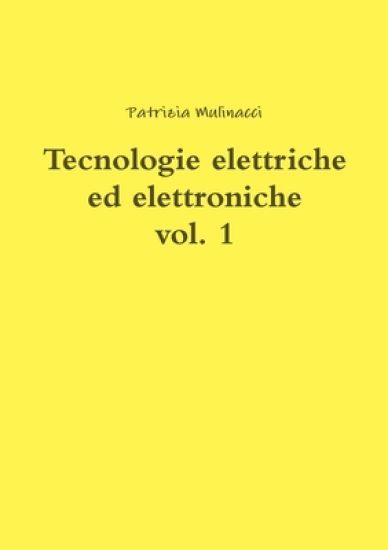
Tecnologie elettriche ed elettroniche vol. 1
Il testo e rivolto agli allievi del III anno dell'istituto professionale che affrontano per la prima volta lo studio delle tecnologie elettriche ed elettroniche. L'esposizione dei contenuti e accompagnata da numerosi esercizi e proposte per attivita di laboratorio (montaggio di prototipi su breadboard, uso degli strumenti di misura, impianti elettrici civili). Argomenti trattati: tensione, corrente, resistenza, collegamenti sulla breadboard, risoluzione dei circuiti, condensatori, circuiti combinatori, transistore bipolare, impianti elettrici civili (deviatore, invertitore, rele, fotocellule, sistemi di allarme).
Tecnologie elettriche ed elettroniche vol. 2
Il testo e rivolto agli allievi della classe quarta dell'Istituto professionale e rappresenta uno strumento per la materia tecnologie elettriche ed elettroniche. L'esposizione dei contenuti e accompagnata da numerose proposte per le attivita di laboratorio ( montaggio di prototipi su breadboard, uso degli strumenti di misura, realizzazione di impianti elettrici civili e industriali anche di tipo elettropneumatico) oltre che da esercizi (domande a risposta breve e strutturata).
Logico !

Logico !

Patrizia Mulinacci

Lulu.com
2018
pokkari
Il testo nasce dall'esperienza di un corso di protenziamento delle capacit logico-matematiche in un gruppo di allievi del I triennio dell'istituto professionale. La metodologia adottata la didattica per problemi la cui risoluzione richiede: comprensione del testo, traduzione delle informazioni in relazioni matematiche, risoluzione, infine, di equazioni di I grado, sistemi, proporzionalit diretta. Sono proposti anche alcuni problemi di geometria piana: piano cartesiano, retta, distanza tra due punti, criteri di similitudine tra triangoli. Dei 62 problemi proposti, molti dei quali corredati da disegni originali, nella seconda parte del libro presentata e commentata la soluzione.
Church and Censorship in Eighteenth-Century Italy
Dealing with the issue of ecclesiastical censorship and control over reading and readers, this study challenges the traditional view that during the eighteenth century the Catholic Church in Italy underwent an inexorable decline. It reconstructs the strategies used by the ecclesiastical leadership to regulate the press and culture during a century characterized by important changes, from the spread of the Enlightenment to the creation of a state censorship apparatus. Based on the archival records of the Roman Inquisition and the Congregation of the Index of Forbidden Books preserved in the Vatican, it provides a comprehensive analysis of the Catholic Church’s endeavour to keep literature and reading in check by means of censorship and the promotion of a "good" press.The crisis of the Inquisition system did not imply a general diminution of the Church’s involvement in controlling the press. Rather than being effective instruments of repression, the Inquisition and the Index combined to create an ideological apparatus to resist new ideas and to direct public opinion. This was a network mainly inspired by Counter-Enlightenment principles which would go on to influence the Church’s action well beyond the eighteenth century.This book is an English translation of Il governo della lettura: Chiesa e libri nell’Italia del Settecento (Bologna: Il Mulino, 2007).
My Poems Won't Change the World

My Poems Won't Change the World

Patrizia Cavalli

Farrar, Straus and Giroux
2014
nidottu
At last, an ample English-language selection of one of contemporary poetry's most vibrant voices Any hall she has ever read her poetry in is invariably filled to the gills. Women like her, girls like her, and men like her, too. In Italy, Patrizia Cavalli is as beloved as Wistawa Szymborska is in Poland, and if Italy were Japan she'd be designated a national treasure. The Italian philosopher Giorgio Agamben said of Cavalli that she has written "the most intensely 'ethical' poetry in Italian literature of the twentieth century." One could add that it is, easily, also the most sensual and comical. Though Cavalli has been widely translated into German, French, and Spanish, My Poems Won't Change the World is her first substantial American anthology. The book is made up of poems from Cavalli's collections published by Einaudi from 1974 to 2006, now freshly translated by an illustrious group of American poets, some of them already familiar with her work: Mark Strand, Jorie Graham, Jonathan Galassi, Rosanna Warren, Geoffrey Brock, J. D. McClatchy, and David Shapiro. Gini Alhadeff's translations, which make up half the book, are the result of a five-year collaboration with Cavalli. This edition includes the original Italian language poems alongside the English translation.
The Chatter of the Visible

The Chatter of the Visible

Patrizia C. McBride

The University of Michigan Press
2016
nidottu
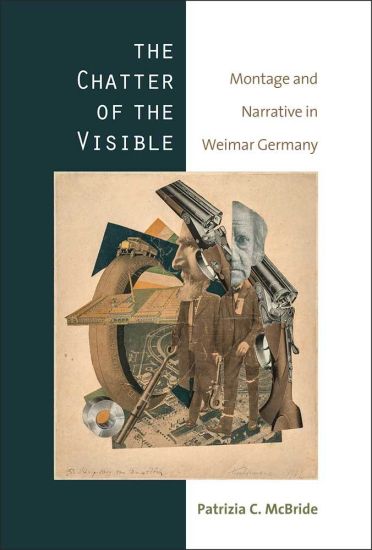
The Chatter of the Visible examines the paradoxical narrative features of the photomontage aesthetics of artists associated with Dada, Constructivism, and the New Objectivity. While montage strategies have commonly been associated with the purposeful interruption of and challenge to narrative consistency and continuity, McBride offers an historicized reappraisal of 1920s and 1930s German photomontage work to show that its peculiar mimicry was less a rejection of narrative and more an extension or permutation of it—a means for thinking in narrative textures exceeding constraints imposed by “flat” print media (especially the novel and other literary genres). McBride’s contribution to the conversation around Weimar-era montage is in her situation of the form of the work as a discursive practice in its own right, which affords humans a new way to negotiate temporality, as a particular mode of thinking that productively relates the particular to the universal, or as a culturally specific form of cognition.
The Chatter of the Visible

The Chatter of the Visible

Patrizia C. McBride

The University of Michigan Press
2016
sidottu
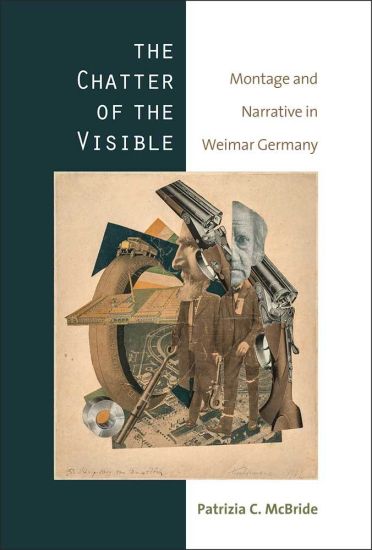
The Chatter of the Visible examines the paradoxical narrative features of the photomontage aesthetics of artists associated with Dada, Constructivism, and the New Objectivity. While montage strategies have commonly been associated with the purposeful interruption of and challenge to narrative consistency and continuity, McBride offers an historicized reappraisal of 1920s and 1930s German photomontage work to show that its peculiar mimicry was less a rejection of narrative and more an extension or permutation of it—a means for thinking in narrative textures exceeding constraints imposed by “flat” print media (especially the novel and other literary genres). McBride’s contribution to the conversation around Weimar-era montage is in her situation of the form of the work as a discursive practice in its own right, which affords humans a new way to negotiate temporality, as a particular mode of thinking that productively relates the particular to the universal, or as a culturally specific form of cognition.
Chaos and Coarse Graining in Statistical Mechanics

Chaos and Coarse Graining in Statistical Mechanics

Patrizia Castiglione; Massimo Falcioni; Annick Lesne; Angelo Vulpiani

Cambridge University Press
2008
sidottu
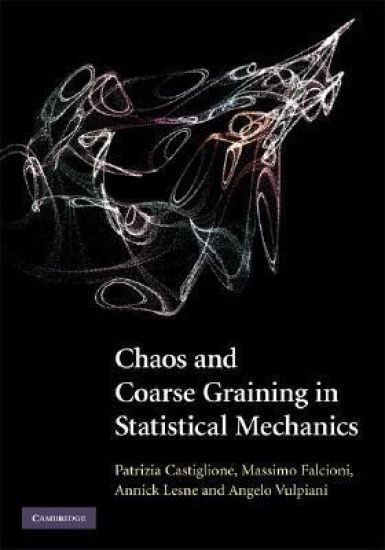
While statistical mechanics describe the equilibrium state of systems with many degrees of freedom, and dynamical systems explain the irregular evolution of systems with few degrees of freedom, new tools are needed to study the evolution of systems with many degrees of freedom. This book presents the basic aspects of chaotic systems, with emphasis on systems composed by huge numbers of particles. Firstly, the basic concepts of chaotic dynamics are introduced, moving on to explore the role of ergodicity and chaos for the validity of statistical laws, and ending with problems characterized by the presence of more than one significant scale. Also discussed is the relevance of many degrees of freedom, coarse graining procedure, and instability mechanisms in justifying a statistical description of macroscopic bodies. Introducing the tools to characterize the non asymptotic behaviors of chaotic systems, this text will interest researchers and graduate students in statistical mechanics and chaos.
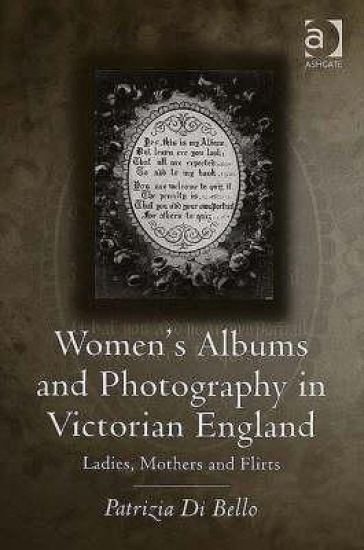
Women's Albums and Photography in Victorian England

Women's Albums and Photography in Victorian England

Patrizia Di Bello

Ashgate Publishing Limited
2007
sidottu
This beautifully illustrated study recaptures the rich history of women photographers and image collectors in nineteenth-century England. Situating the practice of collecting, exchanging and displaying photographs and other images in the context of feminine sociability, Patrizia Di Bello shows that albums express Victorian women's experience of modernity. The albums of individual women, and the broader feminine culture of collecting and displaying imagesare examined, uncovering the cross-references and fertilizations between women's albums and illustrated periodicals, and demonstrating the way albums and photography, itself, were represented in women's magazines, fashion plates, and popular novels. Bringing a sophisticated eye to overlooked images such as the family photograph, Di Bello not only illustrates their significance as historical documents but elucidates the visual rhetorics at play. In doing so, she identifies the connections between Victorian album-making and the work of modern-day amateurs and artists who use digital techniques to compile and decorate albums with Victorian-style borders and patterns. At a time when photographic album-making is being re-vitalised by digital technologies, this book rewrites the history of photographic albums, placing the female collector at its centre and offering an alternative history of photography focused on its uses rather than on its aesthetic or artistic considerations. It is remarkable in elegantly connecting the history of photography with the fields of material culture and women's studies.
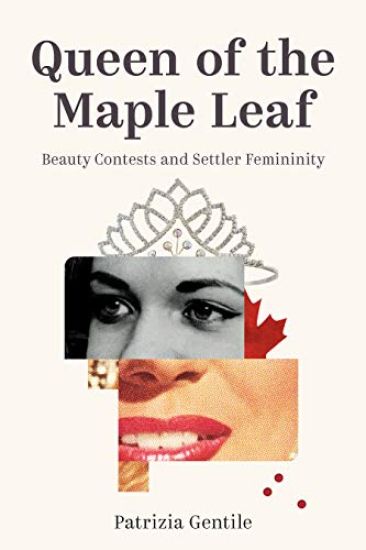
Queen of the Maple Leaf

Queen of the Maple Leaf

Patrizia Gentile

University of British Columbia Press
2020
sidottu
As modern versions of the settler nation took root in twentieth-century Canada, beauty emerged as a business. But beauty pageants were more than just frivolous spectacles. Queen of the Maple Leaf deftly uncovers how colonial power operated within the pageant circuit. Patrizia Gentile examines the interplay between local or community-based pageants and provincial or national ones. Contests such as Miss War Worker and Miss Civil Service often functioned as stepping stones to larger competitions. At all levels, pageants exemplified codes of femininity, class, sexuality, and race that shaped the narratives of the settler nation. A union-organized pageant such as Queen of the Dressmakers, for example, might uplift working-class women, but immigrant women need not apply. Queen of the Maple Leaf demonstrates how these contests connected female bodies to respectable, wholesome, middle-class femininity, locating their longevity squarely within their capacity to reassert the white heteropatriarchy at the heart of settler societies.
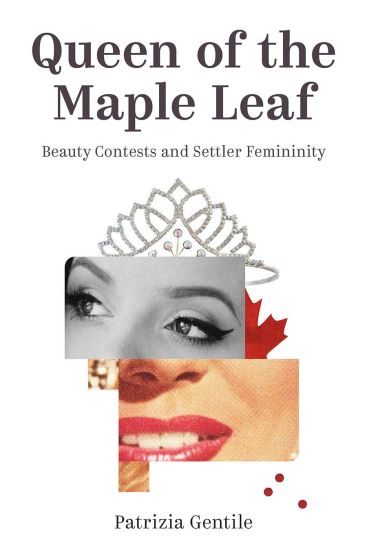
Queen of the Maple Leaf

Queen of the Maple Leaf

Patrizia Gentile

University of British Columbia Press
2022
pokkari
As modern versions of the settler nation took root in twentieth-century Canada, beauty emerged as a business. But beauty pageants were more than just frivolous spectacles. Queen of the Maple Leaf deftly uncovers how colonial power operated within the pageant circuit. Patrizia Gentile examines the interplay between local or community-based pageants and provincial or national ones. Contests such as Miss War Worker and Miss Civil Service often functioned as stepping stones to larger competitions. At all levels, pageants exemplified codes of femininity, class, sexuality, and race that shaped the narratives of the settler nation. A union-organized pageant such as Queen of the Dressmakers, for example, might uplift working-class women, but immigrant women need not apply. Queen of the Maple Leaf demonstrates how these contests connected female bodies to respectable, wholesome, middle-class femininity, locating their longevity squarely within their capacity to reassert the white heteropatriarchy at the heart of settler societies.
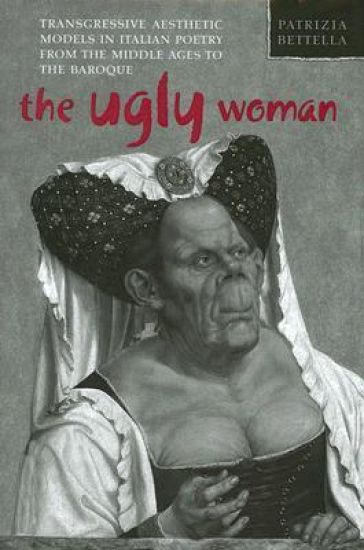
The Ugly Woman

The Ugly Woman

Patrizia Bettella

University of Toronto Press
2005
sidottu
The ugly woman is a surprisingly common figure in Italian poetry, one that has been frequently appropriated by male poetic imagination to depict moral, aesthetic, social, and racial boundaries. Mostly used between the thirteenth and seventeenth centuries - from the invectives of Rustico Filippi, Franco Sacchetti, and Burchiello, to the paradoxical praises of Francesco Berni, Niccolò Campani and Pietro Aretino, and further to the conceited encomia of Giambattista Marino and Marinisti - the portrayal of female unattractiveness was, argues Patrizia Bettella in The Ugly Woman, one way of figuring woman as 'other.'Bettella shows how medieval female ugliness included transgressive types ranging from the lustful old hag, to the slanderer, the wild woman, the heretic/witch, and the prostitute, whereas Early Modern unattractiveness targeted peasants, mountain dwellers, and black slaves: marginal women whose bodies and manners subvert aesthetic precepts of culturally normative beauty and propriety. Taking a philological and feminist approach, and drawing on the Bakhtinian concept of the grotesque body and on the poetics of transgression, The Ugly Woman is a unique look at the essential counterdiscourse of the celebrated Italian poetic canon and a valuable contribution to the study of women in literature.
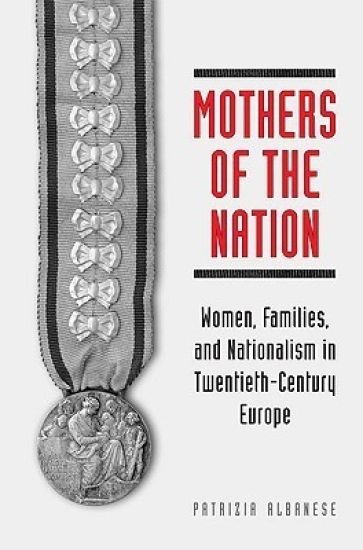
Mothers of the Nation

Mothers of the Nation

Patrizia Albanese

University of Toronto Press
2006
sidottu
How do nationalist governments cope with gender relations? Do their policies modernize, or entrench pre-modern gender roles? In Mothers of the Nation, Patrizia Albanese addresses these questions by assessing the impact of nationalist regimes on the status of women and families in Germany, Italy, Yugoslavia, and Russia, at two different points in history: the aftermath of the First World War, which saw a rise in the number of nationalist governments in power, and the last decade of the twentieth century, which saw a revival of ethno-nationalist sentiment in these areas.Comparing nationalist and non-nationalist polities in order to establish the degree to which these governments differ in their treatment of women and families, Albanese concludes that although most ethno-nationalist regimes intend to return women to their 'natural' place in the home as housewives and mothers, their initiatives are mostly ineffective. These reforms are vehemently opposed by women's groups or individual women, are often reversed by subsequent governments, and have little long term demographic impact. Mothers of the Nation is an important addition to the study of women in a transnational context.
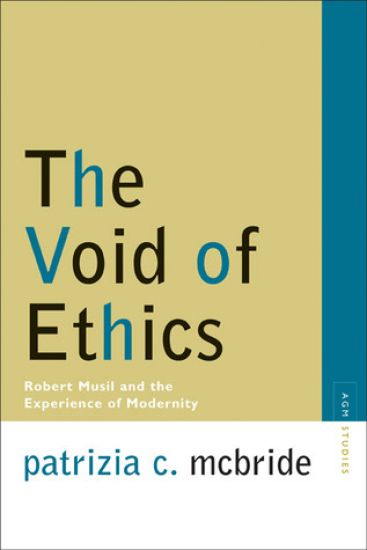
The Void of Ethics

The Void of Ethics

Patrizia C. McBride

Northwestern University Press
2006
sidottu
In a pluralistic society without absolute standards of judgment, how can an individual live a moral life? This is the question Robert Musil (1880-1942), an Austrian-born engineer and mathematician turned writer, asked in essays, plays, and fiction that grapple with the moral ambivalence of modern life. Though unfinished, his monumental novel of Vienna in the febrile days before World War I, The Man without Qualities, is identified by German scholars as the most important literary work of the twentieth century. In a fresh examination of his essays, notebooks, and fiction, Patrizia McBride reconstructs Musil's understanding of ethics as a realm of experience that eludes language and thought. After situating Musil's work within its contemporary cultural-philosophical horizon, as well as the historical background of rising National Socialism, McBride shows how the writer's notion of ethics as a void can be understood as a coherent and innovative response to the crises haunting Europe after World War I. She explores how Musil rejected the outdated, rationalistic morality of humanism, while simultaneously critiquing the irrationalism of contemporary art movements, including symbolism, impressionism, and expressionism. Her work reveals Musil's remarkable relevance today-particularly those aspects of his thought that made him unfashionable in his own time: a commitment to fighting ethical fundamentalism and a literary imagination that validates the pluralistic character of modern life.
The Void of Ethics

The Void of Ethics

Patrizia C. McBride

Northwestern University Press
2006
nidottu
In a pluralistic society without absolute standards of judgment, how can an individual live a moral life? This is the question Robert Musil (1880-1942), an Austrian-born engineer and mathematician turned writer, asked in essays, plays, and fiction that grapple with the moral ambivalence of modern life. Though unfinished, his monumental novel of Vienna in the febrile days before World War I, The Man without Qualities, is identified by German scholars as the most important literary work of the twentieth century. In a fresh examination of his essays, notebooks, and fiction, Patrizia McBride reconstructs Musil's understanding of ethics as a realm of experience that eludes language and thought. After situating Musil's work within its contemporary cultural-philosophical horizon, as well as the historical background of rising National Socialism, McBride shows how the writer's notion of ethics as a void can be understood as a coherent and innovative response to the crises haunting Europe after World War I. She explores how Musil rejected the outdated, rationalistic morality of humanism, while simultaneously critiquing the irrationalism of contemporary art movements, including symbolism, impressionism, and expressionism. Her work reveals Musil's remarkable relevance today-particularly those aspects of his thought that made him unfashionable in his own time: a commitment to fighting ethical fundamentalism and a literary imagination that validates the pluralistic character of modern life.
Lexical Innovation in World Englishes

Lexical Innovation in World Englishes

Patrizia Anesa

CRC Press Inc
2018
sidottu
Winner of the 2020 ESSE Book Award in English Language and LinguisticsLexical Innovation in World Englishes contributes to the investigation of World Englishes by offering insights into the lexical developments of selected English varieties and their cross-fertilization potential. Taking a theoretical and empirical approach and focusing on neological formations, this book: discusses and problematizes different categorizations of English varieties and processes of word formation, considering the expansion of English across the world; draws on authentic examples taken from language corpora to gain a finer understanding of the varieties’ transformations and of their reciprocal influences from a lexical perspective; aims to validate general considerations on the lexical features of these varieties of English and test them using corpora.Including eight empirical case studies, this innovative text shows the importance of investigating lexical developments to observe the evolution of a variety while arguing for the need to go beyond a purely structuralist approach and to include a broader discursive and sociological perspective. Lexical Innovation in World Englishes is key reading for postgraduate students and researchers in the fields of World Englishes and language varieties.