Kirjojen hintavertailu. Mukana 11 627 373 kirjaa ja 12 kauppaa.

Kirjahaku

Etsi kirjoja tekijän nimen, kirjan nimen tai ISBN:n perusteella.

1000 tulosta hakusanalla Paul B. Jenkins

From Field to Fork

From Field to Fork

Paul B. Thompson

Oxford University Press Inc
2015
sidottu
After centuries of neglect, the ethics of food are back with a vengeance. Justice for food workers and small farmers has joined the rising tide of concern over the impact of industrial agriculture on food animals and the broader environment, all while a global epidemic of obesity-related diseases threatens to overwhelm modern health systems. An emerging worldwide social movement has turned to local and organic foods, and struggles to exploit widespread concern over the next wave of genetic engineering or nanotechnologies applied to food. Paul B. Thompson's book applies the rigor of philosophy to key topics in the first comprehensive study explore interconnections hidden deep within this welter of issues. Bringing more than thirty years of experience working closely with farmers, agricultural researchers and food system activists to the topic, he explores the eclipse of food ethics during the rise of nutritional science, and examines the reasons for its sudden re-emergence in the era of diet-based disease. Thompson discusses social injustice in the food systems of developed economies and shows how we have missed the key insights for understanding food ethics in the developing world. His discussions of animal production and the environmental impact of agriculture breaks new ground where most philosophers would least expect it. By emphasizing the integration of these issues, Thompson not only brings a comprehensive philosophical approach to moral issues in the production, processing, distribution, and consumption of food -- he introduces a fresh way to think about practical ethics that will have implications in other areas of applied philosophy.

From Field to Fork

From Field to Fork

Paul B. Thompson

Oxford University Press Inc
2015
nidottu
After centuries of neglect, the ethics of food are back with a vengeance. Justice for food workers and small farmers has joined the rising tide of concern over the impact of industrial agriculture on food animals and the broader environment, all while a global epidemic of obesity-related diseases threatens to overwhelm modern health systems. An emerging worldwide social movement has turned to local and organic foods, and struggles to exploit widespread concern over the next wave of genetic engineering or nanotechnologies applied to food. Paul B. Thompson's book applies the rigor of philosophy to key topics in the first comprehensive study explore interconnections hidden deep within this welter of issues. Bringing more than thirty years of experience working closely with farmers, agricultural researchers and food system activists to the topic, he explores the eclipse of food ethics during the rise of nutritional science, and examines the reasons for its sudden re-emergence in the era of diet-based disease. Thompson discusses social injustice in the food systems of developed economies and shows how we have missed the key insights for understanding food ethics in the developing world. His discussions of animal production and the environmental impact of agriculture breaks new ground where most philosophers would least expect it. By emphasizing the integration of these issues, Thompson not only brings a comprehensive philosophical approach to moral issues in the production, processing, distribution, and consumption of food -- he introduces a fresh way to think about practical ethics that will have implications in other areas of applied philosophy.
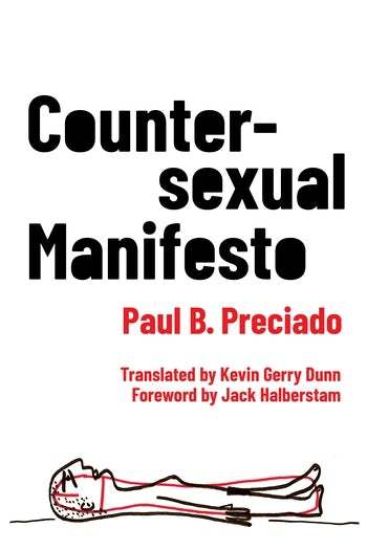
Countersexual Manifesto

Countersexual Manifesto

Paul B. Preciado; Jack Halberstam

Columbia University Press
2018
sidottu
Countersexual Manifesto is an outrageous yet rigorous work of trans theory, a performative literary text, and an insistent call to action. Seeking to overthrow all constraints on what can be done with and to the body, Paul B. Preciado offers a provocative challenge to even the most radical claims about gender, sexuality, and desire.Preciado lays out mock constitutional principles for a countersexual revolution that will recognize genitalia as technological objects and offers step-by-step illustrated instructions for dismantling the heterocentric social contract. He calls theorists such as Derrida, Foucault, Butler, and Haraway to task for not going nearly far enough in their attempts to deconstruct the naturalization of normative identities and behaviors. Preciado’s claim that the dildo precedes the penis—that artifice, not nature, comes first in the history of sexuality—forms the basis of his demand for new practices of sexual emancipation. He calls for a world of sexual plasticity and fabrication, of bio-printers and “dildonics,” and he invokes countersexuality’s roots in the history of sex toys, pornography, and drag in order to rupture the supposedly biological foundations of the heterocentric regime. His claims are extreme, but supported through meticulous readings of philosophy and theory, as well as popular culture. The Manifesto is now available in English translation for its twentieth anniversary, with a new introduction by Preciado. Countersexual Manifesto will disrupt feminism and queer theory and scandalize us all with its hyperbolic but deadly serious defiance of everything we’ve been told about sex.
Countersexual Manifesto

Countersexual Manifesto

Paul B. Preciado; Jack Halberstam

Columbia University Press
2018
pokkari
Countersexual Manifesto is an outrageous yet rigorous work of trans theory, a performative literary text, and an insistent call to action. Seeking to overthrow all constraints on what can be done with and to the body, Paul B. Preciado offers a provocative challenge to even the most radical claims about gender, sexuality, and desire.Preciado lays out mock constitutional principles for a countersexual revolution that will recognize genitalia as technological objects and offers step-by-step illustrated instructions for dismantling the heterocentric social contract. He calls theorists such as Derrida, Foucault, Butler, and Haraway to task for not going nearly far enough in their attempts to deconstruct the naturalization of normative identities and behaviors. Preciado’s claim that the dildo precedes the penis—that artifice, not nature, comes first in the history of sexuality—forms the basis of his demand for new practices of sexual emancipation. He calls for a world of sexual plasticity and fabrication, of bio-printers and “dildonics,” and he invokes countersexuality’s roots in the history of sex toys, pornography, and drag in order to rupture the supposedly biological foundations of the heterocentric regime. His claims are extreme, but supported through meticulous readings of philosophy and theory, as well as popular culture. The Manifesto is now available in English translation for its twentieth anniversary, with a new introduction by Preciado. Countersexual Manifesto will disrupt feminism and queer theory and scandalize us all with its hyperbolic but deadly serious defiance of everything we’ve been told about sex.
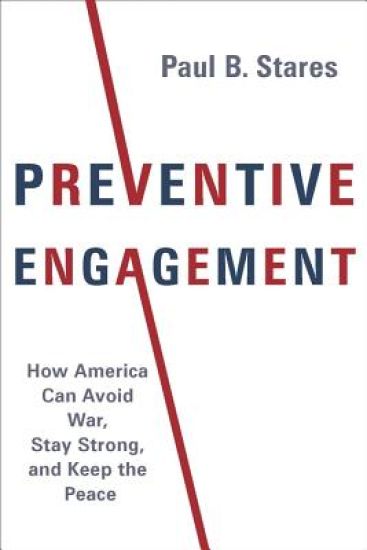
Preventive Engagement

Preventive Engagement

Paul B. Stares

Columbia University Press
2017
sidottu
America finds itself in an acute predicament: The international order it has helped construct over many decades is under increasing stress from various quarters. As the world's predominant military power and principal guarantor of global peace and security, the United States must fulfill its many responsibilities without becoming entangled in costly conflicts that threaten its security, deplete its national power, and weaken its international standing. Preventive Engagement proposes a long-term strategy for how the United States can manage the risks of a more turbulent world in a way that lessens the demand for--and potential drain on--U.S. power. Its novel approach adapts the basic techniques used to prevent many societal problems, such as infectious diseases, violent crime, and drug trafficking. Preventive engagement has three complementary components: the promotion of policies known to lower the risk of violent conflict and political instability; the anticipation of crises most likely to precipitate major U.S. military engagement; and a concerted effort to mitigate if not resolve conflicts that erupt in the short term before escalating into a threat to U.S. interests. This comprehensive approach stresses early detection and foresight to actively manage sources of conflict. Using examples from Syria, Ukraine, and the South China Sea, Preventive Engagement shows its strategy in practice and illuminates the role that international actors, including NGOs, the United Nations, regional organizations, and private businesses, can play to further U.S. preventive goals.
Preventive Engagement

Preventive Engagement

Paul B. Stares

Columbia University Press
2019
pokkari
The United States faces an increasingly turbulent world. The risk of violent conflict and other threats to international order presents a vexing dilemma: should the United States remain the principal guarantor of global peace and security with all its considerable commitments and potential pitfalls––not least new and costly military entanglements––that over time diminish its capacity and commitment to play this vital role or, alternatively, should it pull back from the world in the interests of conserving U.S. power, but at the possible cost of even greater threats emerging in the future?Paul B. Stares proposes an innovative and timely strategy—“preventive engagement”—to resolve America’s predicament. This approach entails pursuing three complementary courses of action: promoting policies known to lessen the risk of violent conflict over the long term; anticipating and averting those crises likely to lead to costly military commitments in the medium term; and managing ongoing conflicts in the short term before they escalate further and exert pressure on the United States to intervene. In each of these efforts, forging “preventive partnerships” with a variety of international actors, including the United Nations, regional organizations, nongovernmental organizations, and the business community, is essential. The need to think and act ahead that lies at the heart of a preventive engagement strategy requires the United States to become less shortsighted and reactive. Drawing on successful strategies in other areas, Preventive Engagement provides a detailed and comprehensive blueprint for the United States to shape the future and reduce the potential dangers ahead.
Pennsylvania Politics Today and Yesterday – The Tolerable Accommodation

Pennsylvania Politics Today and Yesterday – The Tolerable Accommodation

Paul B. Beers

Pennsylvania State University Press
1980
nidottu
A sort of rough justice characterized the Pennsylvania political scene, this book argues, if we define justice in Learned Hand's words as "the tolerable accommodation of the conflicting interests of society." According to the Prologue: "Reform always has worked better in Pennsylvania as an issue-based effort, rather than a broad political movement." According to the Epilogue: "Although 1978 was a year of intense competition, in the end—in revisions so typical of Pennsylvania—both the old and the new politics were refuted, while the comfortable middle-road was chosen." Beers explains the Keystone State's rejection of ideological extremes by reviewing its traditional virtues: tolerance of diversity, independence in thought and action, and patience under adversity. "Pennsylvania is the vest-pocket edition of the world," said Governor Shafer in 1967, "the ethnographic mosaic," said historian Phil Klein in 1976; "kind and mild, sort of non-Puritanical," said novelist John Updilke in 1977. The book's lively narrative begins with Boss Matt Quay forcing his way into the U.S. Senate in 1900, ends with Governor Dick Thornburgh balancing the taxpayers' demand for budge-cutting against his party leaders' itch for patronage. Between 1900 and 1979 the story is told of the rogues (Penrose, the Vares, and Cianfrani), the reformers (Pinchot, Leader, and Duff), and the greater number whose real achievements were dimmed by implications of corruption (Earle, Fine, and Shapp). On balance the author tends toward Henry Adams's assessment of the Pennsylvanian: "In practical matters it was the steadiest of all American types; perhaps the most efficient; certainly the safest."
Court Reform and Judicial Leadership

Court Reform and Judicial Leadership

Paul B. Wice

Praeger Publishers Inc
1995
sidottu
This study examines judicial leadership in court reform, tying biography, political science, social psychology, law, and history into court reform at the local level through the case of a nationally known jurist and reformer—Judge George Nicola of New Jersey. The work provides an important examination, in depth and over time, of true leadership in the courts and of the exceptionally innovative programs developed by Judge Nicola. The author also addresses two fundamental issues which lie at the heart of court reform and judicial leadership: the perplexing question of whether a judicial system so bound by tradition as that of the United States can be changed from within; and whether judicial leadership provides the best and most fruitful opportunity for changing this institution. This volume will be of interest to scholars of political science, American government, the judiciary, and the practice of law.
Financing American Enterprise

Financing American Enterprise

Paul B. Trescott

Praeger Publishers Inc
1982
sidottu
This work is a general history of banking in America, emphasizing the relation between bank credit and the development of the American economy. The effects on the banking industry of population growth, industrialization, technological advance, and changes in the forms and sizes of business firms are examined.
The Horn of Africa

The Horn of Africa

Paul B. Henze

Palgrave Macmillan
1991
sidottu
There are many books on individual countries of the Horn, but this one is unique in treating the region as a whole, stressing interactions among as well as within Sudan, Ethiopia and Somalia and, in turn, their relations with neighbouring regions of Africa and the Middle East. The author summarizes the history of the region from earliest times to the 19th century and then concentrates on Russian and American involvements.
Abstract Algebra

Abstract Algebra

Paul B. Garrett

CRC Press
2019
nidottu
Designed for an advanced undergraduate- or graduate-level course, Abstract Algebra provides an example-oriented, less heavily symbolic approach to abstract algebra. The text emphasizes specifics such as basic number theory, polynomials, finite fields, as well as linear and multilinear algebra. This classroom-tested, how-to manual takes a more narrative approach than the stiff formalism of many other textbooks, presenting coherent storylines to convey crucial ideas in a student-friendly, accessible manner. An unusual feature of the text is the systematic characterization of objects by universal mapping properties, rather than by constructions whose technical details are irrelevant. Addresses Common Curricular Weaknesses In addition to standard introductory material on the subject, such as Lagrange's and Sylow's theorems in group theory, the text provides important specific illustrations of general theory, discussing in detail finite fields, cyclotomic polynomials, and cyclotomic fields. The book also focuses on broader background, including brief but representative discussions of naive set theory and equivalents of the axiom of choice, quadratic reciprocity, Dirichlet's theorem on primes in arithmetic progressions, and some basic complex analysis. Numerous worked examples and exercises throughout facilitate a thorough understanding of the material.
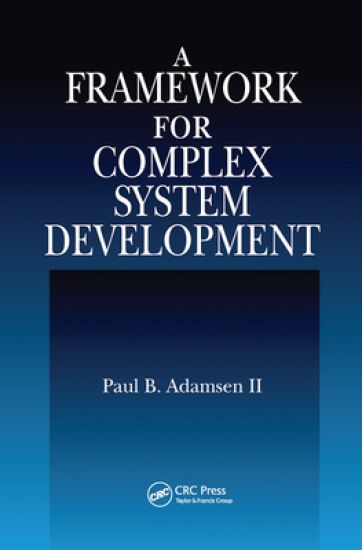
A Framework for Complex System Development
Industry, government, and academic efforts to create a generalized systems engineering process have repeatedly fallen short. The outcome? Systems engineering failures that produce losses like the September 1999 destruction of the Mars Climate Orbiter. A simple information transfer error between teams motivated far-reaching managerial and technical changes at NASA's Jet Propulsion Laboratory-evidence of systems engineering complexity. Struck by the amount of chaos that can quickly develop from such intricacy, the author has devoted several years to the development and refinement of the framework delineated in this work to help you "control the chaos". A Framework for Complex System Development develops a generalized process that distinguishes between "time" and "logical" domains-how I/O evolves over time versus the instantaneous program state. Explicitly characterized and identified, they preserve the framework. By combining these views, you get an application specific process, versatile enough for many different contexts. It also defines the technical activities that constitute the system development process and how they connect and interact with managerial activities. You will be able to integrate these activities and realize the maximum potential for success. A key element to success in today's paradigm of "faster, better, cheaper" systems and decreasing resource levels is a clear, workable plan that can be easily implemented. A Framework for Complex System Development illustrates such a plan, distilling the essential aspects of system design into a logical process for a well-organized development program. With A Framework for Complex System Development, you can use the author's approach-developed in the crucible of the real world-to develop sound complex systems in an organized and efficient manner.
Space Weapons and U.S. Strategy

Space Weapons and U.S. Strategy

Paul B. Stares

Routledge
2021
sidottu
This book, first published in 1985, analyses the factors that have shaped the militarization of space. By examining in great detail the determinants of U.S. policy, it explains why for over 25 years space did not become the scene of an arms race, and why this began to change in the late 1970s. Both superpowers did, however, develop a limited anti-satellite capability in the 1960s, and these programmes are also discussed.
Space Weapons and U.S. Strategy

Space Weapons and U.S. Strategy

Paul B. Stares

TAYLOR FRANCIS LTD
2022
nidottu
This book, first published in 1985, analyses the factors that have shaped the militarization of space. By examining in great detail the determinants of U.S. policy, it explains why for over 25 years space did not become the scene of an arms race, and why this began to change in the late 1970s. Both superpowers did, however, develop a limited anti-satellite capability in the 1960s, and these programmes are also discussed.
Food Biotechnology in Ethical Perspective

Food Biotechnology in Ethical Perspective

Paul B. Thompson

Chapman and Hall
1997
sidottu
This book provides an overview of ethical issues arising in connection with progress made in food biotechnology. There is substantive discussion of the ethical issues referring to food safety, animal welfare, environmental impact, ownership of intellectual property, and consumer perception of the product. The arguments for and against issues causing major concern are evaluated, advancing the quality of the debate. It will be of interest to companies exploiting the new biotechnology techniques, government policy makers, food scientists and biotechnologist in academic research institutions.
The Architecture of Oppression

The Architecture of Oppression

Paul B. Jaskot

Routledge
1999
sidottu
This book re-evaluates the architectural history of Nazi Germany and looks at the development of the forced-labour concentration camp system. Through an analysis of such major Nazi building projects as the Nuremberg Party Rally Grounds and the rebuilding of Berlin, Jaskot ties together the development of the German building economy, state architectural goals and the rise of the SS as a political and economic force. As a result, The Architecture of Oppression contributes to our understanding of the conjunction of culture and politics in the Nazi period as well as the agency of architects and SS administrators in enabling this process.
The Architecture of Oppression

The Architecture of Oppression

Paul B. Jaskot

Routledge
1999
nidottu
This book re-evaluates the architectural history of Nazi Germany and looks at the development of the forced-labour concentration camp system. Through an analysis of such major Nazi building projects as the Nuremberg Party Rally Grounds and the rebuilding of Berlin, Jaskot ties together the development of the German building economy, state architectural goals and the rise of the SS as a political and economic force. As a result, The Architecture of Oppression contributes to our understanding of the conjunction of culture and politics in the Nazi period as well as the agency of architects and SS administrators in enabling this process.
Working with Traumatic Brain Injury in Schools

Working with Traumatic Brain Injury in Schools

Paul B. Jantz; Susan C. Davies; Erin D. Bigler

Routledge
2014
sidottu
Every day, children and adolescents worldwide return to the educational setting having sustained a traumatic brain injury (TBI). The possible negative consequences of TBI range from mild to severe and include neurological, cognitive, emotional, social, and behavioral difficulties. Within the school setting, the negative effects of TBI tend to persist or worsen over time, often resulting in academic and social difficulties that require formal and informal educational assistance and support. School psychologists and other educational professionals are well-positioned to help ensure students with TBI receive this assistance and support. Working with Traumatic Brain Injury in Schools is a comprehensive practitioner-oriented guide to effective school-based services for students who have experienced a TBI. It is primarily written for school-based professionals who have limited or no neurological or neuropsychological training; however, it contains educational information that is useful to professionals with extensive knowledge in neurology and/or neuropsychology. This book is also written for parents and guardians of students with TBI because of their integral role in the transition, school-based assessment, and school-based intervention processes. Chapter topics include: basic brain anatomy and physiology; head injury and severity level classifications; biomechanics of injury; injury recovery and rehabilitation; neurological, cognitive, emotional, behavioral, social, and academic consequences; understanding community-based assessment findings; a framework for school-based assessment (TBI-SNNAP); school-based psychoeducational report writing, and school-based interventions; monitoring pharmacological interventions; and prevention. An accompanying website includes handouts, sample reports, and training templates to assist professionals in recognizing and responding to students with TBI.
Working with Traumatic Brain Injury in Schools

Working with Traumatic Brain Injury in Schools

Paul B. Jantz; Susan C. Davies; Erin D. Bigler

Routledge
2014
nidottu
Every day, children and adolescents worldwide return to the educational setting having sustained a traumatic brain injury (TBI). The possible negative consequences of TBI range from mild to severe and include neurological, cognitive, emotional, social, and behavioral difficulties. Within the school setting, the negative effects of TBI tend to persist or worsen over time, often resulting in academic and social difficulties that require formal and informal educational assistance and support. School psychologists and other educational professionals are well-positioned to help ensure students with TBI receive this assistance and support. Working with Traumatic Brain Injury in Schools is a comprehensive practitioner-oriented guide to effective school-based services for students who have experienced a TBI. It is primarily written for school-based professionals who have limited or no neurological or neuropsychological training; however, it contains educational information that is useful to professionals with extensive knowledge in neurology and/or neuropsychology. This book is also written for parents and guardians of students with TBI because of their integral role in the transition, school-based assessment, and school-based intervention processes. Chapter topics include: basic brain anatomy and physiology; head injury and severity level classifications; biomechanics of injury; injury recovery and rehabilitation; neurological, cognitive, emotional, behavioral, social, and academic consequences; understanding community-based assessment findings; a framework for school-based assessment (TBI-SNNAP); school-based psychoeducational report writing, and school-based interventions; monitoring pharmacological interventions; and prevention. An accompanying website includes handouts, sample reports, and training templates to assist professionals in recognizing and responding to students with TBI.
The Investor's Guide to the Net

The Investor's Guide to the Net

Paul B. Farrell

John Wiley Sons Inc
1996
nidottu
Your guide to the best online investing sites Investor's Guide to the Net is your key to successful online investing. This hands-on guide shows you where to steer yourself on the information superhighway by supplying Internet and Web addresses, screen captures, and maps of major online investment sites. You will explore the growing number of investing options available to you through such popular services as Prodigy, America Online (AOL), and CompuServe, plus bulletin boards, chat groups, and much more. "I thought I knew a lot about the Internet until I read Paul Farrell's excellent Investor's Guide to the Net. It teaches you how to become a profitable twenty-first century investor before the twentieth century ends."—Bill Griffeth, Anchor, CNBC-TV and author of 10 Steps to Financial Prosperity "An indispensable roadmap for the financial information highway."—William J. O'Neil, Publisher, Investor's Business Daily "Investing on the Internet is revolutionizing Wall Street. Paul Farrell provides a thorough tour of the new landscape and shows you how to profit from this sea of change."—Norman G. Fosback, Editor-In-Chief, Mutual Funds Magazine "Investor's Guide to the Net tells individual investors how to make use of the wonderful world of cyberspace without getting lost."—Willard C. Rappleye, Vice Chairman, Financial World Magazine