Kirjojen hintavertailu. Mukana 11 627 623 kirjaa ja 12 kauppaa.

Kirjahaku

Etsi kirjoja tekijän nimen, kirjan nimen tai ISBN:n perusteella.

1000 tulosta hakusanalla Paul F Hammond

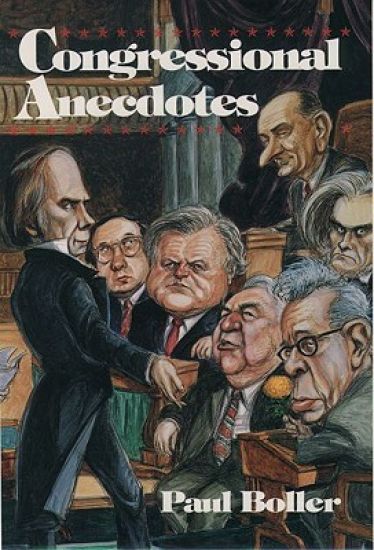
Congressional Anecdotes

Congressional Anecdotes

Paul F. Boller

Oxford University Press Inc
1992
nidottu
You can count on Congress to provide a good laugh. Take, for instance, the Senator who talked about the war in "Indigo China," or the Representative who asked why the Israelis and Arabs couldn't settle their differences "like good Christians." But the U.S. Congress has always been much more than a good source of comedy. It has been home to brilliance as well as buffoonery, to integrity as well as corruption, to statesmanship as well as demagoguery. And in Congressional Anecdotes Paul F. Boller, Jr. captures it all with a sweeping, informative, and delightful look at the history of our national legislature. A professional historian and author of the bestselling Presidential Anecdotes, Paul Boller again shows his gift for lively--and revealing--stories. In this collection he provides a fascinating view of the history of our Congress, a history that reflects the life and character of the nation in often surprising ways. The first Congress, for example, was serious about its task of setting precedents for the new republic, earnestly debating how the President should be addressed. But some Congressmen erupted in laughter when Vice President John Adams proposed "His Mighty Benign Highness," and they suggested in turn that Adams be hailed as "Your Rotundity." At one time dueling among members of Congress was common, and in the nineteenth century they often came to the Capitol armed with swords, pistols, and Bowie knives. In one session, as animosities flared between North and South, a general free-for-all broke out on the House floor and ended only when one Congressman pulled off another Congressman's wig, reducing the whole House to laughter. In the twentieth century, Boller reminds us, racial and sexual equality lagged on Capitol Hill just as it did across the country. For a long time black Congressmen were banned from the Congressional Dining Room because of their race, and the first women members waded in male condescension. Boller's book is filled with informative essays and entertaining stories about the sharp debates and fierce battles that took place in the nation's legislature during its first two hundred years. It also provides fascinating insights into its leading figures: John Randolph, Henry Clay, Daniel Webster, John C. Calhoun, Robert LaFollette, Sam Rayburn, Gerald Ford, Tip O'Neill, Robert Dole. Organizing the anecdotes by subject, Boller has written ten chapters about Congress, each of them containing essays and stories about such topics as "Congress-Bashing" (a practice almost as old as the Constitution itself), "Manners and Morals," "On the Floor" (Congressional debates), "Oratory," "In the Chair" (about Speakers and Vice Presidents), and "Congress and the President." Amusing, dramatic, and poignant, Boller's tales about Congress reveal the rich and vital past of one of America's greatest institutions, as well as the indispensable part it has played in the nation's development.
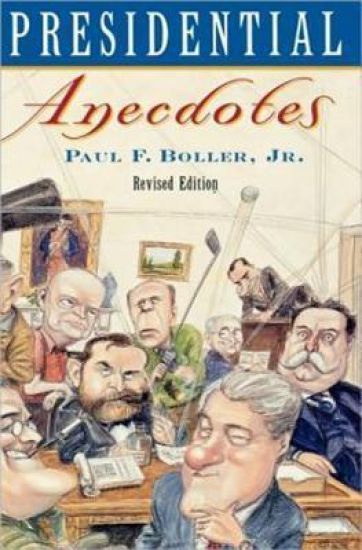
Presidential Anecdotes

Presidential Anecdotes

Paul F. Boller

Oxford University Press Inc
1996
nidottu
Dramatic, poignant, hilarious, and sentimental: anecdotes about US presidents are as varied as the presidents themselves, and people have enjoyed hearing them since the early days of the American Republic. This new and revised edition of Presidential Anecdotes recounts some of the most striking stories about America's forty-two Chief Executives, from Washington to Clinton.
Not So!

Not So!

Paul F. Boller

Oxford University Press Inc
2016
nidottu
In sailing westward in 1492, did Columbus defy the prevailing belief that the Earth was flat? Was Thomas Paine an atheist? Was Truman plucked from obscurity to be FDR's running mate in 1944? Are presidential campaigns nowadays far dirtier than they were in the past? Is Hillary Clinton the most active or influential First Lady ever? Not so, says Paul Boller, in this delightfully informative look at some of the most common myths and misconceptions about the American past. As he did in his bestselling They Never Said It, Boller provides us with a cornucopia of historical correction, debunking myths that range from the trivial--for instance, George Washington did not have false teeth made of wood (they were made of ivory)--to the pernicious (FDR did not know in advance that the Japanese planned to bomb Pearl Harbor). We learn that most educated people in Columbus's day knew the world was round (it was Washington Irving who first portrayed Columbus as defying a coterie of flat-earthers); that Washington's famous Farewell Address was mostly written by Alexander Hamilton; that the Pledge of Allegiance was penned by Francis Bellamy, a devout socialist, in 1892 (and it was intended as a paean to big government); that Thomas Paine was not an atheist, but a deist (as were Washington, Jefferson, and Franklin), and his Age of Reason attacked both organized religion and atheism; that Truman was far from an obscure politician in 1944 (he had been on the cover of Time in 1943 for his Senate work uncovering waste and fraud in the war industries, and a Look magazine poll placed Truman among the ten figures who had contributed the most to the war effort); that presidential campaigns in the old days were more vituperative than recent ones; and that several First Ladies were more influential than Hillary Clinton, most notably Eleanor Roosevelt and Edith Wilson (the latter played a crucial role in her husband's administration from 1919 to 1921, after he suffered a massive stroke). Boller doesn't simply debunk each myth, but instead provides us with much fascinating history surrounding each case, so that the reader is treated to intriguing discussions of many singular episodes in American history, including the Kennedy assassination, the McCarthy hearings, the events leading up to Pearl Harbor, and Watergate. And finally, if the book provides many eye-opening surprises and amusing passages, there is also a serious side of Boller's exploration of American myth. As he shows, much misinformation has been cooked up for political or ideological reasons. By debunking these tales, Boller warns us to question what we hear and what we think we know about America and about our leaders, past and present. The chronicles of American history are strewn with legends, fables, folklore, misconceptions, and outright lies. Patriotism has set many a tall tale in motion, but so have political partisanship and ideological zeal. For everyone who loves history--or the truth--Paul Boller has given us a candid and absorbing look at the American past that helps us get a good sense of where we have been and who we are as a people.
Presidential Wives

Presidential Wives

Paul F. Boller

Oxford University Press Inc
2000
nidottu
In Presidential Wives, Paul Boller brings his gift for telling detail to bear on the women our Presidents married, and the result is a biographical feat--at once funny and poignant, dramatic and illuminating, covering every First Lady from Martha Washington to Hillary Rodham Clinton. Boller devotes a full chapter to each of his subjects, featuring an incisive biographical essay followed by a selection of revealing anecdotes. Through his portrayal of such a diverse group of women, Boller sheds new light on how much the institution of the presidency tells us about ourselves and our life as a nation. First published in 1988, this second edition has been revised to include updated information on people such as Nancy Reagan and Jacqueline Kennedy Onassis, a new preface, and new chapters devoted to Barbara Bush and Hillary Rodham Clinton.
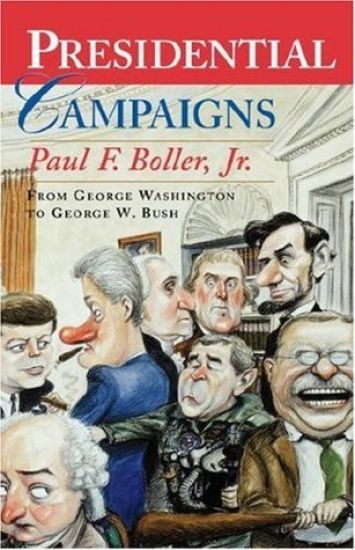
Presidential Campaigns

Presidential Campaigns

Paul F. Boller

Oxford University Press Inc
2004
nidottu
Were presidential campaigns always as bitter as they have been in recent years? Or is the current style of campaigning a new political development? In this revised and updated edition of Presidential Campaigns the answers to these questions are clear: the race for the presidency, although at times mean and nasty, has always been an endlessly entertaining and highly charged spectacle. This book unveils the whole history of American presidential elections, from the seamless ascent of General George Washington to the bitterly contested election of George W. Bush, bringing these boisterous contests to life in all their richness and complexity. Back in the nineteenth century, the invective at election time was exuberant and the mudslinging unrestrained; a candidate might be called everything from a carbuncle-faced old drunkard to a howling atheist. But there was plenty of fun and games, too, with songs and slogans, speeches and parades, all livening up the scene in order to get people to the polls. Presidential Campaigns takes note of the serious side of elections even as it documents the frenzy, frolic and the sleaze. Each chapter contains a brief essay describing an election and presenting "campaign highlights" that bring to life the quadrennial confrontation in all its Shame and glory. With a postscript analysing the major changes in the ways Americans have chosen their Presidents from Washington's time to the present, Presidential Campaigns gives the reader a full picture of this somewhat flawed procedure.
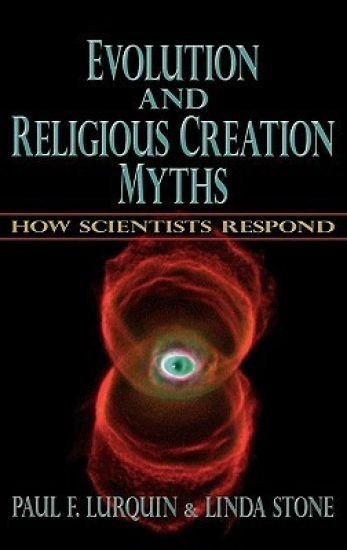
Evolution and Religious Creation Myths

Evolution and Religious Creation Myths

Paul F. Lurquin; Linda Stone

Oxford University Press Inc
2007
sidottu
Relying mostly on modern genetic science, this book exposes how various forms of creationism - including intelligent design - fail to provide testable models for the appearance and evolution of life. On the contrary, science has been very successful in the description of the unguided processes that led to the creation of the universe and one of its consequences, the appearance of life forms, including humans.
When Peacekeeping Missions Collide

When Peacekeeping Missions Collide

Paul F. Diehl; Daniel Druckman; Grace B. Mueller

OXFORD UNIVERSITY PRESS INC
2023
nidottu
The contemporary world is beset with a wide variety of conflicts, all of which have features without historical precedent. While most accounts of peacekeeping focus on attempts to limit violent conflict, this traditional view hardly captures the variety of challenges that today's peacekeepers face. Peacekeepers are now thrust into the unconventional roles of monitoring elections, facilitating transitions to the rule of law, distributing humanitarian aid, and resolving conflicts in civil societies that are undergoing transformation. This is the context for understanding the activities of modern-day peacekeepers. In When Peacekeeping Missions Collide, Paul F. Diehl, Daniel Druckman, and Grace B. Mueller provide an original and comprehensive assessment on how different peacekeeping missions intersect with one another in contemporary conflicts. They begin by documenting the patterns of peacekeeping missions in 70 UN operations, noting the dramatic increase in number and diversity of operations since the end of the Cold War as well as the shift to conflicts with a substantial internal conflict component. They then turn to the overarching question of the book: how do individual peacekeeping missions impact the outcomes of other missions within the same operations? To answer this, the authors have developed a novel dataset of UN peace operations from 1946-2016 to assess mission compatibility. Moreover, the authors utilize five detailed case studies of UN peacekeeping operations featuring mission interdependence and then measure the results against their theoretical expectations. Ultimately, the model they have developed for analyzing the effectiveness of the far more complex peace operations of today--relative to the simpler operations of the past--is essential reading for scholars of peacekeeping and conflict management.
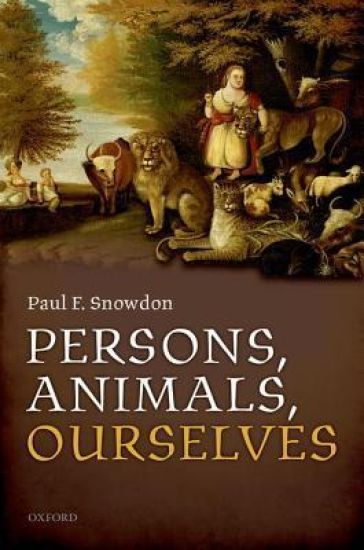
Persons, Animals, Ourselves

Persons, Animals, Ourselves

Paul F. Snowdon

Oxford University Press
2014
sidottu
The starting point for this book is a particular answer to a question that grips many of us: what kind of thing are we? The particular answer is that we are animals (of a certain sort)--a view nowadays called 'animalism'. This answer will appear obvious to many but on the whole philosophers have rejected it. Paul F. Snowdon proposes, contrary to that attitude, that there are strong reasons to believe animalism and that when properly analysed the objections against it that philosophers have given are not convincing. One way to put the idea is that we should not think of ourselves as things that need psychological states or capacities to exist, any more that other animals do. The initial chapters analyse the content and general philosophical implications of animalism--including the so-called problem of personal identity, and that of the unity of consciousness--and they provide a framework which categorises the standard philosophical objections. Snowdon then argues that animalism is consistent with a perfectly plausible account of the central notion of a 'person', and he criticises the accounts offered by John Locke and by David Wiggins of that notion. In the two next chapters Snowdon argues that there are very strong reasons to think animalism is true, and proposes some central claims about animal which are relevant to the argument. In the rest of the book the task is to formulate and to persuade the reader of the lack of cogency of the standard philosophical objections, including the conviction that it is possible for the animal that I would be if animalism were true to continue in existence after I have ceased to exist, and the argument that it is possible for us to remain in existence even when the animal has ceased to exist. In considering these types of objections the views of various philosophers, including Nagel, Shoemaker, Johnston, Wilkes, and Olson, are also explored. Snowdon concludes that animalism represents a highly commonsensical and defensible way of thinking about ourselves, and that its rejection by philosophers rests on the tendency when doing philosophy to mistake fantasy for reality.
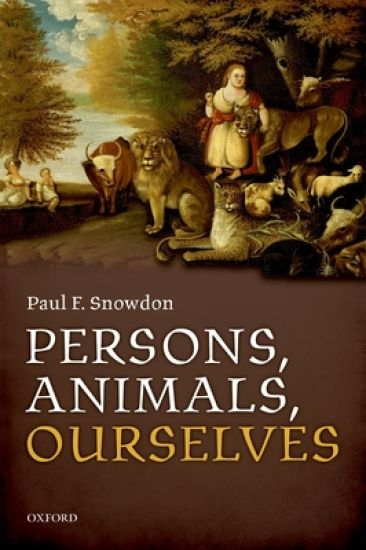
Persons, Animals, Ourselves

Persons, Animals, Ourselves

Paul F. Snowdon

Oxford University Press
2017
nidottu
The starting point for this book is a particular answer to a question that grips many of us: what kind of thing are we? The particular answer is that we are animals (of a certain sort)--a view nowadays called 'animalism'. This answer will appear obvious to many but on the whole philosophers have rejected it. Paul F. Snowdon proposes, contrary to that attitude, that there are strong reasons to believe animalism and that when properly analysed the objections against it that philosophers have given are not convincing. One way to put the idea is that we should not think of ourselves as things that need psychological states or capacities to exist, any more that other animals do. The initial chapters analyse the content and general philosophical implications of animalism--including the so-called problem of personal identity, and that of the unity of consciousness--and they provide a framework which categorises the standard philosophical objections. Snowdon then argues that animalism is consistent with a perfectly plausible account of the central notion of a 'person', and he criticises the accounts offered by John Locke and by David Wiggins of that notion. In the two next chapters Snowdon argues that there are very strong reasons to think animalism is true, and proposes some central claims about animal which are relevant to the argument. In the rest of the book the task is to formulate and to persuade the reader of the lack of cogency of the standard philosophical objections, including the conviction that it is possible for the animal that I would be if animalism were true to continue in existence after I have ceased to exist, and the argument that it is possible for us to remain in existence even when the animal has ceased to exist. In considering these types of objections the views of various philosophers, including Nagel, Shoemaker, Johnston, Wilkes, and Olson, are also explored. Snowdon concludes that animalism represents a highly commonsensical and defensible way of thinking about ourselves, and that its rejection by philosophers rests on the tendency when doing philosophy to mistake fantasy for reality.
Essays on Perceptual Experience

Essays on Perceptual Experience

Paul F. Snowdon

Oxford University Press
2024
sidottu
A central figure in Anglo-American philosophy for over four decades, Paul F. Snowdon made seminal contributions to the fields of metaphysics, philosophy of mind, and the history of twentieth-century philosophy. Snowdon's work on perception and perceptual experience--much of which is collected in this volume for the first time--was particularly influential and firmly established 'disjunctivism' as a view with which any theorist working in the field must reckon. In the essays collected in the first part of this volume, Snowdon traces the contours of the concept of perception, refining his formulation of the disjunctivist position, determining the degree of involvement of the concept of causation, and engaging critically with arguments which aim to support sense-data theories. The second part contains critical examinations of the views propounded by several influential philosophers, amounting to a partial sketch of the history of twentieth-century philosophy of perception. Among the figures whose work Snowdon engages are J. L. Austin, A. J. Ayer, Michael Ayers, Michael Hinton, John McDowell, G. E. Moore, H. H. Price, Wilfrid Sellars, P. F. Strawson, and Ludwig Wittgenstein. The volume opens with a robust and intellectually generous introduction in which Snowdon describes the theoretical challenges, approaches, and themes that animate the set of interrelated problems addressed across all sixteen essays. Sprinkled throughout are an array of candid reflections that serve to illuminate both the substantive connections between the essays as well as the historical and circumstantial contexts that occasioned their writing.
Who Rules the Earth?

Who Rules the Earth?

Paul F. Steinberg

Oxford University Press Inc
2015
sidottu
Humanity is confronted with an alarming number of environmental problems that seem to grow worse by the day. We hear a steady stream of news reports about climate change, water shortages, and rampant deforestation. We learn of toxic chemicals in our food supply and garbage filling our oceans, and wonder: Why do these problems persist, and what can be done to set society on a more sustainable course? In Who Rules the Earth?, Paul F. Steinberg, one of America's leading scholars on the politics of environmentalism, explains that there is room for hope, and draws from the latest social science research to explain why. Green consumer choices and changes in personal lifestyles are important, but they are not nearly enough. Lasting social change requires modifying the very rules that guide human behavior and shape the ways we interact with the Earth. We know these rules by familiar names like city ordinances, product design standards, purchasing agreements, public policies, cultural norms, or national constitutions. Though these rules are largely invisible to us, their impact across the world has been dramatic. By changing the rules, the Canadian province of Ontario cut the levels of pesticides in its waterways in half. The city of Copenhagen has adopted new planning codes that will reduce its carbon footprint to zero by 2025. In the United States, a handful of industry mavericks designed new rules to promote greener buildings, and transformed the world's largest industry into a more sustainable enterprise. Steinberg takes the reader on a series of journeys, from a familiar walk on the beach to a remote village deep in the jungles of Peru, helping the reader to 'see' the social rules that pattern our physical reality and showing why these are the big levers that will ultimately determine the health of our planet. By unveiling the influence of social rules at all levels of society-from private property to government policy, and from the rules governing our oceans to the dynamics of innovation and change within corporations and communities, Who Rules the Earth? will be essential reading for anyone interested in bringing about real environmental change.
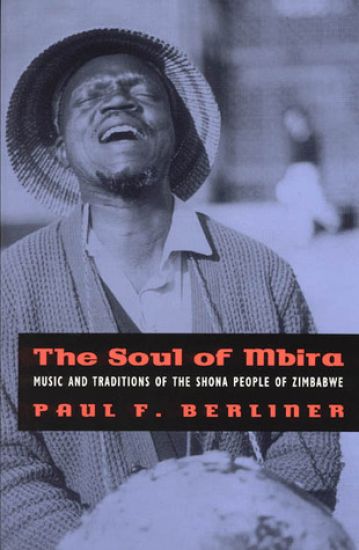
The Soul of Mbira

The Soul of Mbira

Paul F. Berliner

University of Chicago Press
1993
nidottu
This sensitive, scholarly portrayal of Shona musicians and the African Musical tradition is highly engaging and comprehensive in its range of data. Paul Berliner provides the complete cultural context for the music and an intimate, precise account of the meaning of the instrument and its music. "Paul Berliner's The Soul of Mbira is probably the best ethnography ever written about an African musical tradition. It is a complete classic ...I know of no other instrument with the range of the mbira, and the book is equal to the instrument."--John Chernoff
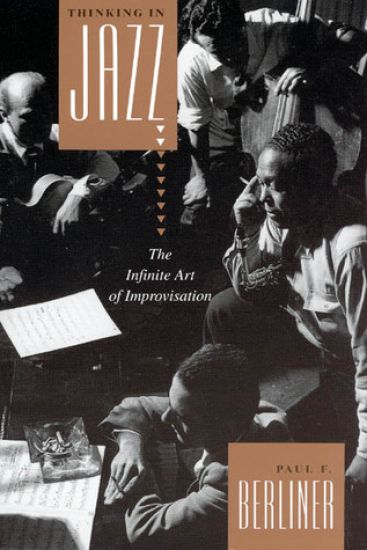
Thinking in Jazz

Thinking in Jazz

Paul F. Berliner

University of Chicago Press
1994
nidottu
This text reveals how musicians, both individually and collectively, learn to improvise. It aims to illuminate the distinctive creative processes that comprise improvisation. Chronicling leading musicians from their first encounters with jazz to the development of a unique improvisatory voice, Paul Berliner demonstrates that a lifetime of preparation lies behind the skilled improviser's every note. Berliner's integration of data concerning musical development, the rigorous practice and thought artists devote to jazz outside performance, and the complexities of composing in the moment leads to a new understanding of jazz improvisation as a language, an aesthetic and a tradition. The product of more than 15 years of immersion in the jazz world, "Thinking in Jazz" combines participant observation with detailed musicological analysis, the author's own experience as a jazz trumpeter, interpretations of published material by scholars and performers, and, above all, original data from interviews with more than 50 professional musicians. Together, the interviews provide insight into the production of jazz by great artists like Betty Carter, Miles Davis, Dizzy Gillespie, Coleman Hawkins and Charlie Parker. "Thinking in Jazz" features musical examples from the 1920s to the present, including transcriptions (keyed to commercial recordings) of collective improvisations by Miles Davis's and John Coltrane's groups.
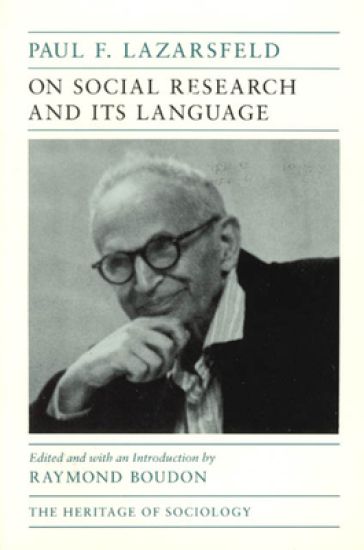
On Social Research and Its Language

On Social Research and Its Language

Paul F. Lazarsfeld

University of Chicago Press
1993
sidottu
Without Paul F. Lazarsfeld the social sciences would not be what they are today. In his work on unemployment, voting, consumer behaviour, and social influence, among other subjects, his methodological emphasis on vigorously controlled scientific language and structures transformed social research worldwide. His criticism of observational, conceptual, and inferential procedures in sociology led to the formation of universally applied observational and analytical techniques. The 18 essays in "On Social Research and Its Language" illustrate the diversity of Lazarsfeld's substantive, methodological, and organizational interests. Spanning the years 1933 to 1972, they encompass his own works of social research, as well as writings on methodology and the history and sociology of social research. In addition, Raymond Boudon provides a revealing biography of Lazarsfeld and his influence on sociology.
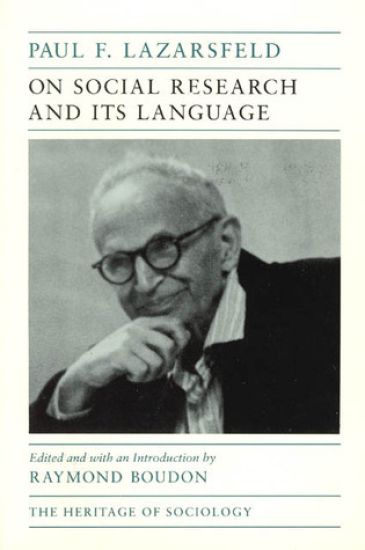
On Social Research and Its Language

On Social Research and Its Language

Paul F. Lazarsfeld; Raymond Boudon

University of Chicago Press
1993
nidottu
Without Paul F. Lazarsfeld the social sciences would not be what they are today. In his work on unemployment, voting, consumer behaviour, and social influence, among other subjects, his methodological emphasis on vigorously controlled scientific language and structures transformed social research worldwide. His criticism of observational, conceptual, and inferential procedures in sociology led to the formation of universally applied observational and analytical techniques. The 18 essays in "On Social Research and Its Language" illustrate the diversity of Lazarsfeld's substantive, methodological, and organizational interests. Spanning the years 1933 to 1972, they encompass his own works of social research, as well as writings on methodology and the history and sociology of social research. In addition, Raymond Boudon provides a revealing biography of Lazarsfeld and his influence on sociology.
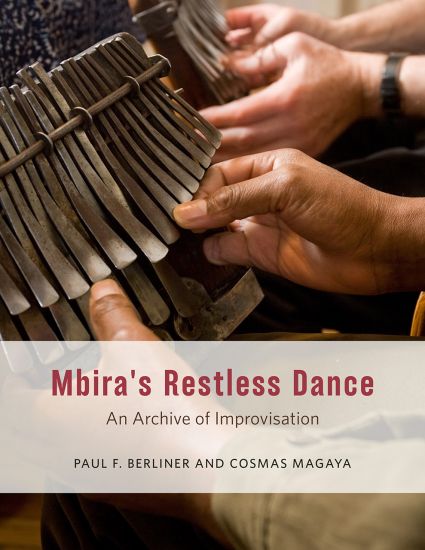
Mbira's Restless Dance

Mbira's Restless Dance

Paul F. Berliner; Cosmas Magaya

University of Chicago Press
2020
kierre
Growing out of the collaborative research of an American ethnomusicologist and Zimbabwean musician, Paul F. Berliner and Cosmas Magaya’s Mbira’s Restless Dance documents the repertory for a keyboard instrument known generally as mbira. At the heart of this work lies the analysis of the improvisatory processes that propel mbira music’s magnificent creativity.Mbira’s Restless Dance is written to be played. This two-volume, spiral-bound set features musical transcriptions of thirty-nine compositions and variations, annotated with the master player’s advice on technique and performance, his notes and observations, and commentary by Berliner. Enhanced with extensive website audiovisuals, Mbira’s Restless Dance is in effect a series of masterclasses with Magaya, suitable for experienced mbira players and those learning the fundamentals. Together with Berliner's The Art of Mbira, in which he provides an indispensable historical and cultural guide to mbira in a changing world, Mbira's Restless Dance breaks new ground in the depth and specificity of its exploration of an African musical tradition, and in the entwining of the authors’ collaborative voices. It is a testament to the powerful relationship between music and social life—and the rewards of lifelong musical study, performance, and friendship.
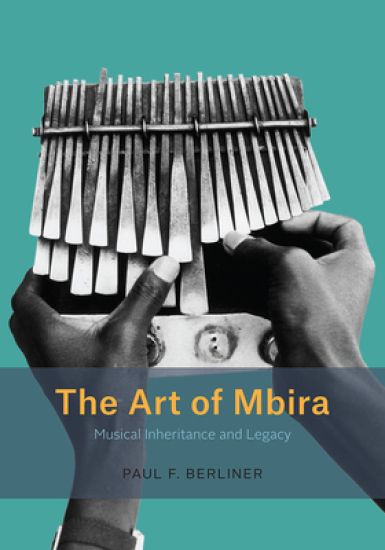
The Art of Mbira

The Art of Mbira

Paul F Berliner

University of Chicago Press
2019
sidottu
Growing out of the collaborative research of an American ethnomusicologist and Zimbabwean musician, Paul F. Berliner's The Art of Mbira documents the repertory for a keyboard instrument known generally as mbira. At the heart of this work lies the analysis of the improvisatory processes that propel mbira music's magnificent creativity. In this book, Berliner provides insight into the communities of study, performance, and worship that surround mbira. He chronicles how master player Costas Magaya and his associates have developed their repertory and practices over more than four decades, shaped by musical interaction, social and political dynamics in Zimbabwe, and the global economy of the music industry. At once a detailed exposition of the music's forms and practices, it is also an indispensable historical and cultural guide to mbira in a changing world. Together with Berliner and Magaya's compendium of mbira compositions, Mbira's Restless Dance, The Art of Mbira breaks new ground in the depth and specificity of its exploration of an African musical tradition, and in the entwining of the authors' collaborative voices. It is a testament to the powerful relationship between music and social life--and the rewards of lifelong musical study, performance, and friendship.
The Art of Mbira

The Art of Mbira

Paul F Berliner

University of Chicago Press
2019
pokkari
Growing out of the collaborative research of an American ethnomusicologist and Zimbabwean musician, Paul F. Berliner's The Art of Mbira documents the repertory for a keyboard instrument known generally as mbira. At the heart of this work lies the analysis of the improvisatory processes that propel mbira music's magnificent creativity. In this book, Berliner provides insight into the communities of study, performance, and worship that surround mbira. He chronicles how master player Cosmas Magaya and his associates have developed their repertory and practices over more than four decades, shaped by musical interaction, social and political dynamics in Zimbabwe, and the global economy of the music industry. At once a detailed exposition of the music's forms and practices, it is also an indispensable historical and cultural guide to mbira in a changing world. Together with Berliner and Magaya's compendium of mbira compositions, Mbira's Restless Dance, The Art of Mbira breaks new ground in the depth and specificity of its exploration of an African musical tradition, and in the entwining of the authors' collaborative voices. It is a testament to the powerful relationship between music and social life--and the rewards of lifelong musical study, performance, and friendship.
A Prodigy's Calling

A Prodigy's Calling

Paul F. Berliner

THE UNIVERSITY OF CHICAGO PRESS
2024
sidottu
The coming-of-age story of a master musician in mid-twentieth century colonial Rhodesia as he learns his community’s most cherished art, all while navigating profound social transformation. Ethnomusicologist Paul F. Berliner has been studying Zimbabwean mbira for more than fifty years. When he first arrived in what was then Rhodesia after the nation declared independence from the United Kingdom, he met Cosmas Magaya, a mbira player who would become his teacher and lifelong collaborator. A Prodigy’s Calling chronicles the early years of Magaya’s life, documenting the master mbira player’s journey from child prodigy to established expert. As a child, Magaya was immersed in mbira music through his father’s work as a healer and spirit medium. As Magaya grew, so too did his world; his performances extended beyond the family compound as his skill and knowledge increased, bringing him into contact with a society fraught with decolonial conflict. Following Magaya’s childhood, readers will learn how his upbringing guided his journey through the community’s social networks and how his early sensibilities, proclivities, and talents shaped his development. At the same time, his deepening engagement with music and the ancestors was affected by overlapping tensions between Shona cosmology and Christian ideology, rural and urban lifestyles, and the escalating African nationalist struggle and the white supremacist state. While Magaya’s story reflects profound social changes in the nation, it is also a story of musical apprenticeship. Readers following Magaya’s discovery of ever finer details in the music’s richly layered patterns will enhance their ability to hear mbira music’s forms, variations, and sonic qualities. Linocut illustrations by South African artist Lucas Bambo bring the narrative to life, and Berliner’s spirited storytelling is accompanied by QR codes that take readers directly to recordings of music as Magaya learns it. Appendices for musicians interested in learning or improving their mbira playing complement the story of Magaya’s early life. Inviting the reader into the very tradition it recounts, the book offers intimate insights into the relationships among music, Shona cosmology, and colonial politics in everyday life.
A Prodigy's Calling

A Prodigy's Calling

Paul F. Berliner

THE UNIVERSITY OF CHICAGO PRESS
2024
nidottu
The coming-of-age story of a master musician in mid-twentieth century colonial Rhodesia as he learns his community’s most cherished art, all while navigating profound social transformation. Ethnomusicologist Paul F. Berliner has been studying Zimbabwean mbira for more than fifty years. When he first arrived in what was then Rhodesia after the nation declared independence from the United Kingdom, he met Cosmas Magaya, a mbira player who would become his teacher and lifelong collaborator. A Prodigy’s Calling chronicles the early years of Magaya’s life, documenting the master mbira player’s journey from child prodigy to established expert. As a child, Magaya was immersed in mbira music through his father’s work as a healer and spirit medium. As Magaya grew, so too did his world; his performances extended beyond the family compound as his skill and knowledge increased, bringing him into contact with a society fraught with decolonial conflict. Following Magaya’s childhood, readers will learn how his upbringing guided his journey through the community’s social networks and how his early sensibilities, proclivities, and talents shaped his development. At the same time, his deepening engagement with music and the ancestors was affected by overlapping tensions between Shona cosmology and Christian ideology, rural and urban lifestyles, and the escalating African nationalist struggle and the white supremacist state. While Magaya’s story reflects profound social changes in the nation, it is also a story of musical apprenticeship. Readers following Magaya’s discovery of ever finer details in the music’s richly layered patterns will enhance their ability to hear mbira music’s forms, variations, and sonic qualities. Linocut illustrations by South African artist Lucas Bambo bring the narrative to life, and Berliner’s spirited storytelling is accompanied by QR codes that take readers directly to recordings of music as Magaya learns it. Appendices for musicians interested in learning or improving their mbira playing complement the story of Magaya’s early life. Inviting the reader into the very tradition it recounts, the book offers intimate insights into the relationships among music, Shona cosmology, and colonial politics in everyday life.