Kirjojen hintavertailu. Mukana 11 627 616 kirjaa ja 12 kauppaa.

Kirjahaku

Etsi kirjoja tekijän nimen, kirjan nimen tai ISBN:n perusteella.

1000 tulosta hakusanalla Paul K. Conkin

Urbanization And Development

Urbanization And Development

Paul K C Liu

Routledge
2020
nidottu
The growth and expansion of cities and the transition from a rural to an urban society are among the most critical links between population change and economic development. On the one hand, migration is one of the fundamental demographic processes associated with changes in the population of urban places; the changing distribution of population be
The N-Vortex Problem

The N-Vortex Problem

Paul K. Newton

Springer-Verlag New York Inc.
2001
sidottu
This text is an introduction to current research on the N- vortex problem of fluid mechanics. It describes the Hamiltonian aspects of vortex dynamics as an entry point into the rather large literature on the topic, with exercises at the end of each chapter.
Science Fiction Before 1900

Science Fiction Before 1900

Paul K. Alkon

Routledge
2002
nidottu
Paul Alkon analyzes several key works that mark the most significant phases in the early evolution of science fiction, including Frankenstein, Twenty Thousand LeaguesUnder the Sea, A Connecticut Yankee in King arthur'sCourt and The Time Machine. He places the work in context and discusses the genre and its relation to other kinds of literature.
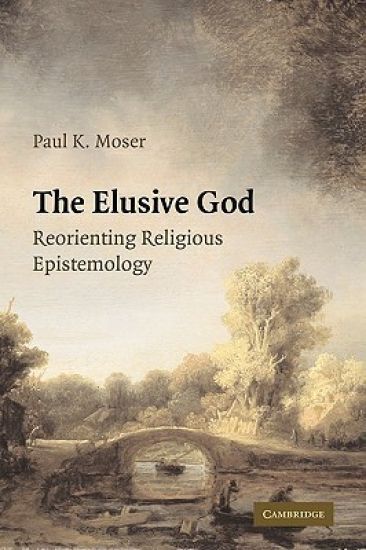
The Elusive God

The Elusive God

Paul K. Moser

Cambridge University Press
2009
pokkari
Three questions motivate this book's account of evidence for the existence of God. First, if God's existence is hidden, why suppose He exists at all? Second, if God exists, why is He hidden, particularly if God seeks to communicate with people? Third, what are the implications of divine hiddenness for philosophy, theology, and religion's supposed knowledge of God? This book answers these questions using a new account of evidence and knowledge of divine reality that challenges scepticism about God's existence. The central thesis is that we should expect evidence of divine reality to be purposively available to humans, that is, available only in a manner suitable to divine purposes in self-revelation. This lesson generates a seismic shift in our understanding of evidence and knowledge of divine reality. The result is a much-needed reorienting of religious epistemology to accommodate the character and purposes of an authoritative, perfectly loving God.
Problems of Empiricism: Volume 2

Problems of Empiricism: Volume 2

Paul K. Feyerabend

Cambridge University Press
1985
pokkari
Over the past thirty years Paul Feyerabend has developed an extremely distinctive and influentical approach to problems in the philosophy of science. The most important and seminal of his published essays are collected here in two volumes, with new introductions to provide an overview and historical perspective on the discussions of each part. Volume 1 presents papers on the interpretation of scientific theories, together with papers applying the views developed to particular problems in philosophy and physics. The essays in volume 2 examine the origin and history of an abstract rationalism, as well as its consequences for the philosophy of science and methods of scientific research. Professor Feyerabend argues with great force and imagination for a comprehensive and opportunistic pluralism. In doing so he draws on extensive knowledge of scientific history and practice, and he is alert always to the wider philosophical, practical and political implications of conflicting views. These two volumes fully display the variety of his ideas, and confirm the originality and significance of his work.
Realism, Rationalism and Scientific Method: Volume 1

Realism, Rationalism and Scientific Method: Volume 1

Paul K. Feyerabend

Cambridge University Press
1985
pokkari
Over the past thirty years Paul Feyerabend has developed an extremely distinctive and influentical approach to problems in the philosophy of science. The most important and seminal of his published essays are collected here in two volumes, with new introductions to provide an overview and historical perspective on the discussions of each part. Volume 1 presents papers on the interpretation of scientific theories, together with papers applying the views developed to particular problems in philosophy and physics. The essays in volume 2 examine the origin and history of an abstract rationalism, as well as its consequences for the philosophy of science and methods of scientific research. Professor Feyerabend argues with great force and imagination for a comprehensive and opportunistic pluralism. In doing so he draws on extensive knowledge of scientific history and practice, and he is alert always to the wider philosophical, practical and political implications of conflicting views. These two volumes fully display the variety of his ideas, and confirm the originality and significance of his work.
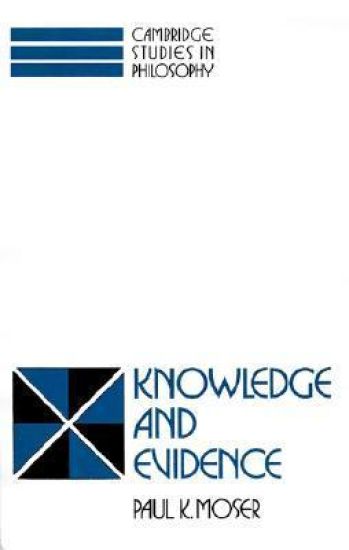
Knowledge and Evidence

Knowledge and Evidence

Paul K. Moser

Cambridge University Press
1991
pokkari
Paul Moser's book defends what has been an unfashionable view in recent epistemology: the foundationalist account of knowledge and justification. Since the time of Plato philosophers have wondered what exactly knowledge is. This book develops a new account of perceptual knowledge which specifies the exact sense in which knowledge has foundations. The author argues that experiential foundations are indeed essential to perceptual knowledge, and he explains what knowledge requires beyond justified true beliefs. In challenging prominent sceptical claims that we have no justified beliefs about the external world, the book outlines a theory of rational belief.
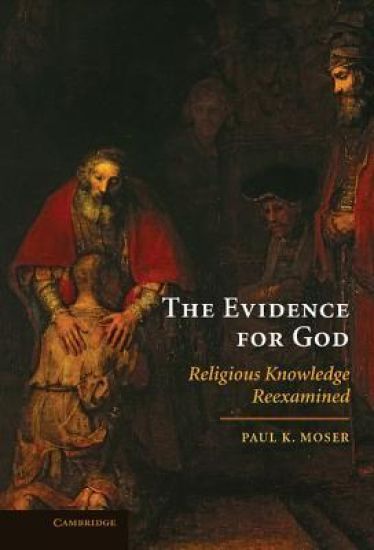
The Evidence for God

The Evidence for God

Paul K. Moser

Cambridge University Press
2009
sidottu
If God exists, where can we find adequate evidence for God's existence? In this book, Paul Moser offers a perspective on the evidence for God that centers on a morally robust version of theism that is cognitively resilient. The resulting evidence for God is not speculative, abstract, or casual. Rather, it is morally and existentially challenging to humans, as they themselves responsively and willingly become evidence of God's reality in receiving and reflecting God's moral character for others. Moser calls this 'personifying evidence of God,' because it requires the evidence to be personified in an intentional agent - such as a human - and thereby to be inherent evidence of an intentional agent. Contrasting this approach with skepticism, scientific naturalism, fideism, and natural theology, Moser also grapples with the potential problems of divine hiddenness, religious diversity, and vast evil.
The Archaeology of Rank

The Archaeology of Rank

Paul K. Wason

Cambridge University Press
2004
pokkari
Social archaeology is concerned with how one might use the archaeological record of the present to elucidate how social interactions were ordered in a past society. This requires a meaningful model of society, considerable archaeological data, and a reliable connection between them. A major goal of this book is to improve our understanding of one aspect of social archaeology, the inference of status hierarchy. The first section covers what is involved in social inference, and presents ideas on how it may be done reliably. In the following section, the typological models of Elman Service and Morton Fried are used to clarify certain aspects of ranking. The final section draws together a number of insights concerning the recognition of status inequality. These approaches are given systematic arrangement and evaluated in light of the model of social inference. This arrangement clarifies how they relate to each other, making it easier to see how they may be applied in varied real contexts, and stimulates new ideas for more correlations of ranking.
The Evidence for God

The Evidence for God

Paul K. Moser

Cambridge University Press
2009
pokkari
If God exists, where can we find adequate evidence for God's existence? In this book, Paul Moser offers a perspective on the evidence for God that centers on a morally robust version of theism that is cognitively resilient. The resulting evidence for God is not speculative, abstract, or casual. Rather, it is morally and existentially challenging to humans, as they themselves responsively and willingly become evidence of God's reality in receiving and reflecting God's moral character for others. Moser calls this 'personifying evidence of God,' because it requires the evidence to be personified in an intentional agent - such as a human - and thereby to be inherent evidence of an intentional agent. Contrasting this approach with skepticism, scientific naturalism, fideism, and natural theology, Moser also grapples with the potential problems of divine hiddenness, religious diversity, and vast evil.
The Democratic Peace and Territorial Conflict in the Twentieth Century

The Democratic Peace and Territorial Conflict in the Twentieth Century

Paul K. Huth; Todd L. Allee

Cambridge University Press
2003
sidottu
This book presents a systematic reassessment of the theoretical and empirical foundations of the democratic peace literature. Three distinct theoretical models of how domestic political institutions shape the foreign policy choices of state leaders are developed and Huth and Allee then test hypotheses from each model against an original data set of 348 territorial disputes from 1919–95. Each territorial dispute is divided into three separate but related phases for empirical analysis: Challenge the Status Quo Stage, Negotiation Stage and Military Escalation Stage. Their statistical results provide strong support for the importance of democratic accountability and norms in shaping decisions to negotiate and settle disputes as well as to threaten force and escalate to war. The findings of this book address central debates and provide many insights into understanding when and why democratic leaders engage in cooperative or confrontational foreign policies.
The Democratic Peace and Territorial Conflict in the Twentieth Century

The Democratic Peace and Territorial Conflict in the Twentieth Century

Paul K. Huth; Todd L. Allee

Cambridge University Press
2003
pokkari
This book presents a systematic reassessment of the theoretical and empirical foundations of the democratic peace literature. Three distinct theoretical models of how domestic political institutions shape the foreign policy choices of state leaders are developed and Huth and Allee then test hypotheses from each model against an original data set of 348 territorial disputes from 1919–95. Each territorial dispute is divided into three separate but related phases for empirical analysis: Challenge the Status Quo Stage, Negotiation Stage and Military Escalation Stage. Their statistical results provide strong support for the importance of democratic accountability and norms in shaping decisions to negotiate and settle disputes as well as to threaten force and escalate to war. The findings of this book address central debates and provide many new insights into understanding when and why democratic leaders engage in cooperative or confrontational foreign policies.
Physics and Philosophy: Volume 4

Physics and Philosophy: Volume 4

Paul K. Feyerabend

Cambridge University Press
2015
sidottu
This collection of the writings of Paul Feyerabend is focused on his philosophy of quantum physics, the hotbed of the key issues of his most debated ideas. Written between 1948 and 1970, these writings come from his first and most productive period. These early works are important for two main reasons. First, they document Feyerabend's deep concern with the philosophical implications of quantum physics and its interpretations. These ideas were paid less attention in the following two decades. Second, the writings provide the crucial background for Feyerabend's critiques of Karl Popper and Thomas Kuhn. Although rarely considered by scholars, Feyerabend's early work culminated in the first version of Against Method. These writings guided him on all the key issues of his most well-known and debated theses, such as the incommensurability thesis, the principles of proliferation and tenacity, and his particular version of relativism, and more specifically on quantum mechanics.
The Elusive God

The Elusive God

Paul K. Moser

Cambridge University Press
2008
sidottu
Three questions motivate this book's account of evidence for the existence of God. First, if God's existence is hidden, why suppose He exists at all? Second, if God exists, why is He hidden, particularly if God seeks to communicate with people? Third, what are the implications of divine hiddenness for philosophy, theology, and religion's supposed knowledge of God? This book answers these questions using a new account of evidence and knowledge of divine reality that challenges scepticism about God's existence. The central thesis is that we should expect evidence of divine reality to be purposively available to humans, that is, available only in a manner suitable to divine purposes in self-revelation. This lesson generates a seismic shift in our understanding of evidence and knowledge of divine reality. The result is a much-needed reorienting of religious epistemology to accommodate the character and purposes of an authoritative, perfectly loving God.
Three Dialogues on Knowledge

Three Dialogues on Knowledge

Paul K. Feyerabend

Blackwell Publishers
1991
nidottu
The Socratic, or dialog, form is central to the history of philosophy and has been the discipline's canonical genre ever since. Paul Feyerabend's Three Dialogues on Knowledge resurrects the form to provide an astonishingly flexible and invigorating analysis of epistemological, ethical and metaphysical problems. He uses literary strategies - of irony, voice and distance - to make profoundly philosophical points about the epistemic, existential and political aspects of common sense and scientific knowledge. He writes about ancient and modern relativism; the authority of science; the ignorance of scientists; the nature of being; and true and false enlightenment. Throughout Three Dialogues on Knowledge is provocative, controversial and inspiring. It is, unlike most current philosophical writing, written for readers with a keen sense of what matters and why.
First and Second Chronicles

First and Second Chronicles

Paul K. Hooker

Westminster/John Knox Press,U.S.
2001
nidottu
Presents the first and second Chronicles as a theological reflection on the story of Israel's faith, using the narrative of Samuel and Kings, reaffirming Israel's position as the chosen people of God, and tracing the role of worship in Israel's history as a nation. Original.
Washington D.C.: The World War II Years

Washington D.C.: The World War II Years

Paul K. Williams

Arcadia Publishing (SC)
2004
nidottu
The valiant story of the nation's capital facing the challenges of World War II told in over 200 rare, historical images that bring the past to life.As the country prepared for World War II, the nation's capital took center stage. Washington residents witnessed the local population nearly double in a few short years, as a mostly female work force descended on the city, while its male population was sent off to combat in Europe and the Pacific. Washingtonians planted victory gardens, ran scrap drives, and suffered the effects of severe rationing along with the rest of the nation, while military personnel manned anti aircraft batteries around the city. New government agencies were created and existing ones expanded dramatically-most doubled their workforce and constructed hundreds of temporary facilities on the Mall and throughout the city. Washington also witnessed the construction of the largest office building in the world, the Pentagon, which was completed in just 16 months. Washington, D.C.: The World War II Years captures nearly 200 fascinating images from this era. These archival photographs chronicle the beginning stages of war preparation, little known civic defense organizations, VE and VJ celebratory parades, and the overall spirit of the continually persevering capital city.
Southwest Washington, D.C.

Southwest Washington, D.C.

Paul K. Williams

Arcadia Publishing (SC)
2006
nidottu
Southwest Washington, D.C.: A defined neighborhood even without a proper name.The quadrant of Southwest Washington, D.C. has a clear border southwest of the U.S. Capitol Building, nestled along the oldest waterfront in the city. Its physical delineations have defined it as a community for more than 250 years, beginning in the mid-1700s with emerging farms. By the mid-1800s, a thriving urban, residential, and commercial neighborhood was supported by the waterfront where Washingtonians bought seafood and produce right off the boats. In the 1920s and 1930s, an aging housing stock and an overcrowded city led to an increase of African Americans and Jewish immigrants who became self-sufficient within their own communities. However, political pressures and radical urban planning concepts in the 1950s led to the large-scale razing of most of SW, creating a new community with what was then innovative apartment and cooperative living constructed with such unusual building materials as aluminum. Author and local historian Paul K. Williams provides and in-depth look at it all.
Philosophy of Nature

Philosophy of Nature

Paul K. Feyerabend

Polity Press
2016
sidottu
Philosopher, physicist, and anarchist Paul Feyerabend was one of the most unconventional scholars of his time. His book Against Method has become a modern classic. Yet it is not well known that Feyerabend spent many years working on a philosophy of nature that was intended to comprise three volumes covering the period from the earliest traces of stone age cave paintings to the atomic physics of the 20th century – a project that, as he conveyed in a letter to Imre Lakatos, almost drove him nuts: “Damn the ,Naturphilosophie.”The book’s manuscript was long believed to have been lost. Recently, however, a typescript constituting the first volume of the project was unexpectedly discovered at the University of Konstanz. In this volume Feyerabend explores the significance of myths for the early period of natural philosophy, as well as the transition from Homer’s “aggregate universe” to Parmenides’ uniform ontology. He focuses on the rise of rationalism in Greek antiquity, which he considers a disastrous development, and the associated separation of man from nature. Thus Feyerabend explores the prehistory of science in his familiar polemical and extraordinarily learned manner. The volume contains numerous pictures and drawings by Feyerabend himself. It also contains hitherto unpublished biographical material that will help to round up our overall image of one of the most influential radical philosophers of the twentieth century.
Philosophy of Nature

Philosophy of Nature

Paul K. Feyerabend

Polity Press
2018
nidottu
Philosopher, physicist, and anarchist Paul Feyerabend was one of the most unconventional scholars of his time. His book Against Method has become a modern classic. Yet it is not well known that Feyerabend spent many years working on a philosophy of nature that was intended to comprise three volumes covering the period from the earliest traces of stone age cave paintings to the atomic physics of the 20th century – a project that, as he conveyed in a letter to Imre Lakatos, almost drove him nuts: “Damn the ,Naturphilosophie.”The book’s manuscript was long believed to have been lost. Recently, however, a typescript constituting the first volume of the project was unexpectedly discovered at the University of Konstanz. In this volume Feyerabend explores the significance of myths for the early period of natural philosophy, as well as the transition from Homer’s “aggregate universe” to Parmenides’ uniform ontology. He focuses on the rise of rationalism in Greek antiquity, which he considers a disastrous development, and the associated separation of man from nature. Thus Feyerabend explores the prehistory of science in his familiar polemical and extraordinarily learned manner. The volume contains numerous pictures and drawings by Feyerabend himself. It also contains hitherto unpublished biographical material that will help to round up our overall image of one of the most influential radical philosophers of the twentieth century.