"The Complete Idiot's Guide® to the Crusades is a journey into the clash between Christianity and Islam in a two-hundred-year battle for the soul of man and the profits of trade. It was a time when western civilization brought the world such items as chastity belts, razors, stained glass, perfume, gunpowder, the compass, and even public latrines. The book will record every step of this 1,000-mile journey: the epic battles of Antioch, Jerusalem, and Acre and, ultimately, the battle for the souls of all men. It was a war that, in many ways, is still being fought today in various spots on the globe. "
Child psychology as a scientific enterprise is about 100 years old, but while numerous textbooks and practical guides are available, the more meditative questions about the nature of a child's mind are rarely asked. This book explores some of the enduring questions in developmental psychology: How do children form an attachment to their caregivers? How do they learn words? In their imagination, are they confused - or clear-sighted - about the difference between fantasy and reality? How do they decide who to trust? In each case, Paul Harris shows why these questions are important, proposes likely answers, and explains the uncertainties that persist. He outlines important landmarks, both well-known and neglected, and explores broader questions about theories of mind, morality, and cross-cultural differences.
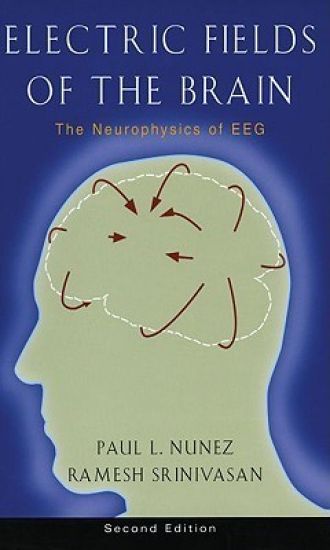
Electroencephalography (EEG) is practiced by neurologists, cognitive neuroscientists, and others interested in functional brain imaging. Whether for clinical or experimental purposes, all studies share a common purpose-to relate scalp potentials to the underlying neurophysiology. Electrical potentials on the scalp exhibit spatial and temporal patterns that depend on the nature and location of the sources and the way that currents and fields spread through tissue. Because these dynamic patterns are correlated with behavior and cognition, EEG provides a "window on the mind," correlating physiology and psychology. This classic and widely acclaimed text, originally published in 1981, filled the large gap between EEG and the physical sciences. It has now been brought completely up to date and will again serve as an invaluable resource for understanding the principles of electric fields in living tissue and for using hard science to study human consciousness and cognition. No comparable volume exists for it is no easy task to explain the problems of EEG in clear language, with mathematics presented mainly in appendices. Among the many topics covered by the Second Edition are micro and meso (intermediate scale) synaptic sources, electrode placement, choice of reference, volume conduction, power and coherence measures, projection of scalp potentials to dura surface, dynamic signatures of conscious experience, neural networks immersed in global fields of synaptic action, and physiological bases for brain source dynamics. The Second Edition is an invaluable resource for neurologists, neuroscientists (especially cognitive neuroscientists), biomedical engineers, and their students and trainees. It will also appeal to physicists, mathematicians, computer scientists, psychiatrists, and industrial engineers interested in EEG.
The rapidly developing field of intellectual property and private international law could be difficult to navigate for practitioners and researchers because of the complex interface of the two legal disciplines. Intellectual Property and Private International Law sets out the main concepts with a comprehensive analysis of issues arising from the relationship between the two disciplines from common law, European Union and international perspectives. This highly regarded work examines how jurisdiction is established in intellectual property disputes, how one identifies the applicable law and how to secure the recognition and enforcement of foreign judgments. This new edition encompasses the numerous, and in some cases major, legal developments seen over the past twelve years. It deals with the private international law aspects of the introduction of mandatory exemptions to the Directive on Copyright in the Digital Single Market; discusses the new Court of Justice of the European Union case law on article 7.2 Brussels I Regulations and its divergent approach to European Union intellectual property rights; covers recent EU directives and national case law, including the fundamental change in patent law that will result from the introduction of the European Patent with Unitary Effect and the Unified Patent Court; as well as elucidating the implications of Britain's departure from the European Union.
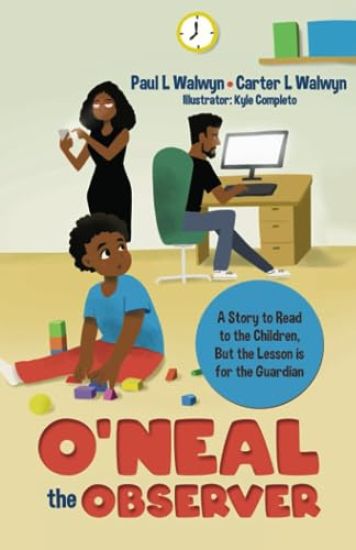
The age-old question has always been, is a child's behaviour based on genetics or environmental factors? That question won't be answered here by O'neal because he is only two years old. O'neal the Observer is a short story about a Black boy who is paying attention to his parents' interests, and also what they are disinterested in, even if they are unaware. Like most children at that age, they are trying to understand a new world, and sometimes what a guardian displays is what a child will receive, and one day mirror themselves.
Markets for Power provides an unusually complete analysis of the economic, technical, and institutional aspects of the electric utility industry. The authors evaluate four currently popular options for deregulating this unique segment of the economy, and in a balanced program for reform, they advise against total deregulation and recommend a cautious approach to even partial deregulation.
Paul L. Heck's Political Theology and Islam offers a sophisticated and comprehensive analysis of sovereignty in Islamic society, beginning with the origins of Islam and extending to the present. This wide-ranging study sets out to answer an unassumingly tricky question: What is politics in Islam? Paul L. Heck's answer takes the form of a close analysis of sovereignty across Islamic history, approaching this concept from the perspective of political theology. As he illustrates, the history of politics in Islam is best understood as an ongoing struggle for a moral order between those who occupy positions of rulership and religious voices that communicate the ethics of Islam and educate the public in their religious and moral devotions. In this sense, sovereignty in Islam is split between ruling powers and pious communities, whose interactions range from close cooperation to outright competition. Heck shows that it is precisely through these interactions that Islamic conceptions of sovereignty are constructed and negotiated. Political Theology and Islam's first section spells out the concepts and methods for the study of politics in Islam as a struggle for a moral order, one not only involving varied claims to sovereignty but also a general determination to realize the righteousness of Islam that stands at the heart of the message that the Prophet Muhammad conveyed to his society in seventh-century Arabia. The following sections demonstrate, through examples from both the past and today's worldwide Muslim community, the diverse ways in which the umma, the community of Muslims, has struggled for a moral order that recalls its prophetic message. Deftly moving in various political theaters and through a wide range of intellectual traditions, Heck's book will emerge as a touchstone of scholarship in the field of Muslim politics and intellectual thought.
Paul L. Heck's Political Theology and Islam offers a sophisticated and comprehensive analysis of sovereignty in Islamic society, beginning with the origins of Islam and extending to the present.This wide-ranging study sets out to answer an unassumingly tricky question: What is politics in Islam? Paul L. Heck's answer takes the form of a close analysis of sovereignty across Islamic history, approaching this concept from the perspective of political theology. As he illustrates, the history of politics in Islam is best understood as an ongoing struggle for a moral order between those who occupy positions of rulership and religious voices that communicate the ethics of Islam and educate the public in their religious and moral devotions. In this sense, sovereignty in Islam is split between ruling powers and pious communities, whose interactions range from close cooperation to outright competition. Heck shows that it is precisely through these interactions that Islamic conceptions of sovereignty are constructed and negotiated.Political Theology and Islam's first section spells out the concepts and methods for the study of politics in Islam as a struggle for a moral order, one not only involving varied claims to sovereignty but also a general determination to realize the righteousness of Islam that stands at the heart of the message that the Prophet Muhammad conveyed to his society in seventh-century Arabia. The following sections demonstrate, through examples from both the past and today's worldwide Muslim community, the diverse ways in which the umma, the community of Muslims, has struggled for a moral order that recalls its prophetic message. Deftly moving in various political theaters and through a wide range of intellectual traditions, Heck's book will emerge as a touchstone of scholarship in the field of Muslim politics and intellectual thought.
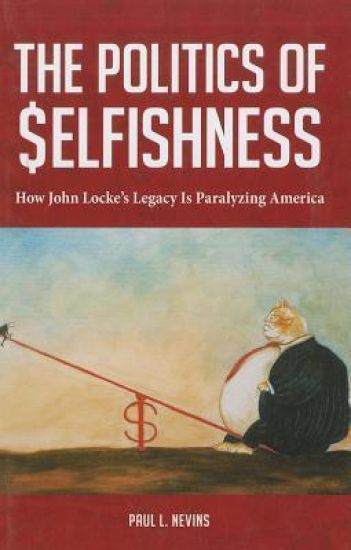
In this thought-provoking book, the author argues that a preoccupation with the self and its solitary concerns—a mindset that is Locke's legacy—is at the root of America's present political and economic problems.John Locke was an English philosopher who is regarded as the "father of liberalism." His thinking had a profound influence on political philosophy; in fact, the founding fathers who drafted the Constitution of the United States based a portion of its content upon Locke's tenets. However, it can be argued that these Lockean concepts are ill-adapted to realities of the modern world, and as such are the root cause of dysfunction in our body politic today—and are hampering the Obama administration's attempts to effect change.This book traces the evolution of liberalism as a political philosophy in England and the United States from the 18th century to today. The author presents a series of historical and contemporary studies that illustrate how John Locke's political philosophy of antisocial individualism continues to affect modern American culture. Additionally, this book attempts to address why American "conservatives" are actually liberal, how American "liberals" can also be deemed liberal, to provide direction in getting American politics moving again, and restore the American dream for ourselves and our children.Over 100 primary sources are examined Chronological presentation within the book's first four parts or "books" Extensive bibliography includes primary and secondary books, as well as citations to newsprint, magazine, and journal article sources
Originally published in 1981, this concordance can afford particular benefits to the critic and textual scholar because of several specialized problems that The Arrow of Gold presents. It should be able to shed light on problems distinct to The Arrow of Gold even as it provides information on questions pertinent to Conrad’s work as a whole. This volume is part of a series which produced verbal indexes, concordances, and related data for all of Conrad’s works.
Originally published in 1981, this concordance can afford particular benefits to the critic and textual scholar because of several specialized problems that The Arrow of Gold presents. It should be able to shed light on problems distinct to The Arrow of Gold even as it provides information on questions pertinent to Conrad’s work as a whole. This volume is part of a series which produced verbal indexes, concordances, and related data for all of Conrad’s works.
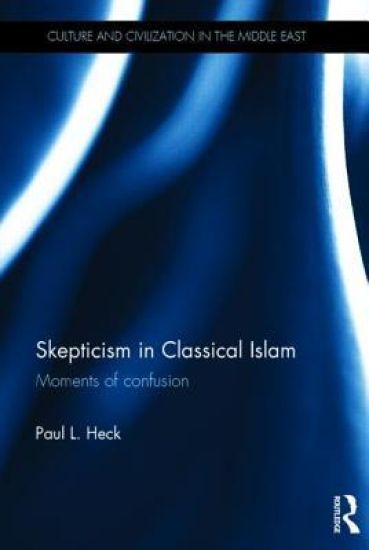
The first major treatment of skepticism in Islam, this book explores the critical role of skeptical thinking in the development of theology in Islam. It examines the way key thinkers in classical Islam faced perplexing questions about the nature of God and his relation to the world, all the while walking a fine line between belief in God’s message as revealed in the Qur’an, and the power of the mind to discover truths on its own. Skepticism in Classical Islam reveals how doubt was actually an integral part of scholarly life at this time. Skepticism is by no means synonymous with atheism. It is, rather, the admission that one cannot convincingly demonstrate a truth claim with certainty, and Islam’s scholars, like their counterparts elsewhere, acknowledged such impasses, only to be inspired to find new ways to resolve the conundrums they faced. Whilst their conundrums were unique, their admission of the limits of knowledge shares much with other scholarly traditions. Seeking to put Islam on the map of the broader study of the history of scepticism, this book will be of interest to scholars and students of Religion, History and Philosophy.
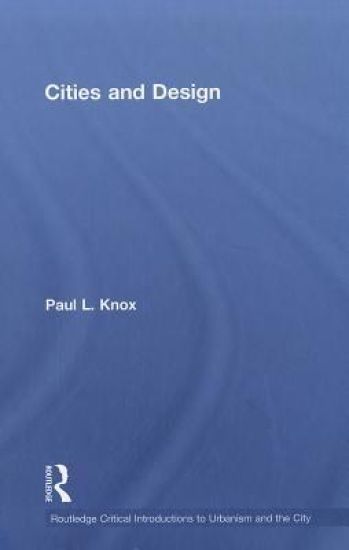
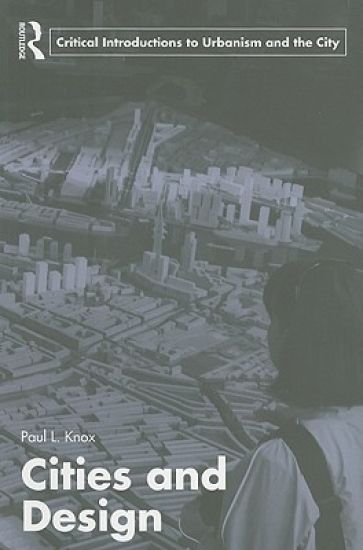
Cities, initially a product of the manufacturing era, have been thoroughly remade in the image of consumer society. Competitive spending among affluent households has intensified the importance of style and design at every scale and design professions have grown in size and importance, reflecting distinctive geographies and locating disproportionately in cities most intimately connected with global systems of key business services. Meanwhile, many observers still believe good design can make positive contributions to people’s lives.Cities and Design explores the complex relationships between design and urban environments. It traces the intellectual roots of urban design, presents a critical appraisal of the imprint and effectiveness of design professions in shaping urban environments, examines the role of design in the material culture of contemporary cities, and explores the complex linkages among designers, producers and distributors in contemporary cities, for example: fashion and graphic design in New York; architecture, fashion and publishing in London; furniture, industrial design, interior design and fashion in Milan; haute couture in Paris and so on.This book offers a distinctive social science perspective on the economic and cultural context of design in contemporary cities, presenting cities themselves as settings for design, design services and the ‘affect’ associated with design.
Cities, initially a product of the manufacturing era, have been thoroughly remade in the image of consumer society. Competitive spending among affluent households has intensified the importance of style and design at every scale and design professions have grown in size and importance, reflecting distinctive geographies and locating disproportionately in cities most intimately connected with global systems of key business services. Meanwhile, many observers still believe good design can make positive contributions to people’s lives.Cities and Design explores the complex relationships between design and urban environments. It traces the intellectual roots of urban design, presents a critical appraisal of the imprint and effectiveness of design professions in shaping urban environments, examines the role of design in the material culture of contemporary cities, and explores the complex linkages among designers, producers and distributors in contemporary cities, for example: fashion and graphic design in New York; architecture, fashion and publishing in London; furniture, industrial design, interior design and fashion in Milan; haute couture in Paris and so on.This book offers a distinctive social science perspective on the economic and cultural context of design in contemporary cities, presenting cities themselves as settings for design, design services and the ‘affect’ associated with design.
The first major treatment of skepticism in Islam, this book explores the critical role of skeptical thinking in the development of theology in Islam. It examines the way key thinkers in classical Islam faced perplexing questions about the nature of God and his relation to the world, all the while walking a fine line between belief in God’s message as revealed in the Qur’an, and the power of the mind to discover truths on its own. Skepticism in Classical Islam reveals how doubt was actually an integral part of scholarly life at this time. Skepticism is by no means synonymous with atheism. It is, rather, the admission that one cannot convincingly demonstrate a truth claim with certainty, and Islam’s scholars, like their counterparts elsewhere, acknowledged such impasses, only to be inspired to find new ways to resolve the conundrums they faced. Whilst their conundrums were unique, their admission of the limits of knowledge shares much with other scholarly traditions. Seeking to put Islam on the map of the broader study of the history of scepticism, this book will be of interest to scholars and students of Religion, History and Philosophy.
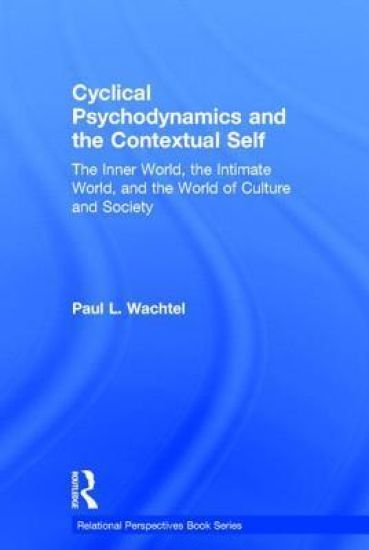
Cyclical Psychodynamics and the Contextual Self articulates in new ways the essential features and most recent extensions of Paul Wachtel's powerfully integrative theory of cyclical psychodynamics. Wachtel is widely regarded as the leading advocate for integrative thinking in personality theory and the theory and practice of psychotherapy. He is a contributor to cutting edge thought in the realm of relational psychoanalysis and to highlighting the ways in which the relational point of view provides especially fertile ground for integrating psychoanalytic insights with the ideas and methods of other theoretical and therapeutic orientations. In this book, Wachtel extends his integration of psychoanalytic, cognitive-behavioral, systemic, and experiential viewpoints to examine closely the nature of the inner world of subjectivity, its relation to the transactional world of daily life experiences, and the impact on both the larger social and cultural forces that both shape and are shaped by individual experience. Here, he discusses in a uniquely comprehensive fashiong the subtleties of the clinical interaction, the findings of systematic research, and the role of social, economic, and historical forces in our lives. The chapters in this book help to transcend the tunnel vision that can lead therapists of different orientations to ignore the important discoveries and innovations from competing approaches. Explicating the pervasive role of vicious circles and self-fulfilling prophecies in our lives, Cyclical Psychodynamics and the Contextual Self shows how deeply intertwined the subjective, the intersubjective, and the cultural realms are, and points to new pathways to therapeutic and social change. Both a theoretical tour de force and an immensely practical guide to clinical practice, this book will be essential reading for psychoanalysts, psychotherapists and students of human behavior of all backgrounds and theoretical orientations.