Kirjojen hintavertailu. Mukana 12 397 123 kirjaa ja 12 kauppaa.

Kirjahaku

Etsi kirjoja tekijän nimen, kirjan nimen tai ISBN:n perusteella.

1000 tulosta hakusanalla Paul Rees

Key Questions in Ecology

Key Questions in Ecology

Paul Rees

CABI Publishing
2020
nidottu
An understanding of ecology is an important requirement of a wide range of academic areas, including biology, zoology and environmental science. This book is a study and revision guide for students following programmes of study in which ecology is an important component. It contains 600 multiple-choice questions (and answers) set at three levels - foundation, intermediate and advanced - and grouped into 10 major topic areas: · The history and foundations of ecology · Abiotic factors and environmental monitoring · Taxonomy and biodiversity · Energy flow and production ecology · Nutrient and material cycles · Ecophysiology · Population ecology · Community ecology and species interactions · Ecological genetics and evolution · Ecological methods and statistics The book has been produced in a convenient format so that it can be used at any time in any place. It allows the reader to learn and revise the meaning of ecological terms, the basic processes operating in ecosystems, the dynamics of populations, ecological genetics and the process of evolution, the methods used in ecological surveys, and much more. The structure of the book allows the study of one topic area at a time, progressing through simple questions to those that are more demanding. Many of the questions require students to use their knowledge to interpret information provided in the form of graphs, data or photographs, providing a useful tool for independent study.
Key Questions in Applied Ecology and Conservation
An understanding of applied ecology and conservation is an important requirement of a wide range of programmes of study including applied biology, ecology, environmental science and wildlife conservation. This book is a study and revision guide for students following such programmes. It contains 600 multiple-choice questions (and answers) set at three levels - foundation, intermediate and advanced - and grouped into 10 major topic areas: History and foundations of applied ecology and conservation Environmental pollution and perturbations Wildlife and conservation biology Restoration biology and habitat management Agriculture, forestry and fisheries management Pest, weed and disease management Urban ecology and waste management Global environmental change and biodiversity loss Environmental and wildlife law and policy Environmental assessment, monitoring and modelling The book has been produced in a convenient format so that it can be used at any time in any place. It allows the reader to learn and revise the meaning of terms used in applied ecology and conservation, study the effects of pollution on ecosystems, the management, conservation and restoration of wildlife populations and habitats, urban ecology, global environmental change, environment law and much more. The structure of the book allows the study of one topic area at a time, progressing through simple questions to those that are more demanding. Many of the questions require students to use their knowledge to interpret information provided in the form of graphs, data or photographs.
Key Questions in Biodiversity

Key Questions in Biodiversity

Paul Rees

CABI Publishing
2021
nidottu
An understanding of biodiversity is an important requirement of a wide range of programmes of study including biology, zoology, wildlife conservation and environmental science. This book is a study and revision guide for students following such programmes in which biodiversity is an important component. It contains 600 multiple-choice questions (and answers) set at three levels - foundation, intermediate and advanced - and grouped into 10 major topic areas: 1. Principles of classification and taxonomy 2. Comparative anatomy and physiology 3. Protoctists, monerans, fungi, lichens and acellular organisms 4. 'Lower' plants and pteridophytes 5. Seed-bearing plants 6. Sponges, cnidarians, nematodes and minor animal phyla 7. Platyhelminths, annelids and molluscs 8. Arthropods and echinoderms 9. Fishes, amphibians and reptiles 10. Birds and mammals The book has been produced in a convenient format so that it can be used at any time in any place. It allows the reader to learn and revise the meaning of terms used in animal and plant classification, the principles of comparative physiology, and the characteristics of, and diversity in, the major animal and plant taxa. The structure of the book allows the study of one topic area or group of taxa at a time, progressing through simple questions to those that are more demanding. Many of the questions require students to use their knowledge to identify organisms and biological structures from drawings or photographs.
Key Questions in Animal Behaviour and Welfare
An understanding of animal behaviour and welfare is an important requirement of a wide range of programmes of study including biology, zoology, animal welfare, animal behaviour, psychology and zoo biology. This book is intended as a study and revision guide for students following programmes of study in which animal behaviour and welfare are an important component. It contains 600 multiple-choice questions (and answers) set at three levels - foundation, intermediate and advanced - and grouped into 10 major topic areas: 1. Foundations and history of animal behaviour and welfare 2. Basic concepts and mechanisms in behaviour 3. Biological basis of behaviour 4. Learning, memory and training 5. Territoriality, navigation and migration 6 Animal cognition and communication 7. Behavioural ecology and social behaviour 8. Measuring, recording and analysing animal behaviour and welfare 9. Animal exploitation and welfare 10 Animal rights, ethics and law The book has been produced in a convenient format so that it can be used at any time in any place. It allows the reader to learn and revise the meaning of terms used in the study of animal behaviour and welfare, methods of recording behaviour and assessing welfare, the physiology of behaviour, learning, memory, cognition, behavioural ecology, animal rights and much more. Many of the questions require students to use their knowledge to interpret information provided in the form of graphs, data or photographs.
Key Questions in Zoo and Aquarium Studies
An understanding of the work of zoos and aquariums is central to many programmes of study in wildlife conservation and more specialised programmes in zoo and aquarium science and management. This book is intended as a study and revision guide for students following these programmes. It contains 600 multiple-choice questions (and answers) set at three levels - foundation, intermediate and advanced - and grouped into 10 major topic areas: 1. History of zoos and aquariums 2. Zoo and exhibit design 3. Aquariums and Aquatic exhibits 4 Visitor studies, zoo education and zoo research 5. Nutrition and food presentation 6 Reproductive biology and genetics 7. Conservation breeding and assisted reproductive technologies 8. Behaviour, training and environmental enrichment 9. Animal welfare and conservation medicine 10. Zoo organisation and regulation The book has been produced in a convenient format so that it can be used at any time in any place. It allows the reader to learn and revise the meaning of terms used in zoo and aquarium biology, the principles of animal husbandry and enclosure design, the behaviour of zoo visitors, the operation of captive breeding programmes, the international organisation of zoos, their legal regulation and much more. The structure of the book allows the study of one topic area at a time, progressing through simple questions to those that are more demanding. Many of the questions require students to use their knowledge to interpret information provided in the form of graphs, diagrams, data or photographs.
Students' Dictionary of Zoo and Aquarium Studies
This Students' Dictionary of Zoo and Aquarium Studies contains over 5,000 terms (illustrated by 88 figures) used in zoos, aquariums, safari parks, birds of prey centres, petting zoos, animal rescue centres and other facilities that make up the 'zoo industry'. It covers a wide range of topics including animal behaviour, animal husbandry, animal welfare, ecology, law, taxonomy, classification, nutrition, parasitology, physiology, reproduction, experimental design, statistics, veterinary science, disease, visitor studies, water management, wildlife conservation and zoo design and architecture. It should be of great interest to those studying zoo biology, animal management, veterinary science and related subjects along with zookeepers and aquarists in the early stages of their careers. Dr Paul Rees has a long-standing interest in animals and in zoos. He has taught a wide range of subjects including ecology, animal behaviour, zoo biology, and wildlife and zoo law. While lecturing at the University of Salford he created the first undergraduate programme in Wildlife Conservation and Zoo Biology in the United Kingdom and over a period of some 20 years was an external examiner for BSc and MSc programmes in zoo biology and wildlife conservation at the Universities of Edinburgh, Chester, Staffordshire, Wolverhampton, Gloucestershire and Nottingham Trent University. Dr Rees has published research on the large mammal fauna of Ngorongoro Crater, Tanzania, the ecology and behaviour of elephants and cheetahs living in zoos, and the laws concerning wildlife reintroductions and the regulation of zoos.
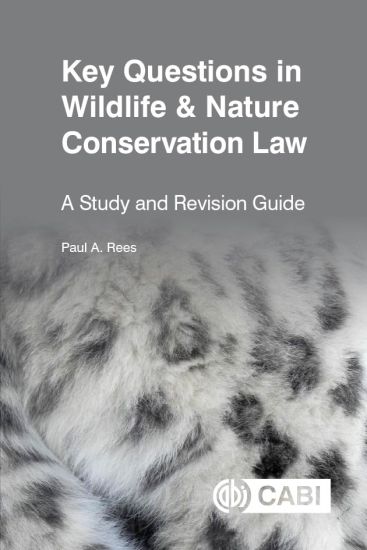
Key Questions in Wildlife & Nature Conservation Law
Law plays an essential part in the conservation of wildlife and ecosystems. The study of wildlife and nature conservation law is an important component of a wide range of programmes of study including wildlife conservation, environmental management and environmental law. This book is a study and revision guide for students following such programmes. It contains 600 multiple choice questions (and answers) set at three levels - foundation, intermediate and advanced - and grouped into 10 major topic areas: 1. Principles of Wildlife and Nature Conservation Law 2. History of Wildlife and Nature Conservation Law 3. Species Protection and Exploitation I - EU and International Law 4. Species Protection and Exploitation II - National Laws 5. Protected Areas and Habitats I - EU and International Laws 6. Protected Areas and Habitats II - National Laws 7. Planning, Pollution, Restoration and Conservation Funding 8. Wildlife Trade, Animal Collections and Alien Species 9. Wildlife Law Enforcement and Penalties 10. Legal Texts This book has been produced in a convenient format so that it can be used at any time, in any place. It allows the reader to learn and revise the meaning of terms used in wildlife and nature conservation law and study the role of legislation at national, European Union (EU) and international level in the protection of individual species, habitats and landscapes. It uses examples from a wide variety of taxa, habitats and protected areas selected from a range of jurisdictions from the United Kingdom, the United States and Australia to Antarctica and the High Seas. Topics include the control of hunting, the conservation of trees and forests, the protection of National Parks and wilderness areas, wildlife trade and the organisations involved in the enforcement of wildlife laws. The structure of the book allows the study of one topic area at a time, progressing through simple questions to those that are more demanding. Some of the questions require students to use their knowledge to interpret information provided in the form of photographs and legal texts.
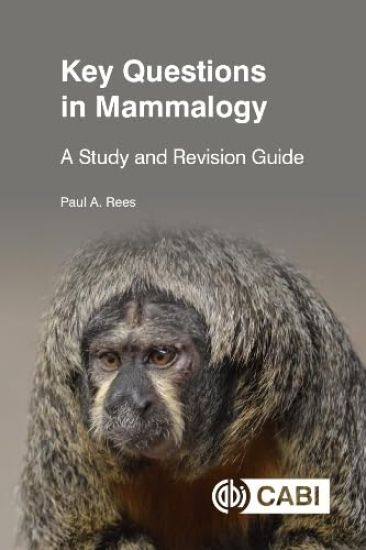
Key Questions in Mammalogy

Key Questions in Mammalogy

Paul Rees

CABI PUBLISHING
2024
sidottu
Although mammals comprise a relatively small proportion of total biodiversity they are disproportionately represented in courses in biology and zoology and they are the dominant taxon in zoos around the world. Mammalogy is well-established as a discrete element of biological courses in some parts of the world, notably in North America. This book is intended as a study and revision guide for students following programmes of study in which mammalogy is an important component. It comprises 600 multiple-choice questions (and answers) set at three levels - foundation, intermediate and advanced - grouped into 10 major topic areas: 1. The history and principles of mammalogy 2. Origins, evolution and taxonomy 3. Anatomy 4. Physiology 5. Behaviour 6 Ecology and genetics 7. Zoogeography 8. Conservation and management 9. Parasites and diseases 10. Domestication and human use of animals The book is designed to be used at any time in any place. It allows the reader to study the meaning of terms used in mammalogy, the history of mammalogy, the taxonomy, evolution and genetics of mammals, their zoogeography, their anatomy, physiology and adaptations to their environment, their behaviour, their conservation and management, their diseases, and their domestication and use by humans. Some of the questions will require students to use their knowledge to interpret information provided in the form of graphs, data, maps or photographs
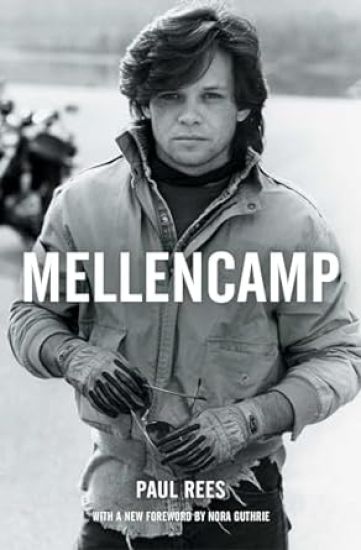
Mellencamp

Mellencamp

Paul Rees

Atria Books
2024
nidottu
This definitive biography of John Mellencamp is "a true coming-of-age story" (John Sykes, chairman of the Rock and Roll Hall of Fame Foundation) of an iconic American rock and roll original, featuring exclusive in-depth interviews and never-before-told details. Perfect for fans of Janis and Born to Run. John Mellencamp is not your typical rock star. With music inspired by the work of William Faulkner, John Steinbeck, and other giants of American literature, he has experienced a colorful career unlike any other. Now, this fascinating biography fully charts the life of one of this country's most important voices in American music. Mellencamp's story is also the story of the American heartland. His growth as an artist and evolution into legendary status directly reflected the major changes of the last fifty years. From the Summer of Love to the growing divisiveness of American politics and beyond, his music has served as the backdrop to this country for millions of fans. Featuring exclusive interviews with friends, family, and colleagues, and exploring everything from the founding of Farm Aid to his induction into the Rock and Roll Hall of Fame, this is a fresh, expansive, and "inspirational" (Nora Guthrie, president of The Woody Guthrie Foundation) look at a true original.
Consciously Create

Consciously Create

Paul Reese

Lulu Publishing Services
2016
pokkari
For the millions of people who study the Law of Attraction but have yet to obtain consistent, repeatable results, Paul Reese offers this step-by-step road map to Consciously Create your own destiny with great precision. More than a "science of thought" user's guide, this work reveals a critical, previously hidden element in thought energy manifestation-the ability to craft and manage Primary Thought Patterns. You will be given tools, such as the free will funnel, to carefully and expertly alter your resonant frequency. With a simple but elegant five-step process, Paul will teach you the truth about how your dominant mindset impacts your connection to Universal Energy, and the guidance necessary to craft the future of your desires.
Consciously Create

Consciously Create

Paul Reese

Lulu Publishing Services
2016
sidottu
For the millions of people who study the Law of Attraction but have yet to obtain consistent, repeatable results, Paul Reese offers this step-by-step road map to Consciously Create your own destiny with great precision. More than a "science of thought" user's guide, this work reveals a critical, previously hidden element in thought energy manifestation-the ability to craft and manage Primary Thought Patterns. You will be given tools, such as the free will funnel, to carefully and expertly alter your resonant frequency. With a simple but elegant five-step process, Paul will teach you the truth about how your dominant mindset impacts your connection to Universal Energy, and the guidance necessary to craft the future of your desires.
A Fast Ride Out of Here

A Fast Ride Out of Here

Pete Way; Paul Rees

Constable
2018
pokkari
'They call me a madman but compared to Pete Way, I'm out of my league.' - Ozzy OsbourneThere are rock memoirs and then there is this one. A Fast Ride Out of Here tells a story that is so shocking, so outrageous, so packed with excess and leading to such uproar and tragic consequences as to be almost beyond compare. Put simply, in terms of jaw-dropping incident, self-destruction and all-round craziness, Pete Way's rock'n'roll life makes even Keith Richards's appear routine and Ozzy Osbourne seem positively mild-mannered in comparison. Not for nothing did Nikki Sixx, bassist with LA shock-rockers Motley Crue and who 'died' for eight minutes following a heroin overdose in 1988, consider that he was a disciple of and apprenticed to Way.During a forty-year career as founding member and bassist of the venerated British hard rock band UFO, and which has also included a stint in his hell-raising buddy Ozzy's band, Pete Way has both scaled giddy heights and plunged to unfathomable lows. A heroin addict for more than ten years, he blew millions on drugs and booze and left behind him a trail of chaos and carnage. The human cost of this runs to six marriages, four divorces, a pair of estranged daughters and two dead ex-wives. Latterly, Way has fought cancer, but has survived it all and is now ready to tell his extraordinary tale. By turns hilarious, heart-rending, mordant, scabrous, self-lacerating, brutally honest and entirely compulsive, A Fast Ride Out of Here will be a monument to rock'n'roll debauchery on an epic, unparalleled scale and also to one man's sheer indestructability.
The Gospel According to Luke

The Gospel According to Luke

Steve Lukather; Paul Rees

Constable
2020
pokkari
No one explodes one of the longest-held misconceptions of music history better than Steve Lukather and his band Toto. The dominant pop-culture sound of the late-1970s and '80s was not in fact the smash and sneer of punk, but a slick, polished amalgam of rock and R&B that was first staked out on Boz Scaggs' Silk Degrees. That album was shaped in large part by the founding members of Toto, who were emerging as the most in-demand elite session muso-crew in LA, and further developed on the band's self-titled three-million-selling debut smash of 1978. A string of hits followed for the band going into the '80s and beyond. Running parallel to this, as stellar session players, Lukather and band-mates David Paich, Jeff Porcaro and Steve Porcaro were also the creative linchpins on some of the most successful, influential and enduring records of the era. In The Gospel According to Luke, Lukather tells the Toto story: how a group of high school friends formed the band in 1977 and went on to sell more than 40 million records worldwide. He also lifts the lid on what really went on behind the closed studio doors and shows the unique creative processes of some of the most legendary names in music: from Quincy Jones, Paul McCartney, Stevie Nicks and Elton John to Miles Davis, Joni Mitchell, Don Henley, Roger Waters and Aretha Franklin. And yet, Lukather's extraordinary tale encompasses the dark side of the American Dream.Engaging, incisive and often hilarious, The Gospel According to Luke is no ordinary rock memoir. It is the real thing . . .
When We Were Lions

When We Were Lions

Rees Paul

Aurum Press
2016
sidottu
2016 marks the 20th anniversary of the 1996 European Cup, hosted in England, when the national football team reached the semi-finals to be knocked out, on penalties, by Germany. It was also the end of a generation – these were the last footballers to be brought up on beer and sweat. In September '96 Arsene Wenger arrived at Arsenal with his ‘continental’ philosophy of diets and training, and by 1998 Beckham had arrived, changing the face of football the world over.1996 was also a significant date across the British spectrum. It was the year that Brit-Pop went global. The Lad culture of the 90’s peaked in 1996 when James Brown turned Loaded Magazine from a 100k readership into a 1 million+ readership, and Simon Fuller of 19 Management was making his first steps into turning footballers into the next celebrities. And, of course, Skinner and Baddiel wrote that song, which became an anthem for a generation who seemed to have never had it so good. The Tories were on their way out, although unemployment was at a record low, Blair could do no wrong, and it was a glorious summer, where everything seemed possible.Though it wasn’t all a haze of a halcyon summer, it was the first time that England had played a unified Germany since before the war, old prejudices reared their heads and the marginalised hooligans of the game were hidden only by a lick of paint that the old Wembley stadium got ahead of the tournament. Starting with Gazza's goal against Scotland and ending later that summer when the dream was over, but the belief remained that this really was a great time for Britain. Through that narrative will be woven a portrait of an England which was proud to wear Three Lions on the Shirt.