Kirjojen hintavertailu. Mukana 11 342 296 kirjaa ja 12 kauppaa.

Kirjahaku

Etsi kirjoja tekijän nimen, kirjan nimen tai ISBN:n perusteella.

1000 tulosta hakusanalla Percy Walker

Eudora Welty and Walker Percy

Eudora Welty and Walker Percy

Marion Montgomery

McFarland Co Inc
2003
pokkari
Eudora Welty and Walker Percy were friends but very different writers, even though both were from the Deep South and intensely interested in the relation of place to their fiction. This work explores in each the concept of home and the importance of home to the homo viator ("man on his way"), and anti-idealism and anti-romanticism. The differences between Welty and Percy and in their fiction were revealed in the habits of their lives. Welty spent her life in Jackson, Mississippi, and was very much a member of the community. Percy was a wanderer who finally settled in Covington, Louisiana, because it was, as he called it, a "noplace." The author also asserts that Percy somewhat envied Welty and her stability in Jackson, and that for him, place was such a nagging concern that it became a personal problem to him as homo viator.
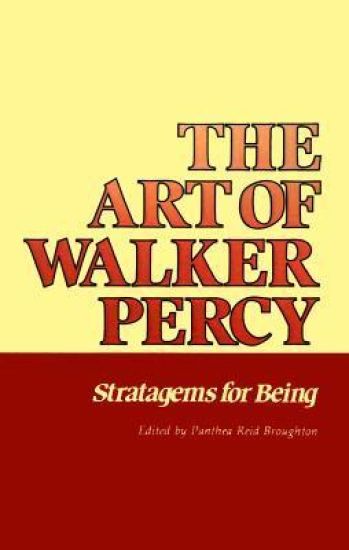
The Art of Walker Percy

The Art of Walker Percy

Louisiana State University Press
1999
nidottu
The writings of Walker Percy, as Panthea Broughton notes in her introduction, are at once both accessible and inaccessible. Because they tempt readers to identify with characters and recognise ideas, they have gained a large and enthusiastic following. But because they are subtle and complicated, they defy attempts to reduce them to transparencies. Indeed, Percy's fiction and nonfiction have a curious, baffling quality that eludes all but the most scrupulously thoughtful and sensitive readers. Through his close alignment with European novelists and philosophers, this native of Alabama has given to American fiction a classic tone that is lacking in the work of such twentieth-century writers as Hemingway and Fitzgerald.In The Art of Walker Percy Broughton has brought together essays from fifteen scholars. Writing from a conviction of the centrality and worth of Walker Percy's work, as well as from the idea that fresh criticism is of value not only to readers but to living authors as well, the essayists present diverse approaches to understanding his art.Cleanth Brooks, in his essay, compares Percy with Eric Voegelin and notes the similarity of their respective approaches to the moral problems of modern man. Martin Luschei, in an examination of the technique of The Moviegoer, shows how Percy presents his fictional world through the use of filmic art. William Poteat's critique of The Message in the Bottle deals with Percy's original contribution to the philosophy of language. Ted Spivey offers a structuralist analysis of Percy's work and suggests that in Lancelot Percy's quest takes a new direction.Still other contributors approach Percy through more traditional rubrics, such as the South, Kierkegaard's stages, dualism, and theology, in new and revelatory ways. Written specifically for this new collection, their essays present the reader with a sense of how many appropriate ""stratagems"" there are for seeing the meaning in Percy. As they bring his work into focus, therefore, they assist Walker Percy in his avowed strategy of helping us see the world.
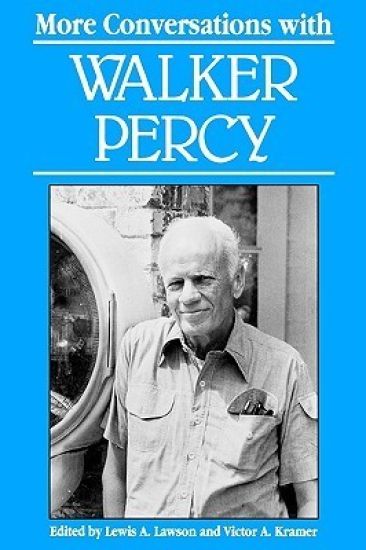
More Conversations with Walker Percy

More Conversations with Walker Percy

University Press of Mississippi
1993
nidottu
These collected interviews, like a visit with Percy at his home on the Bogue Falaya River, provide refreshing close-up encounters with one of America's most celebrated writers.These twenty-seven interviews cover a period of twenty-two years, from the time of the publication of Percy's first novel, The Moviegoer, in 1961, until 1983, when he was interviewed about his friendship with Thomas Merton.This volume is the second in the Literary Conversations series. These unabridged interviews, collected from a variety of sources, will give reading pleasure to general readers who wish to know Percy and his works more closely, and they will be of great use to Percy scholars.
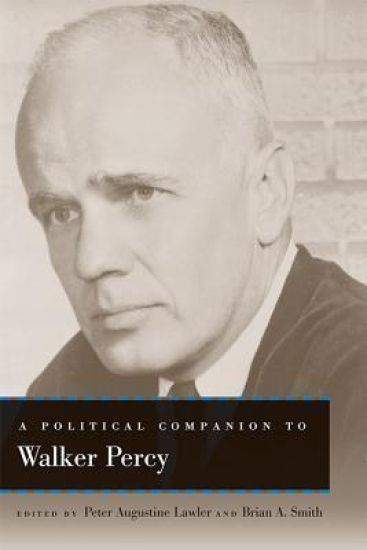
A Political Companion to Walker Percy

A Political Companion to Walker Percy

The University Press of Kentucky
2014
nidottu
In 1962, Walker Percy (1916--1990) made a dramatic entrance onto the American literary scene when he won the National Book Award for fiction with his first novel, The Moviegoer. A physician, philosopher, and devout Catholic, Percy dedicated his life to understanding the mixed and somewhat contradictory foundations of American life as a situation faced by the wandering and won-dering human soul. His controversial works combined existential questioning, scientific investigation, the insight of the southern stoic, and authentic religious faith to produce a singular view of humanity's place in the cosmos that ranks among the best American political thinking.An authoritative guide to the political thought of this celebrated yet complex American author, A Political Companion to Walker Percy includes seminal essays by Ralph C. Wood, Richard Reinsch II, and James V. Schall, S.J., as well as new analyses of Percy's view of Thomistic realism and his reaction to the American pursuit of happiness. Editors Peter Augustine Lawler and Brian A. Smith have assembled scholars of diverse perspectives who provide a necessary lens for interpreting Percy's works. This comprehensive introduction to Percy's "American Thomism" is an indispensable resource for students of American literature, culture, and politics.
The Correspondence of Shelby Foote and Walker Percy

The Correspondence of Shelby Foote and Walker Percy

Shelby Foote; Walker Percy

WW Norton Co
1998
nidottu
In the late 1940s, Walker Percy and Shelby Foote, friends since their teenage years in Greenville, Mississippi, began a correspondence that would last until Percy's death in 1990. Walker Percy, the highly regarded author of The Moviegoer, wrote six novels, two volumes of philosophical writings, and numerous essays. Shelby Foote met with early success as a novelist, but his reputation today rests more upon his massive three-volume narrative history of the Civil War, and his role as commentator in Ken Burns's documentary The Civil War. The correspondence between Percy and Foote traces their lives from the beginning of their respective careers, when they were grappling fiercely and openly with their ambitions, artistic doubts, and personal problems. Although they discuss such serious matters as the death of Foote's mother and Percy's battle with cancer, their letters are full of sly humor and good-natured ribbing. Jay Tolson has selected, edited, and annotated the letters of these two remarkable writers to shed light on their relationship and their literary careers. Includes an eight-page insert with photographs of the writers chronicling their friendship.
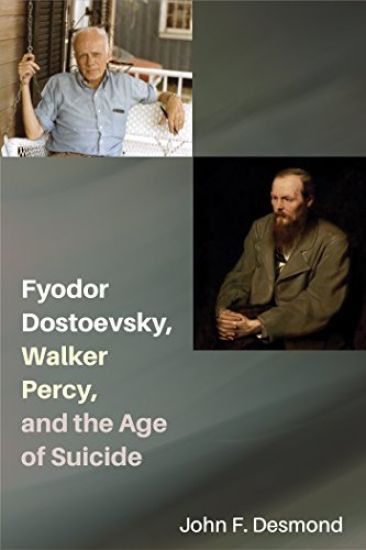
Fyodor Dostoevsky, Walker Percy, and the Age of Suicide

Fyodor Dostoevsky, Walker Percy, and the Age of Suicide

John F. Desmond

The Catholic University of America Press
2019
sidottu
Fyodor Dostoevsky, Walker Percy, and the Age of Suicide is a study of the phenomenon of suicide in modern and post-modern society as represented in the major fictional works of Fyodor Dostoevsky and Walker Percy. In his study, suicide is understood in both a literal and spiritual sense as referring to both the actual suicides in their works and to the broader social malaise of spiritual suicide, or despair. In the 19th century Dostoevsky called suicide ""the terrible question of our age"". For his part, Percy understood 20th century Western culture as ""suicidal"" in both its social, political and military behavior and in the deeper sense that its citizenry had suffered an ontological ""loss of self"" or ""deformation"" of being. Likewise, Thomas Merton called the 20th century an ""age of suicide"". John Desmond examines the cultural ethos of suicide as it is developed in eleven major works of fiction?Dostoevsky's Notes from Underground, Crime and Punishment, The Idiot, Demons and The Brothers Karamazov; and Percy's The Moviegoer, The Last Gentleman, Love in the Ruins, Lancelot, The Second Coming and The Thanatos Syndrome. His study is analogical and progressive in that it demonstrates how Percy ""furthered"" Dostoevsky's prophetic insights and intuitions about suicide as they evolved in modern Western culture. It reveals how the spiritual, moral and ideological conditions that Dostoevsky analyzed in the latter 19th century came to prophetic?and dire?fulfillment in the 20th century, as Percy observed. The study develops its argument through a close analysis of themes, characters, actions and images that reveal both correspondence between and development from Dostoevsky to Percy. In the Epilogue, Desmond offers a Christian counter-vision to the suicidal ethos of the age.
Flannery O'Connor, Walker Percy, and the Aesthetic of Revelation Volume 1
With his mastery of modernist technique and his depictions of characters obsessed with the past, Nobel laureate William Faulkner raised the bar for southern fiction writers. But the work of two later authors shows that the aesthetic of memory is not enough: Confederate thunder fades into a comic echo as they turn to an explicitly religious source of meaning. According to John Sykes, the fiction of Flannery O'Connor and Walker Percy provides occasions for divine revelation. He traces their work from its common roots in midcentury southern and Catholic intellectual life to show how the two adopted different theological emphases and rhetorical strategies - O'Connor building to climactic images, Percy striving for dialogue with the reader - as a means of uncovering the sacramental foundation of the created order. Sykes sets O'Connor and Percy against the background of the Southern Renaissance from which they emerged, showing not only how they shared a distinctly Christian notion of art that led them to see fiction as revelatory but also how their methods of revelation took them in different directions. Yet, despite their differences in strategy and emphasis, he argues that the two are united in their conception of the artist as ""God's sharp-eyed witness,"" and he connects them with the philosophers and critics, both Christian and non-Christian, who had a meaningful influence on their work. Through sustained readings of key texts - particularly such O'Connor stories as ""The Artificial Nigger"" and ""The Geranium"" and Percy's novels ""Love in the Ruins"" and ""The Second Coming"" - Sykes focuses on the intertwined themes of revelation, sacrament, and community. He views their work in relation to the theological difficulties that they were not able to overcome concerning community. For both writers, the question of community is further complicated by the changing nature of the South as the Lost Cause and segregation lose their holds and a new form of prosperity arises. By disclosing how O'Connor and Percy made aesthetic choices based on their Catholicism and their belief that fiction by its very nature is revelatory, Sykes demonstrates that their work cannot be seen as merely a continuation of the historical aesthetic that dominated southern literature for so long. Flannery O'Connor, Walker Percy, and the ""Aesthetic of Revelation"" is theoretically sophisticated without being esoteric and is accessible to any reader with a serious interest in these writers, brimming with fresh insights about both that clarify their approaches to art and enrich our understanding of their work.
The Last Gentleman

The Last Gentleman

Walker Percy

St Martin's Press
1999
pokkari
Will Barrett is a 25-year-old wanderer from the South living in New York City, detached from his roots and with no plans for the future, until the purchase of a telescope sets off a romance and changes his life forever.
Love in the Ruins

Love in the Ruins

Walker Percy

Picador USA
1999
nidottu
Dr. Tom More has created a stethoscope of the human spirit. With it, he embarks on an unforgettable odyssey to cure mankind's spiritual flu. This novel confronts both the value of life and its susceptibility to chance and ruin.
The Second Coming

The Second Coming

Walker Percy

Picador USA
1999
pokkari
Will Barrett (also the hero of Percy's "The Last Gentleman") is a lonely widower suffering from a depression so severe that he decides he doesn't want to continue living. But then he meets Allison, a mental hospital escapee making a new life for herself in a greenhouse. "The Second Coming" is by turns touching and zany, tragic and comic, as Will sets out in search of God's existence and winds up finding much more.
The Thanatos Syndrome

The Thanatos Syndrome

Walker Percy; Percy

Picador USA
1999
nidottu
Returning home to the small Louisiana parish where he had praticed psychiatry, Dr. Tom More quickly notices something strange occuring with the townfolk, a loss of inhibitions. Behind this mystery is a dangerous plot drug the local water supply, and a discovery that takes More into the underside of the American search for happiness.
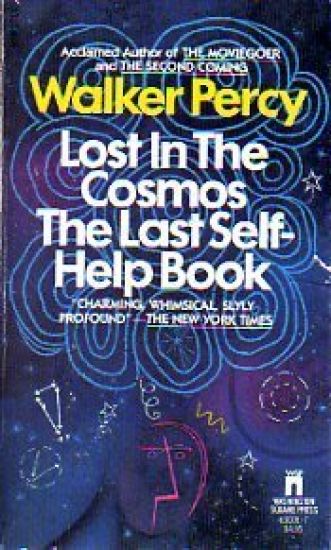
Lost in the Cosmos: The Last Self-Help Book
Walker Percy's mordantly funny and wholly original contribution to the self-help book craze deals with the Western mind's tendency toward heavy abstraction. This favorite of Percy fans continues to charm and beguile readers of all tastes and backgrounds. "Lost in the Cosmos" invites us to think about how we communicate with our world.
The Message in the Bottle

The Message in the Bottle

Walker Percy

St Martin's Press
2000
pokkari
In "Message" i"n the" "Bottle," Walker Percy offers insights on such varied yet interconnected subjects as symbolic reasoning, the origins of mankind, Helen Keller, Semioticism, and the incredible Delta Factor. Confronting difficult philosophical questions with a novelist's eye, Percy rewards us again and again with his keen insights into the way that language possesses all of us.
The Moviegoer

The Moviegoer

Walker Percy

Farrar, Straus and Giroux
2019
nidottu
Winner of the 1962 National Book Award and one of Time magazine's 100 Best English-Language Novels, Walker Percy's debut The Moviegoer is an American masterpiece and a classic of Southern literature. Insightful, romantic, and humorous, it is the story of a young man's search for meaning amid a shallow consumerist landscape. Binx Bolling, a young New Orleans stockbroker, fills his days with movies and casual sex. His life offers him nothing worth retaining; what he treasures are scenes from The Third Man or Stagecoach, not the personal experiences he knows other people hold dear. On the cusp of turning thirty, however, something changes: At Mardi Gras, he embarks on a quest for some form of authentic experience. The consequences of Binx's quest, on both himself and his unstable cousin Kate, prove outrageous, absurd, moving, and indelible. Featuring an afterword by Paul Elie, this new edition of The Moviegoer cements Walker Percy's place as a giant of American literature.
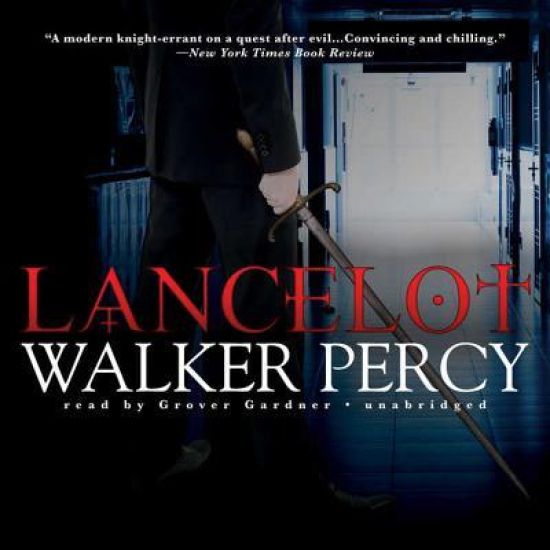
Lancelot

Lancelot

Walker Percy

Blackstone Audiobooks
2016
mp3 cd-levyllä
Lancelot Lamar, a disenchanted liberal lawyer, finds himself confined in a mental asylum with memories that don't seem worth remembering--until a visit from an old friend and classmate gives him the opportunity to recount his journey of dark violence. It began the day he accidentally discovered he was not the father of his youngest daughter. That discovery touched off his obsession to reverse the degeneration of modern America and begin a new age of chivalry and romance. With ever increasing fury, Lancelot would become a shining knight, not of romance--but of revenge.
The Last Gentleman

The Last Gentleman

Walker Percy

Blackstone Audiobooks
2016
mp3 cd-levyllä
Williston Bibb Barrett is a rather unusual and inquisitive young Southerner with a special gift for cultivating the possibilities of life. He suffers from occasional bouts of amnesia and disconcerting attacks of deja vu. He clings to certain old-fashioned notions of behavior, and yet he finds himself constantly impelled to eavesdrop on other people's conversations. And he lives with the secret suspicion that the great world catastrophe that everyone fears will happen has already happened. The novel follows Will Barrett's adventures as he becomes involved in the complex troubles, loves, and fortunes of a Southern family, the Vaughts, that is living in the shadow of their youngest son's illness. With settings ranging from New York to Alabama, Louisiana to New Mexico, this is an ambitious, funny, compulsively readable novel about the dilemmas of modern man.
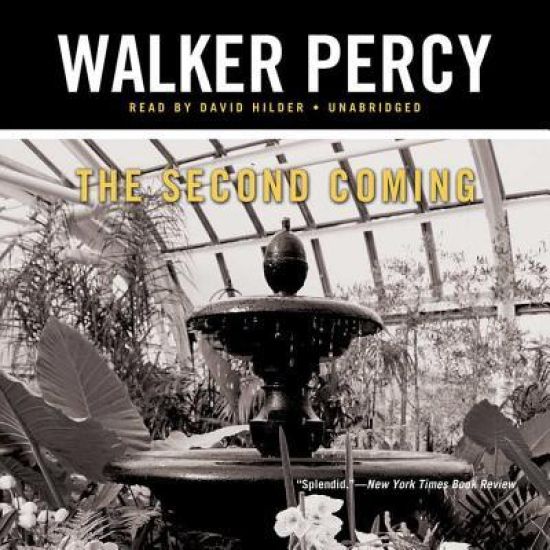
The Second Coming

The Second Coming

Walker Percy

Blackstone Audiobooks
2016
mp3 cd-levyllä
Will Barrett of Linwood, North Carolina, is a depressed widower with a peculiar tendency to fall down in strange places. Allison, the girl in the greenhouse, has just escaped from a mental institution and is working hard to make a new life for herself. When their paths cross in a most unusual manner, a relationship begins that will help restore two struggling outcasts to new life. What follows is by turns touching and zany, tragic and comic, as Will undertakes his own Pascalian wager in search of proof of the existence of God. Leaving his comfortable home atop a pleasant Carolina mountain and descending deep into the bowels of the long-unused Lost Cove cave, he is prepared to wait for a sign--which may, of course, be death. What he is not prepared for is what actually happens.
The Thanatos Syndrome

The Thanatos Syndrome

Walker Percy

Blackstone Audiobooks
2016
mp3 cd-levyllä
When Dr. Tom More (of Love in the Ruins) is released on parole from state prison, he returns to Feliciana, Louisiana, the parish where he was born and bred and where he practiced psychiatry before his arrest. Upon arriving, he notices something strange in almost everyone around him: unusual sexual behavior in women patients, a bizarre loss of inhibition, a lack of complexity in speech--even his own wife's extraordinary success at bridge tournaments, during which her mind seems to function like a computer. With the ingenious help of his attractive cousin, Dr. Lucy Lipscomb, More begins to uncover a criminal experiment to "improve" people's behavior by drugging the local water supply. But beyond this scheme are activities so sinister that even Tom More wouldn't believe them if he hadn't witnessed them with his own eyes.
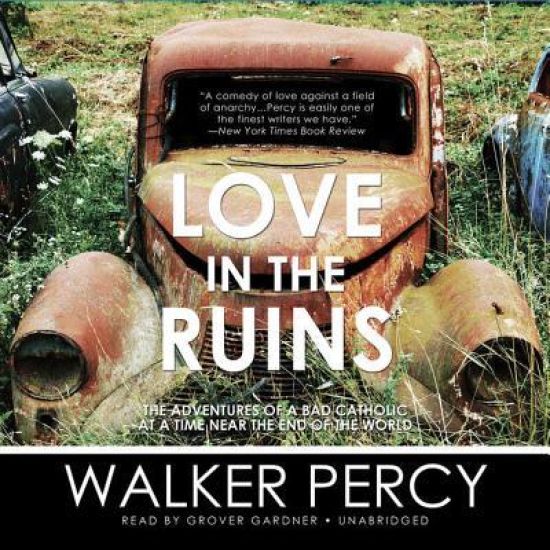
Love in the Ruins: The Adventures of a Bad Catholic at a Time Near the End of the World
The auto age is defunct. Buicks, Chryslers, and Pontiacs disfigure the landscape. Vines sprout in Manhattan. Wolves are seen in downtown Cleveland. And psychiatrist, mental hospital outpatient, and inventor Dr. Tom More has created a miraculous instrument: the ontological lapsometer, a kind of stethoscope of the human spirit. With it, he plans to cure mankind's spiritual flu. But first he must survive Moira, Lola, and Ellen--and discover why so many living people are actually dead. Attempting to save the world from completely destroying itself, Tom ultimately begins to understand the quality and caprices of life and the uncontrollable vagaries of time and chance.