Kirjahaku
Etsi kirjoja tekijän nimen, kirjan nimen tai ISBN:n perusteella.
1000 tulosta hakusanalla Perry L Harrington
American higher education—historically and inherently—is a morally formative endeavor. Yet, in order to respond to America’s moral pluralism, higher education has increasingly taken a reductionistic approach to moral formation. Consequently, it abandoned the effort to supply students with moral expertise. Current approaches help students learn how to be excellent professionals and citizens, but they fail to provide the necessary tools for living the good life—in college and beyond.Identity Excellence: A Theory of Moral Expertise for Higher Education addresses this problem by setting forth a multi-disciplinary theory of moral expertise for fostering moral excellence in an array of important identities. To this end, it teases apart the essential elements of what it means to be excellent in an identity before discussing the philosophical, sociological, psychological, and educational processes necessary for students to internalize traditions of identity excellence as part of their own moral identities. Overall, the emergent theory exposes the shortcomings in contemporary general education, professional ethics, and co-curricular education.Finally, this book sets forth a bold but compelling vision for a more hopeful future for American higher education. As outlined within, such education involves teaching students’ excellence in the Great Identities, as well as how to prioritize and integrate their pursuit of identity excellence.
This account of the CoMission--a group of 83 Christian organizations formed to instruct Russian public school teachers in how to teach Christian ethics--provides unique insights both into postcommunist Russia and Western evangelical movements. Interviews with over 100 people intimately involved in Russian education, politics, and evangelism make the narrative's analysis thorough, accessible, and personal. The author's comprehensive research and first-person experience result in an informative, instructive, and compelling book.
Downright Filthy Pitching Book 1: The Science of Effective Velocity
Perry L. Husband
Createspace Independent Publishing Platform
2005
nidottu
Sh-Sh-Shnoozy the Sh-Sh-Shivering Sh-Sh-Shnowman
Perry L. Johnson
Createspace Independent Publishing Platform
2016
nidottu
Downright Filthy Pitching Book 2: Hitters' Attention
Perry L. Husband
Createspace Independent Publishing Platform
2007
nidottu
Downright Filthy Pitching Book 3: The Science of Pitch Sequencing
Perry L. Husband
Createspace Independent Publishing Platform
2007
nidottu
Getting Filthy: Implementing Effective Velocity
Perry L. Husband
Createspace Independent Publishing Platform
2013
nidottu
Getting Filthy - Implementing Effective Velocity When a pitcher of any level has great "Stuff", which means high velocity, good movement etc..... they are referred to as 'Nasty'. 'Filthy' is the term used when a 'Nasty' pitcher learns how to pitch. Teaching pitchers of all levels to get 'Filthy' is a process, just like all skill sets. This book is set up in a series of lessons to take on one element at a time. EV as a whole can seem very complex, although when you break each facet down into bite sized chunks, they are much easier to understand. 'Filthy' is a whole new chapter in the art of pitching. Getting 'Filthy' is a process that has steps and none of the steps are very complicated all by themselves. Step one is knowledge about gravity, but not the gravity that keeps your spikes firmly planted on the mound, rather the gravity that determines who wins the battle between the pitcher and the batter. This gravity is called Effective Velocity or EV for short. EV is timing and timing is what has determined the outcome of every at bat in the history of baseball and softball. And.....just as it does not matter whether you understand how gravity keeps you attached to the earth or not.......it also does not matter if you understand how EV works or not, it is still working all the time and in every at bat. Effective Velocity for pitchers is a complex subject that has a lot of layers. EV is a lot like math, in that you could not learn math in one day, at least not all of it. You can learn one aspect of math each day, such as addition or division or geometry, but when you try to learn math all at once, it's a cluttered mess. It becomes something like geovision or addometry, both of which are crazy versions of what was intended. And although you will see bits of the truth in addometry, it will never quite be exactly right. The same is true with EV. Most coaches or instructors read about EV and try to combine it with what they already 'know' about pitching, which usually turns into a watered down version of the truth. When you are ready to implement the most scientifically sound system in pitching, then it is time to start Getting Filthy.
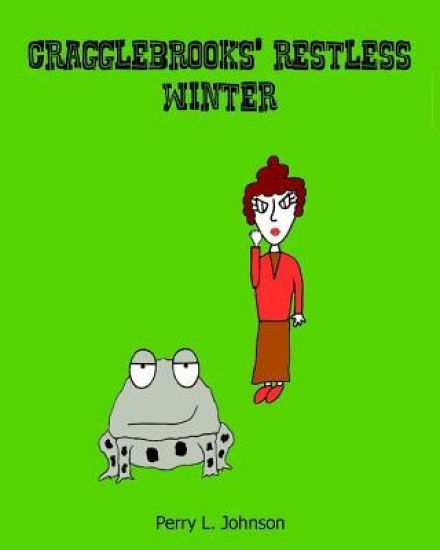
Cragglebrooks' Restless Winter
Perry L. Johnson
Createspace Independent Publishing Platform
2016
nidottu
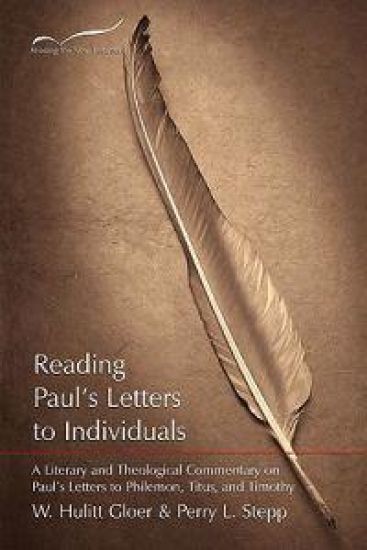
In this volume, Gloer and Stepp interpret Paul's letter to Philemon and the Pastoral Epistles-Titus and 1 & 2 Timothy. Philemon tells a simple and straight-forward story of Philemon and his escaped slave Onesimus. How can the story of an escaped slave returned to his master hold any meaning for believers today? Indeed, in Philemon we encounter a practical working out of Paul's foundational theological ideas-grace, faith, atonement, reconciliation, freedom in Christ, new creation, and the ethical life that stems from these.In their study of the Pastoral Epistles, Gloer and Stepp describe the continuation of Paul's missionary work, the internal and external conflicts, and Paul's gradual withdrawal from the work that has defined his life. In Paul's absence, how will the churches address the conflicts and persecution? They survive and thrive by trusting the successors that Paul provided for them.Like other volumes in this unique series, Reading Paul's Letters to Individuals focuses on comprehending the major themes of the epistles and their relationship to the understanding of the early Christian communities. With the focus on the work in its entirety rather than a verse-by-verse methodology, this volume will appeal to the professional and nonprofessional alike, as well as to college and seminary students.
A basic human's personal need is to live a full life, and that desire includes many diverse things that we take for granted. Such essentials include having access to clean water and fresh air, having ample food and sleep, being sheltered in a pleasant environment, and having ready access to medical facilities. While our personal habits have a lot to do with how we live, our major personal choices decide how we live, how our lives play out, and what access we have to the things that matter. It has to do with what we want to achieve that we often do not clearly address. This book describes some major historical events. While those events covered perilous times, we are again facing similar events that in many ways mirror the past.About the AuthorPerry L. Westmoreland was born in Portland, Oregon, and later lived in Olympia, Washington. After graduation from high school, he entered the United States Naval Academy in Annapolis, Maryland, and was commissioned as an officer in the U. S. Navy. Mr. Westmoreland served aboard numerous ships and at many shore stations, including a year with the Seabees in Vietnam where he was awarded the Bronze Star. He retired from the Navy as a commander in 1976. Mr. Westmoreland has worked in commercial construction projects, including an airfield in Saudi Arabia and nuclear generating plants in Arizona. Mr. Westmoreland's other books are The Keys to Communicating with Other Worlds, Unveiled, Ancient Greek Beliefs, The Prophet's Prot g , The Neanderthal Quandary, Seattle Slim, and Out to Eternity, all available on the Internet.
Identity in Action: Christian Excellence in All of Life
Perry L. Glanzer
Abilene Christian University Press
2021
nidottu
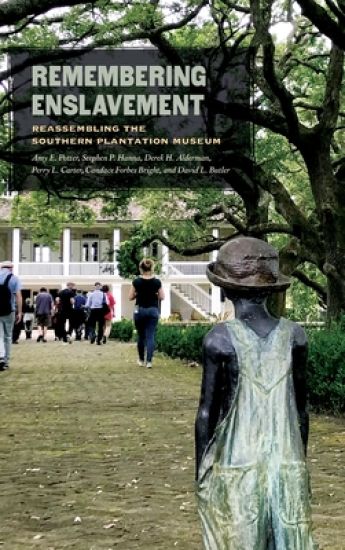
Remembering Enslavement
Amy E. Potter; Stephen P. Hanna; Derek H. Alderman; Perry L. Carter; Candace Forbes Bright; David L. Butler
UNIVERSITY OF GEORGIA PRESS
2022
sidottu
Remembering Enslavement explores plantation museums as sites for contesting and reforming public interpretations of slavery in the American South. Emerging out of a three-year National Science Foundation grant (2014–17), the book turns a critical eye toward the growing inclusion of the formerly enslaved within these museums, specifically examining advances but also continuing inequalities in how they narrate and memorialize the formerly enslaved.Using assemblage theory as a framework, Remembering Enslavement offers an innovative approach for studying heritage sites, retelling and remapping the ways that slavery and the enslaved are included in southern plantation museums.It examines multiple plantation sites across geographic areas, considering the experiences of a diversity of actors: tourists, museum managers/owners, and tour guides/interpreters. This approach allows for an understanding of regional variations among plantation museums, narratives, and performances, as well as more in-depth study of the plantation tour experience and public interpretations. The authors conclude the book with a set of questions designed to help professionals reassemble plantation museum narratives and landscapes to more justly position the formerly enslaved at their center.
Remembering Enslavement
Amy E. Potter; Stephen P. Hanna; Derek H. Alderman; Perry L. Carter; Candace Forbes Bright; David L. Butler
UNIVERSITY OF GEORGIA PRESS
2022
pokkari
Remembering Enslavement explores plantation museums as sites for contesting and reforming public interpretations of slavery in the American South. Emerging out of a three-year National Science Foundation grant (2014–17), the book turns a critical eye toward the growing inclusion of the formerly enslaved within these museums, specifically examining advances but also continuing inequalities in how they narrate and memorialize the formerly enslaved.Using assemblage theory as a framework, Remembering Enslavement offers an innovative approach for studying heritage sites, retelling and remapping the ways that slavery and the enslaved are included in southern plantation museums.It examines multiple plantation sites across geographic areas, considering the experiences of a diversity of actors: tourists, museum managers/owners, and tour guides/interpreters. This approach allows for an understanding of regional variations among plantation museums, narratives, and performances, as well as more in-depth study of the plantation tour experience and public interpretations. The authors conclude the book with a set of questions designed to help professionals reassemble plantation museum narratives and landscapes to more justly position the formerly enslaved at their center.