

Kirjahaku
Etsi kirjoja tekijän nimen, kirjan nimen tai ISBN:n perusteella.
250 tulosta hakusanalla Peta Poletti

This is the first full history of the Society of St Francis from the struggles of the 1920s through its rapid growth in the post-war years to the present day.
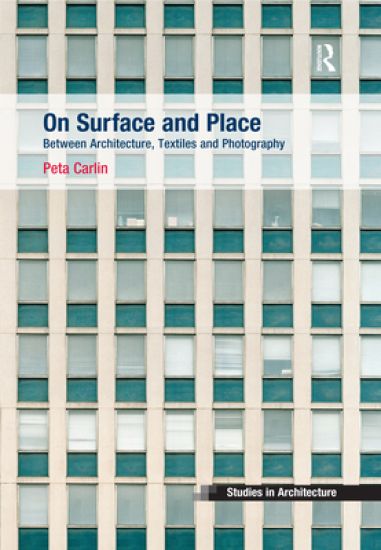
On Surface and Place is a rich and poetic exploration of surfaces which foregrounds their significance in our understanding and experience of place. Adopting weaving as its overarching metaphor, it departs from Gottfried Semper’s discussion of correspondences between architecture and textiles, and emerges from the reading of photographs, a swatch of Harris Tweed and curtain wall façade juxtaposed. In juxtaposing the fabric of the city with the weave of Harris Tweed the book charts an original course across a range of connected ideas and questions, combining many different themes, writers and disciplines. It presents integrated and innovative rethinkings on a number of fundamental relationships, including correlations between body and building, word and image, and between the rural and the metropolitan, and the hand-crafted and the mass-reproduced. In doing so, it seeks to foreground the very interrelationship of surface and place, as it makes a claim for the relational nature of the world in which we live.
Forms of Emotion analyses how drama, theatre and contemporary performance present emotion and its human and nonhuman diversity. This book explores the emotions, emotional feelings, mood, and affect, which make up a spectrum of ‘emotion’, to illuminate theatrical knowledge and practice and reflect the distinctions and debates in philosophy, neuroscience, psychology, and other disciplines. This study asserts that specific forms of emotion are intentionally unified in drama, theatre, and performance to convey meaning, counteract separation and subversively champion emotional freedom. The book progressively shows that the dramatic and theatrical representation of the nonhuman reveals how human dominance is offset by emotional connection with birds, animals, and the natural environment. This book will be of great interest to students and researchers interested in the emotions and affect in dramatic literature, theatre studies, performance studies, psychology, and philosophy as well as artists working with emotionally expressive performance.
Forms of Emotion analyses how drama, theatre and contemporary performance present emotion and its human and nonhuman diversity. This book explores the emotions, emotional feelings, mood, and affect, which make up a spectrum of ‘emotion’, to illuminate theatrical knowledge and practice and reflect the distinctions and debates in philosophy, neuroscience, psychology, and other disciplines. This study asserts that specific forms of emotion are intentionally unified in drama, theatre, and performance to convey meaning, counteract separation and subversively champion emotional freedom. The book progressively shows that the dramatic and theatrical representation of the nonhuman reveals how human dominance is offset by emotional connection with birds, animals, and the natural environment. This book will be of great interest to students and researchers interested in the emotions and affect in dramatic literature, theatre studies, performance studies, psychology, and philosophy as well as artists working with emotionally expressive performance.
In Caring, Peta Bowden extends and challenges recent debates on feminist ethics. She takes issue with accounts of the ethics of care that focus on alleged principles of caring rather than analysing caring in practice. Caring, Bowden argues, must be understood by 'working through examples'. Following this approach, Bowden explores four main caring practices: mothering, friendship, nursing and citizenship. Her analysis of the differences and similarities in these practices - their varying degrees of intimacy and reciprocity, formality and informality, vulnerability and choice - reveals the practical complexity of the ethics of care.Caring recognizes that ethical practices constantly outrun the theories that attempt to explain them, and Bowden's unique approach provides major new insights into the nature of care without resorting to indiscriminate unitary models. It will be essential reading for all those interested in ethics, gender studies, nursing and the caring professions.
In Caring, Peta Bowden extends and challenges recent debates on feminist ethics. She takes issue with accounts of the ethics of care that focus on alleged principles of caring rather than analysing caring in practice. Caring, Bowden argues, must be understood by 'working through examples'. Following this approach, Bowden explores four main caring practices: mothering, friendship, nursing and citizenship. Her analysis of the differences and similarities in these practices - their varying degrees of intimacy and reciprocity, formality and informality, vulnerability and choice - reveals the practical complexity of the ethics of care.Caring recognizes that ethical practices constantly outrun the theories that attempt to explain them, and Bowden's unique approach provides major new insights into the nature of care without resorting to indiscriminate unitary models. It will be essential reading for all those interested in ethics, gender studies, nursing and the caring professions.

This pioneering study is one of the major publications in the increasingly popular and largely undocumented area of circus studies.Through photographs and illustrations, Peta Tait presents an extraordinary survey of 140 years of trapeze acts and the socially changing ideas of muscular action in relation to our understanding of gender and sexuality. She questions how spectators see and enjoy aerial actions, and what cultural identities are presented by bodies in fast, physical aerial movement.Adeptly locating aerial performance within the wider cultural history of bodies and their identities, Circus Bodies explores this subject through a range of films such as Trapeze (1956) and Wings of Desire (1987) and Tait also examines live performances including:* the first trapeze performers: Léotard and the Hanlon Brothers* female celebrities; Azella, Sanyeah, black French aerialist LaLa, the infamous Leona Dare, and the female human cannonballs* twentieth-century gender benders; Barbette and Luisita Leers* the Codonas, Concellos, Gaonas, Vazquez and Pages troupes* imaginative aerial acts in Cirque de Soleil and Circus Oz productions.This book will prove an invaluable resource for all students and scholars interested in this fascinating field.

This pioneering study is one of the major publications in the increasingly popular and largely undocumented area of circus studies.Through photographs and illustrations, Peta Tait presents an extraordinary survey of 140 years of trapeze acts and the socially changing ideas of muscular action in relation to our understanding of gender and sexuality. She questions how spectators see and enjoy aerial actions, and what cultural identities are presented by bodies in fast, physical aerial movement.Adeptly locating aerial performance within the wider cultural history of bodies and their identities, Circus Bodies explores this subject through a range of films such as Trapeze (1956) and Wings of Desire (1987) and Tait also examines live performances including:* the first trapeze performers: Léotard and the Hanlon Brothers* female celebrities; Azella, Sanyeah, black French aerialist LaLa, the infamous Leona Dare, and the female human cannonballs* twentieth-century gender benders; Barbette and Luisita Leers* the Codonas, Concellos, Gaonas, Vazquez and Pages troupes* imaginative aerial acts in Cirque de Soleil and Circus Oz productions.This book will prove an invaluable resource for all students and scholars interested in this fascinating field.
The last fifty years have witnessed the growing pervasiveness of the figure of the map in critical, theoretical, and fictional discourse. References to mapping and cartography are endemic in poststructuralist theory, and, similarly, geographically and culturally diverse authors of twentieth-century fiction seem fixated upon mapping. While the map metaphor has been employed for centuries to highlight issues of textual representation and epistemology, the map metaphor itself has undergone a transformation in the postmodern era. This metamorphosis draws together poststructuralist conceptualizations of epistemology, textuality, cartography, and metaphor, and signals a shift away from modernist preoccupations with temporality and objectivity to a postmodern pragmatics of spatiality and subjectivity. Cartographic Strategies of Postmodernity charts this metamorphosis of cartographic metaphor, and argues that the ongoing reworking of the map metaphor renders it a formative and performative metaphor of postmodernity.

The last fifty years have witnessed the growing pervasiveness of the figure of the map in critical, theoretical, and fictional discourse. References to mapping and cartography are endemic in poststructuralist theory, and, similarly, geographically and culturally diverse authors of twentieth-century fiction seem fixated upon mapping. While the map metaphor has been employed for centuries to highlight issues of textual representation and epistemology, the map metaphor itself has undergone a transformation in the postmodern era. This metamorphosis draws together poststructuralist conceptualizations of epistemology, textuality, cartography, and metaphor, and signals a shift away from modernist preoccupations with temporality and objectivity to a postmodern pragmatics of spatiality and subjectivity. Cartographic Strategies of Postmodernity charts this metamorphosis of cartographic metaphor, and argues that the ongoing reworking of the map metaphor renders it a formative and performative metaphor of postmodernity.

Rainbow Reading Level 3 - Water: Water Changes Box C
Peta Jane Sinclair
Cambridge University Press
2009
nidottu
This is an information book about the water cycle and the ways in which water can change its shape and its state. There are fun experiments to do which allow the learners to experience the different changes of state for themselves. These are illustrated so that learners who cannot do the experiments can still see what happens.
SCENAR for Beginners is for all the SCENAR Home users and Professionals that become overwhelmed about the What, Where, When, Why and How to use their SCENAR Device. It can appear overwhelming and you may become anxious and hesitant when faced with a chronic condition, an immediate accident or if a condition gets exacerbated after treatment. I wrote this book to make the use of SCENAR simplified and understandable by using pictures, showing pad placement, and explaining Protocols and Settings, thereby giving you maximum potential from your device.


Book of Sayings Book 1 is a collection of condensed simple, short and to the point personal quotes, adaptable to every experience and every person. They guide you on life choices, life direction, personal relationships and prioritization in life to gain health and contentment. Each saying supports the release of thought that causes negativity, clears beliefs that lead you on hazardous and dangerous paths and illuminates the way to proceed. These Sayings can be used in speeches, quoted in books, read for personal direction, to gain clarity in life or told to others for inspiration. Read one daily or open daily to find your focus of the day.

Book of Sayings Book 4 is a collection of condensed simple, short and to the point personal quotes, adaptable to every experience and every person. They guide you on life choices, life direction, personal relationships and prioritization in life to gain health and contentment. Each saying supports the release of thought that causes negativity, clears beliefs that lead you on hazardous and dangerous paths and illuminates the way to proceed. These Sayings can be used in speeches, quoted in books, read for personal direction, to gain clarity in life or told to others for inspiration. Read one daily or open daily to find your focus of the day.