Daring, ingenious and profoundly moving, The Kennedy Moment is masterful storytelling from an author whose career has put him at the heart of international affairs. Dr Michael Lowell--a mild-mannered American, unshakeably decent and at the top of his profession--accepts an invitation to a weekend reunion of Oxford college friends. He is looking forward to meeting some of them--including front-line Canadian medic H l ne Hevr and the Australian advertising genius Toby Jenks. But the big attraction is the serene young woman from Karachi who rejected him twenty years ago because he was 'just a little bit too dull'. As the weekend gets underway and old loves and tensions arise, an audacious suggestion is made. It begins as a joke. But it is a joke that none of them can forget. Moving between Oxford, New York, Washington, Geneva and Abidjan, this compelling political thriller is the story of five ordinary people who find themselves drawn into an extraordinary conspiracy--a gamble that could force the hand of governments and affect the lives of millions. But if it should go wrong, the risk to their own lives is incalculable.
Philosophy in the Islamic world from the 9th to 11th centuries was characterized by an engagement with Greek philosophical works in Arabic translation. This volume collects papers on both the Greek philosophers in their new Arabic guise, and on reactions to the translation movement in the period leading up to Avicenna. In a first section, Adamson provides general studies of the ’formative’ period of philosophy in the Islamic world, discussing the Arabic reception of Aristotle and of his commentators. He also argues that this formative period was characterized not just by the use of Hellenic materials, but also by a productive exchange of ideas between Greek-inspired ’philosophy (falsafa)’ and Islamic theology (kalÄm). A second section considers the underappreciated philosophical impact of Galen, using Arabic sources to understand Galen himself, and exploring the thought of the doctor and philosopher al-RÄzÄ«, who drew on Galen as a chief inspiration. A third section looks at al-FÄrÄbÄ« and the so-called ’Baghdad school’ of the 10th century, examining their reaction to Aristotle’s Metaphysics, his epistemology, and his famous deterministic ’sea battle’ argument. A final group of papers is devoted to Avicenna’s philosophy, which marks the beginning of a new era of philosophy in the Islamic world.
Dr Michael Lowell-a mild-mannered American, unshakeably decent and at the top of his profession-accepts an invitation to a weekend reunion of Oxford college friends. He is looking forward to meeting some of them-including front-line Canadian medic Helene Hevre and the Australian advertising genius Toby Jenks. But the big attraction is the serene young woman from Karachi who rejected him twenty years ago because he was `just a little bit too dull'. As the weekend gets under way and old loves and tensions arise, an audacious suggestion is made. It begins as a joke. But it is a joke that none of them can forget. Moving between Oxford, New York, Washington, Geneva and Abidjan, this compelling political thriller is the story of five ordinary people who find themselves drawn into an extraordinary conspiracy-a gamble that could force the hand of governments and affect the lives of millions. But if it should go wrong, the risk to their own lives is incalculable.
Filosofi i den islamiska världen är tredje delen i Peter Adamsons bokserie En filosofihistoria utan luckor , baserad på hans populära podcast med samma namn. Här täcks filosofin på det islamiska området från äldsta tider fram till 2000-talet, med uppmärksammande av såväl muslimska som judiska och kristna tänkare, från de arabiska kärnländerna till Andalusien i väster och Indien i öster. Tänkandet i den islamiska världen spelade en viktig roll i förmedlingen av antikens filosofiska och vetenskapliga arv till Europa, men som Adamson visar med många exempel utgör det också en rik och fascinerande idévärld i sig, med originella bidrag inom såväl metafysik och kunskapsteori som etik och religionsfilosofi. De två första delarna i serien, om filosofin i den grekiska och romerska antikens värld, utkommer inom kort. Denna del kan läsas oberoende av de övriga. Peter Adamson är professor i senantik och arabisk filosofi vid Ludwig-Maximilians universitet i München. Han har publicerat flera böcker och många artiklar i vetenskapliga tidskrifter om arabisk filosofi.
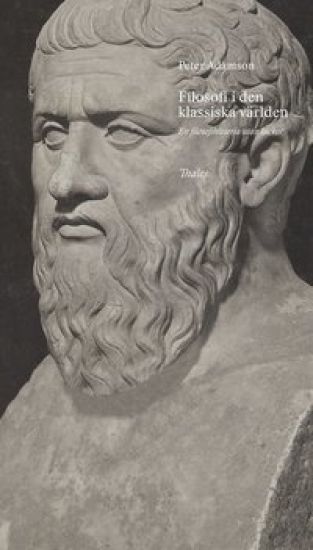
Filosofi i den klassiska världen är första delen i Peter Adamsons bokserie En filosofihistoria utan luckor , baserad på hans populära podcast med samma namn. Här berättar han om den västerländska filosofins gryning på grekiskt område under 500-talet f.Kr., med början i försokratikernas storslagna naturteorier. De följs på 400-talet av sofisterna och Sokrates, vars ifrågasättanden av rådande normer och kunskapsanspråk bildar bakgrunden till Platons mångskiftande dialoger från 300-talet, där han utvecklar sin lära om ideala former. Perioden avslutas med Aristoteles, Platons främste student och kritiker, som ger filosofin en ny vinkling och ett nytt arbetssätt med sina vetenskapliga avhandlingar och sitt empiriskt inriktade tänkande. Under denna korta tidsrymd läggs grunderna till de flesta teman och frågeställningar som behandlats inom filosofin sedan dess, från metafysik och kunskapsteori, logik och språkfilosofi till etik och politisk filosofi, samtidigt som konturerna till senare tiders vetenskaper avtecknar sig, alltifrån matematik till biologi och medicin. Med de skolor som Platon och Aristoteles inrättade, Akademin respektive Lykeion, bildas också en modell för filosofiska och vetenskapliga forskningsgemenskaper, under resten av antiken liksom i senare tider. Peter Adamson är professor i senantik och arabisk filosofi vid Ludwig-Maximilians universitet i München. Han har publicerat flera böcker och många artiklar i vetenskapliga tidskrifter.
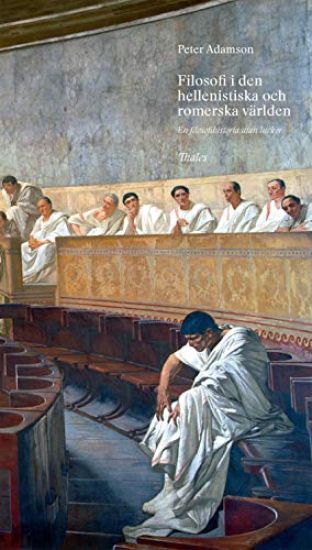
Filosofi i den hellenistiska och romerska världen är andra delen i Peter Adamsons bokserie En filosofihistoria utan luckor . I denna volym följer vi filosofins utveckling i Medelhavsområdet under närmare tusen år, från 300-talet f.Kr. fram till 500-talet e.Kr., från de grekisktalande områdena i öst till det romerska riket under kejsartid. Den hellenistiska och romerska filosofin präglas av en ökad inriktning på etik med fokus på frågan om människans möjligheter att uppnå ett lyckligt och bekymmersfritt liv. Den frågan besvaras på olika sätt av kyniker, epikuréer och stoiker, som alla gör anspråk på att förvalta arvet efter Sokrates. De utmanas av den pyrrhonska skepticismen, som försöker uppnå samma mål sinnesfrid genom att ifrågasätta möjligheten att veta någonting alls. Mot denna bakgrund växer nyplatonismen fram med Plotinos som främste representant, vars religiöst färgade platonska metafysik kommer att påverka filosofin under mer än tusen år. Efterhand som kristendomen vinner fotfäste i romarriket går även den i dialog med antikens filosofiska tradition, från de tidiga grekiska och romerska kyrkofäderna till Augustinus och Boethius under senantiken. Peter Adamson är professor i senantik och arabisk filosofi vid Ludwig-Maximilians universitet i München, och en av vår tids främsta filosofihistoriker.
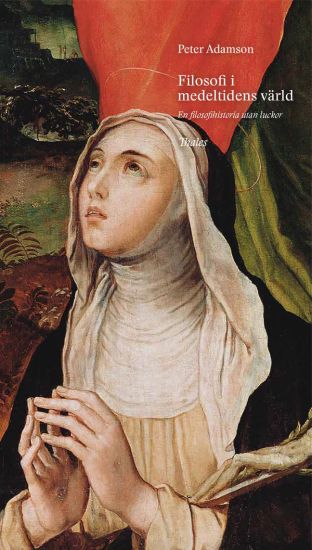
Filosofi i medeltidens värld är fjärde delen i Peter Adamson bokserie En filosofihistoria utan luckor . Medeltiden har ofta behandlats som en dunkel parentes i filosofins historia, men Peter Adamson visar att den är en lång och innehållsrik period, från 800-talets karolingiska renässans fram till 1400-talet, när det är dags för nästa renässans. Under medeltiden utforskas filosofins alla områden på djupet, från metafysik, logik och kunskapsteori till etiskt och politiskt tänkande, med utveckling av originella idéer och argument. Här finns välkända namn som Pierre Abélard, Thomas av Aquino och William Ockham, vilka tillsammans med otaliga anonyma tänkare lämnat efter sig en stor mängd texter där filosofi och religion ofta går hand i hand, utan att förnuftet någonsin helt underkastas teologins doktriner. I Adamson framställning möter vi dock inte bara universitetens skolmän utan också mystiker och skönlitterära författare, såväl kvinnliga som manliga, vilka prövar nya tankemöjligheter på folkspråket och utmanar både skolastikens och kyrkans läror och traditioner. Medeltidens filosofi står för en avgörande förmedling av det västerländska tänkandets arv från antiken till den moderna tiden, ofta med föregripande av senare idéer inom filosofi och vetenskap.Peter Adamson är professor i senantik och arabisk filosofi vid Ludwig-Maximilians universitet i München, och har publicerat ett flertal böcker och artiklar om medeltidens filosofi.
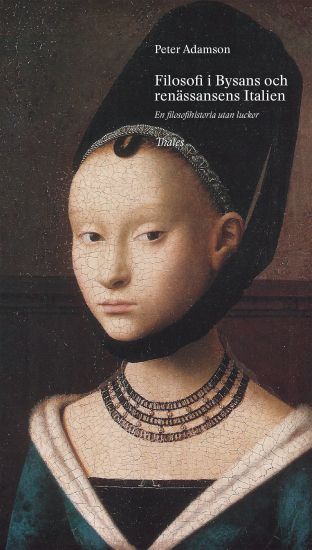
Filosofi i Bysans och renässansens Italien är sjätte volymen i Peter Adamsons bokserie En filosofihistoria utan luckor . Han tecknar här en levande och inträngande bild av tänkandet i två stora intellektuella kulturer, under en period från senantiken fram till nya tiden. I bokens första del spåras filosofins utveckling i Bysans från Johannes av Damaskus på 700-talet till 1400-talets lärda, verksamma i spänningsfältet mellan kristen teologi och antikens tänkande. Förutom genrer som historieskrivning, retorik och brevkonst, med centrala gestalter som Michael Psellos och Anna Komnena, diskuteras också den filosofiska betydelsen av kulturella fenomen som ikonoklasmen och hesychasmen, liksom synen på könen och den vetenskapliga litteraturen. Andra delen leder vidare från Bysans till renässansens Italien och den humanistiska rörelsen, som inspireras av den grekisktalande österns förmedling av arvet från antiken. Här berättas om filosofins och vetenskapens pånyttfödelse, med välkända namn som Niccolò Machiavelli, Christine de Pizan och Pico della Mirandola. Återupptäckandet av antikens litteratur och filosofi stimulerar till odling av latinsk stilkonst och litterär kritik, filologi och historia liksom till samhällsutopier och diskussioner om styrelseskick. Ur konfrontationen mellan humanismens platonism och den aristoteliska och skolastiska traditionen växer de första ansatserna till den moderna naturvetenskapen fram, med företrädare som Giordano Bruno och Galileo Galilei. Peter Adamson är professor i senantik och arabisk filosofi vid Ludwig-Maximilians universitet i München och en av vår tids främsta filosofihistoriker.
Peter Adamson and Jonardon Ganeri present a lively introduction to one of the world's richest intellectual traditions: the philosophy of classical India. They begin with the earliest extant literature, the Vedas, and the explanatory works that these inspired, known as Upanisads. They also discuss other famous texts of classical Vedic culture, especially the Mahabharata and its most notable section, the Bhagavad-Gita, alongside the rise of Buddhism and Jainism. In this opening section, Adamson and Ganeri emphasize the way that philosophy was practiced as a form of life in search of liberation from suffering. Next, the pair move on to the explosion of philosophical speculation devoted to foundational texts called 'sutras,' discussing such traditions as the logical and epistemological Nyaya school, the monism of Advaita Vedanta, and the spiritual discipline of Yoga. In the final section of the book, they chart further developments within Buddhism, highlighting Nagarjuna's radical critique of 'non-dependent' concepts and the no-self philosophy of mind found in authors like Dignaga, and within Jainism, focusing especially on its 'standpoint' epistemology. Unlike other introductions that cover the main schools and positions in classical Indian philosophy, Adamson and Ganeri's lively guide also pays attention to philosophical themes such as non-violence, political authority, and the status of women, while considering textual traditions typically left out of overviews of Indian thought, like the Carvaka school, Tantra, and aesthetic theory as well. Adamson and Ganeri conclude by focusing on the much-debated question of whether Indian philosophy may have influenced ancient Greek philosophy and, from there, evaluate the impact that this area of philosophy had on later Western thought.
Peter Adamson and Jonardon Ganeri present a lively introduction to one of the world's richest intellectual traditions: the philosophy of classical India. They begin with the earliest extant literature, the Vedas, and the explanatory works that these inspired, known as Upani?ads. They also discuss other famous texts of classical Vedic culture, especially the Mahabharata and its most notable section, the Bhagavad-Gita, alongside the rise of Buddhism and Jainism. In this opening section, Adamson and Ganeri emphasize the way that philosophy was practiced as a form of life in search of liberation from suffering. Next, the pair move on to the explosion of philosophical speculation devoted to foundational texts called 'sutras,' discussing such traditions as the logical and epistemological Nyaya school, the monism of Advaita Vedanta, and the spiritual discipline of Yoga. In the final section of the book, they chart further developments within Buddhism, highlighting Nagarjuna's radical critique of 'non-dependent' concepts and the no-self philosophy of mind found in authors like Dignaga, and within Jainism, focusing especially on its 'standpoint' epistemology. Unlike other introductions that cover the main schools and positions in classical Indian philosophy, Adamson and Ganeri's lively guide also pays attention to philosophical themes such as non-violence, political authority, and the status of women, while considering textual traditions typically left out of overviews of Indian thought, like the Carvaka school, Tantra, and aesthetic theory as well. Adamson and Ganeri conclude by focusing on the much-debated question of whether Indian philosophy may have influenced ancient Greek philosophy and, from there, evaluate the impact that this area of philosophy had on later Western thought.
In this latest instalment of the series A History of Philosophy Without Any Gaps, Peter Adamson and Chike Jeffers delve into the fascinating world of Africana Philosophy. Africana Philosophy from Ancient Egypt to the Nineteenth Century is the first of two volumes in the History of Philosophy Without Any Gaps series to bring readers the story of Africana philosophy. This diverse topic is defined as philosophy emerging from and distinctively related to Africa or the African diaspora. The story starts at the very beginning by asking what it would mean to engage philosophically with evidence left by prehistoric peoples of Africa, and proceeds to discuss the philosophical traditions of ancient Egypt, late ancient and early modern Ethopia, and Islamic philosophy in West Africa. A number of chapters then explore the idea of philosophy in African oral traditions, considering the methodological debates that have raged between African philosophers like John Mbiti, Paulin Hountondji, and Henry Odera Oruka. Peter Adamson and Chike Jeffers also consider philosophical responses to the situation brought about by the transatlantic slave trade and the early colonization of Africa. Starting from early figures like Anton Wilhelm Amo and Phillis Wheatley, and the ideas that drove the Haitian Revolution, extensive discussion is then given to Africana philosophy of the nineteenth century. The incendiary ideas of David Walker, the nuanced rhetoric of Frederick Douglass, and the clashing approaches of Booker T. Washington and W.E.B. Du Bois are among the highlights here. Significant attention is given to female thinkers like Maria W. Stewart, Sojourner Truth, Anna Julia Cooper, and Ida B. Wells. The coverage is also geographically diverse, with chapters on figures who worked not only in Africa and the United States, but also Brazil, Canada, Britain, France, and the Caribbean.
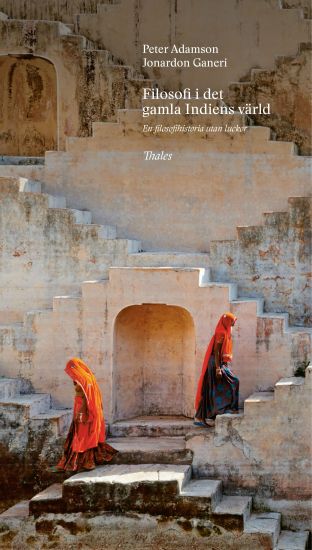
Filosofi i det gamla Indiens värld ger en bred överblick av tänkandet på den indiska subkontinenten, och presenterar en mångfald olika tankeskolor, i vilka religiösa och filosofiska strävanden oupplösligen sammanflätas. Utgångspunkten är hinduismen och den brahminska kulturen, med dess inriktning på förståelse av jagets natur och uttolkning av de gamla Vedaskrifterna. Den har givit oss förklarande texter som Upanishaderna men även det litterära eposet Mahabharata med dess mest berömda avsnitt Bhagavadgita. Buddhismen och jainismen växer fram som reaktioner på denna tradition, men delar samtidigt dess syn på filosofin som i första hand ett sätt att leva. För Buddha handlar det om att följa icke-jagets väg för att utsläcka begäret och uppnå befrielse från lidande (nirvana), för jainismen om praktiserandet av icke-våld (ahimsa) för att frigöras från karma och därmed undgå återfödelse.Den senare utvecklingen yttrar sig i en enormt rik litteratur på sanskrit, pali och andra språk. Med tiden ser vi en ökad fokusering på kunskapsteori och metafysik, språk och logik, men även på frågor om medvetandets och jagets existens och natur. Tanken på filosofins betydelse för livet går dock aldrig förlorad, och vi finner även praktiskt inriktade discipliner som yoga och tantra tillsammans med ayurvedisk medicin och en på dramatiken inriktad estetik. Boken ingår i serien "Filosofihistoria utan luckor" men kan även läsas självständigt. Någon liknande översikt över indisk filosofi har aldrig funnits på svenska. Peter Adamson är professor i senantik och arabisk filosofi vid Ludwig-Maximilians universitet i München och en av vår tids främsta filosofihistoriker. Denna del av "Filosofihistoria utan luckor" är skriven tillsammans med Jonardon Ganeri, professor vid Torontos universitet och specialist på sydasiatisk filosofi.
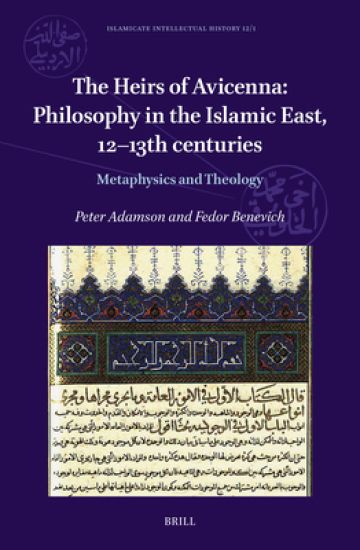
This is the first in a series of sourcebooks charting the reception of Avicenna (Ibn Sina, d.1037) in the Islamic East (from Syria to central Asia) in the 12th-13th centuries CE. Avicenna was the dominant philosophical authority in this period, who provoked generations of thinkers to subtle critique, defense, and development of his ideas. The series will translate and analyze hundreds of passages from works by such figures as al-Ghazali, al-Suhrawardi, Fakhr al-Din al-Razi, Na?ir al-Din al-?usi, and many more. This volume focuses especially on issues in metaphysics, dealing with topics like the essence-existence distinction, the problem of universals, free will and determinism, Platonic Forms, good and evil, proofs of God’s existence, and the relationship between philosophy and theology.
Admiral Thunderbolt: The Spectacular Career of Peter Wessel is a historical biography by Hans Christian Adamson that details the life of one of Norway's most famous naval heroes. Peter Wessel, also known as Tordenskjold (Thunderbolt), was a sailor who rose to prominence during the Great Northern War in the early 18th century. The book follows Wessel's early life as a young sailor, his rise through the ranks of the Norwegian navy, and his legendary exploits on the high seas. Wessel was known for his bravery and cunning, and he played a crucial role in several key battles during the war.Through meticulous research and engaging storytelling, Adamson brings Wessel's story to life, describing his daring raids on enemy ships, his strategic victories in battle, and his eventual rise to the rank of admiral. Along the way, the book also provides a fascinating glimpse into the politics and social customs of Norway during this time period.Admiral Thunderbolt is a thrilling tale of adventure and heroism on the high seas, and a tribute to one of Norway's greatest naval heroes.The Spectacular Career Of Peter Wessel, Norway's Greatest Sea Hero, Who In Eight Years Of Naval Warfare Sailed, Shot, And Stormed His Way From Sea Cadet To Vice Admiral, A. D. 1711 To 1718.This scarce antiquarian book is a facsimile reprint of the old original and may contain some imperfections such as library marks and notations. Because we believe this work is culturally important, we have made it available as part of our commitment for protecting, preserving, and promoting the world's literature in affordable, high quality, modern editions, that are true to their original work.
Selected as a Doody's Core Title for 2022 and 2023! Comprehensive, authoritative, and up to date, Pizzo and Poplack’s Pediatric Oncology, 8th Edition, remains your most trusted source of information on the care and research of children with cancer. This award-winning text is the single most comprehensive reference on the biology and genetics of childhood cancer, its diagnosis and multimodal treatment, and long-term management. In the tradition of excellence established by Drs. Philip A. Pizzo and David G. Poplack, this 8th Edition keeps you fully informed while helping you collaborate more effectively with others on the cancer care team to enhance quality-of-life issues for patients and families. Covers all aspects of the breadth and depth of childhood cancer, including basic science, diagnostic tools, principles of treatment, and clinical trials, as well as highly detailed, definitive coverage of each pediatric malignancy. Includes updates to current treatment approaches based on the results of recently completed and published clinical research. Contains new information on the biology of pediatric malignancies and strategies for the conduct of clinical trials that reflect the rapid pace of laboratory discovery. Features chapters on palliative care and education, and covers supportive care in contexts such as emergencies, infectious disease, and nutrition. Provides expert guidance on state-of-the-art, multidisciplinary care for children and families, including psychosocial aspects of care and perspectives from patients and parents. Discusses the cooperative nature of pediatric oncology as a model for cancer research with information from cooperative clinical trial groups and consortia. Enrich Your eBook Reading ExperienceRead directly on your preferred device(s), such as computer, tablet, or smartphone. Easily convert to audiobook, powering your content with natural language text-to-speech.