Kirjojen hintavertailu. Mukana 12 083 983 kirjaa ja 12 kauppaa.

Kirjahaku

Etsi kirjoja tekijän nimen, kirjan nimen tai ISBN:n perusteella.

1000 tulosta hakusanalla Peter Anderson

The Francoist Military Trials

The Francoist Military Trials

Peter Anderson

Routledge
2015
nidottu
In Spain between 1936-1945, the Franco regime carried out one Europe’s more brutal but less remembered programs of mass repression. Many were murdered by the regime’s death squads, and in some areas Francoists also subjected up to 15% of the population to summary military trials. Here many suffered the death sentence or jail terms up to thirty years. Although historians have recognised the staggering scale of the trials, they have tended to overlook the mass participation that underpinned them. In contrast to the discussion in other European countries, little attention has been paid to the wide scale collusion in the killings and incarcerations in Spain.Exploring mass complicity in the trials of hundreds of thousands of defeated Republicans following the end of the Spanish Civil War, The Francoist Military Trials probes local Francoists’ accusations whereby victims were selected for prosecution in military courts. It also shows how insubstantial and hostile testimony formed the bedrock of ‘investigations’, secured convictions, and shaped the harsh sentencing practices of Franco’s military judges. Using civil court records, it also documents how grassroots Francoists continued harassing Republicans for many years after they emerged from prison. Challenging the popularly prevalent view that the Franco regime imposed a police state upon a passive Spanish society, the evidence Anderson uncovers here illustrates that local state officials and members of the regime’s support base together forged a powerful repressive system that allowed them to wage war on elements of their own society to a greater extent than perhaps even the Nazis managed against their own population.
A Structural Atlas of the English Dialects
First published in 1987, this atlas identifies structural patterns which exist in the sound systems of the dialects of England. It regards variation, not as something to be ignored or avoided, but as a central and essential feature of dialect, which must be accounted for in a systematic way. The study identifies some of the more prominent structural boundaries between dialect areas and argues that discrete boundaries do not exist: rather there are a number of areas separated by bands of dialects in which conflicting partial systems exist.
A Structural Atlas of the English Dialects
First published in 1987, this atlas identifies structural patterns which exist in the sound systems of the dialects of England. It regards variation, not as something to be ignored or avoided, but as a central and essential feature of dialect, which must be accounted for in a systematic way. The study identifies some of the more prominent structural boundaries between dialect areas and argues that discrete boundaries do not exist: rather there are a number of areas separated by bands of dialects in which conflicting partial systems exist.
R.H.Y.T.H.M Sales: Selling and Wellbeing-How Mindset Meets Targets

R.H.Y.T.H.M Sales: Selling and Wellbeing-How Mindset Meets Targets

Peter Anderson

Createspace Independent Publishing Platform
2017
nidottu
Why do so many people burn out in the sales industry? Can we embrace a healthier way to live within our time at work? In this captivating book, Peter Anderson shares his RHYTHM Sales method that helps generate wealth and wellbeing. He reveals what is needed to meet targets. The latest research informs us that a healthy mindset has an economic valve. The RHYTHM Sales method shows you the 'how to'. Reading this book will change your approach to selling to include 'you' in the process, which in turn will improve your sales performance.
Riding the Wheel

Riding the Wheel

Peter Anderson

Kelsay Books
2024
pokkari
Peter Anderson's dispatches from the western slope of the Sangre de Cristos appeared for many years in Colorado Central Magazine and the Crestone Eagle. Riding the Wheel gathers and distills many of those seasonal meditations into a lyrical almanac that affirms and celebrates the great wheel of life. The San Luis Valley of southern Colorado, Peter Anderson's home ground, is brought to life in this gathering of lyric essays, prose poems, and exquisite haikus. With him, we enjoy "creekside meditations on moving water," travel the "cosmic highway" on moonless nights where "distance has its way with you," outrun a wind-driven "man-eating dune," get to know the neighbors, both two-legged and four, in a "little town at the end of the road," and best of all celebrate the "good news" of a world that, despite these "precarious times," continually and forever renews itself.-Rick Kempa, Editor/Publisher, Deep Wild JournalPete Anderson brings his own vernacular to the Japanese tradition of haibun, in which prose meets haiku and form is as prone to change as the seasons. Mystical and charming all at once, here we are given that rare alchemy of language and landscape, silence and sound, wilderness and wonder. -Wendy Videlock, author of Wise to the West, poet laureate of Western Colorado In Riding the Wheel, Anderson has crafted a paean to place, nature and living in the tradition of so many other fine writers-Barry Lopez comes to mind. To read a writer so in tune with nature, with rhythm, with the vicissitudes of life is to encounter the places, moments and prayers of Anderson's home as though we are there ourselves. We encounter not just the passing of seasons, not just a writer completely and skillfully in tune with their craft, but a tribute to life-and by life I mean love. The reader might not realize at first that they are witness to this love, but what leaps from the page lingers and haunts in the most reverberating and blessed ways.-aaron a. abeyta, author of Colcha, winner of the American Book Award
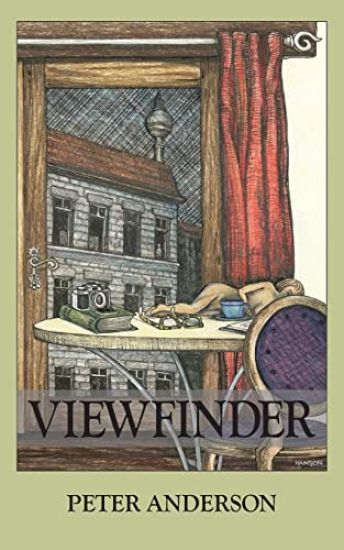
Viewfinder

Viewfinder

Peter Anderson

Limberlost Press
2023
pokkari
A frigid, gray winter in Berlin: On the night after the matriarch of a small group of close friends is found mysteriously dead in a river, five large photographic artworks created by one of the group are stolen from a glitzy gallery. Death and theft trigger searches and discoveries, personal and historical, by each of the once-glamorous but now aging friends. Their personal quests spread them from Berlin to locations across northern Europe. Secrecy and revelation, perception and misinterpretation, guilt and desire to protect, Viewfinder, the second installment in The Expatriate Trio, is ultimately a tale of resilience and long-sought redemption.
How To Raise A Pitbull To Be A Familly Dog

How To Raise A Pitbull To Be A Familly Dog

Peter Anderson

Independently Published
2019
pokkari
The pit bull terrier makes a wonderful life companion and, despite what everyone seems to assume, is a truly devoted family dog breed This practical book will teach you every tip and trick you must know in order to raise your newest family member to become the dog you've always wanted. With a gentle temper, this lovely breed is truly amazing with children as well, while having an amazing potential when it comes to trainability and intelligence levels.Order this book for yourself or as a thoughtful gift for a dog loving friend or relative, and you can be sure to win their appreciation
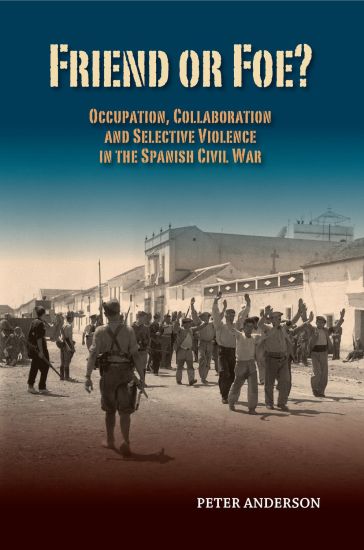
Friend or Foe?

Friend or Foe?

Peter Anderson

LIVERPOOL UNIVERSITY PRESS
2016
sidottu
'Today with the Red Army captive and disarmed, the Nationalist [nacionales] troops have achieved their final military objectives. The war is over.' With these two sentences, on 1 April 1939, General Franco announced that his writ ran across the whole of Spain. His words marked a high point for those who had flocked to Franco's side and since the start of the Civil War in July 1936 had carried out what they regarded as the steady occupation of the country. The history of this occupation remains conspicuous by its absence and the term occupation lies discredited for many historians. The danger of leaving the history of the occupation unexplored, however, is that a major process designed to control the conquered population remains in the shadows and, unlike many other European countries, the view of occupation as an imposition by outsiders remains unchallenged. Friend or Foe? explores how Francoist occupation saw members of the state and society collaborate to win control of Spanish society. At the heart of the process lay the challenging task in civil war of distinguishing between supporter and opponent. Occupation also witnessed a move from arbitrary violence towards selecting opponents for carefully graded punishment. Such selection depended upon fine-grained information about vast swathes of the population. The massive scale of the surveillance meant that regime officials depended on collaborators within the community to furnish them with the information needed to write huge numbers of biographies. Accordingly, knowledge as a form of power became as crucial as naked force as neighbours of the defeated helped define who would gain reward as a friend and who would suffer punishment as a foe.
Friend or Foe?

Friend or Foe?

Peter Anderson

Sussex Academic Press
2017
nidottu
'Today with the Red Army captive and disarmed, the Nationalist [nacionales] troops have achieved their final military objectives. The war is over.' With these two sentences, on 1 April 1939, General Franco announced that his writ ran across the whole of Spain. His words marked a high point for those who had flocked to Franco's side and since the start of the Civil War in July 1936 had carried out what they regarded as the steady occupation of the country. The history of this occupation remains conspicuous by its absence and the term occupation lies discredited for many historians. The danger of leaving the history of the occupation unexplored, however, is that a major process designed to control the conquered population remains in the shadows and, unlike many other European countries, the view of occupation as an imposition by outsiders remains unchallenged. Friend or Foe? explores how Francoist occupation saw members of the state and society collaborate to win control of Spanish society. At the heart of the process lay the challenging task in civil war of distinguishing between supporter and opponent. Occupation also witnessed a move from arbitrary violence towards selecting opponents for carefully graded punishment. Such selection depended upon fine-grained information about vast swathes of the population. The massive scale of the surveillance meant that regime officials depended on collaborators within the community to furnish them with the information needed to write huge numbers of biographies. Accordingly, knowledge as a form of power became as crucial as naked force as neighbours of the defeated helped define who would gain reward as a friend and who would suffer punishment as a foe.
The Music Teacher

The Music Teacher

Peter Anderson

Lulu.com
2007
nidottu
A comic, meditative literary novel about Aaron, an Abba-obsessed, repressed Head of Music and his cantankerous (and increasingly incontinent) Father. Estranged for decades, when their respective wives take their leave of them they reunite for a quixotic road-trip in search of Aaron's mythical ex-lover...
First Church of the Higher Elevations

First Church of the Higher Elevations

Peter Anderson

BOWER HOUSE
2015
nidottu
These contemplative essays, written for seekers and wanderers, explore the complexity of the scripture of place, the geography of the heart, the landscape of imagination, and the topography of memory. Thoughtful and rich in spirit, the book discusses a personal relationship to place and prayer. Dark, serious, joyful, and funny, it is a perfect companion on a trek through the woods or in the comfort of your own home.
Heading Home

Heading Home

Peter Anderson

BOWER HOUSE
2017
nidottu
Heading Home begins with Peter Anderson's dharma-bum passion for the road, which leads him through the mountains and deserts of the American West, and eventually lands him in an eccentric end-of-the-road town fill of mystics, misfits, and mountain dwellers. This book is a gathering of "field notes"--observations, recollections, and stories along the way, where home is understood as a work in progress and the way is a road that never ends.