Kirjojen hintavertailu. Mukana 11 244 527 kirjaa ja 12 kauppaa.

Kirjahaku

Etsi kirjoja tekijän nimen, kirjan nimen tai ISBN:n perusteella.

1000 tulosta hakusanalla Peter Brain

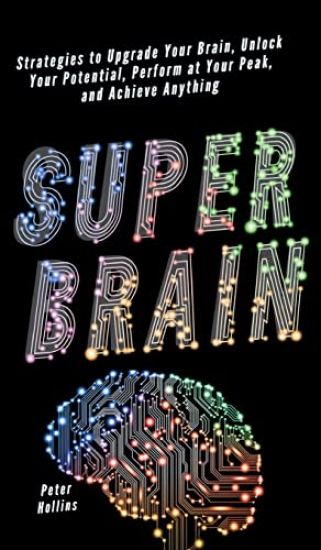
Super Brain

Super Brain

Peter Hollins

PKCS Media, Inc.
2022
sidottu
Practical methods to fully utilize your brain. Learn how it works and you can harness it to the fullest This is a book about practical neuroscience. That means that while it is scientifically-based, it gets down to how you can compensate for your brain's evolutionary habits and excel in spite of them. Our brains are stuck in the year 10,000 BC, so let's find out how to make that work for us.A combination of applied psychology and self-help techniques.Super Brain is a unique look at your brain. First, we take a quick tour of the brain's most important (and also annoying) structures and aspects. Then, we take the shortcut to addressing many of the brain's shortcomings with strategies designed to work with them seamlessly. Think of Super Brain as 20% textbook (only the essentials ) and 80% field guide to navigating the world in a better, more efficient, and smarter way.How to stop being a slave to your brain and take charge Peter Hollins has studied psychology and peak human performance for over a dozen years and is a bestselling author. He has worked with dozens of individuals to unlock their potential and path towards success. His writing draws on his academic, coaching, and research experience. Oddly enough, neuroscience was his favorite class in school, and he has found how to apply that same information to real life situations.Build the best habits that you never knew you needed.A brief guide to the universe inside our headsHow to deal with the brain's imperfections, one by oneIncreasing your attention span strategically and boosting willpowerHow to disengage the brain's autopilot function and become more presentThe lessons we can glean from Pavlov's dogsHow to deeply process information into your memoryThe brain's odd learning and forgetting tendencies
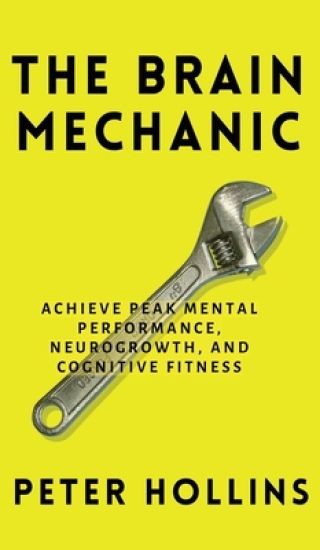
The Brain Mechanic

The Brain Mechanic

Peter Hollins

PKCS Media, Inc.
2023
pokkari
Sorry, you can't actually "train your brain." But you can force it to adapt, grow, and perform to it's full potential.The brain is the seat of our consciousness, identity, and higher thoughts. But it is also a flesh and blood machine that can wear down, grow tired, and malfunction. Learn how to prevent this and be your best.Become quicker, sharper, smarter, more observant.THE BRAIN MECHANIC is a guide to how to revitalize, polish, and fix-up your brain. The truth is, you're probably underperforming mentally. It's not personal, it's just how you're wired. This book provides a series of steps and plans for you to get on track to your best thinking days.Drawing from the most recent, up-to-date research on brain health.Peter Hollins has studied psychology and peak human performance for over a dozen years and is a bestselling author. He has worked with a multitude of individuals to unlock their potential and path towards success. His writing draws on his academic, coaching, and research experience.Understand the everyday forces that fundamentally change your brain.-The deep connection (and surprising) between the body and the mind.-Everyday actions and habits to increase focus, discipline, and critical thinking.-The emotional power of social bonds and ties, and how they empower us.-Why we need breaks, and what we should actually do for a mental rest.-Neuroplasticity - the real brain training - and how to do it daily.-The vagus nerve and how it makes or breaks your sense of calm.Fine-tune your thinking. Be your brain's mechanic.
The Brain Mechanic

The Brain Mechanic

Peter Hollins

PKCS Media, Inc.
2023
sidottu
Sorry, you can't actually "train your brain." But you can force it to adapt, grow, and perform to it's full potential.The brain is the seat of our consciousness, identity, and higher thoughts. But it is also a flesh and blood machine that can wear down, grow tired, and malfunction. Learn how to prevent this and be your best.Become quicker, sharper, smarter, more observant.THE BRAIN MECHANIC is a guide to how to revitalize, polish, and fix-up your brain. The truth is, you're probably underperforming mentally. It's not personal, it's just how you're wired. This book provides a series of steps and plans for you to get on track to your best thinking days.Drawing from the most recent, up-to-date research on brain health.Peter Hollins has studied psychology and peak human performance for over a dozen years and is a bestselling author. He has worked with a multitude of individuals to unlock their potential and path towards success. His writing draws on his academic, coaching, and research experience.Understand the everyday forces that fundamentally change your brain.-The deep connection (and surprising) between the body and the mind.-Everyday actions and habits to increase focus, discipline, and critical thinking.-The emotional power of social bonds and ties, and how they empower us.-Why we need breaks, and what we should actually do for a mental rest.-Neuroplasticity - the real brain training - and how to do it daily.-The vagus nerve and how it makes or breaks your sense of calm.Fine-tune your thinking. Be your brain's mechanic.
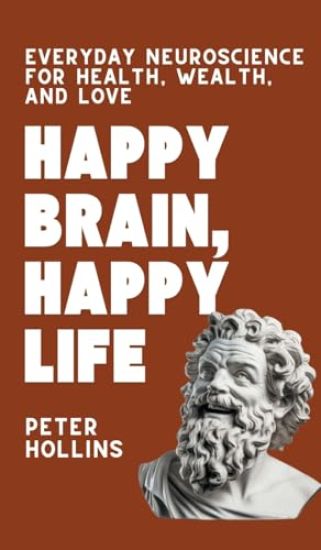
Happy Brain, Happy Life

Happy Brain, Happy Life

Peter Hollins

PKCS Media, Inc.
2024
pokkari
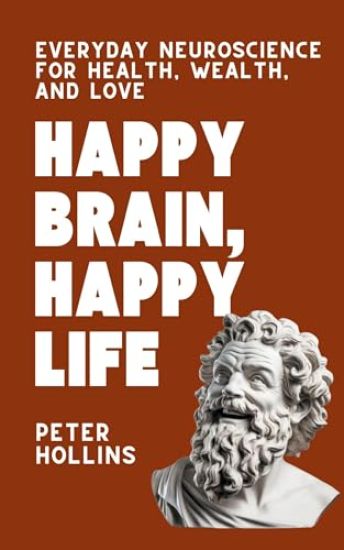
Neuroscience made simple: practical methods to rewire your brain for happiness, fulfillment, and better decisions along the way.Much of the time, we are unhappy. We are not satisfied. We are sad or depressed. This all starts in the brain. So let's go there.Understand your brain; change it; shape it; master it.You don't have to be a scientist to make your brain work for you. Happy Brain, Happy Life is all about how to fine tune your brain to the finest condition possible. We start with what makes a happy and healthy brain, and then we go into how to get there. Once we get there, we talk about the specific actions and behaviors we can use in our daily lives to ensure that you are set for health, wealth, and love.Your brain thinks it is 20,000 BC. Let's prevent self-sabotage.Peter Hollins has studied psychology and peak human performance for over a dozen years and is a bestselling author. He has worked with dozens of individuals to unlock their potential and path towards success. His writing draws on his academic, coaching, and research experience. Oddly enough, neuroscience was his favorite class in school, and he has found how to apply that same information to real life situations.Create real neural changes, which have huge real life effects.- The recipe for massive amounts of serotonin- The stressful brain and how it literally changes your neural network- How the brain is a storyteller and is wired to think and process with stories- The neuroplasticity of compassion- Triggering factors for the neurotransmitters you want- The relationship between dopamine and setting goals- Why humans are social animals
Happy Brain, Happy Life

Happy Brain, Happy Life

Peter Hollins

PKCS Media, Inc.
2024
sidottu
Neuroscience made simple: practical methods to rewire your brain for happiness, fulfillment, and better decisions along the way.Much of the time, we are unhappy. We are not satisfied. We are sad or depressed. This all starts in the brain. So let's go there.Understand your brain; change it; shape it; master it.You don't have to be a scientist to make your brain work for you. Happy Brain, Happy Life is all about how to fine tune your brain to the finest condition possible. We start with what makes a happy and healthy brain, and then we go into how to get there. Once we get there, we talk about the specific actions and behaviors we can use in our daily lives to ensure that you are set for health, wealth, and love.Your brain thinks it is 20,000 BC. Let's prevent self-sabotage.Peter Hollins has studied psychology and peak human performance for over a dozen years and is a bestselling author. He has worked with dozens of individuals to unlock their potential and path towards success. His writing draws on his academic, coaching, and research experience. Oddly enough, neuroscience was his favorite class in school, and he has found how to apply that same information to real life situations.Create real neural changes, which have huge real life effects.- The recipe for massive amounts of serotonin- The stressful brain and how it literally changes your neural network- How the brain is a storyteller and is wired to think and process with stories- The neuroplasticity of compassion- Triggering factors for the neurotransmitters you want- The relationship between dopamine and setting goals- Why humans are social animals
The Brain Book: An Owner's Manual

The Brain Book: An Owner's Manual

Peter Russell

Peter Russell
2009
nidottu
The power and versatility of the human brain far surpasses that of any computer, indeed, it is the most complex and involved system on this planet. Yet no human being has ever come close to using its full potential. In Part One of this handbook for brain users, Peter Russell sets out the brain's development and structure; in Part Two he examines its function and potential, discussing memory, imagery, mnemonics, the holographic theory of mind, reading and note-taking. He also introduces readers to mind maps using color, key words and organic structure. Among the many intriguing features of the book is the rejection of the notion that our brain deteriorates after middle age.
The Hypnotic Brain

The Hypnotic Brain

Peter Brown

Yale University Press
1991
sidottu
Hypnosis has recently experienced a surge of popularity in the scientific community and the general public and is currently being used to deal with a wide range of disorders. IN this elegantly written book, Dr. Peter Brown draws on the latest developments in cognitive psychology, anthropology, ethnology, and neuroscience to offer a new explanation for how hypnosis works and how it can be applied. Brown argues that the ability to hypnotized and be hypnotized is closely related to brain functions that are uniquely human—especially to our ability to communicate with others. He begins by looking at the way communication has evolved, especially our use of facial expression and the tonal aspects of speech to synchronize interactions. These features were particularly important for the transmission of culture in oral societies before the advent of writing. He next considers the changes the brain undergoes during hypnosis, proposing that hypnotherapy can be understood as the interaction between two fundamental brain functions: the rhythmic alteration in level of consciousness that the brain undergoes throughout the course of the day, and the capacity to use metaphor, imagery, and analogy to understand ourselves and the world. Brown discusses some of the clinical uses of hypnotherapy, in particular the exploration of multiple personality disorder (which can be characterized as spontaneous self-hypnosis as a means of coping with trauma) and the role of hypnosis in treating medical illness. In his final chapter he deals with how language may be used in hypnotherapy, with examples from the work of eth late Milton Erickson, one of the most influential clinicians and teacher sin contemporary hypnosis.
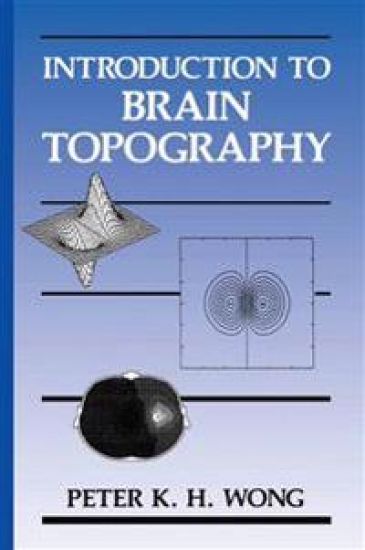
Introduction to Brain Topography

Introduction to Brain Topography

Peter K.H. Wong

Kluwer Academic / Plenum Publishers
1991
sidottu
A text for newcomers to the field of brain electromagnetic topography, combining the necessary knowledge in the diverse areas of physical sciences, mathematics, neurophysiology, and anatomy. Topics include fundamentals of data acquisition, mapping, and post-processing; source modeling and analysis;
The Autonomous Brain

The Autonomous Brain

Peter M. Milner

Psychology Press
1999
sidottu
The behaviorist credo that animals are devices for translating sensory input into appropriate responses dies hard. The thesis of this pathbreaking book is that the brain is innately constructed to initiate behaviors likely to promote the survival of the species, and to sensitize sensory systems to stimuli required for those behaviors. Animals attend innately to vital stimuli (reinforcers) and the more advanced animals learn to attend to related stimuli as well. Thus, the centrifugal attentional components of sensory systems are as important for learned behavior as the more conventional paths. It is hypothesized that the basal ganglia are an important source of response plans and attentional signals. This reversal of traditional learning theory, along with the rapid expansion of knowledge about the brain, especially that acquired by improved techniques for recording neural activity in behaving animals and people, makes it possible to re-examine some long standing psychological problems. One such problem is how the intention to perform an act selects sensory input from relevant objects and ensures that it alone is delivered to the motor system to control the intended response. This is an aspect of what is sometimes known as the binding problem: how the different features of an observed object are integrated into a unified percept. Another problem that has never been satisfactorily addressed is how the brain stores information concerning temporal order, a requirement for the production of most learned responses, including pronouncing and writing words. A fundamental process, the association between brain activities representing external events, is surprisingly poorly understood at the neural level. Most concepts have multiple associations but the concept is not unduly corrupted by them, and usually only a single appropriate association is aroused at a time. Furthermore, any arbitrary pair of concepts can be instantly associated, apparently requiring an impossibly high degree of neural interconnection. The author suggests a substitute for the reverberating closed neuronal loop as an explanation for the engram (active memory trace or working memory), which may go some way to resolving these difficulties. Shedding new light on enduring questions, The Autonomous Brain will be welcomed by a broad audience of behavioral and brain scientists.
Brain-Disabling Treatments in Psychiatry

Brain-Disabling Treatments in Psychiatry

Peter R. Breggin

Springer Publishing Co Inc
2007
sidottu
From the author of Toxic Psychiatry and Talking Back to Prozac: Peter Breggin is the conscience of American psychiatry. Once more he updates us on the real evidence with respect to the safety and effectiveness of specific psychiatric medications and ECT. This information is needed by all mental health professionals, as well as patients and families." --Bertram Karon, Ph.D., Professor of Psychology, Michigan State University, Author of The Psychotherapy of Schizophrenia "Nowhere does false medical thinking do more harm than in the modern psychiatric argument that mental illness is easily diagnosed and then cured by a side-effect free drug. Nowhere is the correct psychiatric thinking more evident than in the books by Peter Breggin. -- William Glasser, MD, psychiatrist, author of Reality Therapy In Brain Disabling Treatments in Psychiatry, renowned psychiatrist Peter R. Breggin, M.D., presents startling scientific research on the dangerous behavioral abnormalities and brain dysfunctions produced by the most widely used and newest psychiatric drugs such as Prozac, Paxil, Zoloft, Cymbalta, Effexor, Xanax, Ativan, Ritalin, Adderall, Concerta, Strattera, Risperdal, Zyprexa, Geodon, Abilify, lithium and Depakote. Many of Breggin's earlier findings have improved clinical practice, led to legal victories against drug companies, and resulted in FDA-mandated changes in what the manufacturers must admit about their drugs. Yet reliance on these drugs has continued to escalate in the last decade, and drug company interests have overwhelmed psychiatric practice. This greatly expanded second edition, supported by the latest evidence-based research, shows that psychiatric drugs achieve their primary or essential effect by causing brain dysfunction, and that they tend to do far more harm than good. New scientific analyses in this completely updated edition include: Chapters covering every new antidepressant and stimulant drug Twenty new guidelines for how to conduct non-drug therapy A chapter describing how to safely withdraw from psychiatric drugs A discussion of "medication spellbinding," explaining how patients fail to appreciate their drug-induced mental dysfunctions Documentation of how the drug companies control research and the flow of information about psychiatric treatments
The Global Brain

The Global Brain

Peter Russell

Floris Books
2007
nidottu
We've seen the power of the internet to connect people around the world in ways never before known. This remarkable book argues that the billions of messages and pieces of information flying back and forth are linking the minds of humanity together into a single, global brain: a brain with astonishing potential for the Earth.Peter Russell, an acclaimed author and speaker, weaves together modern technology and ancient mysticism to present a startling vision of the world to come, where humanity is a fully conscious superorganism in an awakening universe. The human potential movement, he shows, is growing fast and influencing business, politics and medicine.This new edition is fully updated for the challenges we face in the twenty-first century.
The Autonomous Brain

The Autonomous Brain

Peter M. Milner

Psychology Press Ltd
2015
nidottu
The behaviorist credo that animals are devices for translating sensory input into appropriate responses dies hard. The thesis of this pathbreaking book is that the brain is innately constructed to initiate behaviors likely to promote the survival of the species, and to sensitize sensory systems to stimuli required for those behaviors. Animals attend innately to vital stimuli (reinforcers) and the more advanced animals learn to attend to related stimuli as well. Thus, the centrifugal attentional components of sensory systems are as important for learned behavior as the more conventional paths. It is hypothesized that the basal ganglia are an important source of response plans and attentional signals. This reversal of traditional learning theory, along with the rapid expansion of knowledge about the brain, especially that acquired by improved techniques for recording neural activity in behaving animals and people, makes it possible to re-examine some long standing psychological problems. One such problem is how the intention to perform an act selects sensory input from relevant objects and ensures that it alone is delivered to the motor system to control the intended response. This is an aspect of what is sometimes known as the binding problem: how the different features of an observed object are integrated into a unified percept. Another problem that has never been satisfactorily addressed is how the brain stores information concerning temporal order, a requirement for the production of most learned responses, including pronouncing and writing words. A fundamental process, the association between brain activities representing external events, is surprisingly poorly understood at the neural level. Most concepts have multiple associations but the concept is not unduly corrupted by them, and usually only a single appropriate association is aroused at a time. Furthermore, any arbitrary pair of concepts can be instantly associated, apparently requiring an impossibly high degree of neural interconnection. The author suggests a substitute for the reverberating closed neuronal loop as an explanation for the engram (active memory trace or working memory), which may go some way to resolving these difficulties. Shedding new light on enduring questions, The Autonomous Brain will be welcomed by a broad audience of behavioral and brain scientists.
Brain Based Enterprises

Brain Based Enterprises

Peter Cook

Routledge
2018
sidottu
Brain Based Enterprises offers a unique synthesis of intelligent thought fused with pragmatic and pithy insights on the art and discipline of leading enterprises, where intelligence, ideas and innovation are the currencies of Sustainable Coopetive Advantage (SCA). From the first signs of intelligence through making axes and fire, we now have access to unprecedented powers of creation through the convergence of humanity and technology. Rapid and dramatic advances in our understanding of genomics, biotechnology, computing and robotics make it possible for us to create a better world or destroy what we have created. The author explores both sides of the Man-Machine dynamic so that you can choose wisely.Expressed clearly and concisely, this book is essential reading for busy people seeking to inform and illuminate themselves with a rich mixture of pragmatism, inspiration and wisdom. Featuring numerous micro case-ettes from enterprises ranging from biotechnology to banking and bots, Brain Based Enterprises grounds the ideas for people seeking to make the most of the Fourth Industrial Revolution.
Introduction to Brain Topography

Introduction to Brain Topography

Peter K.H. Wong

Springer-Verlag New York Inc.
2012
nidottu
It had been difficult to find appropriate teaching material for students and newcomers to this field of brain electromagnetic topography. In part, this is due to the many disciplines involved, requiring some knowledge of the physical sciences, mathematics, neurophysiology and anatomy. It is my hope that this book will be found suitable for introducing interested workers to this exciting field. Advanced topics will not be covered, as there are many excellent texts available. Peter K.H. Wong vii ACKNOWLEDGEMENT My co-authors, Hal Weinberg and Roberto Bencivenga, for their support; Richard Hamer, for all his early advice; Ernst Rodin and Gene Ramsay, for their encouragement; Wendy Cummings for her assistance; Technologists from the Department of Diagnostic Neurophysiology for collecting such excellent data; Bio-Logic Systems Corp. for permission to use some data as illustration; and all my friends and colleagues. My wife Elke, for putting up with me throughout this presumptuous endeavour. The manuscript was delivered in camera-ready form to the Publisher. Illustrations were created using Harvard Graphics and CorelDraw software. ix CONTENTS Part 1: Fundamentals. 1 1.1 Introduction . . . 1 1.2 Data Aquisition. . 3 Map Construction. 8 Interpolation . . . 12 1.3 Spatial Sampling . . 16 1.4 Reference and Reference-Dependence 20 1.5 Map Display Methods ..... . 27 Scaling and Floating Voltage Scales. 37 Summary Maps .......... . 37 1.6 Identification of Topographic Features 41 1.7 Spike Mapping .. . 51 1.8 Post-Processing 61 Analog Front-end. 62 Digital Filtering . 63 Reference Manipulation .. 65 Statistical Mapping .
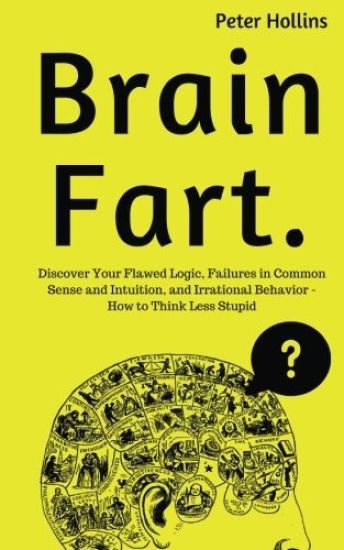
Brain Fart: Discover Your Flawed Logic, Failures in Common Sense and Intuition, and Irrational Behavior - How to Think Less Stupid
Your first instincts and gut feelings are usually flat out wrong. Discover why, and learn how to actually think clearly.A brain fart is a lapse in judgment. We do this every day without realizing it, and it can have severe consequences on our lives. Use this book as a field guide to think better, understand your feelings better, and tame your stupid brain.Cure your flawed thinking habits and mental blunders.Brain Fart is a book that will get you to think about how you think. Never before has such a deep look been taken into the roots of illogical and rash decisions - how they form, and how they persist in our lives. We all recognize our big blunders, but it's the subconscious ones that can sink us.Brain Fart is expertly researched with psychological and scientific studies, and delves into neuroscience and behavioral economics. In a book that has wide ranging implications, Peter Hollins illustrates why we tend to immediately regret our decisions and proclaim, "What was I thinking? "Stop falling into your own mental traps and develop clarity of thought.Peter Hollins has studied psychology and peak human performance for over a dozen years and is a bestselling author. He has worked with dozens of individuals to unlock their potential and path towards success. His writing draws on his academic, coaching, and research experience.Discover your brain's subtle tricks and everyday illusions.-Why our concept of free will is illusory at best.-The roots of superstitious and magical thinking.-How advertisers are so effective at emptying our wallets.-Why our memories betray us.Understand what your head is really up to.-How we evaluate risk entirely wrong.-Why our first impressions lead us astray.-Why our egos skew our sense of reality.Solve your fuzzy thoughts and solve your life.Think with clarity and you'll perform at peak levels and stop making sub-optimal decisions. Make sure your reasoning gets you where you want to be and never settle for less than you deserve. Thinking is difficult. But Brain Fart makes it much, much easier.Prevent your next brain fart by clicking the BUY NOW button at the top of this page.
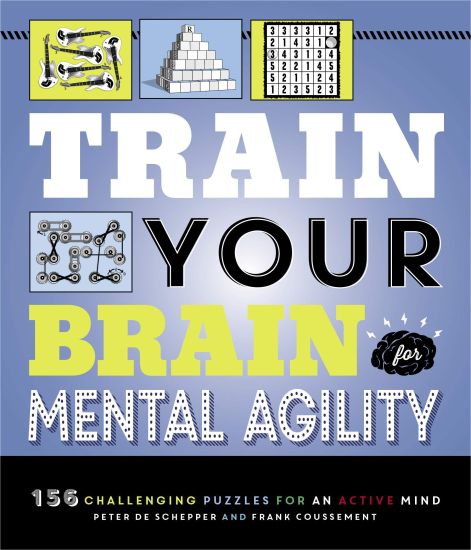
Train Your Brain: Mental Agility

Train Your Brain: Mental Agility

Peter De Schepper; Frank Coussement

Imagine Publishing, Inc
2021
nidottu
Unusual puzzles challenge puzzlers of all skill levels to condition their grey matter and flex their mental agility. Featuring 156 unique visual puzzles This newest addition to the Train Your Brain collection includes more than 150 unique visual puzzles in a variety of styles that will stretch, engage, and entertain. These puzzles go beyond your average word search or crossword and include brainteasers, binarios(R), golf mazes, letter blocks, anagrams, word pyramids, connects, doodle puzzles, sudoku, and more.