Kirjahaku
Etsi kirjoja tekijän nimen, kirjan nimen tai ISBN:n perusteella.
1000 tulosta hakusanalla Peter G Drake
This book seeks to re-appreciate the concept of customary international law as a form of spontaneous societal self-organisation, and to develop the methodological consequences that ensue from this conception for the practice of its application. In pursuing this aim, the author draws from three different strands of scholarship that have not yet been considered in connection with one another: First, general jurisprudential theories of customary law; second, theories of customary international law, especially as they relate to international relations scholarship; and third, methodological approaches to the interpretation of international law. This expansive, philosophical layout of the book enables the author to put the conceptual enigmas of customary international law into a broader perspective.Among the issues discussed in the book are the dichotomy of its traditional and modern forms and the respective benefits and disadvantages of inductive and deductive approaches to its ascertainment. In the course of this analysis, the author draws insights from Friedrich August Hayek’s theory of law as a ‘spontaneous order’, an information-processing device which enables the participants of a legal system to make use of decentralised knowledge. The book argues that the major advantage of custom as a source of international law lies in the fact that it is the result of a gradual process of trial and error, rather than the product of deliberate planning. This makes it a particularly apposite source of law in a time of seismic shifts in the distribution of power within a vastly diverse community of States, when a new global order is expected to emerge, the contours of which are not yet clearly discernible.This book applies general concepts of legal philosophy to explain the continuing relevance of custom as a source of international law while at the same time inferring from this theoretical framework concrete practical and methodological consequences, the most important of which is the special role that purposive interpretation plays with respect to rules of international custom. Given this broad approach, the book will be of interest to several groups of potential readers including academics interested in the philosophy of customary law in general, academic international lawyers and legal practitioners, especially judges, scholars of international relations and all those interested in how the international community of States organises itself.

Right Relationship (16pt Large Print Edition)
Peter G Brown; Geoffrey Garver
Readhowyouwant
2011
pokkari
This is Volume V of eighteen in a series on the Sociology of Work and Organisation. First published in 1968, this is a study in occupational sociology and looks at status and role of the lorry driver, and the consequences of industrial structure provided by the analysis of the observed behaviour and recorded attitudes of a sample of this group of workers.
This book analyzes Islam as a form of 'travelling theory' in the context of contemporary global transformations such as diasporic communities, transnational social movements, global cities and information technologies. Peter Mandaville examines how 'globalization' is manifested as lived experience through a discussion of debates over the meaning of Muslim identity, political community and the emergence of a 'critical Islam'. This radical book argues that translocal forces are leading the emergence of a wider Muslim public sphere. Now available in paperback, it contains a new preface setting the debates in the context of September 11th.
This is Volume V of eighteen in a series on the Sociology of Work and Organisation. First published in 1968, this is a study in occupational sociology and looks at status and role of the lorry driver, and the consequences of industrial structure provided by the analysis of the observed behaviour and recorded attitudes of a sample of this group of workers.
The Newborn Child
Peter G. B. Johnston; Kristie Flood; Karen Spinks
Churchill Livingstone
2002
nidottu
This is the ninth edition of a well-established, introductory text providing in-depth information on the care of the newborn, both normal and abnormal, full-term and pre-term, from minor to major abnormalities and illnesses. It provides an introduction to neonatology, concentrating on common conditions,for all health professionals concerned with care of the newborn.The concise, readable text facilitates the comprehension of content. The content is firmly evidence-based to ensure best practices. Key points listed throughout the text assist in learning and comprehension. Color photos illustrate important clinical conditions. The text is now fully referenced to give recent evidence base Fully updated in line with recent guidelines e.g. resuscitation Recent developments in intensive care (particularly of preterm neonates) and pharmacology More about the care of normal babies, including the parents' perspective Increased emphasis on the nursing/midwifery aspects New material on neonatal encephalopathy; genetic disorders; social and psychological care of the family
Discover all the ways Outlook can make your life with this book. In the handy package that is Outlook, you get the tools you use constantly: e–mail, a calendar and appointment book, a contacts list, a to–do list, and more. Learn to use them together, and you have a sophisticated system for managing your day. This complete A–to–Z guide can teach you, whether you’re just venturing into Outlook or are ready to customize and tweak it with VBA programming.
Structural Glasses and Supercooled Liquids
Peter G. Wolynes; Vassiliy Lubchenko
John Wiley Sons Inc
2012
sidottu
With contributions from 24 global experts in diverse fields, and edited by world-recognized leaders in physical chemistry, chemical physics and biophysics, Structural Glasses and Supercooled Liquids: Theory, Experiment, and Applications presents a modern, complete survey of glassy phenomena in many systems based on firmly established characteristics of the underlying molecular motions as deduced by first principle theoretical calculations, or with direct/single-molecule experimental techniques. A well-rounded view of a variety of disordered systems where cooperative phenomena, which are epitomized by supercooled liquids, take place is provided. These systems include structural glasses and supercooled liquids, polymers, complex liquids, protein conformational dynamics, and strongly interacting electron systems with quenched/self-generated disorder. Detailed calculations and reasoned arguments closely corresponding with experimental data are included, making the book accessible to an educated non-expert reader.
Sir Arthur Tansley was the leading figure in ecology for the first half of the 20th century, founding the field, and forming its first professional societies. He was the first President of the British Ecological Society and the first chair of the Field Studies Council. His work as a botanist is considered seminal and he is recognized as one of the giants of ecology throughout the world. Ecology underpins the principles and practices of modern conservation and the maintenance of biodiversity. It explains the causes of, and offers solutions to, problems of climate change. Yet ecology is a young science, barely 100 years old. Its origins lie in phytogeography, the naming and mapping of plants. Shaping Ecology is a book about a multi-faceted man whose friends included Bertrand Russell, Marie Stopes, Julian Huxley, GM Trevelyan, and Solly Zuckerman. Historical context is provided by Tansley's family for his parents moved in the Fabian-socialist world of John Ruskin and Octavia Hill, both instrumental in the foundation of the National Trust. While Britain was relatively slow to protect its green spaces and wildlife, it did establish in 1913 the first professional Ecological Society in the world. Tansley was its President. Organising the British Vegetation Committee and initiating a series of International Phytogeographic Excursions, he changed phytogeography into ecology.
Tools and Tactics of Design
Peter G. Dominick; John T. Demel; William M. Lawbaugh; Richard J. Freuler; G. L. Kinzel; Eli Fromm
John Wiley Sons Inc
2000
nidottu
This book is about the process of design and the skills that individuals should develop in order to execute that process. Its focus is on explaining the engineering design process but the authors have also tried to provide an experiential resource. In this regard the book provides the reader with guidance on how to use a variety of tools and techniques that support collaborative design efforts.
Tools and Tactics of Design
Peter G. Dominick; John T. Demel; William M. Lawbaugh; Richard J. Freuler; Gary L. Kinzel; Eli Fromm
John Wiley Sons Inc
2021
nidottu
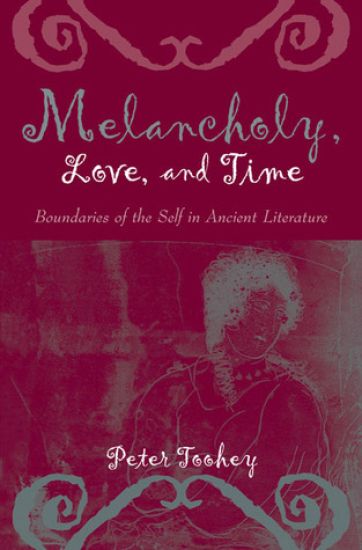
Ancient literature features many powerful narratives of madness, depression, melancholy, lovesickness, simple boredom, and the effects of such psychological states upon individual sufferers. Peter Toohey turns his attention to representations of these emotional states in the Classical, Hellenistic, and especially the Roman imperial periods in a study that illuminates the cultural and aesthetic significance of this emotionally charged literature. His probing analysis shows that a shifting representation of these afflicted states, and the concomitant sense of isolation from one's social affinities and surroundings, manifests a developing sense of the self and self-consciousness in the ancient world.This book makes important contributions to a variety of disciplines including classical studies, comparative literature, literary and art history, history of medicine, history of emotions, psychiatry, and psychology.Peter Toohey is Professor and Department Head of Greek and Roman Studies at the University of Calgary, Canada.
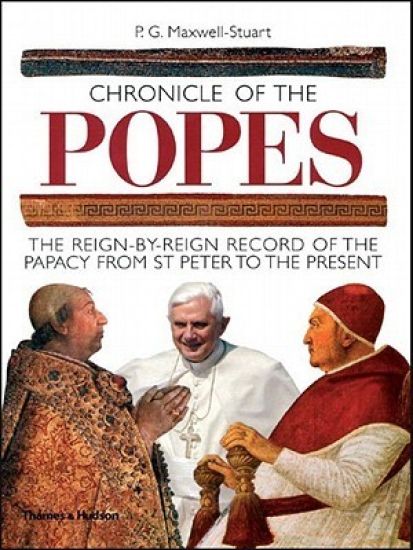
Chronicle of the Popes recounts the lives, deeds and misdeeds of the 265 Popes from St Peter to Pope Benedict XVI. The extraordinary dichotomy between the dignity of the holy office and the human passions and pleasures of some of the individuals who have occupied it characterizes the narrative throughout. It shows how ultimately the rôle has come full circle – from selfconsciously spiritual office, through embroilment in political power, and back to its spiritual roots.
Social scientists have long been fascinated by the Christian conversion, a form of religious experience that believers say both strengthens their faith and changes their lives. This study looks at the performance of conversion narratives and argues that the performance itself is central to the efficacy of the conversion. Through detailed analysis of a number of conversion narratives, Peter Stromberg shows how these narratives can be understood as a form of ritual, in which believers invoke central emotional conflicts and then attempt to resolve these conflicts by reframing them in terms of the language of Evangelical Christianity. Although the Christian conversion narrative is used as the primary example, the approach in this book also illuminates other practices - such as psychotherapy - in which people deal with emotional conflict through language.
Peter Bolt explores the impact of Mark's Gospel on its early readers in the first-century Graeco-Roman world. His book focuses upon the thirteen characters in Mark who come to Jesus for healing or exorcism and, using analytical tools of narrative and reader-response criticism, explores their crucial role in the communication of the Gospel. Bolt suggests that early readers of Mark would be persuaded that Jesus' dealings with the suppliants show him casting back the shadow of death and that this in itself is preparatory for Jesus' final defeat of death in resurrection. Enlisting a variety of ancient literary and non-literary sources in an attempt to illuminate this first-century world, this book gives special attention to illness, magic and the Roman imperial system. This is a different approach to Mark, which attempts to break the impasse between narrative and historical studies and will appeal to scholars and students alike.
Risk pervades virtually all areas of human endeavour, whether these endeavours be for social, personal, commercial or national purposes. It is vitally important for all those involved in decision making in these areas to know how to evaluate the risks involved in any action if choices are to be made meaningfully. In this introduction, Professor Moore begins by summarising the basic concepts that lie behind a formal approach to decision making under conditions of uncertainty. There then follows a discussion of general questions of the determination of probabilities that measure risk, first the theoretical approach then the collective principle allied to the actuarial approach and the controversial subjective or personal approach. A chapter on measuring utility, or worth, leads in to the second part of the book in which more specific questions about handling risk are studied by looking at examples drawn from a number of different fields: commercial, industrial and financial investment decisions, portfolio management, physical risks, medical diagnosis and finally questions of public policy. The book ends with three appendices covering the basic principles for the handling of probabilities, the various decision making procedures that have been advanced and ways in which risk reduction can be achieved. This account of risk will not only be an essential purchase for practising managers, but will also be necessary reading for those students seeking qualification in business and management studies, accounting, banking, insurance and public administration.
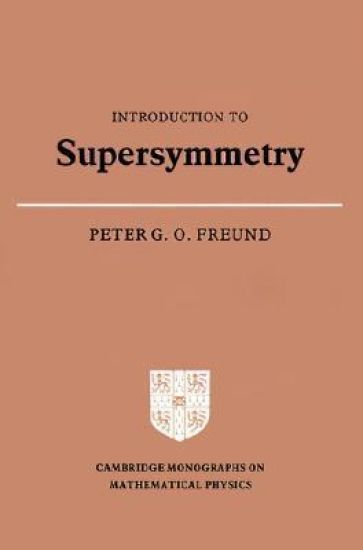
Just as ordinary symmetries relate various forms of matter to each other, and various basic forces to each other, so the novel concept of supersymmetry relates (Fermi) matter to (Bose) force. It is the aim of this book to provide a brief introductory description of the new physical and mathematical ideas involved in formulating supersymmetric theories. The book starts with a physical motivation of supersymmetry, a presentation of the mathematics of Lie superalgebras, supergroups and superspace. Techniques for constructing manifestly globally supersymmetric field theories are given, using the superfield formalism. To allow for a clear flow of ideas, the basic ideas and techniques are worked out in low space dimensionalities where the formulae do not obscure the concepts. Generalizations to four space-time dimensions are then readily come by. Some quantum aspects are discussed. Possible phenomenological applications are not emphasized. Supergravities, locally supersymmetric theories are then considered in 4 and 11 dimensions, in component formalism. An introduction to supersymmetry will be of interest to postgraduate students and researchers in theoretical and particle physics, especially those working in quantum field theory, quantum gravity, general relativity and supergravity. The book will also be of interest to mathematicians with an interest in theoretical physics.