Kirjojen hintavertailu. Mukana 11 627 373 kirjaa ja 12 kauppaa.

Kirjahaku

Etsi kirjoja tekijän nimen, kirjan nimen tai ISBN:n perusteella.

1000 tulosta hakusanalla Peter H. Rolfs

Model-Based Engineering with AADL

Model-Based Engineering with AADL

Peter H. Feiler; David P. Gluch

Addison Wesley
2015
nidottu
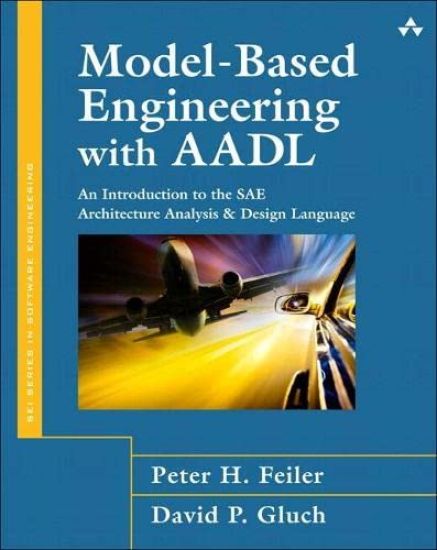
Conventional build-then-test practices are making today’s embedded, software-reliant systems unaffordable to build. In response, more than thirty leading industrial organizations have joined SAE (formerly, the Society of Automotive Engineers) to define the SAE Architecture Analysis & Design Language (AADL) AS-5506 Standard, a rigorous and extensible foundation for model-based engineering analysis practices that encompass software system design, integration, and assurance. Using AADL, you can conduct lightweight and rigorous analyses of critical real-time factors such as performance, dependability, security, and data integrity. You can integrate additional established and custom analysis/specification techniques into your engineering environment, developing a fully unified architecture model that makes it easier to build reliable systems that meet customer expectations. Model-Based Engineering with AADL is the first guide to using this new international standard to optimize your development processes. Coauthored by Peter H. Feiler, the standard’s author and technical lead, this introductory reference and tutorial is ideal for self-directed learning or classroom instruction, and is an excellent reference for practitioners, including architects, developers, integrators, validators, certifiers, first-level technical leaders, and project managers. Packed with real-world examples, it introduces all aspects of the AADL notation as part of an architecture-centric, model-based engineering approach to discovering embedded software systems problems earlier, when they cost less to solve. Throughout, the authors compare AADL to other modeling notations and approaches, while presenting the language via a complete case study: the development and analysis of a realistic example system through repeated refinement and analysis. Part One introduces both the AADL language and core Model-Based Engineering (MBE) practices, explaining basic software systems modeling and analysis in the context of an example system, and offering practical guidelines for effectively applying AADL. Part Two describes the characteristics of each AADL element, including their representations, applicability, and constraints. The Appendix includes comprehensive listings of AADL language elements, properties incorporated in the AADL standard, and a description of the book’s example system.
Europe's Tragedy

Europe's Tragedy

Peter H. Wilson

Penguin Books Ltd
2010
pokkari
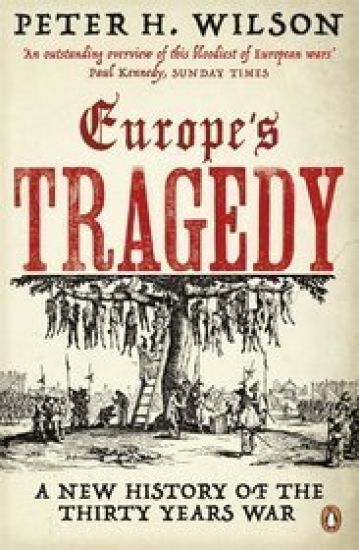
Winner of the Society for Military History Distinguished Book Award 2011The horrific series of conflicts known as the Thirty Years War (1618-48) tore the heart out of Europe, killing perhaps a quarter of all Germans and laying waste to whole areas of Central Europe to such a degree that many towns and regions never recovered. All the major European powers apart from Russia were heavily involved and, while each country started out with rational war aims, the fighting rapidly spiralled out of control, with great battles giving way to marauding bands of starving soldiers spreading plague and murder. The war was both a religious and a political one and it was this tangle of motives that made it impossible to stop. Whether motivated by idealism or cynicism, everyone drawn into the conflict was destroyed by it. At its end a recognizably modern Europe had been created but at a terrible price.Peter Wilson's book is a major work, the first new history of the war in a generation, and a fascinating, brilliantly written attempt to explain a compelling series of events. Wilson's great strength is in allowing the reader to understand the tragedy of mixed motives that allowed rulers to gamble their countries' future with such horrifying results. The principal actors in the drama (Wallenstein, Ferdinand II, Gustavus Adolphus, Richelieu) are all here, but so is the experience of the ordinary soldiers and civilians, desperately trying to stay alive under impossible circumstances.
The Holy Roman Empire

The Holy Roman Empire

Peter H. Wilson

Penguin Books Ltd
2017
pokkari
THE SUNDAY TIMES AND ECONOMIST BOOKS OF THE YEAR 2016'A definitive study of the amorphous state that lasted a thousand years ... The Holy Roman Empire deserves to be hailed as a magnum opus' Tom Holland, Daily Telegraph'Engrossing ... staggering ... a book that is relevant to our own times' The Times'Masterly ... If, like most people, you know little more about the Holy Roman Empire other than Voltaire's bon mot - "neither holy, nor Roman, nor an empire" - then this is the book for you' Daniel Johnson, Sunday Times'A history that helps us understand Europe's problems today ... interesting and provocative, makes the complex understandable' Christopher Kissane, GuardianA great, sprawling, ancient and unique entity, the Holy Roman Empire, from its founding by Charlemagne to its destruction by Napoleon a millennium later, formed the heart of Europe. It was a great engine for inventions and ideas, it was the origin of many modern European states, from Germany to the Czech Republic, its relations with Italy, France and Poland dictated the course of countless wars - indeed European history as a whole makes no sense without it.In this strikingly ambitious book, Peter H. Wilson explains how the Empire worked. It is not a chronological history, but an attempt to convey to readers why it was so important and how it changed over its existence. The result is a tour de force - a book that raises countless questions about the nature of political and military power, about diplomacy and the nature of European civilization and about the legacy of the Empire, which has continued to haunt its offspring, from Imperial and Nazi Germany to the European Union.
Iron and Blood

Iron and Blood

Peter H. Wilson

PENGUIN BOOKS LTD
2024
pokkari
*WINNER OF THE DUKE OF WELLINGTON MEDAL FOR MILITARY HISTORY**A DAILY TELEGRAPH BOOK OF THE YEAR 2022*'No one interested in the history of Europe can afford not to read this stupendous book' Simon Heffer, Daily TelegraphIron and Blood is a startlingly ambitious and absorbing book, encompassing five centuries of political, military, technological and economic change to tell the story of the German-speaking lands, from the Rhine to the Balkan frontier, from Switzerland to the North Sea. Wilson's narrative considers everything from weapons development to recruitment to battlefield strategy.Germans' military impact on the rest of Europe has been immense. If there is one constant it has been the sense of being beset by seemingly more powerful enemies - France or Russia or Turkey - and the need to strike a rapid knockout blow to ensure a favourable result. Almost inevitably, this has in practice meant protracted, relentless and often unwinnable wars, and - in 1939-1945 - moral catastrophe.The author of definitive books on the Holy Roman Empire and the Thirty Years War, Peter Wilson has with Iron and Blood written his masterpiece.'Hugely impressive' Richard J. Evans, Times Literary Supplement
Talons of the Eagle, 5e

Talons of the Eagle, 5e

Peter H. Smith

Oxford University Press Inc
2021
nidottu
Topical and up to date, Talons of the Eagle: Latin America, the United States, and the World, Fifth Edition, presents an eminent scholar's perspective on the interaction between global trends and inter-American affairs-a subject that has become crucially important in the current era. Rather than concentrating solely on U.S. policy, Peter H. Smith and Ana Covarrubias uniquely address the structural relationships between the two regions by focusing on internationalsystems, the distribution of power, and the perception and pursuit of national interests. Throughout, this provocative text casts light on such contemporary issues as economic integration, drug trafficking, undocumented migration, and the rise of Latin America's "new left." It also analyzes LatinAmerican reactions and responses to the U.S.-and to the rest of the world-in these complex and troubling times.
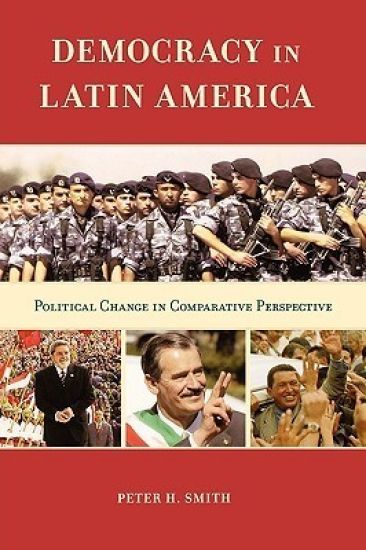
Democracy in Latin America

Democracy in Latin America

Peter H. Smith

Oxford University Press Inc
2005
sidottu
Democracy in Latin America examines the processes of democratization in Latin America over the past twenty years. It provides a comprehensive analysis of the issues inherent in the move toward democracy-including elections, culture, representation, poverty, and criminality. Organized thematically, with a unique historical perspective, the book focuses on six paradigmatic case studies in the region: Argentina, Brazil, Chile, Mexico, Nicaragua, and Venezuela.
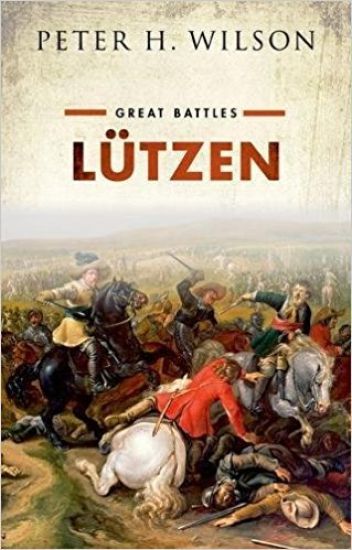
Lützen

Lützen

Peter H. Wilson

Oxford University Press
2018
sidottu
The Thirty Years' War (1618-48) was Europe's most destructive conflict prior to the two world wars. Two of European history's greatest generals faced each other at Lützen in November 1632, mid-way through this terrible war. Neither achieved his objective. Albrecht von Wallenstein withdrew his battered imperial army at nightfall, unaware that his opponent, King Gustavus Adolphus of Sweden, had died a few hours earlier. The indecisive military outcome found an immediate echo in image and print, and became the object of political and historical disputes. Swedish propaganda swiftly fostered the lasting image of the king's sacrifice for the Protestant cause against the spectre of Catholic Habsburg 'universal monarchy'. The standard assumption that the king had 'met his death in the hour of victory' became integral to how Gustavus Adolphus's contribution to modern warfare has been remembered, even celebrated, while the study of Lützen's wider legacy shows how such events are constantly rewritten as elements of propaganda, religious and national identity, and professional military culture. The battle's religious and political associations also led to its adoption as a symbol by those advocating German unification under Prussian leadership. The battlefield remains a place of pilgrimage to this day and a site for the celebration of Protestant German and Nordic culture. This book is the first to combine analysis of the battle itself with an assessment of its cultural, political and military legacy, and the first to incorporate recent archaeological research within a reappraisal of the events and their significance. It challenges the accepted view that Lützen is a milestone in military development, arguing instead that its impact was more significant on the cultural and political level.
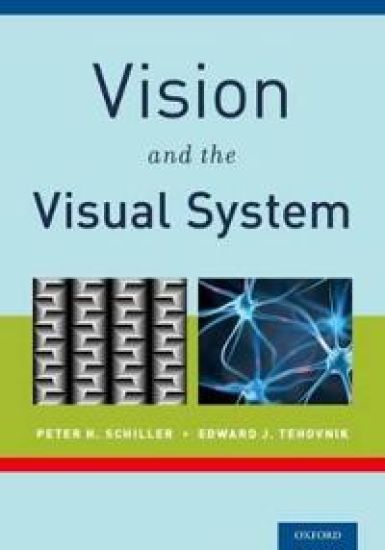
Vision and the Visual System

Vision and the Visual System

Peter H. Schiller; Edward J. Tehovnik

Oxford University Press Inc
2015
sidottu
Vision and the Visual System offers students, teachers, and researchers a rigorous, yet accessible account of how the brain analyzes the visual scene. Schiller and Tehovnik describe key aspects of visual perception while explaining the relationship between eye movements and the neural structures in the brain, which play a central role in how we process visual information. The book discusses various brain areas involved in processing information, focusing on the evolutionary origins and mechanics behind the several parallel pathways that compose the visual system. Later chapters explain how the nervous system processes the perception of color, motion, depth, and patterns. A variety of illusions are on display in Chapter 14, where the authors provide detailed explanations that deconstruct how the visual system operates to create them. The volume concludes with a discussion of recent attempts to build visual prosthetic devices for blind individuals, of which there are more than 40 million in the world. Vision and the Visual System is based on Professor Schiller's more than 40 years of experience teaching vision courses at MIT, and is tailored especially for college undergraduates and graduate students interested in visual perception and the operations of the visual system.
Under the Gun

Under the Gun

Peter H. Rossi

AldineTransaction
1983
nidottu
In 1978, the Social and Demographic Research Institute of the University of Massachusetts, Amherst, received a grant from the National Institute of Justice to undertake a comprehensive review of the literature on weapons, crime, and violence in the United States. The purpose of the project is best described as a "sifting and winnowing" of the claims and counterclaims from both sides of the Great American Gun War - the perennial struggle in Ameri­can political life over what to do, if anything, about guns, about violence, and about crime. The review and analysis of the available studies consumed the better part of three years; the results of this work are contained in this volume.The intention of any review is to take stock of the available fund of knowledge in some topical area. Under the Gun is no different: our goal has been to glean from the volumes of previous studies those facts that, in our view, seem firmly and certainly established; those hypotheses that seem adequately supported by, or at least approximately consistent with, the best available research evidence; and those areas or topics about which, it seems, we need to know a lot more than we do. One of our major conclusions can be stated in advance: despite the large number of studies that have been done, many critically important questions have not been adequately researched, and some of them have not been examined at all.Much of the available research in the area of weapons and crime has been done by advocates for one or another policy position. As a consequence, the manifest intent of many "studies" is to persuade rather than to inform. We have tried to approach the topic from a purely agnostic point of view, treating as an open question what policies should be enacted with regard to gun, or crime, control. Thus, we have tried to judge each study on its own merits, on the basis of the routine standards normally applied to social-scientific research, and not on the basis of how effectively it argues for a particular policy direction. It would, of course, be presumptuous to claim that we have set aside all our own biases in conducting this study. Whether or not our treatment is fair and objective is clearly something for the reader, and not us, to decide.
Down and Out in America

Down and Out in America

Peter H. Rossi

University of Chicago Press
1991
nidottu
The most accurate and comprehensive picture of homelessness to date, this study offers a powerful explanation of its causes, proposes short- and long-term solutions, and documents the striking contrasts between the homeless of the 1950s and 1960s and the contemporary homeless population, which is younger and contains more women, children, and blacks.
The Development of Behavioral States and the Expression of Emotions in Early Infancy
Peter H. Wolff, a world-renowned authority on infant behavior, helped lay the foundation for the field in the 1960s with his innovative studies of behavioral studies, motor coordination, smiling, and crying in infancy. Some twenty years later, as infancy studies have become increasingly specialized and fragmented, he calls for new theoretical perspectives and methods of investigation. Applying ethological methods used in field studies of animal behavior, Wolff first observes how babies behave in the "natural" ecology of their homes to catalog their species-typical behavioral repertory and then manipulates their behavior through informal experiments designed to examine functional significance. Wolff argues that a coherent psychobiological theory of early human development must begin with knowledge about the infant's behavioral repertory under free field conditions. Many current theories of human development begin instead with assumptions about the organization of behavior derived from studies of psychological function in the adult; moreover, they appeal to instincts, maturational programs, or genomes to explain the apparent lawfulness in the development of these behavioral categories. Such a priori explanations, Wolff contends, beg the whole question of development. As an alternative to theoretical metaphors that portray the infant as a closed system and suggests that development is controlled by prescient programs that anticipate the mature steady state, Wolff proposes a metaphor of the infant as an open, self-organizing system with partial, mutative mechanisms of development. Applying this metaphor, he addresses the essentially unsolved problem of how novel behavioral forms are induced during ontogenesis. Wolff presents a study of twenty-two infants who were observed for thirty hours each week in their homes during the first months after birth. He builds a week-by-week description of changes in behavioral states of wakefulness and examines how reversible state changes influence developmental transformations in social-affective behavior and sensori-motor intelligence. The observations and informal experiments emphasize expressions of emotion and the infant's changing relations to persons and things. Pointing out that movements are our only clue to what infants "feel" or "think," Wolff gives special emphasis to the systematic variations in spontaneous and environmentally evoked patterns of motor coordination as a function of behavioral state transitions. Of great importance to psychologists, psychiatrists, pediatricians, and students of development in general, The Development of Behavioral States and the Expression of Emotions in Early Infancy offers a major empirical, methodological, and theoretical rethinking of the subject to which Wolff has made outstanding contributions.
The Holy Roman Empire 1495-1806

The Holy Roman Empire 1495-1806

Peter H. Wilson

Red Globe Press
2011
nidottu
The Holy Roman Empire has always caused tremendous confusion for students of European history, and this book sets out to provide a clear account of this remarkable organisation - comparable in many ways only to the modern European Union - and its profound impact during its three centuries of existence.
The Thirty Years War

The Thirty Years War

Peter H. Wilson

Red Globe Press
2010
sidottu
An edited and annotated collection of translated documents on the Thirty Years War, providing students with accessible source material on this destructive conflict. Covering all aspects of the war from a variety of contemporary perspectives, it brings together an exciting range of material from treaties to literature to eyewitness accounts.
The Thirty Years War

The Thirty Years War

Peter H. Wilson

Red Globe Press
2010
nidottu
An edited and annotated collection of translated documents on the Thirty Years War, providing students with accessible source material on this destructive conflict. Covering all aspects of the war from a variety of contemporary perspectives, it brings together an exciting range of material from treaties to literature to eyewitness accounts.
Expressive Forms in Brahms's Instrumental Music

Expressive Forms in Brahms's Instrumental Music

Peter H. Smith

Indiana University Press
2005
sidottu
"This book is a substantial and timely contribution to Brahms studies. Its strategy is to focus on a single critical work, the C-Minor Piano Quartet, analyzing and interpreting it in great detail, but also using it as a stepping-stone to connect it to other central Brahms works in order to reach a new understanding of the composer's technical language and expressive intent. It is an original and worthy contribution on the music of a major composer." —Patrick McCreless Expressive Forms in Brahms's Instrumental Music integrates a wide variety of analytical methods into a broader study of theoretical approaches, using a single work by Brahms as a case study. On the basis of his findings, Smith considers how Brahms's approach in this piano quartet informs analyses of similar works by Brahms as well as by Beethoven and Mozart. Musical Meaning and Interpretation—Robert S. Hatten, editor
Technological Nature

Technological Nature

Peter H. Kahn Jr.

MIT Press
2011
sidottu
Why it matters that our relationship with nature is increasingly mediated and augmented by technology.Our forebears may have had a close connection with the natural world, but increasingly we experience technological nature. Children come of age watching digital nature programs on television. They inhabit virtual lands in digital games. And they play with robotic animals, purchased at big box stores. Until a few years ago, hunters could "telehunt"-shoot and kill animals in Texas from a computer anywhere in the world via a Web interface. Does it matter that much of our experience with nature is mediated and augmented by technology? In Technological Nature, Peter Kahn argues that it does, and shows how it affects our well-being.Kahn describes his investigations of children's and adults' experiences of cutting-edge technological nature. He and his team installed "technological nature windows" (50-inch plasma screens showing high-definition broadcasts of real-time local nature views) in inside offices on his university campus and assessed the physiological and psychological effects on viewers. He studied children's and adults' relationships with the robotic dog AIBO (including possible benefits for children with autism). And he studied online "telegardening" (a pastoral alternative to "telehunting").Kahn's studies show that in terms of human well-being technological nature is better than no nature, but not as good as actual nature. We should develop and use technological nature as a bonus on life, not as its substitute, and re-envision what is beautiful and fulfilling and often wild in essence in our relationship with the natural world.
German Unification in the European Context

German Unification in the European Context

Peter H. Merkl

Pennsylvania State University Press
1993
sidottu
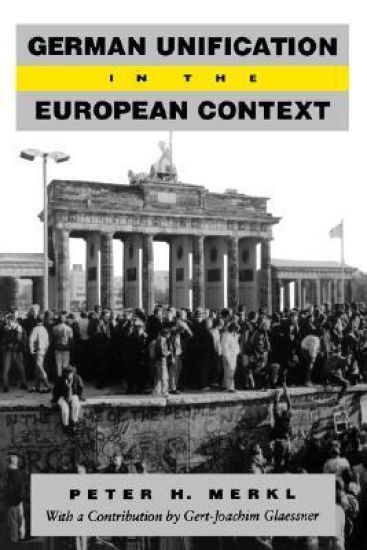
The collapse of the Communist regime in East Germany and the subsequent unification of East and West Germany were events of extraordinary historical importance, the ramifications of which will take years to unfold. A leading U.S. expert on West German politics, Peter Merkl, had the good fortune to be a visiting professor at the University of Göttingen in 1990 and was able to witness this incredible transition firsthand. While teaching at the Free University in Berlin in 1991, Merkl enlisted the cooperation of a leading East German expert, Gert-Joachim Glaessner, to contribute a chapter on the GDR. The result is a work that offers a careful and comprehensive account of the process of unification and its implications for the future of European and international politics. Merkl begins by laying out the historical German Question and placing the divided state in the international context of the Cold War and its consequences. He then analyzes the generational differences between Germans over fifty who rallied to the challenge with enthusiasm and the less nationalistic younger generation who feared that the pursuit of unification would preempt such goals as a better life for West Germans and a livable environment. Gert-Joachim Glaessner describes in detail the spectacular unraveling of the East German communist regime that ultimately led to the fall of the Berlin Wall amidst the disintegration of the other Communist regimes, arguing that they did not fall on their own nor as a result of West German or Western initiatives alone. Merkl analyzes the process of political unification, the several elections of the year 1990, and the agreements made between East and West Germany. He also discusses the international objections to German unification and the many obstacles that were and will need to be overcome to make German unity a reality. He examines the attitudes of East and West Germans towards each other and their sense of national identity, the transformation of institutions and constitutions, and the immense problems and expense of rebuilding the East German infrastructure and economy and of privatizing state-owned operations. Finally, he maps out the international significance of the great changes of the post-Wall and post-Communist world that will define the future role of united Germany vis-à-vis Germany's neighbors, the European community, the United States, and the world. The book ends with a glimpse of how Germans envision themselves in the year 2000.
German Unification in the European Context

German Unification in the European Context

Peter H. Merkl

Pennsylvania State University Press
1993
pokkari
The collapse of the Communist regime in East Germany and the subsequent unification of East and West Germany were events of extraordinary historical importance, the ramifications of which will take years to unfold. A leading U.S. expert on West German politics, Peter Merkl, had the good fortune to be a visiting professor at the University of Göttingen in 1990 and was able to witness this incredible transition firsthand. While teaching at the Free University in Berlin in 1991, Merkl enlisted the cooperation of a leading East German expert, Gert-Joachim Glaessner, to contribute a chapter on the GDR. The result is a work that offers a careful and comprehensive account of the process of unification and its implications for the future of European and international politics. Merkl begins by laying out the historical German Question and placing the divided state in the international context of the Cold War and its consequences. He then analyzes the generational differences between Germans over fifty who rallied to the challenge with enthusiasm and the less nationalistic younger generation who feared that the pursuit of unification would preempt such goals as a better life for West Germans and a livable environment. Gert-Joachim Glaessner describes in detail the spectacular unraveling of the East German communist regime that ultimately led to the fall of the Berlin Wall amidst the disintegration of the other Communist regimes, arguing that they did not fall on their own nor as a result of West German or Western initiatives alone. Merkl analyzes the process of political unification, the several elections of the year 1990, and the agreements made between East and West Germany. He also discusses the international objections to German unification and the many obstacles that were and will need to be overcome to make German unity a reality. He examines the attitudes of East and West Germans towards each other and their sense of national identity, the transformation of institutions and constitutions, and the immense problems and expense of rebuilding the East German infrastructure and economy and of privatizing state-owned operations. Finally, he maps out the international significance of the great changes of the post-Wall and post-Communist world that will define the future role of united Germany vis-à-vis Germany's neighbors, the European community, the United States, and the world. The book ends with a glimpse of how Germans envision themselves in the year 2000.