Kirjojen hintavertailu. Mukana 11 342 296 kirjaa ja 12 kauppaa.

Kirjahaku

Etsi kirjoja tekijän nimen, kirjan nimen tai ISBN:n perusteella.

1000 tulosta hakusanalla Peter Tuffrey

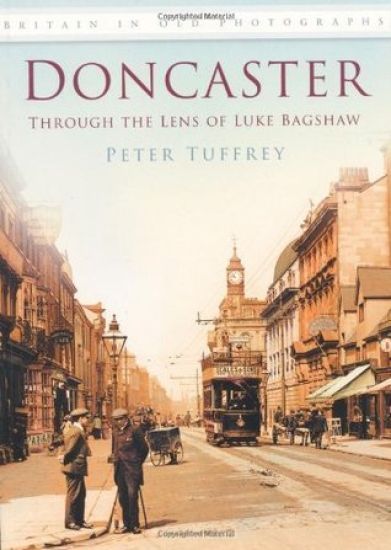
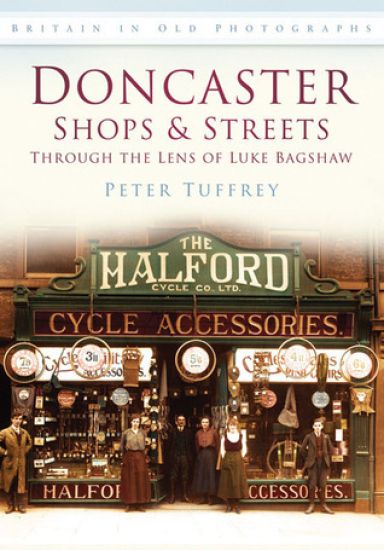
Doncaster: Through the Lens of Luke Bagshaw

Doncaster: Through the Lens of Luke Bagshaw

Peter Tuffrey

The History Press Ltd
2008
nidottu
Each of these images is accompanied by a detailed caption. Some are extremely rare, including shots of Doncaster colliery at the turn of the century and the inside of the railway works of the Victorian age; all of them will delight lovers of photography. With events such as the Chrysanthemum Show and a tea party at Cusworth Hall, busy street scenes, views of the surrounding area and the full history of Doncaster's Victorian buildings, theatres and pubs - as well as long-gone institutions such as the workhouse - this volume will delight photographers and local historians alike.
Doncaster Shops and Streets: Through the Lens of Luke Bagshaw
This fascinating collection, taken from the original glass-plate negatives, showcases some of the very best of local photographer Luke Bagshaw's images of Doncaster at the turn of the last century. Balby Laundry, E.H Booth's grocers, Bell Brother's jewellers, W.E. Clark's cycle shop and countless others are all captured in Bagshaw's beautiful images. Each photograph is accompanied by a detailed caption giving the full history of the shop or scene. With more than 190 images of stores, street scenes, new buildings (including the theatre, racecourse and power station) rising, and the trams and carriages of yesteryear, this book captures the Doncaster of the past. It is an essential guide for lovers of photography and for anyone with an interest in the history of the area.
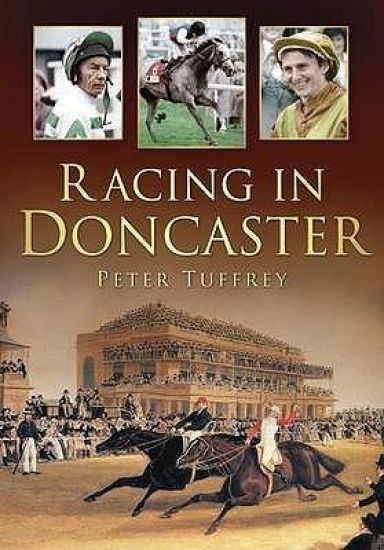
Racing in Doncaster

Racing in Doncaster

Peter Tuffrey

The History Press Ltd
2009
nidottu
Racing in Doncaster contains a fascinating selection of photographs, charting the ups and downs of this historic course. Famous races, horses, jockeys and trainers can all be found here, along with much detail about the St Leger, Doncaster’s most celebrated and lucrative race of all. Peter Tuffrey has gathered together well over 200 images, many unpublished, to present a comprehensive photographic history of the course, the meetings, and the runners and rider who have graced Doncaster’s turf. This is must-have for all racing enthusiasts.
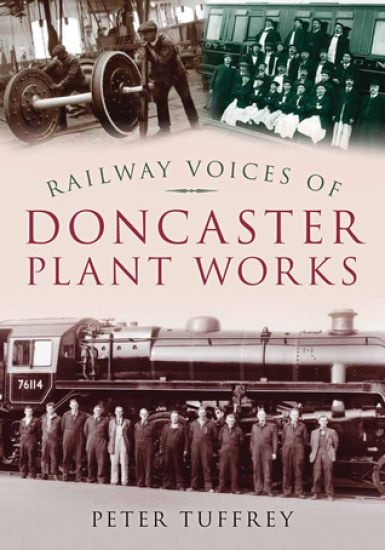
Voices from Doncaster Plant Works

Voices from Doncaster Plant Works

Peter Tuffrey

The History Press Ltd
2010
nidottu
Doncaster’s Plant Works was established in 1853 by the Great Northern Railway Company. Always referred to simply as ‘The Plant’, it has built and repaired numerous carriages, wagons, and locomotives including the renowned Flying Scotsman and Mallard. Well-known local author and journalist, Peter Tuffrey, has compiled an affectionately illustrated record of the Plant in Voices from Doncaster Plant Works, preserving the memories of the men and women who worked there or were associated with it. The Plant is still in part existence today and its importance to Doncaster cannot be overstated. Packed with photographs, many previously unpublished, and assembled from interviews with many of its staff over the years – from managers, fitters, electricians, secretaries and canteen staff – this book is sure to appeal to railway enthusiasts, local history buffs and past and present Plant Works staff alike.
Doncaster & District

Doncaster & District

Peter Tuffrey

The History Press Ltd
2011
nidottu
James Simonton, founder of the J.S. & S. postcard business, came to Doncaster around 1908, settling in the outlying village of Wadworth. His three sons, James junior, Frederick and Francis, were all initially involved in the family business, and between 1908 and 1950 the firm photographed virtually every street and numerous local events in the towns and villages within a twenty-mile radius of Doncaster, producing thousands of topographical picture postcard views of Doncaster and its environs at the dawn of the twentieth century. Illustrated with 200 images of shops, street scenes, buildings and the transport of yesteryear, and accompanied by informative captions, this fascinating book captures the Doncaster of the past. It is an essential guide for lovers of photography and for anyone with an interest in the history of the area.
Yorkshire People and Railways

Yorkshire People and Railways

Peter Tuffrey

Amberley Publishing
2011
nidottu
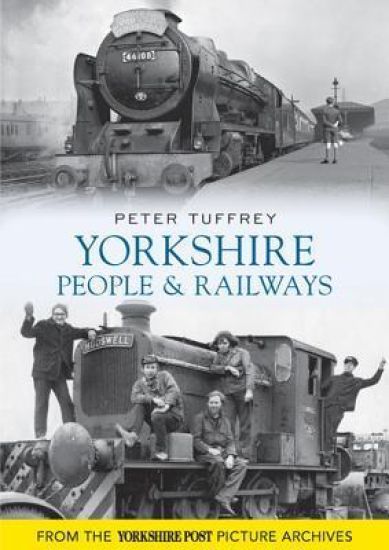
As a collector of old photographs, particularly those depicting railways, well-known Yorkshire writer Peter Tuffrey has always been aware of the vast photographic archive lurking in the depths of the Yorkshire Post newspaper. Renewing his contact recently with an old acquaintance, Peter Charlton, now Editor of the Yorkshire Post, Peter has been able to select some of these photographs for use in his new book Yorkshire People & Railways. Under various chapter headings - Views from the Lineside; Staff; Crashes; On Shed and Works; Preserved Railways; Railway Stations - we see the many different ways Yorkshire people have been involved with railways, particularly in the days of steam, in their own county. Some of the lineside pictures are pin-sharp, having been scanned from large format glass plate negatives. But that is not to detract from the other pictures in the book, which have been carefully composed and taken over the years by the Yorkshire Post's own reputable staff photographers. The picture captions are well researched, informative and refl ect Peter's eye for the unusual and eccentric. Yorkshire People & Railways not only provides interest for the real enthusiast but also for the social historians among us who want to look back and get a feel for how it really was in the days when steam was King.
Yorkshire People at Work

Yorkshire People at Work

Peter Tuffrey

Amberley Publishing
2012
nidottu
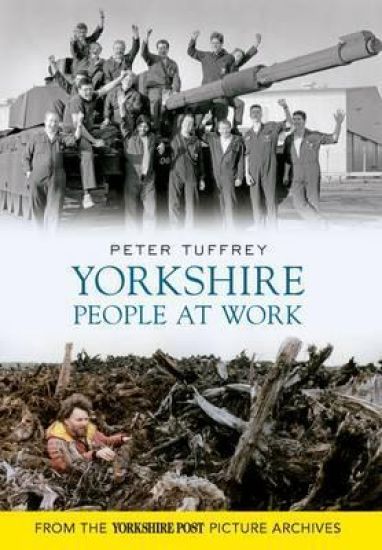
Delving once more into the colossal photographic archives of the Yorkshire Post, Peter Tuffrey has produced another fascinating publication: Yorkshire People at Work. Whilst trying to illustrate the areas of work for which the county is perhaps best known - railways, fishing, textiles and steel making - Peter quickly realised that the range of occupations was enormous not to mention intriguing. Consequently, the book is unpredictable and exciting. It includes fire eaters, bakers, buskers, model makers, train drivers, and undertakers to mention only a few. Peter admits to choosing jobs that he could never attempt himself but that is of no consequence because it all adds up to a marvellous catalogue of the many diverse professions in Yorkshire. From the many thousands of pictures perused over a long period, the final number for inclusion in the book was whittled down to around 225. The pictures owe much to the Yorkshire Post's staff photographers' ability to get the best out of a subject by means of clever camera angles and imaginative compositions. Each picture also has concise informative captions alongside, which complete this celebration of Yorkshire People at Work.
North Yorkshire Town and Villages

North Yorkshire Town and Villages

Peter Tuffrey

Fonthill Media
2016
nidottu
Delving once more into the depths of the Yorkshire Post's photographic files and newspaper archives, Peter Tuffrey has come up with a treasure trove of pictures and stories that quite marvellously capture the flavour of life in North Yorkshire during the 1940s, 1950s, 1960s and 70s. This part of the county, snuggling alongside the Yorkshire Dales and North Yorkshire Moors, is renowned for its association with the agricultural world and many former farming activities are featured. Additionally, we witness redevelopment taking place as well as the threat motorised transport will bring in future years to the numerous small and quaint villages. The book also finds time to illustrate well-known landmarks, country estates as well as hi-lighting quirky and eccentric events. Benningborough Hall, Castle Howard, Studley Royal are just a few of the country estates included. A stop off at the two renowned railway heritage sites the North Yorkshire Moors Railway and Embsay and Bolton Abbey Steam is also included. York, the main city in the region, is seen in all its quaint olde world glory in pictures dating from the 1940s. These, it may be stated, show the area long before it became a massive tourist attraction. This book will provide a worthy companion to the author's earlier publication featuring West Yorkshire Towns, Cities and Villages.
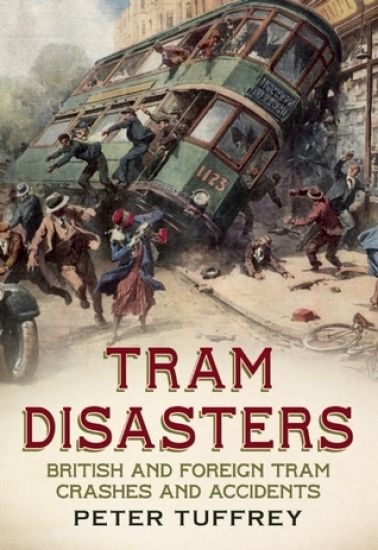
Tram Disasters

Tram Disasters

Peter Tuffrey

Fonthill Media
2013
nidottu
Peter Tuffrey has always been fascinated by trams, just as other people are captivated by racing cars, motorcars, steam locomotives and buses. He can't explain why, but it all began over thirty years ago when he bought a glass plate photographic collection which depicted, with pin sharp clarity, numerous Doncaster trams. From there he moved on to collecting tram crash postcards and helped Sheffield author Brian Hinchliffe produce a small tram crash booklet in 1990. Since that time Peter has collected many more tram crash pictures. Why the fascination with crashes? That's unexplainable too. But disasters hold people's fascination whether they involve aeroplanes, fires, explosions etc. So, offering no plausible rational explanations or excuses, this book boldly illustrates British and Foreign tram crashes from the late nineteenth century to the present day. In certain instances trams have also fallen victim of enemy aerial action and Peter has felt that dramatic pictures of those incidents has warranted them being included here. But, regardless of whether the reader is interested in trams, or disasters of any type, this book also has a wealth of interest for those fascinated by the changing transport scene over the last century.
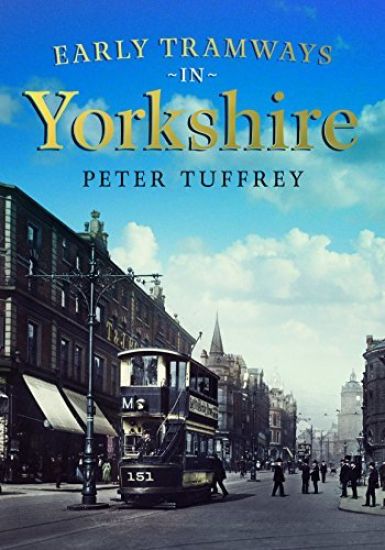
Early Tramways of  Yorkshire

Early Tramways of Yorkshire

Peter Tuffrey

Fonthill Media
2014
nidottu
It has often been said that the world was horse-drawn before the introduction of electric tramways. So, the establishment of a new and relatively cheap mode of transport was a revelation to many people enabling them to travel, work and play beyond their immediate surroundings. The opening of a tramway route captured everyone's imagination, ensuring kids, and adults (and the occasional dog) would turn out to witness the event, always orchestrated by groups of local civic dignitaries. This book via breathtaking, pin sharp pictures - taken from rare postcards and exclusive glass plate negatives - lavishly illustrates the early years of tramways across Yorkshire, from Sheffield to Hull, from Doncaster to Keighley and areas in-between including, Rotherham, Bradford, Halifax, Huddersfield and Leeds. The onlooker today, besides being at one with the enthralled locals, celebrating their new tramway systems, will not resist being enchanted by the everyday street scenes and people going about their daily lives, examples of which abound page after page in this glimpse into a long-forgotten age.
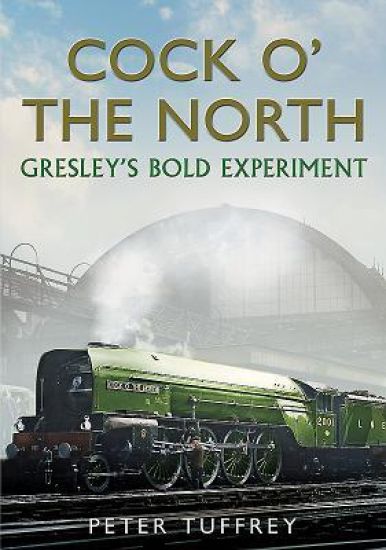
Cock O' the North

Cock O' the North

Peter Tuffrey

Fonthill Media
2014
sidottu
On 22 May 1934 a zenith of locomotive construction in the UK was reached when an enormous new locomotive entered traffic for the London & North Eastern Railway Company. The impressive engine was P2 Class no. 2001 Cock o' the North and it was painstakingly erected to the designs of eminent locomotive engineer H.N. Gresley (later Sir) at the company's sprawling Doncaster Works.Cock o' the North was equipped with number of new and experimental features and this created quite a stir in the highly critical railway world and with the wider general public. These features included; Kylala-Chapelon (Kylchap) double blastpipe and chimney, Lentz poppet valves and rotary cam valve gear, A.C.F.I feedwater heater, V-shaped cab front, streamlined steam passages and a 50 sq. ft firebox grate area. No. 2001 also had a 2-8-2 or 'Mikado' wheel arrangement and, while it was not the first engine in Britain to have such configuration (the Gresley P1 Class locomotives of 1925 were the pioneers), Cock o' the North was the first engine intended for use on express passenger traffic to be built as a 'Mikado'.This book is the first one to feature the entire history of Cock o' the North as a single subject.With detailed research and a remarkable selection of photographs it examines and illustrates many aspects of the locomotive including: the name derivation, construction, trial runs, trial tests, the controversial rebuilding by Gresley's successor, Edward Thompson, the involvement in the Balby Bridge crash, and final withdrawal from service. Locomotive developments at home and abroad during the first half of the 20th century are also chartered as well as Nigel Gresley's rise from Great Northern Railway Company Locomotive Superintendent to LNER Chief Mechanical Engineer. Having understood Gresley's motivation behind building the locomotive, readers are then armed with enough information to ask themselves whether his bold experiment of building the largest steam passenger locomotive Britain has ever seen was a success and achieved the intentions of its creator.
Last Days of Southern Steam from the Bill Reed Collection
This album of 160 colour photographs was taken in the Southern Region of B.R., which was formerly the lines constituting the Southern Railway. Bill Reed took the pictures between 1958 and 1967 during a number of visits to stations, sheds and areas offering attractive vantage points of locomotives. From Greater London in the north, at sheds and stations including Bricklayers Arms, Feltham and Victoria, to Brighton, Southampton and Bournemouth on the south coast. Dover and Folkestone in the south east were visited as well as Exeter, Yeovil and Wadebridge on the south west. The Isle of Wight is also included as the area was incorporated into the S.R. upon Grouping and later the Southern Region of B.R. This book contains a selection of photographs taken on numerous branch lines around the region and these are particularly evocative of the final years of steam under B.R. operation. From a modern perspective they also give an indication why there was such an eagerness on the part of B.R. for their closure. Many of the lines utilized locomotives that had been in service for a number of years and were perhaps coming to the end of their life span.