Kirjojen hintavertailu. Mukana 12 390 323 kirjaa ja 12 kauppaa.

Kirjahaku

Etsi kirjoja tekijän nimen, kirjan nimen tai ISBN:n perusteella.

1000 tulosta hakusanalla Peter Weller

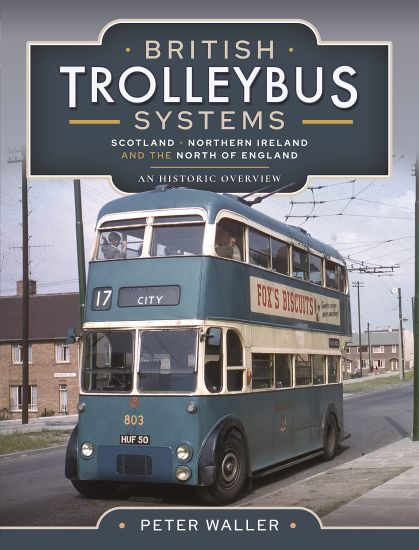
British Trolleybus Systems - Lancashire, Northern Ireland, Scotland and Northern England
Although there had been experiments with the use of a new form of transport - the trackless tram' (better known as the trolleybus) - during the first decade of the 20th century, it was in June 1911 that Bradford and Leeds became the country's pioneering operators of trolleybuses. Some of the earliest operators were in Lancashire, northern England and Scotland; indeed Scotland can lay claim to having both the first system in Britain to close - Dundee in 1914 - and the last to open - Glasgow in 1949. This volume - one of four that examines the history of all trolleybus operators in the British Isles - focuses on Lancashire, Northern England, Scotland and Northern Ireland.
Regional Tramways - The North West of England, Post 1945
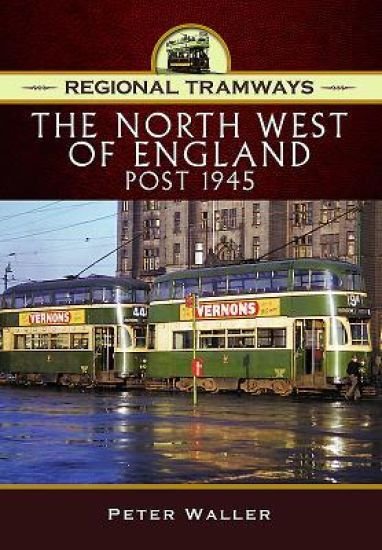
This is the third in the 'Regional Tramways' series that covers the history of tramway operation in the British Isles. Focusing on North-West England, the book provides an overview of the history of tramways in the region from the 1860s, when one of the pioneering horse trams that predated the Tramways Act of 1870 operated in Birkenhead (the first tramway to operate in the British Isles), through to the closures of the last traditional tramways (Stockport and Liverpool) in 1951 and 1957. It also looks at one great survivor the tramway in Blackpool that, fully modernized, continues to operate in the twenty-first century. Concentrating on the systems that survived into 1945 Blackburn, Blackpool, Bolton, Bury, Darwen, Liverpool, Manchester, Oldham, Salford, SHMD and Stockport the book provides a comprehensive narrative, detailing the history of these operations from 1945 onwards, with full fleet lists, maps and details of route openings and closures. The story is supported by almost 200 illustrations, both colour and black and white, many of which have never been published before, that portray the trams that operated in these towns and cities, and the routes on which they operated. Bringing the story up to date, the book also examines the one second-generation tramway built in the region Manchester Metrolink as well as informing readers where it is still possible to see surviving first-generation trams from the region in preservation.
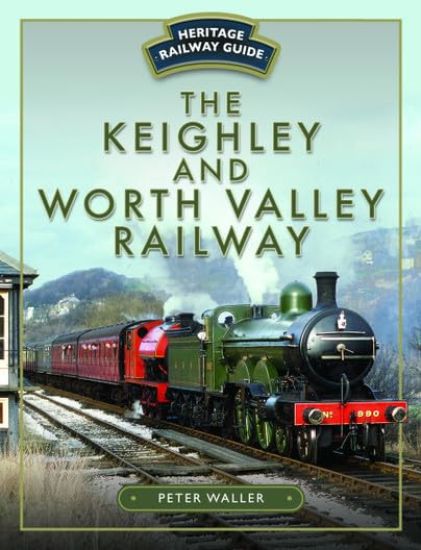
The Keighley and Worth Valley Railway

The Keighley and Worth Valley Railway

Peter Waller

PEN SWORD BOOKS LTD
2023
sidottu
Now preserved for almost sixty years, the former Midland Railway branch from Keighley to Oxenhope to the west of Bradford may not be one of the country’s longest – indeed it only stretches for just under five miles – but it is one of the country’s most popular preserved lines. With a history stretching back to the mid-nineteenth century, the Keighley & Worth Valley provided an essential link for the communities that it served for almost a century. The harsh economic realities of the 1950s made its future uncertain and its fate was, theoretically, sealed before the infamous Beeching Report of March 1963. However, there were a number of local enthusiasts who, having previously witnessed the demise of the ex-Great Northern Railway Queensbury Triangle routes in the mid-1950s, were determined that the Oxenhope line would not suffer a similar fate. With the line preserved, services were triumphantly restored in 1968 and the line has been providing pleasures for tourists and enthusiasts ever since.
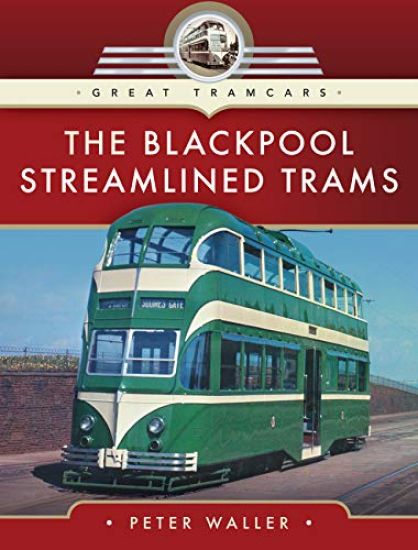
The Blackpool Streamlined Trams

The Blackpool Streamlined Trams

Peter Waller

Pen Sword Transport
2020
sidottu
In the early 1930s the tramcar in Blackpool was at a crossroads; the system needed investment in both new track and new trams whilst there was a serious threat that the 'town' routes - as elsewhere in Britain as operators faced the same challenges - might have been converted to bus operation. The appointment of Walter Luff as the new general manager was, however, to prove a turning point. Working closely with English Electric, based in nearby Preston, Luff developed a series of streamlined trams - both single-deck and double-deck - that were to revolutionise the town's tramway. By the end of 1930s, the corporation had acquired more than 100 new trams - the majority built by English Electric but with 20 coming from Brush - that ensured the survival not only of the key route along the Promenade to Fleetwood but also of the bulk of the 'town' routes. Over the next 70 years these trams were to form the cornerstone of the Blackpool system. Almost from the start, when a number were modified to cater for the changed requirements during the Second World War, many of the trams were rebuilt - into the power cars that worked with the trailers, for example, or the one-man operated cars of the early 1970s - that extended their lives and saw them outlast more modern designs. It was only with the modernisation of the Blackpool system in the first decade of the 20th century that, finally, they became largely obsolete but still, as part of the heritage fleet, they remain very much part of the contemporary Blackpool scene. This book examines the history of Blackpool's streamlined trams of the 1930s from development through to preservation.
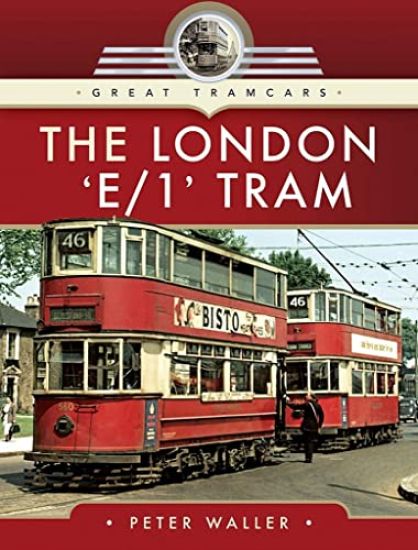
The London 'E/1' Tram

The London 'E/1' Tram

Peter Waller

Pen Sword Transport
2020
sidottu
Probably the single most numerous of tramcar constructed for operation on Britain's first generation electric tramways, the London County Council's 'E/1' class had an operational history that stretched for almost 50 years. The first were produced towards the end of the first decade of the 20th century and the last were withdrawn with the conclusion of 'Operation Tramaway' - the final conversion of the once great London tramway system - in July 1952. Over the years, more than 1,000 were built for operation by the LCC with similar cars being constructed for a number of the council operated systems in the capital prior to the creation of the LPTB in July 1933\. The last batch - effectively rebuilds of single-deck cars that had once operated through the Kingsway Subway prior to its modernisation - not completed until the early 1930s. During the 1920s the LCC cars had undergone a Pullmanisation programme and, during the following decade, a number underwent the LPTB's Rehabilitation scheme. Moreover, with the removal of the restriction on the use of enclosed lower-deck vestibules, many others were converted to fully-enclosed during that decade. Although withdrawals commenced in the 1930s, as the tram system north of the river was converted to trolleybus operation, and others were lost as a result of enemy action during the war, a sizeable number survived to the system's final days. This book examines the history of this important class from development through to preservation.
Britain's Preserved Trams

Britain's Preserved Trams

Peter Waller

Pen Sword Transport
2021
sidottu
It is almost 100 years since the first tram was preserved in Britain, in the century since then a great variety of trams have been saved from tramway systems small and large. Some trams were purchased directly out of service and others were acquired after many years alternative usage, some being summer houses or homes, while others were used on farms or allotments where they served as sheds and out buildings, before being lovingly restored over many years. The story of tram preservation is not wholly positive, in the early days many trams suffered from being stored in the open at unsafe sites, where the historic vehicles were often subjected to acts of vandalism and suffered badly from the weather. This changed to a large extent in 1959, with the acquisition of the site of the future National Tramway Museum at Crich in Derbyshire,, where a comprehensive collection of trams from all over Britain and also foreign tram networks has been assembled, to secure a collection of tramcars for future generations. There is also today fine collections of trams in other museums in Britain and Ireland, which cover much of the rich history of this once common form of public transport. This book looks at almost 200 of these trams when they were in service, through historic photographs, prior to their withdrawal and eventual preservation.
British Trolleybus Systems - Yorkshire

British Trolleybus Systems - Yorkshire

Peter Waller

PEN SWORD BOOKS LTD
2022
sidottu
This is one of four volumes covering the history of British Trolleybus systems. This book looks at the networks in Yorkshire. Bradford and Leeds were the pioneering systems in the country and, more than six decades later, it was Bradford that was to the final bastion of this once important form of transport. The author is an authority on tram and trolleybus systems, with a series of books already published on the history of British and Irish tram networks. This volume covers the history and background surrounding the networks looking at the reasons why they were opened and why they eventually closed down.
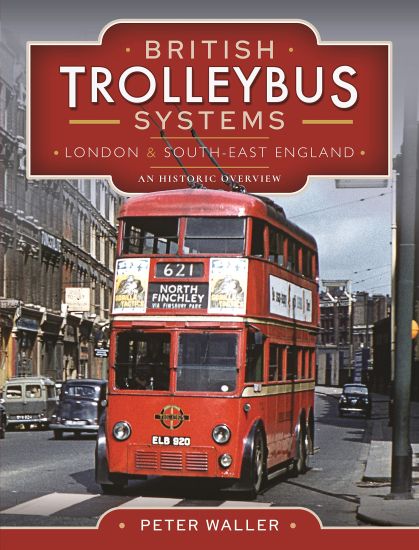
British Trolleybus Systems - London and South-East England
Although there had been experiments with the use of a new form of transport - the 'trackless tram' (better known as the trolleybus) - during the first decade of the 20th century, it was in June 1911 that Bradford and Leeds became the country's pioneering operators of trolleybuses. Whilst, in Leeds, the trolleybus was destined to have a fairly peripheral role (and finally disappeared in 1928), in Bradford, perhaps as a consequence of the hills surrounding the city centre which represented ideal territory for the trolleybus, the 'trackless' was destined to have a long and illustrious career stretching for more than 60 years until - on 26 March 1972 - the final first-generation trolleybus system finally succumbed to the all-conquering motorbus. This is the first of two volumes to cover the history of all of the trolleybus operators of the British Isles and focuses on those systems in the North of England and Scotland as well as the only network in Northern Ireland - Belfast. The book includes comprehensive fleet and route histories allied to some 250 illustrations, both colour and mono, including a map of each network featured.
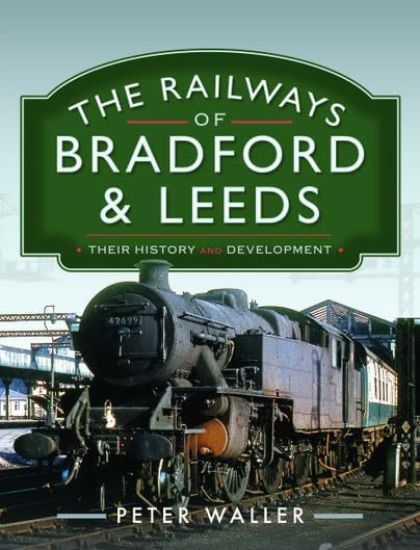
The Railways of Bradford and Leeds

The Railways of Bradford and Leeds

Peter Waller

PEN SWORD BOOKS LTD
2023
sidottu
It was to the south-west of Leeds that one of the key lines in the development of Britain’s railway network – the Middleton Railway – established the principle of seeking parliamentary sanction for the construction of a new form of transport. Five decades later in the early nineteenth century it was again the Middleton Railway that was at the forefront of the use of steam – rather than animal – power to move coal from colliery to market. From the early 1830s through until the early years of the twentieth century the local railway network continued to expand; indeed, if it had not been for the outbreak of the First World War in 1914 the area would have played host to one of the last first-generation main lines to be constructed with the Midland Railway planning – and partially constructing – a new main line north from Royston. In the event the line was never completed, consigning Bradford to be served by no more than glorified branch lines. Providing a largely illustrated account to the history of the railway development of the area, the book includes a fascinating selection of illustrations that focus on the evolution of the network in the almost eighty years since the end of the Second World War.
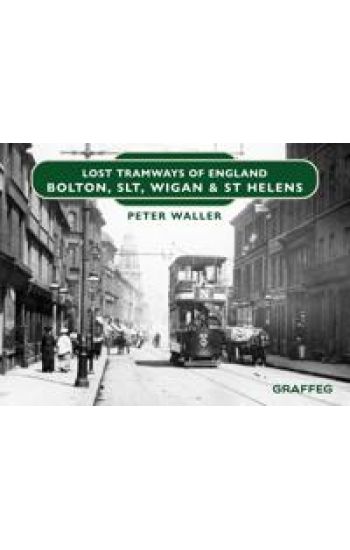
Lost Tramways of England: Bolton, SLT, Wigan and St Helens
At the peak of Britain's first-generation tramways, it was possible to travel by tram all the way from Pier Head at Liverpool to the Pennines in Rochdale by tram. Amongst the chain of tramways that formed these links were the services that operated in Bolton, St Helens, Wigan and the company lines controlled by South Lancashire Tramways. Each of these systems had a fascinating history but all were to suffer greatly as a result of lack of maintenance during and after World War I and from bus competition, with the result that only one - Bolton - survived into the post-World War II era. Locations featured include: Farnworth, Dunscar, Tonge, Horwich, Halliwell, Montserrat, Bury, Huyton, Prescot, Worsley and Leigh. The Lost Tramways series documents the tram networks which were at the heart of many of Britain's growing towns and cities from the mid-19th century to the mid-20th century. An informative, accessible and portable resource for the tram enthusiast as well as the general reader, and a superb souvenir or gift for visitors past and present.