

Kirjahaku
Etsi kirjoja tekijän nimen, kirjan nimen tai ISBN:n perusteella.
1000 tulosta hakusanalla Phil Callaway



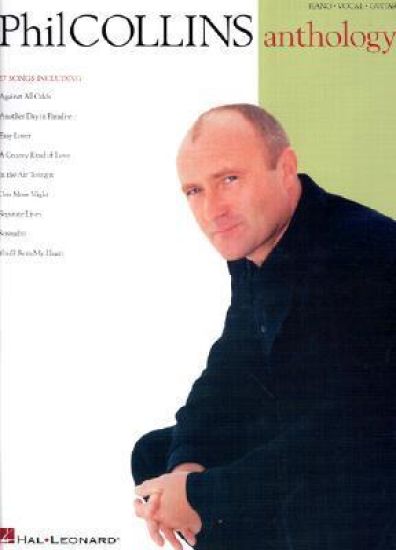
Phil Collins Anthology
Hal Leonard Corporation
2001
nidottu
(Piano/Vocal/Guitar Artist Songbook). Features 27 top hits from this pop icon's highly successful solo career, including: Against All Odds (Take a Look at Me Now) * Another Day in Paradise * Do You Remember * Easy Lover * I Don't Care Anymore * I Missed Again * In the Air Tonight * One More Night * Separate Lives * Sussudio * Take Me Home * Two Worlds * We Wait and We Wonder * You Can't Hurry Love * You'll Be in My Heart * and more.
A compact 11-poem collection of poet Phil Kaye's early work. Includes poems such as "Teeth", "Suburbia" and "Funerals are Like Birthday Parties (For My Grandmother)".

The classic bestseller re-issed in a B format paperback edition. This eye-opening biography traces Lynott's life from 1950s Dublin through to Thin Lizzy and his tragic death. Using dozens of frank interviews with family friends and band members, this is a touching and shocking account of the life of the Irish legend. Mark Putterford's eye opening biography traces Lynott's visionary ambitions to fuse dance music and heavy rock as well as influences on the early careers of future stars like Bob Geldof, Midge Ure, Huey Lewis and Mark Knopfler. Using dozens of frank interviews with family, friends and band members, Putterford gives us a touching and sometimes shocking account of the life of the one and only black Irish rock legend. Includes full discography.

This title, originally published in 1972, has been updated to include Spector's work over the following three decades and the bizarre circumstances surrounding the shooting of Lana Clarkson at Spector's Los Angeles mansion on 03 February 2003. In researching the book on Spector the author spent time with the man himself, having been introduced to him by mutual friend John Lennon. He also spoke to many of Spector's working colleagues.

Paul Hutton's study of Phil Sheridan in the West is authoritative, readable, and an important contribution to the literature of westward expansion. Although headquartered in Chicago, Sheridan played a crucial role in the opening of the West. His command stretched from the Missouri to the Rockies and from Mexico to Canada, and all the Indian Wars of the Great Plains fell under his direction. Hutton ably narrates and interprets Sheridan's western career from the perspective of the top command rather than the battlefield leader. His book is good history and good reading.""-Robert M. Utley
A go-getting, red-headed college kid eager to break into the music business, Phil Gernhard produced a handful of singles for South Carolina doo-wop group Maurice Williams and the Zodiacs. One of these songs, ""Stay,"" reached number one on the charts in 1960. Gernhard was just 19 years old.Phil Gernhard, Record Man is the story of a self-made music mogul who created nearly fifty years' worth of chart-topping songs. From a tiny office and studio in Florida, he co-wrote the Royal Guardsmen's ""Snoopy vs. the Red Baron,"" America's fastest-selling single of 1966. He revived the career of singer Dion DiMucci with the ballad ""Abraham, Martin and John""-a million seller. He discovered and produced hit records for Lobo, Jim Stafford, and the Bellamy Brothers. Through a long collaboration with music business icon Mike Curb, he launched to fame many others, including country superstars Tim McGraw and Rodney Atkins. In Nashville and Los Angeles, Phil Gernhard was a legend.Yet Gernhard's private life was crumbling. He battled physical and emotional demons that he simply couldn't overcome, struggling with alcoholism, drug addiction, and a bad past with his father. He filed for his fourth divorce just months before taking his own life in 2008.Through interviews with Gernhard's musicians, business partners, family members, and ex-wives, Bill DeYoung offers an intimate portrait of a brilliant yet troubled man who channeled his talent, ego, and ambition into the success of others. A true ""record man,"" Gernhard did it all. He lived to make records into gold, to make unknowns into stars, and above all, to make music.
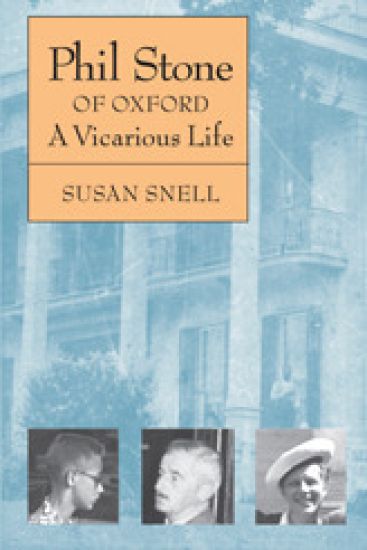
William Faulkner is Phil Stone's contribution to American literature, once remarked a mutual confidant of the Nobel laureate and the Oxford, Mississippi, attorney. Despite his friendship with the writer for nearly fifty years, Stone is generally regarded as a minor figure in Faulkner studies. In her biography Phil Stone of Oxford, Susan Snell offers the first complete critical assessment of Stone's role in the transformation of Billy Falkner, a promising but directionless young man, into William Faulkner, arguably the greatest American novelist of the twentieth century.In the first decades of their friendship, Stone served Faulkner in many ways—as mentor, muse, patron, editor, agent, and publicist. Later, Stone was among Faulkner's first biographers and was a source of archival, biographical, and critical information for such Faulkner scholars as James B. Meriwether and Carvel Collins.Ironically, the most intriguing aspect of Stone's relationship with Faulkner has until now been the least studied. Stone was one of Faulkner's principal character studies, and from his life came the raw material out of which Faulkner constructed a good part of his fictional Yoknapatawpha County. Stone's Ivy League education, his friendships with gamblers and prostitutes, his family's hunting excursions, even his family's antebellum mansion only begin to suggest the borrowings from Stone's life found in books ranging from The Sound and the Fury and Go Down, Moses to the Snopes trilogy.Faulkner also appropriated Stone's personality and profession to mirror—and sometimes mask—his own insecurities. Such characters as Quentin Compson, Darl Bundren, Horace Benbow, and Gavin Stevens owe much to the author himself but also recall Stone in often subtle ways.The fraternal rivalries for their mother's love that consume Darl Bundren and Quentin Compson, for example, are based on Stone's own unhappy family life. Bundren's and Compson's mothers more closely resemble Stone's mother than Faulkner's.In Stone, Faulkner saw the Old South confronting its twentieth-century crucibles—the teeming, rapacious white lower classes; the Great Depression; and the first stirrings of the civil rights and women's movements. In the 1930s, Faulkner recurrently dealt with the region's decadence and the fall of old patriarchies like the Compson and Sartoris families. During these years, Faulkner's fortunes rose steadily as Stone's declined, but it is Stone's story—not his own—that he chose to tell. Snell says that in a sense Faulkner usurped Stone's place in the South's social order, building his reputation and acquiring real estate as personal and financial failures nearly overwhelmed Stone.Stone's transparent jealousy of Faulkner, personality flaws, and mental instability in his final years have engendered skepticism about his claims concerning the years he had spent "fooling with Bill." But, to hastily relegate Stone to the marginalia of Yoknapatawpha County, Snell suggests, is to leave untapped a rich source of information.Phil Stone of Oxford tells the tragic story of a talented, complex man, bred for power in the declining era of southern patriarchy, yet compelled to pursue the Muse vicariously.

Everyone is excited for Punxsatawney Phil's big day. . . except for him. It's the night before Groundhog Day, and Phil can't sleep. His family's voices fill his head: It's a family tradition You'll make us so proud We're all counting on you, you, you Making pancakes usually sets Phil's mind at ease, but before he can finish making this batch his little sister, Marla, joins him in the kitchen. She can't wait for his big day and insists on helping him practice. She even teaches him a poem to help him keep things straight. But when Phil's big (scary) day arrives, his nerves take over and his mind goes blank. What had Marla said? If you see your shadow does it mean an early spring? Or is that if you don't see your shadow? His worries are all coming true until he has an idea that saves the day. In her picture book Phil's Big Day, Liza Woodruff warmly and reassuringly addresses the common but consuming feelings anxiety brings up, and suggests coping mechanisms useful for grown-ups and kids alike. Readers who struggle to have fun in the face of their fears will resonate with Phil's restless thoughts and find joy as Phil takes on his challenges with a supportive sister at his side.

A notoriously restrictive diet, gluten-free can seem the end of exciting food, but Phil uses his Michelin-starred cooking talents and simple, honest ingredients to create dishes that everyone in the family can eat - including the pizza, bread, pasta, cakes and biscuits that you thought you would never enjoy again.

Being diagnosed with Type 2 Diabetes needn't mean an end to enjoying food. In his bestselling gluten-free cookbooks, Phil Vickery showed it's possible to overcome dietary restrictions and still eat well.

Phil Collins: Soy Mi Madre
Aspen Art Museum,US
2010
sidottu
Glasgow-based artist Phil Collins' film Soy Mi Madre examines the immigrant populations of Colorado's Roaring Fork Valley, a sizable percentage of which hail from northwestern Mexico. The region relies heavily on service and maintenance work provided largely through this population, who often commute to work in Aspen. Loosely inspired by Jean Genet's The Maids--a seminal example of Theatre of the Absurd that renders surreal the intricate power dynamics that exist between people of divergent socioeconomic groups and exploits the volatility of social identity--Soy Mi Madre portrays the social realities of this region through the melodramatic lens of the telenovela. Reproduced in this volume through a generous selection of stills, the film uses popular Mexican television actors and crew, including Patricia Reyes Spindola, Zaide Silvia Guitérrez, Veronica Langer and Salvador Parra, as well as members of the transsexual prostitute community of Mexico City.


Phil Woods was an American original. One of the greatest saxophonists of all time, he was the first call for Quincy Jones, Dizzy Gillespie, Thelonious Monk, and Oliver Nelson. His iconic improvisation on Billy Joel's hit song "Just the Way You Are" is quite likely the most played instrumental solo in the world. His popularity soared while an expat in Europe during the cultural revolution of the late sixties and early seventies. Upon his return to the States, Woods formed a band that would perform together for four decades. Grammy Awards, dozens of DownBeat Readers Poll victories, and designation as a National Endowment of the Arts Jazz Master would follow. Life in E Flat is the unvarnished self-portrait of an artist who loved and lived a life of bebop."Phil Woods lived all the tropes of the 20th century American artist: defiant modernist, reverent traditionalist, mid-century family man, countercultural nonconformist, homebody, expatriate and road rat; young Turk and grand master. He possessed an abundance of gifts along with the determination to put the hard work in to realize every facet of them, and the great good fortune to grow up blessed by the mentorship of the most distinguished exponents of a golden age of Black American Music. His story tracks the changes of "this old world" through over three quarters of a century of music and life, informing us of what has been gained and lost, reminding us of what happened and what still needs to be done."- Brian Lynch, Grammy Award-winning trumpeter, composer, and educator"I would have to give Phil Woods' sax solo on Just The Way You Are credit for making that a hit record."- Billy Joel"Mr. Phil Woods left an indelible impression on me as a composer, arranger, and instrumentalist. A sincere active transmitter on the stage "- Eddie Palmieri, ten time Grammy Award winner and NEA Jazz Master"I never worked with a better musician at the same time so unpretentious about the depth, breadth, and total scope of his knowledge and his playing. You hear his unmistakable voice in both his alto saxophone and every note of his very much underrated writing. Phil Woods was a supreme singer and swinger of the music he loved and served so passionately. Equally jazz and man..."- Todd Barkan, Keystone Korner Baltimore and NEA Jazz Master"Phil Woods was a wonderful alto player, a great musician that was at home in any musical situation. His autobiography is a must-read for all jazz fans and musician alike."- Charles McPherson, saxophonist and composer"Phil was in a class of his own....musically of course. But he also had an ear for language... caustic at times, but always honest and heartfelt... truly one of a kind "- Dave Liebman, NEA Jazz Master

Phil Woods was an American original. One of the greatest saxophonists of all time, he was the first call for Quincy Jones, Dizzy Gillespie, Thelonious Monk, and Oliver Nelson. His iconic improvisation on Billy Joel's hit song "Just the Way You Are" is quite likely the most played instrumental solo in the world. His popularity soared while an expat in Europe during the cultural revolution of the late sixties and early seventies. Upon his return to the States, Woods formed a band that would perform together for four decades. Grammy Awards, dozens of DownBeat Readers Poll victories, and designation as a National Endowment of the Arts Jazz Master would follow. Life in E Flat is the unvarnished self-portrait of an artist who loved and lived a life of bebop."I would have to give Phil Woods' sax solo on "Just The Way You Are" credit for making that a hit record." - Billy Joel"Life in E Flat is a gift, a compelling and entertaining memoir by one of the leading alto saxophonists in jazz for 60 years. Woods is a charismatic storyteller-literate, funny, insightful, self-aware, with a keen eye and ear for details that reveal character and wise observations about the music business and the jazz life laced with sardonic wit." - Mark Stryker, author of Jazz From Detroit""Someone spotted me fondling the saxophone and misinterpreted my avaricious intent as musical interest..." So Phil Wood's lifelong journey began-a saga he relates with an irreverent, self-deprecating wit, from his earliest days in Western Massachusetts to recording timeless music and traveling the world with jazz legends. Time and again, he sets up a story like a punchline's coming, and often they do. What you always get is history rich in detail and long in feeling and self-honesty - the personal stumbles and the musical triumphs. Phil left us in 2015; this book he left us is a gift that shows how so much of him is still here." - Ashley Kahn, music historian and author of A Love Supreme: The Story of John Coltrane's Signature Album & Kind of Blue: The Making of the Miles Davis Masterpiece"Growing up a New York jazz fan, Phil Woods was always a favorite. He was straight ahead, personal but in control, brimming with ideas: solid in every way. This account of the late jazz man's American journey, assembled with a loving, light touch by the always discerning critic Ted Panken, is like a Woods' gig. Full of the right information, things you thought you knew but didn't (the stories of often being the only white man in the room especially after marrying Charlie Parker's widow are instructive), heartbreaking and triumphant, Life in E-Flat is 100% solid." - Mark Jacobson, author of The Lampshade and Pale Horse Rider, former staff writer of the Village Voice and New York Magazine, and contributing editor for Rolling Stone and Esquire
This work has been selected by scholars as being culturally important and is part of the knowledge base of civilization as we know it.This work is in the public domain in the United States of America, and possibly other nations. Within the United States, you may freely copy and distribute this work, as no entity (individual or corporate) has a copyright on the body of the work.Scholars believe, and we concur, that this work is important enough to be preserved, reproduced, and made generally available to the public. To ensure a quality reading experience, this work has been proofread and republished using a format that seamlessly blends the original graphical elements with text in an easy-to-read typeface.We appreciate your support of the preservation process, and thank you for being an important part of keeping this knowledge alive and relevant.