Kirjahaku
Etsi kirjoja tekijän nimen, kirjan nimen tai ISBN:n perusteella.
1000 tulosta hakusanalla Philip Kitcher
John Stuart Mill expressed many of the central tenets of liberalism with unsurpassed clarity and enduring influence. Yet Mill’s apparent victory in the marketplace of ideas has numbed us to the power of his arguments. To many readers today, his views can seem utterly familiar, even banal.Sharing insights from teaching Mill for many years, the eminent philosopher Philip Kitcher makes a cogent case for why we should read this nineteenth-century thinker now. He portrays Mill as a conflicted humanist who wrestled with problems that are equally urgent in our own time. Kitcher reflects on Mill’s ideas in the context of contemporary ethical, social, and political issues such as COVID mandates, gun control, income inequality, gay rights, and climate change. More broadly, he shows, Mill’s writings help us cultivate our own capacities for critical thought and ethical decision making.Inviting readers into a conversation with Mill, this book shows that he supplies tools for thinking that are as valuable today as they were in the nineteenth century.

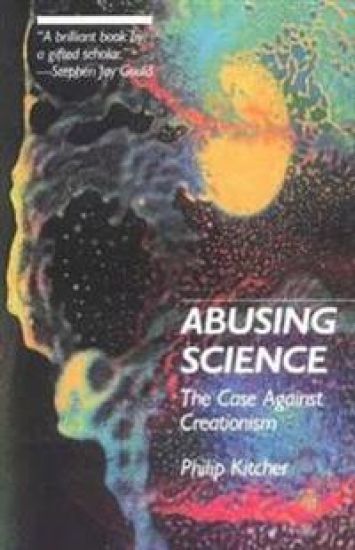
Abusing Science is a manual for intellectual self-defense, the most complete available for presenting the case against Creationist pseudo-science. It is also a lucid exposition of the nature and methods of genuine science. The book begins with a concise introduction to evolutionary theory for non-scientists and closes with a rebuttal of the charge that this theory undermines religious and moral values. It will astonish many readers that this case must still be made in the 1980s, but since it must, Philip Kitcher makes it irresistibly and forcefully.Not long ago, a federal court struck down an Arkansas law requiring that "scientific" Creationism be taught in high school science classes. Contemporary Creationists may have lost one legal battle, but their cause continues to thrive. Their efforts are directed not only at state legislatures but at local school boards and textbook publishers. As Kitcher argues in this rigorous but highly readable book, the integrity of science is under attack. The methods of inquiry used in evolutionary biology are those which are used throughout the sciences. Moreover, modern biology is intertwined with other fields of science-physics, chemistry, astronomy, and geology. Creationists hope to persuade the public that education in science should be torn apart to make room for a literal reading of Genesis.Abusing Science refutes the popular complaint that the scientific establishment is dogmatic and intolerant, denying "academic freedom" to the unorthodox. It examines Creationist claims seriously and systematically, one by one, showing clearly just why they are at best misguided, at worst ludicrous.
Principles of right and wrong guide the lives of almost all human beings, but we often see them as external to ourselves, outside our own control. In a revolutionary approach to the problems of moral philosophy, Philip Kitcher makes a provocative proposal: Instead of conceiving ethical commands as divine revelations or as the discoveries of brilliant thinkers, we should see our ethical practices as evolving over tens of thousands of years, as members of our species have worked out how to live together and prosper. Elaborating this radical new vision, Kitcher shows how the limited altruistic tendencies of our ancestors enabled a fragile social life, how our forebears learned to regulate their interactions with one another, and how human societies eventually grew into forms of previously unimaginable complexity. The most successful of the many millennia-old experiments in how to live, he contends, survive in our values today.Drawing on natural science, social science, and philosophy to develop an approach he calls "pragmatic naturalism," Kitcher reveals the power of an evolving ethics built around a few core principles-including justice and cooperation-but leaving room for a diversity of communities and modes of self-expression. Ethics emerges as a beautifully human phenomenon-permanently unfinished, collectively refined and distorted generation by generation. Our human values, Kitcher shows, can be understood not as a final system but as a project-the ethical project-in which our species has engaged for most of its history, and which has been central to who we are.
The Lives to Come: the Genetic Revolution and Human Possibilities
Philip Kitcher
Simon Schuster
1997
pokkari
The Rich and the Poor is part chronicle, part analysis of a disturbing sea-change: the abandonment of ethics in public policy. Seventy years ago, it was possible for serious thinkers, including some in the governments of affluent nations, to consider policies for raising living standards worldwide. Today, by contrast, the principal policy questions revolve around how to stay on top in a dog-eat-dog world. Philip Kitcher, one of the world’s most eminent philosophers, offers a new account of how ethics and politics should mix. The world needs to explore and reprioritize ethical questions, through inclusive deliberation that is both factually informed and mutually engaged with other perspectives. Achieving that end is hard, but without aspiring to it, we are likely to condemn our successors to lives of great hardship. Climate change demands global cooperation of a kind that can only be obtained by returning to ethical inquiry. The divorce between ethics and economics threatens disaster for all.
In this successor to his pioneering Science, Truth, and Democracy, the author revisits the topic explored in his previous work-namely, the challenges of integrating science, the most successful knowledge-generating system of all time, with the problems of democracy. But in this new work, the author goes far beyond that earlier book in studying places at which the practice of science fails to answer social needs. He considers a variety of examples of pressing concern, ranging from climate change to religiously inspired constraints on biomedical research to the neglect of diseases that kill millions of children annually, analyzing the sources of trouble. He shows the fallacies of thinking that democracy always requires public debate of issues most people cannot comprehend, and argues that properly constituted expertise is essential to genuine democracy. No previous book has treated the place of science in democratic society so comprehensively and systematically, with attention to different aspects of science and to pressing problems of our times.
Few musical works loom as large in Western culture as Richard Wagner's four-part Ring of the Nibelung. In Finding an Ending, two eminent philosophers, Philip Kitcher and Richard Schacht, offer an illuminating look at this greatest of Wagner's achievements, focusing on its far-reaching and subtle exploration of problems of meanings and endings in this life and world. Kitcher and Schacht plunge the reader into the heart of Wagner's Ring, drawing out the philosophical and human significance of the text and the music. They show how different forms of love, freedom, heroism, authority, and judgment are explored and tested as it unfolds. As they journey across its sweeping musical-dramatic landscape, Kitcher and Schacht lead us to the central concern of the Ring—the problem of endowing life with genuine significance that can be enhanced rather than negated by its ending, if the right sort of ending can be found. The drama originates in Wotan's quest for a transformation of the primordial state of things into a world in which life can be lived more meaningfully. The authors trace the evolution of Wotan's efforts, the intricate problems he confronts, and his failures and defeats. But while the problem Wotan poses for himself proves to be insoluble as he conceives of it, they suggest that his very efforts and failures set the stage for the transformation of his problem, and for the only sort of resolution of it that may be humanly possible—to which it is not Siegfried but rather Brünnhilde who shows the way. The Ring's ending, with its passing of the gods above and destruction of the world below, might seem to be devastating; but Kitcher and Schacht see a kind of meaning in and through the ending revealed to us that is profoundly affirmative, and that has perhaps never been so powerfully and so beautifully expressed.
In November 2015, the world powers came together in Paris with the hope of reaching an agreement on the most urgent issue of our time: climate change. While it was an historic moment that brought solutions within the realm of possibility, the obstacles to enacting real revolution were still many. Now, confronting these controversies head-on, two scholars use a series of ground-breaking arguments to frame the problem in human terms, showing us how vested interests have been able to control the conversation, tracing a line of reasoning that will break through the seemingly impenetrable barriers of political obfuscation. This watershed book evokes the battle cries of Naomi Klein and the exigency of Rachel Carson, laying the groundwork for a path to environmental salvation.
Offering an engaging and accessible portrait of the current state of the field, Philosophy of Science: A New Introduction shows students how to think philosophically about science and why it is both essential and fascinating to do so. Gillian Barker and Philip Kitcher reconsider the core questions in philosophy of science in light of the multitude of changes that have taken place in the decades since the publication of C.G. Hempel's classic work, Philosophy of Natural Science (1966)--both in the field and also in history and sociology of science and the sciences themselves. They explore how philosophical questions are connected to vigorous current debates--including climate change, science and religion, race, intellectual property rights, and medical research priorities--showing how these questions, and philosophers' attempts to answer them, matter in the real world. Featuring numerous illustrative examples and extensive further reading lists, Philosophy of Science: A New Introduction is ideal for courses in philosophy of science, history and philosophy of science, and epistemology/theory of knowledge. It is also compelling and illuminating reading for scientists, science students, and anyone interested in the natural sciences and in their place in global society today.
How and when does music become possible? Is it a matter of biology, or culture, or an interaction between the two? Revolutionizing the way we think about the core values of music and human exceptionalism, Hollis Taylor takes us on an outback road trip to meet the Australian pied butcherbird. Recognized for their distinct timbre, calls, and songs, both sexes of this songbird sing in duos, trios, and even larger choirs, transforming their flute-like songs annually. While birdsong has long inspired artists, writers, musicians, and philosophers, and enthralled listeners from all walks of life, researchers from the sciences have dominated its study. As a field musicologist, Taylor spends months each year in the Australian outback recording the songs of the pied butcherbird and chronicling their musical activities. She argues persuasively in these pages that their inventiveness in song surpasses biological necessity, compelling us to question the foundations of music and confront the remarkably entangled relationship between human and animal worlds. Equal parts nature essay, memoir, and scholarship, Is Birdsong Music? offers vivid portraits of the extreme locations where these avian choristers are found, quirky stories from the field, and an in-depth exploration of the vocalizations of the pied butcherbird.
Liberties Journal of Culture and Politics
Martha C. Nussbaum; Samuel Moyn; Maria Stepanova; Pratap Bhanu Mehta; William Deresiewicz; Alastair Macaulay; Michael Kimmage; Nicholas Lemann; Elisabeth Lasch Quinn; Philip Kitcher; Helen Vendler; David Nirenberg; Collin Channer; Andrew Motion; Aaron Fagan
Liberties Journal Foundation
2022
pokkari
Closely examining some of our most deeply held notions about the role of science, distinguished philosopher Philip Kitcher engages the heated debate about how scientific knowledge should be pursued and employed. Kitcher paints a pragmatic portrait of the sciences that allows for the possibility of scientific truth but nonetheless permits social consensus to determine which avenues need to be investigated.
A Primer for Integrated Marketing Communications
Philip Kitchen; Patrick de Pelsmacker
Routledge
2004
sidottu
This textbook is the first introductory primer on integrated marketing communications. It combines theory and practice to show students of marketing how different aspects of integrated marketing communications (IMC) work together. Setting the scene in which IMC has emerged, the authors explain each component of the promotional mix and go on to explain the process of functional integration. The text includes key case studies on companies, including Proctor and Gamble, NSPCC and Ardi, illustrating the practical side of IMC in addition to an introduction to the main theories at work. Including an additional Study Guide at the back, this book will be a valuable resource for students of marketing and marketing communications.
A Primer for Integrated Marketing Communications
Philip Kitchen; Patrick de Pelsmacker
Routledge
2004
nidottu
This textbook is the first introductory primer on integrated marketing communications. It combines theory and practice to show students of marketing how different aspects of integrated marketing communications (IMC) work together. Setting the scene in which IMC has emerged, the authors explain each component of the promotional mix and go on to explain the process of functional integration. The text includes key case studies on companies, including Proctor and Gamble, NSPCC and Ardi, illustrating the practical side of IMC in addition to an introduction to the main theories at work. Including an additional Study Guide at the back, this book will be a valuable resource for students of marketing and marketing communications.
The wars between whites and Indians, the most famous of which were fought on the great Western plains between 1860 and 1890, were among the most tragic of all conflicts ever fought. To the victor went no less than the complete domination of the continent, to the loser total extinction. Accustomed only to small scale skirmishing and raiding, the Indians were doomed from the start. They had never fought a European-style war with its constant pressure and co-ordinated strategies. Philip Katcher details the armies of both sides, paying particular attention to their organisation and uniforms.
Initially British officials were reluctant to accept the offers of loyal subjects to form fighting units but eventually the potential of a Provincial corps was realized. Yet they never received the whole-hearted support of the British regular army and this was a factor in their evental defeat. Nonetheless the Provincial Corps served with distinction – even fighting against the Spanish in Nicaragua and the Bahamas – and some remained in service for several more years by relocating to Canada. This book examines their experiences in this continental conflict and details their uniforms and equipment.
Between 1890 and 1920 the US Army underwent profound changes in organization, function, composition and appearance.The Army was transformed from a small, blue-clad force whose primary weapon was the single-shot rifle, into a mighty host of men dressed in dirt-coloured combat uniforms, using automatic weapons, tanks and aircraft to fight enemies on fields across the world. This book details the Army's developments during its involvement in the Spanish-American War, the Boxer Rebellion and World War I.Particular attention is given to the evolution of the Army's uniforms, which are illustrated vividly by Chris Warner throughout the book.