The 18th century was a wealth of knowledge, exploration and rapidly growing technology and expanding record-keeping made possible by advances in the printing press. In its determination to preserve the century of revolution, Gale initiated a revolution of its own: digitization of epic proportions to preserve these invaluable works in the largest archive of its kind. Now for the first time these high-quality digital copies of original 18th century manuscripts are available in print, making them highly accessible to libraries, undergraduate students, and independent scholars.Medical theory and practice of the 1700s developed rapidly, as is evidenced by the extensive collection, which includes descriptions of diseases, their conditions, and treatments. Books on science and technology, agriculture, military technology, natural philosophy, even cookbooks, are all contained here.++++The below data was compiled from various identification fields in the bibliographic record of this title. This data is provided as an additional tool in helping to insure edition identification: ++++British LibraryT033825With a half-title.Edinburgh: printed for G. Mudie and son; and for J. Johnson, and G. G. & J. Robinson, London, 1795. 6],162p.; 8
The 18th century was a wealth of knowledge, exploration and rapidly growing technology and expanding record-keeping made possible by advances in the printing press. In its determination to preserve the century of revolution, Gale initiated a revolution of its own: digitization of epic proportions to preserve these invaluable works in the largest archive of its kind. Now for the first time these high-quality digital copies of original 18th century manuscripts are available in print, making them highly accessible to libraries, undergraduate students, and independent scholars.Medical theory and practice of the 1700s developed rapidly, as is evidenced by the extensive collection, which includes descriptions of diseases, their conditions, and treatments. Books on science and technology, agriculture, military technology, natural philosophy, even cookbooks, are all contained here.++++The below data was compiled from various identification fields in the bibliographic record of this title. This data is provided as an additional tool in helping to insure edition identification: ++++British LibraryT006484Printers name from colophon. With a half-title.Edinburgh: printed by A. Shirrefs] for T. Duncan; and J. Johnson, London, 1792. xviii,171, 3]p.; 8
In this eminently readable study, Philip Wilson explores the later writings of Ludwig Wittgenstein and shows how a reading of this philosophy can enable the translation theorist and the practising translator to reflect upon and improve the phenomenon of translation. Wittgenstein, whilst a key figure in twentieth-century philosophy, remains peripheral to the field of translation studies and Wilson argues that his later work, because it deals with the nature of language and meaning, is potentially of great significance and an awareness of this can change translation, both literary and non-literary. Wittgenstein’s life and thought is treated in the introduction, where it is shown how his methods can be applied to areas outside philosophy. The central three chapters of the book survey: the reading of the source text for translation; the writing of the target text; the theorisation of the target text. The author demonstrates how tools from Wittgenstein’s work can be of use in translation studies: the notion of the language-game, for example, helps us to understand meaning by looking at the way that words are used, and this can both help us describe translation and suggest ways of translating. A wide variety of examples and case studies is given throughout the book, from both literary and non-literary sources. Aimed at translation studies scholars, graduate students and researchers, this interdisciplinary book will also be of interest to scholars of philosophy and literature.
This book examines how mysticism can tell us about translation and translation can tell us about mysticism, addressing the ancient but ongoing connections between the art of rendering one text in another language and the art of the ineffable.The volume represents the first sustained act of attention to the interdisciplinary crossover of these two fields, taking a Wittgensteinian approach to language, and investigates how mystics and their translators manage to write about what cannot be written about. Three questions are addressed overall: how mysticism can be used to conceptualise translation; the issues that mysticism raises for translation theory and practice; and how mystical texts have been and might be translated. Walter Benjamin’s ‘The Translator’s Task’ is considered in detail as a controversial example of dialogue. Translation examples are given in a range of languages, and six major case studies are provided, including a close reading of Exodus and an analysis of a recent radical translation of Lucretius. This book will be of interest to students and researchers in translation studies, mysticism studies, theology and literary translation, as well as practising translators.
This book examines how mysticism can tell us about translation and translation can tell us about mysticism, addressing the ancient but ongoing connections between the art of rendering one text in another language and the art of the ineffable. The volume represents the first sustained act of attention to the interdisciplinary crossover of these two fields, taking a Wittgensteinian approach to language, and investigates how mystics and their translators manage to write about what cannot be written about. Three questions are addressed overall: how mysticism can be used to conceptualise translation; the issues that mysticism raises for translation theory and practice; and how mystical texts have been and might be translated. Walter Benjamin’s ‘The Translator’s Task’ is considered in detail as a controversial example of dialogue. Translation examples are given in a range of languages, and six major case studies are provided, including a close reading of Exodus and an analysis of a recent radical translation of Lucretius. This book will be of interest to students and researchers in translation studies, mysticism studies, theology and literary translation, as well as practising translators.
In this eminently readable study, Philip Wilson explores the later writings of Ludwig Wittgenstein and shows how a reading of this philosophy can enable the translation theorist and the practising translator to reflect upon and improve the phenomenon of translation. Wittgenstein, whilst a key figure in twentieth-century philosophy, remains peripheral to the field of translation studies and Wilson argues that his later work, because it deals with the nature of language and meaning, is potentially of great significance and an awareness of this can change translation, both literary and non-literary. Wittgenstein’s life and thought is treated in the introduction, where it is shown how his methods can be applied to areas outside philosophy. The central three chapters of the book survey: the reading of the source text for translation; the writing of the target text; the theorisation of the target text. The author demonstrates how tools from Wittgenstein’s work can be of use in translation studies: the notion of the language-game, for example, helps us to understand meaning by looking at the way that words are used, and this can both help us describe translation and suggest ways of translating.A wide variety of examples and case studies is given throughout the book, from both literary and non-literary sources. Aimed at translation studies scholars, graduate students and researchers, this interdisciplinary book will also be of interest to scholars of philosophy and literature.
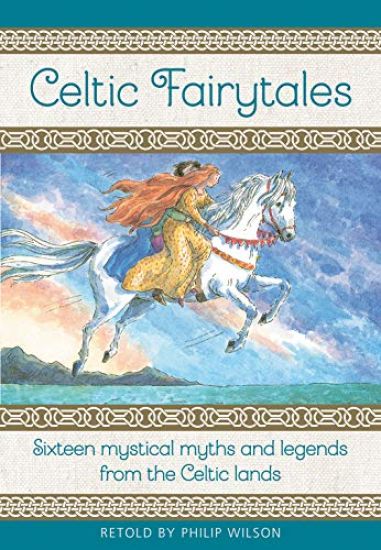
Taken from sources that draw on ancient traditions, these tales from the Celtic lands of Ireland, Wales, Scotland, Brittany, Cornwall and the Isle of Man, have been handed down for centuries by word of mouth. Now retold for a modern readership, with an introduction by folklorist Neil Philip, they will appeal to children of all ages. Read how the lazy giant Tom defeated the giant Blunderbuss and his two dogs Catchem and Tearem; and how King Oisin left the land of youth to return to Ireland only to find himself suddenly 300 years old. At the heart of many of the stories are the mischievous little people (fairies) who create havoc and merriment wherever they go. Enchanting pictures bring the stories vividly to life, making this is a wonderful gift book for any child.
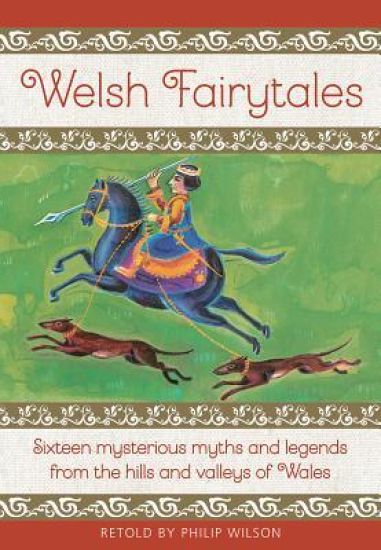
The traditional stories of Wales conjure up a world of adventure and chivalry. Knights and princesses, kings and bards, and the little people who can make the impossible happen – these are just a few of the characters in the stories featured in this book. Drawing on ancient traditions, handed down for centuries by word of mouth, this book features sixteen of the most famous tales from the fertile plains and high mountain passes of Wales. They tell of the great hero, King Arthur, and his Knights of the Round Table. They speak of magical encounters with the fairies, who can make a castle appear out of the air, and of a shepherd high in the mountains of Caermarthen who falls in love with the Maiden from the Lake. All the tales are simply retold by Philip Wilson, with a lively introduction by folklorist Neil Philip.
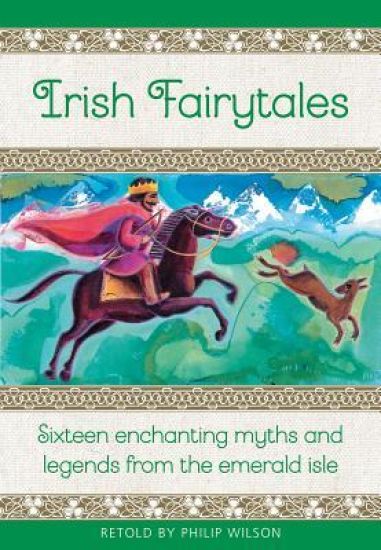
Irish fairytales portray a rich and unpredictable world of enchantment and adventure. Witches and shape-changers, beautiful princesses and noble heroes, giants with untold strength and little people who play tricks wherever they go - these are some of the characters in the traditional stories of Ireland. This delightful volume contains some of the best stories from the rich fund of Irish myth and legend. Read about the cunning defeat of the giant Cucullin by Fin M'Coul, of how King Whiskers tricked the haughty princess into marriage to rid her of her terrible pride, and of the two farmers Hudden and Dudden who lost their cattle through their silly jealousy of a poor old man. With its beguiling stories and beautiful illustrations this charming anthology offers a delight to young and old alike.
The fairytales of Scotland portray a world of magic and shape- shifting. Horses and foxes that turn into handsome princes, thorns that turn into woods, and a tiny stone that becomes an enormous rock – these are some of the amazing transformations that take place in this anthology. The characters in these sixteen tales, from jealous stepmothers and gruesome ghosts to chivalrous princes and beautiful princesses, are some of the most memorable in all folk literature. Read of the poor seal woman taken from the sea by a wicked farmer, of the magic black horse that could y over mountains, and of Kate Crackernuts who married the prince of her dreams after she had cured him of his illness. Superbly illustrated throughout, this lovely anthology will delight readers of all ages.
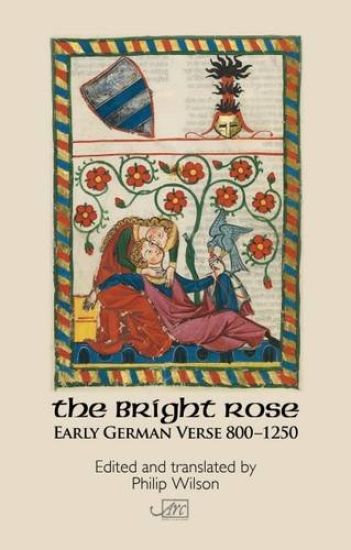
Never published in verse form before, these translations of some of the earliest known German poetry give us a rich glimpse of a life that, while alien in so many ways, was not so different after all. The Minnesang poets, for example, engage in a highly professional ritual, but compose in cognitive metaphors that still ring true: love is a trap; love is a game; love is war. A beautiful, lyrical journey through the passions and fears of pre-Medieval German life, told by some of its finest poetic voices.
'I will marry whoever this slipper fits!' In this spellbinding retelling of the classic folk tale, we're introduced to some familiar characters: a young, neglected heroine, a wicked stepfamily, and a handsome prince in search of a wife and a missing slipper. But wait! There are also three magical dresses, a wish-giving tree, and help for Cinderella from a very unexpected source… Packed with thrilling theatricality, delightful comedy and charming original songs, this refreshing adaptation of Cinderella was written for Chichester Festival Youth Theatre by Philip Wilson with music by Jason Carr. It was first performed in 2024 by a cast of over seventy young people. It offers rich opportunities to theatre companies looking for a flexible, family-friendly fairytale which is just the right fit.
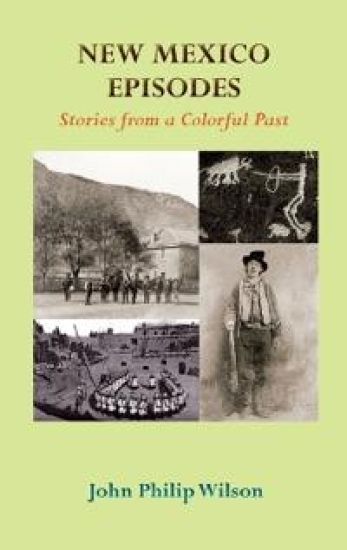
These episodes are non-fiction accounts relating to New Mexico from the earliest visit by a priest, Fray Marcos de Niza, sent by the Viceroy of New Spain in 1539, to the unwelcome intrusion of an enemy saboteur in World War I. Between these extremes we meet a witness who recalls details of an abandoned dwelling whose owner lived there two hundred years earlier, newspaper accounts of a shoot-out at Pinos Atos and its bloody aftermath, a stage ride from Las Cruces to Silver City, and how cattleman John Chisum dealt with two knights of the road. Billy the Kid's escape from the Lincoln County Courthouse is seen in a new light, and an introduction to the Lincoln County War will help the unfamiliar reader to understand what was truly a New Mexico horse opera, with tragic results. The role of the military in the nineteenth century is shown in a glimpse of life at one fort and the report of an Army scouting party that saw a part of the country prior to its settlement. And what would an anthology be without a dog story?
These fourteen non-fictional accounts relate to Arizona from the time of the first visit by Spanish explorer Francisco V squez de Coronado in 1540 to the frustrated claim of a would-be homesteader in the early 1900s. Between these we meet a series of military visitors, the railroad dreams of Confederate President Jefferson Davis, adventures and encounters by early-day travelers, and characterizations of Fort Yuma and Tucson by persons who were not among their admirers. Two young boys helped to turn aside the mayhem brought on by the last Apache raid in 1886, and less than a decade later Arizona farmers began raising a new type of livestock-ostriches. The glowing success of oil drillers in Texas and California encouraged Arizona entrepreneurs to explore for black gold as well. The results proved elusive. These and other stories helped establish the state's colorful history.
These episodes are non-fiction accounts relating to New Mexico from the earliest visit by a priest, Fray Marcos de Niza, sent by the Viceroy of New Spain in 1539, to the unwelcome intrusion of an enemy saboteur in World War I. Between these extremes we meet a witness who recalls details of an abandoned dwelling whose owner lived there two hundred years earlier, newspaper accounts of a shoot-out at Pinos Atos and its bloody aftermath, a stage ride from Las Cruces to Silver City, and how cattleman John Chisum dealt with two knights of the road. Billy the Kid's escape from the Lincoln County Courthouse is seen in a new light, and an introduction to the Lincoln County War will help the unfamiliar reader to understand what was truly a New Mexico horse opera, with tragic results. The role of the military in the nineteenth century is shown in a glimpse of life at one fort and the report of an Army scouting party that saw a part of the country prior to its settlement. And what would an anthology be without a dog story?
These fourteen non-fictional accounts relate to Arizona from the time of the first visit by Spanish explorer Francisco V squez de Coronado in 1540 to the frustrated claim of a would-be homesteader in the early 1900s. Between these we meet a series of military visitors, the railroad dreams of Confederate President Jefferson Davis, adventures and encounters by early-day travelers, and characterizations of Fort Yuma and Tucson by persons who were not among their admirers. Two young boys helped to turn aside the mayhem brought on by the last Apache raid in 1886, and less than a decade later Arizona farmers began raising a new type of livestock-ostriches. The glowing success of oil drillers in Texas and California encouraged Arizona entrepreneurs to explore for black gold as well. The results proved elusive. These and other stories helped establish the state's colorful history.
An Experimental Essay on the Manner in which Opium Acts on the Living Animal Body is an unchanged, high-quality reprint of the original edition of 1795. Hansebooks is editor of the literature on different topic areas such as research and science, travel and expeditions, cooking and nutrition, medicine, and other genres. As a publisher we focus on the preservation of historical literature. Many works of historical writers and scientists are available today as antiques only. Hansebooks newly publishes these books and contributes to the preservation of literature which has become rare and historical knowledge for the future.