Kirjojen hintavertailu. Mukana 11 699 587 kirjaa ja 12 kauppaa.

Kirjahaku

Etsi kirjoja tekijän nimen, kirjan nimen tai ISBN:n perusteella.

1000 tulosta hakusanalla Philo Pratt

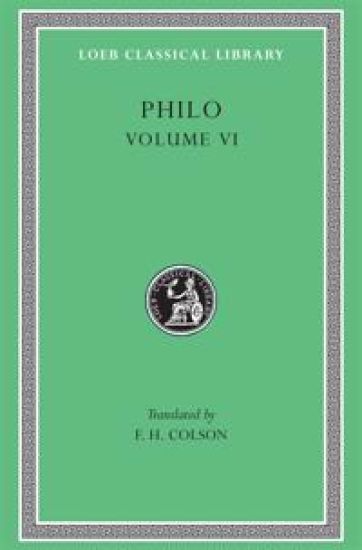
Philo, Volume VI
Syncretistic exegesis.The philosopher Philo was born about 20 BC to a prominent Jewish family in Alexandria, the chief home of the Jewish Diaspora as well as the chief center of Hellenistic culture; he was trained in Greek as well as Jewish learning. In attempting to reconcile biblical teachings with Greek philosophy he developed ideas that had wide influence on Christian and Jewish religious thought. The Loeb Classical Library edition of the works of Philo is in ten volumes and two supplements, distributed as follows. Volume I: Creation; Interpretation of Genesis II and III. II: On the Cherubim; The Sacrifices of Abel and Cain; The Worse Attacks the Better; The Posterity and Exile of Cain; On the Giants. III: The Unchangeableness of God; On Husbandry; Noah's Work as a Planter; On Drunkenness; On Sobriety. IV: The Confusion of Tongues; The Migration of Abraham; The Heir of Divine Things; On the Preliminary Studies. V: On Flight and Finding; Change of Names; On Dreams. VI: Abraham; Joseph; Moses. VII: The Decalogue; On Special Laws Books I–III. VIII: On Special Laws Book IV; On the Virtues; Rewards and Punishments. IX: Every Good Man Is Free; The Contemplative Life; The Eternity of the World; Against Flaccus; Apology for the Jews; On Providence. X: On the Embassy to Gaius; indexes. Supplement I: Questions on Genesis. II: Questions on Exodus; index to supplements.
Philo, Volume VII
Syncretistic exegesis.The philosopher Philo was born about 20 BC to a prominent Jewish family in Alexandria, the chief home of the Jewish Diaspora as well as the chief center of Hellenistic culture; he was trained in Greek as well as Jewish learning. In attempting to reconcile biblical teachings with Greek philosophy he developed ideas that had wide influence on Christian and Jewish religious thought. The Loeb Classical Library edition of the works of Philo is in ten volumes and two supplements, distributed as follows. Volume I: Creation; Interpretation of Genesis II and III. II: On the Cherubim; The Sacrifices of Abel and Cain; The Worse Attacks the Better; The Posterity and Exile of Cain; On the Giants. III: The Unchangeableness of God; On Husbandry; Noah's Work as a Planter; On Drunkenness; On Sobriety. IV: The Confusion of Tongues; The Migration of Abraham; The Heir of Divine Things; On the Preliminary Studies. V: On Flight and Finding; Change of Names; On Dreams. VI: Abraham; Joseph; Moses. VII: The Decalogue; On Special Laws Books I–III. VIII: On Special Laws Book IV; On the Virtues; Rewards and Punishments. IX: Every Good Man Is Free; The Contemplative Life; The Eternity of the World; Against Flaccus; Apology for the Jews; On Providence. X: On the Embassy to Gaius; indexes. Supplement I: Questions on Genesis. II: Questions on Exodus; index to supplements.
Philo, Volume VIII
Syncretistic exegesis.The philosopher Philo was born about 20 BC to a prominent Jewish family in Alexandria, the chief home of the Jewish Diaspora as well as the chief center of Hellenistic culture; he was trained in Greek as well as Jewish learning. In attempting to reconcile biblical teachings with Greek philosophy he developed ideas that had wide influence on Christian and Jewish religious thought. The Loeb Classical Library edition of the works of Philo is in ten volumes and two supplements, distributed as follows. Volume I: Creation; Interpretation of Genesis II and III. II: On the Cherubim; The Sacrifices of Abel and Cain; The Worse Attacks the Better; The Posterity and Exile of Cain; On the Giants. III: The Unchangeableness of God; On Husbandry; Noah's Work as a Planter; On Drunkenness; On Sobriety. IV: The Confusion of Tongues; The Migration of Abraham; The Heir of Divine Things; On the Preliminary Studies. V: On Flight and Finding; Change of Names; On Dreams. VI: Abraham; Joseph; Moses. VII: The Decalogue; On Special Laws Books I–III. VIII: On Special Laws Book IV; On the Virtues; Rewards and Punishments. IX: Every Good Man Is Free; The Contemplative Life; The Eternity of the World; Against Flaccus; Apology for the Jews; On Providence. X: On the Embassy to Gaius; indexes. Supplement I: Questions on Genesis. II: Questions on Exodus; index to supplements.
Philo, Volume IX
Syncretistic exegesis.The philosopher Philo was born about 20 BC to a prominent Jewish family in Alexandria, the chief home of the Jewish Diaspora as well as the chief center of Hellenistic culture; he was trained in Greek as well as Jewish learning. In attempting to reconcile biblical teachings with Greek philosophy he developed ideas that had wide influence on Christian and Jewish religious thought. The Loeb Classical Library edition of the works of Philo is in ten volumes and two supplements, distributed as follows. Volume I: Creation; Interpretation of Genesis II and III. II: On the Cherubim; The Sacrifices of Abel and Cain; The Worse Attacks the Better; The Posterity and Exile of Cain; On the Giants. III: The Unchangeableness of God; On Husbandry; Noah's Work as a Planter; On Drunkenness; On Sobriety. IV: The Confusion of Tongues; The Migration of Abraham; The Heir of Divine Things; On the Preliminary Studies. V: On Flight and Finding; Change of Names; On Dreams. VI: Abraham; Joseph; Moses. VII: The Decalogue; On Special Laws Books I–III. VIII: On Special Laws Book IV; On the Virtues; Rewards and Punishments. IX: Every Good Man Is Free; The Contemplative Life; The Eternity of the World; Against Flaccus; Apology for the Jews; On Providence. X: On the Embassy to Gaius; indexes. Supplement I: Questions on Genesis. II: Questions on Exodus; index to supplements.
Philo, Volume X
A diplomatic mission to the emperor Caligula.The philosopher Philo was born about 20 BC to a prominent Jewish family in Alexandria, the chief home of the Jewish Diaspora as well as the chief center of Hellenistic culture; he was trained in Greek as well as Jewish learning. In attempting to reconcile biblical teachings with Greek philosophy he developed ideas that had wide influence on Christian and Jewish religious thought. The Loeb Classical Library edition of the works of Philo is in ten volumes and two supplements, distributed as follows. Volume I: Creation; Interpretation of Genesis II and III. II: On the Cherubim; The Sacrifices of Abel and Cain; The Worse Attacks the Better; The Posterity and Exile of Cain; On the Giants. III: The Unchangeableness of God; On Husbandry; Noah's Work as a Planter; On Drunkenness; On Sobriety. IV: The Confusion of Tongues; The Migration of Abraham; The Heir of Divine Things; On the Preliminary Studies. V: On Flight and Finding; Change of Names; On Dreams. VI: Abraham; Joseph; Moses. VII: The Decalogue; On Special Laws Books I–III. VIII: On Special Laws Book IV; On the Virtues; Rewards and Punishments. IX: Every Good Man Is Free; The Contemplative Life; The Eternity of the World; Against Flaccus; Apology for the Jews; On Providence. X: On the Embassy to Gaius; indexes. Supplement I: Questions on Genesis. II: Questions on Exodus; index to supplements.
Philo

Philo

John M a Hamilton

British Library, Historical Print Editions
2011
pokkari
Title: Philo: a romance of life in the first century.Publisher: British Library, Historical Print EditionsThe British Library is the national library of the United Kingdom. It is one of the world's largest research libraries holding over 150 million items in all known languages and formats: books, journals, newspapers, sound recordings, patents, maps, stamps, prints and much more. Its collections include around 14 million books, along with substantial additional collections of manuscripts and historical items dating back as far as 300 BC.The FICTION & PROSE LITERATURE collection includes books from the British Library digitised by Microsoft. The collection provides readers with a perspective of the world from some of the 18th and 19th century's most talented writers. Written for a range of audiences, these works are a treasure for any curious reader looking to see the world through the eyes of ages past. Beyond the main body of works the collection also includes song-books, comedy, and works of satire. ++++The below data was compiled from various identification fields in the bibliographic record of this title. This data is provided as an additional tool in helping to insure edition identification: ++++ British Library Hamilton, John M.A.; 1867. 3 vol.; 8 . 12625.aaa.6.
Philo

Philo

John M a Hamilton

British Library, Historical Print Editions
2011
pokkari
Title: Philo: a romance of life in the first century.Publisher: British Library, Historical Print EditionsThe British Library is the national library of the United Kingdom. It is one of the world's largest research libraries holding over 150 million items in all known languages and formats: books, journals, newspapers, sound recordings, patents, maps, stamps, prints and much more. Its collections include around 14 million books, along with substantial additional collections of manuscripts and historical items dating back as far as 300 BC.The GENERAL HISTORICAL collection includes books from the British Library digitised by Microsoft. This varied collection includes material that gives readers a 19th century view of the world. Topics include health, education, economics, agriculture, environment, technology, culture, politics, labour and industry, mining, penal policy, and social order. ++++The below data was compiled from various identification fields in the bibliographic record of this title. This data is provided as an additional tool in helping to insure edition identification: ++++ British Library Hamilton, John M.A.; 1867. 3 vol.; 8 . 12625.aaa.6.
Philo

Philo

John M a Hamilton

British Library, Historical Print Editions
2011
pokkari
Title: Philo: a romance of life in the first century.Publisher: British Library, Historical Print EditionsThe British Library is the national library of the United Kingdom. It is one of the world's largest research libraries holding over 150 million items in all known languages and formats: books, journals, newspapers, sound recordings, patents, maps, stamps, prints and much more. Its collections include around 14 million books, along with substantial additional collections of manuscripts and historical items dating back as far as 300 BC.The GENERAL HISTORICAL collection includes books from the British Library digitised by Microsoft. This varied collection includes material that gives readers a 19th century view of the world. Topics include health, education, economics, agriculture, environment, technology, culture, politics, labour and industry, mining, penal policy, and social order. ++++The below data was compiled from various identification fields in the bibliographic record of this title. This data is provided as an additional tool in helping to insure edition identification: ++++ British Library Hamilton, John M.A.; 1867. 3 vol.; 8 . 12625.aaa.6.
The Biblical Antiquities of Philo

The Biblical Antiquities of Philo

Philo

Literary Licensing, LLC
2014
sidottu
The Biblical Antiquities of Philo is a book written by Philo, a Jewish philosopher who lived in Alexandria during the first century CE. The book is a retelling of the stories of the Hebrew Bible, from the creation of the world to the reign of King David. Philo's version of these stories is heavily influenced by Greek philosophy and literature, and he often adds his own interpretations and commentary. The book is divided into two parts: the first covers the period from Adam to the Exodus, while the second covers the period from the conquest of Canaan to the reign of King David. The Biblical Antiquities of Philo is a valuable source for understanding the Jewish interpretation of the Bible during the time of the Second Temple, as well as the influence of Greek culture on Jewish thought.This Is A New Release Of The Original 1917 Edition.This scarce antiquarian book is a facsimile reprint of the old original and may contain some imperfections such as library marks and notations. Because we believe this work is culturally important, we have made it available as part of our commitment for protecting, preserving, and promoting the world's literature in affordable, high quality, modern editions, that are true to their original work.
Philo of Larissa

Philo of Larissa

Charles Brittain

Oxford University Press
2001
sidottu
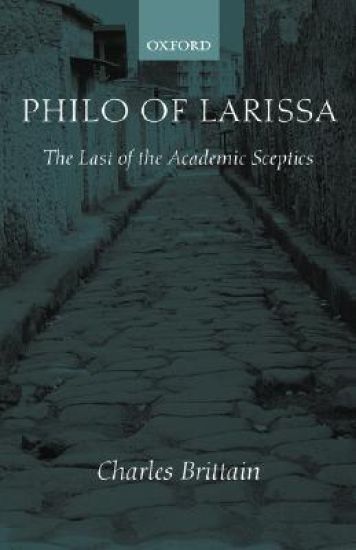
This is the first book-length study of Philo of Larissa. Philo (159-84 BC) was the leader of the Platonic Academy in its final period as an Athenian institution, and also the principal philosophical teacher of Cicero. Dr Brittain charts Philo's gradual rejection of the radical scepticism of Carneades (concluding with his notorious 'Roman Books' of 89 BC), and offers philosophical justifications for his initial position of modified scepticism and final advocacy of a fallibilist empiricism. Philo's controversial epistemological views are constructed through their historical context in the late Hellenistic Academy, his wider thought on the history of philosophy, ethics and rhetoric, and his controversies with his pupils Antiochus and Aenesidemus. The appendix contains full testimonia and 'fragments' of Philo.
Philo of Alexandria and the Construction of Jewishness in Early Christian Writings
Philo of Alexandria and the Construction of Jewishness in Early Christian Writings investigates portrayals of the first-century philosopher and exegete Philo of Alexandria, in the writings of Clement of Alexandria, Origen, and Eusebius. It argues that early Christian invocations of Philo are best understood not as attempts simply to claim an illustrious Jew for the Christian fold, but as examples of ongoing efforts to define the continuities and distinctive features of Christian beliefs and practices in relation to those of the Jews. This study takes as its starting point the curious fact that none of the first three Christians to mention Philo refer to him unambiguously as a Jew. Clement, the first in the Christian tradition to openly cite Philo's works, refers to him twice as a Pythagorean. Origen, who mentions Philo by name only three times, makes far more frequent reference to him in the guise of an anonymous "one who came before us." Eusebius, who invokes Philo on many more occasions than does Clement or Origen, most often refers to Philo as a Hebrew. These epithets construct Philo as an alternative "near-other" to both Christians and Jews, through whom ideas and practices may be imported to the former from the latter, all the while establishing boundaries between the "Christian" and "Jewish" ways of life. The portraits of Philo offered by each author reveal ongoing processes of difference-making and difference-effacing that constituted not only the construction of the Jewish "other," but also the Christian "self."
Philo Sophia

Philo Sophia

António Almas

Lulu.com
2017
pokkari
A forma poetica nao deve reger-se apenas pelos textos ritmados e bem rimados, pode ser muito mais que isso. Uma conjugacao de prosas e versos que para alem da estetica, reflictam tambem a essencia humana numa filigrana delicada de metaforas e frases vestidas de sentidos. Essa e a filosofia da poetica, gerar reaccoes apraziveis em quem le, como se fosse possivel as palavras serem dedos que nos tocam assim.