
Kirjahaku
Etsi kirjoja tekijän nimen, kirjan nimen tai ISBN:n perusteella.
1000 tulosta hakusanalla Pope Honorius
Reproduction of the original: Pope by Joseph Hunter

Reproduction of the original: Pope by Joseph Hunter
Pope
Creative Media Partners, LLC
2026
pokkari
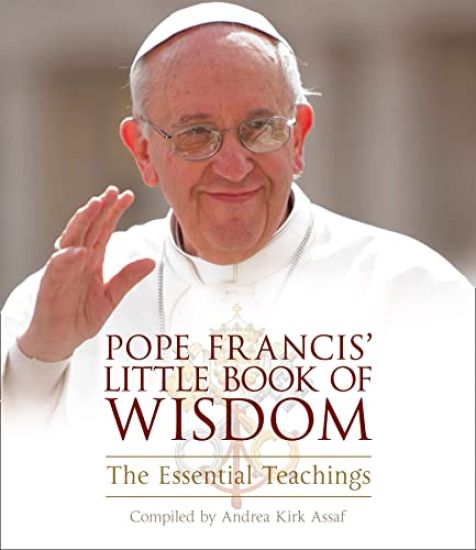
Pope Francis' Little Book of Wisdom offers more than 250 bite-size nuggets of inspiration and wisdom from one of the most popular popes of all time.
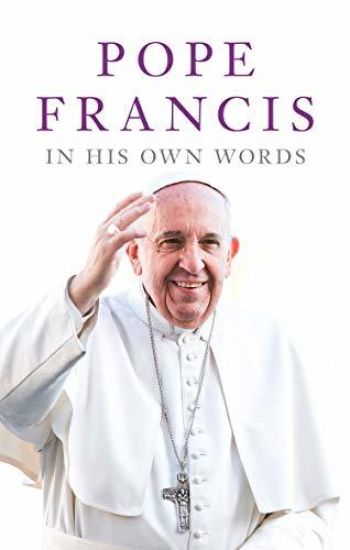
A wide-ranging collection of quotes from the new Popeâ??s writings and speeches, revealing his opinions on the moral issues surrounding the Catholic Church today.

Throughout his life, Pope was fascinated by print. He loved its elements: dropped heads, italics, small capitals; fine paper and good ink; headpieces, tailpieces, initials, and plates. And he loved playing games with publication: anonymity, pseudonymity, false imprints, fake title-pages, advertisements, special editions, and variant texts. This is the first study to take Pope's experiments in print as a guide to interpretation. Each chapter is devoted to a particular book or text and focuses on how Pope expresses meaning through print. The Rape of the Lock, Dunciad Variorum, Essay on Man, early imitations of Horace, and Epistle to Dr Arbuthnot are read through their illustrations, annotations, parallel texts, title-pages, and revisions. Independent chapters are devoted to Pope's Works of 1717 and 1735-6, discussing his self-presentation and his relation to his readers. He emerges from the study as a figure marginalized socially, politically, and sexually, an author who gambles with his private life in confronting his opponents.
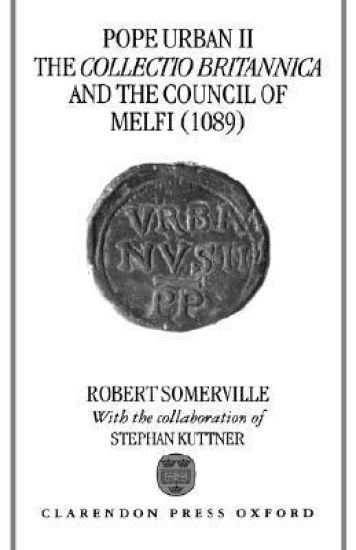
Pope Urban II, the Collectio Britannica, and the Council of Melfi (1089)
Robert Somerville
Clarendon Press
1996
sidottu
The reign of Pope Urban II (1088-1099) is often seen as a turning point in the period of medieval history known as the Gregorian Reform. This volume presents for the first time modern editions of, and commentary on, the decrees of Urban's first papal council (at Melfi in 1089), and the excerpts of his acts found in the enigmatic canon-law book labelled the Collectio Britannica. Both editions are accompanied by English translations of the Latin texts. The two sets of texts make up a substantial proportion of the known documents produced by Pope Urban's chancery in the first year and a half of his pontificate, a time of particular tension in the medieval Church. This volume thus provides a hitherto unavailable critical basis for evaluating the early period of his reign, as well as a new assessment of the preservation and diffusion of his acts and of the Britannica.
The reign of Pope Gregory VII (1073-85), who gave his name to an era of Church reform, is critically important in the history of the medieval church and papacy. Thus it is surprising that this is the first comprehensive biography to appear in any language for over fifty years. H. E. J. Cowdrey presents Gregory's life and work in their entirety, tracing his career from early days as a clerk of the Roman Church, through his political negotiations, ecclesiastical governance, and final exile at Salerno. Full account is taken of his turbulent relations with King Henry IV of Germany, from his first deposition and excommunication in 1076, to the absolution at Canossa and the imposition of a second sentence in 1080. Pope Gregory was also a contemporary of William the Conqueror, and, as the author shows, fully supported his conquest of England. Gregory VII is presented as an individual whose deep inner belief in iustitia (righteousness) did not waver in the face of new circumstances, although his broad outlook underwent changes. Deeply committed to the traditions of the past and especially to those of Pope Gregory the Great, his reign prepared the way for an age of strong papal monarchy in the western Church.
The Epistolae Vagantes of Pope Gregory VII
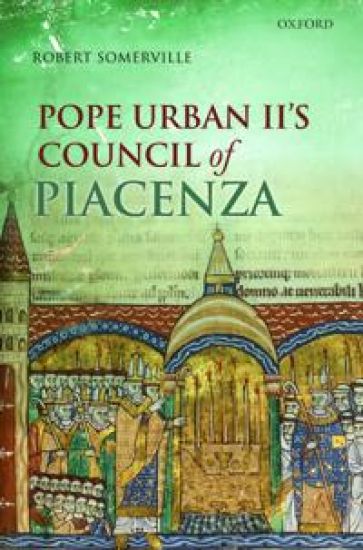
The Council of Piacenza is among the most important moments of the Reform that was sweeping through the Western Church at the end of the eleventh century. It is often regarded as a launching pad for the First Crusade, though the matter is obscure and serves only to hide the assembly's true significance as a turning point in the papal schism between Popes Gregory VII/Urban II and the so-called anti-pope Clement III. The canons promulgated at Piacenza became landmarks not only for the eleventh- and twelfth-century Reform, but more broadly for the Church of the High Middle Ages and even beyond. Robert Somerville situates Piacenza in historical context, discusses the sources, the attendance, and the need for a new edition of the legislation. The official canons are lost, but several dozen twelfth-century manuscripts were consulted for a new edition of these provisions. The account finishes with a commentary on Piacenza's legislation and a discussion of the subsequent legislation of Urban II's synods. Somerville completes the picture of what can be known about the papal synods of one of the most influential Roman pontiffs of the Middle Ages.
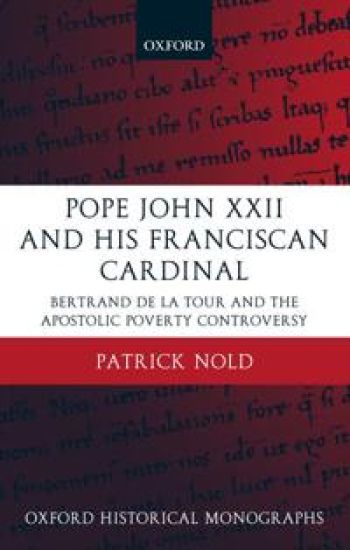
The debate over the poverty of Christ and his apostles under Pope John XXII (1316-1334) is one of the most famous intellectual controversies of the Middle Ages. The story of the uncompromising pope on collision course with a united Franciscan Order has often been told, most memorably by Umberto Eco in The Name of the Rose. In this book, Patrick Nold sets out to investigate the Franciscan Cardinal Bertrand de la Tour, a man apparently torn between the pope who was his patron and the Order to which he had devoted his life. Until now Bertrand has been considered of little importance, owing to his neglect by the primary sources conventionally relied upon by hisorians. Dr Nold suggests that these sources are unreliable: they were written years after the fact by disaffected Franciscans such as William of Ockham. From unpublished manuscript sources, Nold reconstructs the beginnings of the controversy and reveals the crucial role played by the Franciscan Cardinal. His discovery of Bertrand's significance undermines the common scholarly understanding of this episode and of the character of John XXII himself. He provides a major reinterpretation of the apostolic poverty controversy and has far-reaching consequences for issues such as papal infallibility, natural rights theory, and Ockham's political writings.
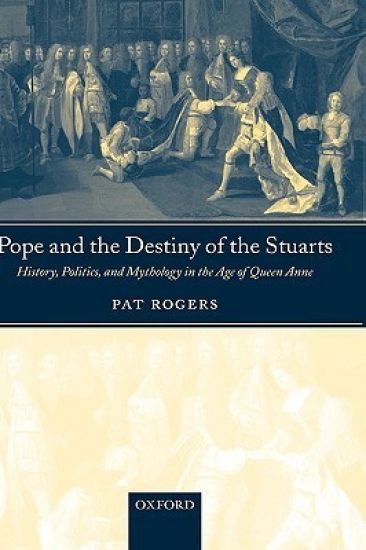
This radical new look at the literary and political climate of England during the reign of Queen Anne examines the work of the greatest poet of the age, Alexander Pope. Pope and the Destiny of the Stuarts provides the fullest contextual account to date of Windsor-Forest (1713), widely seen as a key text in the evolution of early eighteenth-century poetry. It examines the poem's topical and political aspects and offers a reconfiguration of Pope's early career, demonstrating that this was a pivotal period, marking a critical watershed in both his personal and literary development. The book gives a complete account of Pope's life and work in his early twenties, and supplies a new political interpretation, including a careful analysis of possible Jacobite colourings. Attention is directed towards a range of literary, historical, ideological, and artistic issues. The book draws on classical studies (the role of Virgil and Ovid especially), Renaissance scholarship, literary history, political history, and artistic contexts. The key ideas and techniques of Windsor-Forest are related to Pope's other early works, including the Pastorals and, centrally, The Rape of the Lock. Rogers goes on to reassess the poet's dealings with the Scriblerus group. He shows previously unnoted textual connections with the work of Swift, Gay, Parnell, and also Prior, and casts fresh light on the tortuous process of composition and revision of Windsor-Forest, with a description of the manuscript and an account of the publishing and textual history, while numerous allusions are traced for the first time. Pope and the Destiny of the Stuarts will be of interest to scholars and students of eighteenth-century literature, history, and politics.
Pope.L
The Renaissance Society at the University of Chicago
University of Chicago Press
2014
sidottu
I conoclast and artist Pope.L uses the body, sex, and race as his materials the way other artists might use paint, clay, or bronze. His work problematizes social categories by exploring how difference is marked economically, socially, and politically. Working in range of media from ketchup to baloney to correction fluid, with a special emphasis on performativity and writing, Pope.L pokes fun at and interrogates American society's pretenses, the bankruptcy of contemporary mores, and the resulting repercussions for a civil society. Other favorite Pope.L targets are squeamishness about the human body and the very possibility of making meaning through art and its display. Published to accompany Pope.L's wonderfully inscrutable exhibition Forlesen at the Renaissance Society at the University of Chicago, William Pope.L: Showing Up To Withhold is simultaneously an artist's book and a monograph. In addition to reproductions of a number of his most recent artworks, it includes images of significant works from the past decade, and presents a forum for reflection and analysis on art making today with contributions by renowned critics and scholars, including Lawrie Balfour, Nick Bastis, Lauren Berlant, and K. Silem Mohammad.
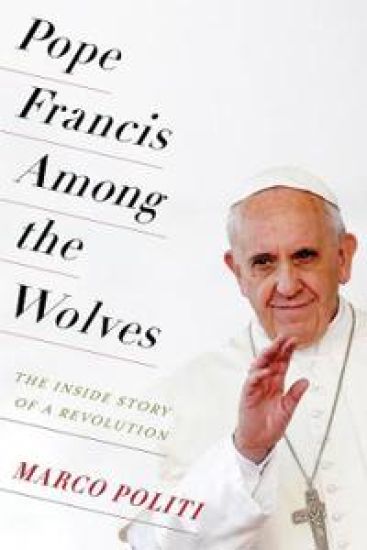
Marco Politi takes us deep inside the power struggle roiling the Roman Curia and the Catholic Church worldwide, beginning with Benedict XVI, the pope who famously resigned in 2013, and intensifying with the contested and unexpected election of Jorge Mario Bergoglio, archbishop of Buenos Aires, now known as Pope Francis. Politi's account balances the perspectives of Pope Francis's supporters, Benedict's sympathizers, and those disappointed members of the Catholic laity who feel alienated by the institution's secrecy, financial corruption, and refusal to modernize. Politi dramatically recounts the sexual scandals that have rocked the church and the accusations of money laundering and other financial misdeeds swirling around the Vatican and the Italian Catholic establishment. Pope Francis has tried to shine a light on these crimes, but his work has been met with resistance from entrenched factions. Politi writes of the decline in church attendance and vocations to the priesthood throughout the world as the church continues to prohibit divorced and remarried Catholics from receiving the communion wafer. He visits European parishes where women now perform the functions of missing male priests-and where the remaining parishioners would welcome the admission of women to the priesthood, if the church would allow it. Pope Francis's emphasis on pastoral compassion for all who struggle with the burden of family life has also provoked the ire of traditionalists in the Roman Curia and elsewhere. He knows from personal experience what life is like for the poor in Buenos Aires and other metropolises of the globalized world, and highlights the contrast between the vital, vibrant faith of these parishioners and the disillusionment of European Catholics. Pope Francis and his supporters are locked in a battle with the defenders of the traditional hard line and with ecclesiastical corruption. In this conflict, the future of Catholicism is at stake-and it is far from certain Francis will succeed in saving the institution from decline.
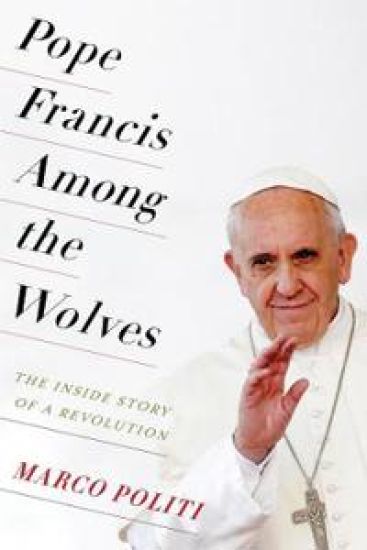
Marco Politi takes us deep inside the power struggle roiling the Roman Curia and the Catholic Church worldwide, beginning with Benedict XVI, the pope who famously resigned in 2013, and intensifying with the contested and unexpected election of Jorge Mario Bergoglio, archbishop of Buenos Aires, now known as Pope Francis. Politi's account balances the perspectives of Pope Francis's supporters, Benedict's sympathizers, and those disappointed members of the Catholic laity who feel alienated by the institution's secrecy, financial corruption, and refusal to modernize. Politi dramatically recounts the sexual scandals that have rocked the church and the accusations of money laundering and other financial misdeeds swirling around the Vatican and the Italian Catholic establishment. Pope Francis has tried to shine a light on these crimes, but his work has been met with resistance from entrenched factions. Politi writes of the decline in church attendance and vocations to the priesthood throughout the world as the church continues to prohibit divorced and remarried Catholics from receiving the communion wafer. He visits European parishes where women now perform the functions of missing male priests-and where the remaining parishioners would welcome the admission of women to the priesthood, if the church would allow it. Pope Francis's emphasis on pastoral compassion for all who struggle with the burden of family life has also provoked the ire of traditionalists in the Roman Curia and elsewhere. He knows from personal experience what life is like for the poor in Buenos Aires and other metropolises of the globalized world, and highlights the contrast between the vital, vibrant faith of these parishioners and the disillusionment of European Catholics. Pope Francis and his supporters are locked in a battle with the defenders of the traditional hard line and with ecclesiastical corruption. In this conflict, the future of Catholicism is at stake-and it is far from certain Francis will succeed in saving the institution from decline.
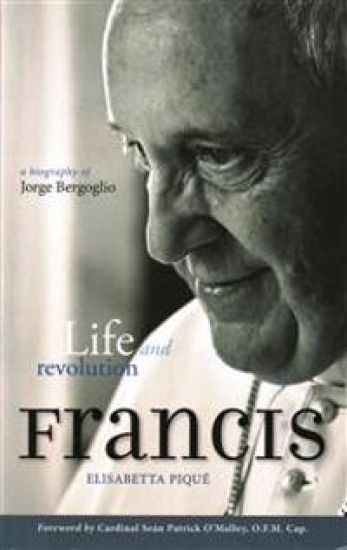
A bestseller in its original Argentinian, Francis: Life and Revolution paints an intimate portrait of Jorge Bergoglio by Elisabetta Pique, a journalist who is also a close friend of the man who became the 266th and current Pope. The warm, personal narrative is rich in character and evocation of the subject and biographer's shared Argentinian heritage, making this unique among books about Bergoglio. Pique tells the story of his upbringing, and journey through priesthood to the Vatican, the Curia and ultimately to his election as Pope. Her text includes her phone conversations with Bergoglio in the days preceding the announcement, his fears and modest denials when she told him she believed it would be him, and a fascinating never-before-reported account of the deliberations of the Conclave that elected him. Before analysing the innovations and the polemic changes driven by the new Pope, the book tells of a good natured and kind man with a wonderful sense of humour married to strong convictions who risked his own life to help the victims of illegal repression in Argentina.