Kirjojen hintavertailu. Mukana 11 244 527 kirjaa ja 12 kauppaa.

Kirjahaku

Etsi kirjoja tekijän nimen, kirjan nimen tai ISBN:n perusteella.

1000 tulosta hakusanalla Publisher "DNA"

Environmental DNA

Environmental DNA

Pierre Taberlet; Aurelie Bonin; Lucie Zinger; Eric Coissac

Oxford University Press
2018
nidottu
Environmental DNA (eDNA) refers to DNA that can be extracted from environmental samples (such as soil, water, feces, or air) without the prior isolation of any target organism. The analysis of environmental DNA has the potential of providing high-throughput information on taxa and functional genes in a given environment, and is easily amenable to the study of both aquatic and terrestrial ecosystems. It can provide an understanding of past or present biological communities as well as their trophic relationships, and can thus offer useful insights into ecosystem functioning. There is now a rapidly-growing interest amongst biologists in applying analysis of environmental DNA to their own research. However, good practices and protocols dealing with environmental DNA are currently widely dispersed across numerous papers, with many of them presenting only preliminary results and using a diversity of methods. In this context, the principal objective of this practical handbook is to provide biologists (both students and researchers) with the scientific background necessary to assist with the understanding and implementation of best practices and analyses based on environmental DNA.
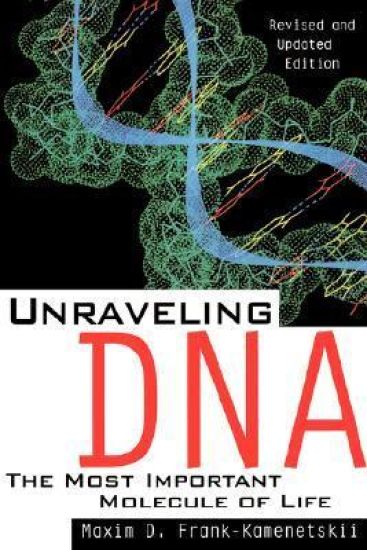
Unraveling DNA

Unraveling DNA

Maxim Kamenetskii

Perseus Books
1997
pokkari
A definitive guide to the history, makeup, and current breakthroughs of DNA research explores the essentials of the molecule of life, including its role in potential cancer and AIDS cures. Original.
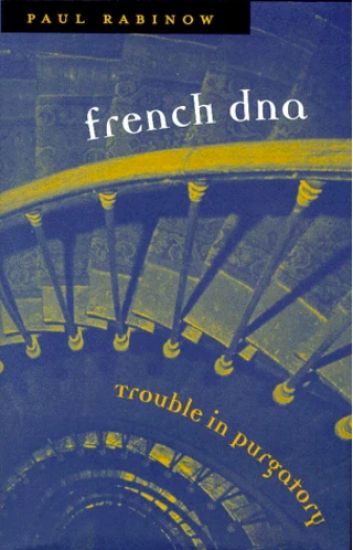
French DNA

French DNA

Paul Rabinow

University of Chicago Press
1999
sidottu
Is there such a thing as "French DNA"? Can a country be said to have its own genetic material? When that country is France, as Paul Rabinow discovered, the answer to both questions is "yes". In a story that involves nations, commerce, patients and genetics, Rabinow seeks to uncover the tangled relations and conceptions that govern modern medical research. In 1993, an American biotechnology company, Millennium Pharmaceuticals, and France's genetics lab, the Centre d'Etude du Polymorphisme Humaine (CEPH), developed plans for a collaborative effort to discover diabetes genes. The results of this collaboration could have been medically significant and financially lucrative. The two companies had agreed that CEPH would supply Millennium with a store of genetic material collected from a large number of French families, and Millennium would supply funding and expertise in new technologies to accelerate the identification of the genes, terms to which the French government had agreed. But in early 1994, just as the collaboration was to begin, the French government called a halt to the deal. The government explained that the CEPH could not be permitted to give the Americans that most precious of substances - never before named in such a manner - French DNA.
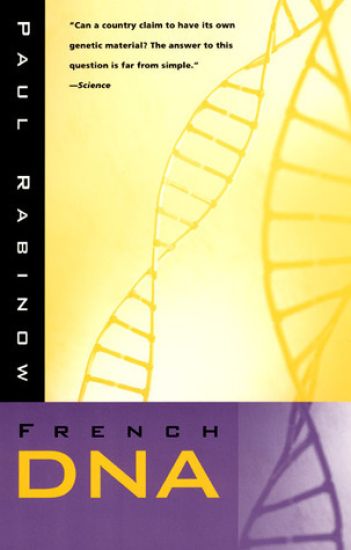
French DNA

French DNA

Paul Rabinow

University of Chicago Press
2002
nidottu
In 1993, an American biotechnology company and a French genetics lab developed a collaborative research plan to search for diabetes genes. But just as the project was to begin, the French government called it to a halt, barring the laboratory from sharing something never previously thought of as a commodity unto itself: French DNA.
The DNA of Customer Experience

The DNA of Customer Experience

C. Shaw

Palgrave Macmillan
2007
sidottu
As the World Thought Leaders on Customer Experience, Colin Shaw and the team at Beyond Philosophy have undertaken more than 18 months of groundbreaking research to discover the emotions that drive and destroy value in an organization, and can now disclose the empirical link between evoking these emotions and substantial financial returns.
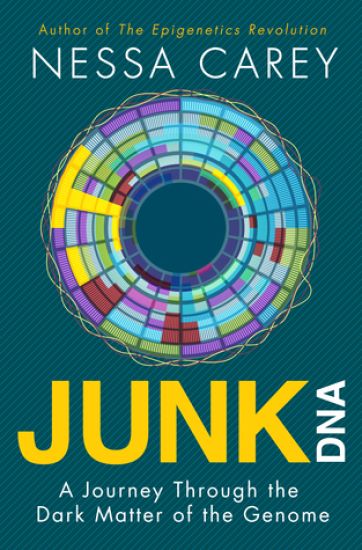
Junk DNA

Junk DNA

Nessa Carey

Columbia University Press
2015
sidottu
For decades after the identification of the structure of DNA, scientists focused only on genes, the regions of the genome that contain codes for the production of proteins. Other regions that make up 98 percent of the human genome were dismissed as "junk," sequences that serve no purpose. But researchers have recently discovered variations and modulations in this junk DNA that are involved with a number of intractable diseases. Our increasing knowledge of junk DNA has led to innovative research and treatment approaches that may finally ameliorate some of these conditions. Junk DNA can play vital and unanticipated roles in the control of gene expression, from fine-tuning individual genes to switching off entire chromosomes. These functions have forced scientists to revisit the very meaning of the word "gene" and have engendered a spirited scientific battle over whether or not this genomic "nonsense" is the source of human biological complexity.Drawing on her experience with leading scientific investigators in Europe and North America, Nessa Carey provides a clear and compelling introduction to junk DNA and its critical involvement in phenomena as diverse as genetic diseases, viral infections, sex determination in mammals, and evolution. We are only now unlocking the secrets of junk DNA, and Nessa Carey's book is an essential resource for navigating the history and controversies of this fast-growing, hotly disputed field.
Junk DNA

Junk DNA

Nessa Carey

Columbia University Press
2017
pokkari
For decades after the identification of the structure of DNA, scientists focused only on genes, the regions of the genome that contain codes for the production of proteins. Other regions that make up 98 percent of the human genome were dismissed as "junk," sequences that serve no purpose. But researchers have recently discovered variations and modulations in this junk DNA that are involved with a number of intractable diseases. Our increasing knowledge of junk DNA has led to innovative research and treatment approaches that may finally ameliorate some of these conditions. Junk DNA can play vital and unanticipated roles in the control of gene expression, from fine-tuning individual genes to switching off entire chromosomes. These functions have forced scientists to revisit the very meaning of the word "gene" and have engendered a spirited scientific battle over whether or not this genomic "nonsense" is the source of human biological complexity.Drawing on her experience with leading scientific investigators in Europe and North America, Nessa Carey provides a clear and compelling introduction to junk DNA and its critical involvement in phenomena as diverse as genetic diseases, viral infections, sex determination in mammals, and evolution. We are only now unlocking the secrets of junk DNA, and Nessa Carey's book is an essential resource for navigating the history and controversies of this fast-growing, hotly disputed field.
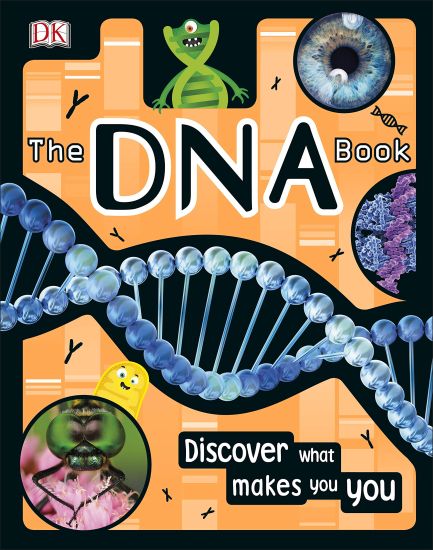
The DNA Book

The DNA Book

DK Children
2020
sidottu
This book introduces children ages 7-9 to the amazing science of DNA, genetics, and what makes you you.It's inside every living plant and animal, from the tiniest seed to the person standing next to you, but how much do you know about DNA? This book gives children an in-depth look at DNA and its role in all living things--from why we have different-colored eyes to why we age. Discover what DNA is, what it does, and how it shapes our lives, including inheritance and why we look like our parents; forensic science and how DNA evidence helps catch criminals; and genetic engineering and if we could bring dinosaurs back to life. With fun illustrated DNA characters, clear diagrams, and astonishing photographs, children will love learning about themselves and this all-important molecule.The DNA Book is packed with colorful illustrations and mind-boggling facts, perfect for curious young minds. It's a great addition to any STEAM library and decodes how DNA underpins life on Earth.
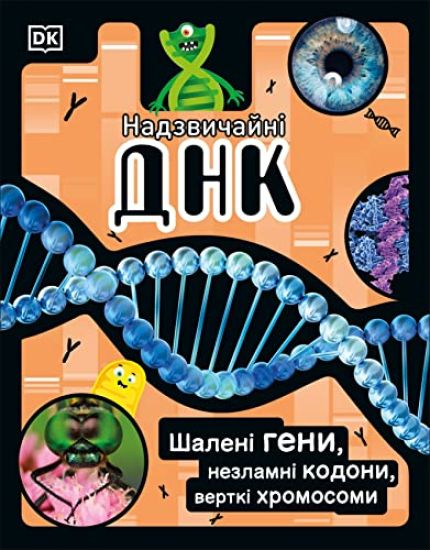
The DNA Book (Ukrainian Edition)

The DNA Book (Ukrainian Edition)

DORLING KINDERSLEY LTD
2022
sidottu
It's inside every living plant and animal, from the tiniest seed to the person standing next to you, but how much do you know about DNA?From why we have different coloured eyes to why we age, this book gives children an in-depth look at DNA and its role in all living things. Discover what DNA is, what it does, and how it shapes our lives, including inheritance and why we look like our parents; forensic science and how DNA evidence helps catch criminals; and how genetic engineering could theoretically bring dinosaurs back to life. With fun illustrated characters, clear diagrams, and fascinating photographs, children will love learning about themselves and this all-important molecule.The DNA Book is packed with colourful illustrations and mind-boggling facts, a great addition to any STEAM library. Perfect for curious young minds, this is an ideal introduction to the amazing science of genetics, and what makes you you.
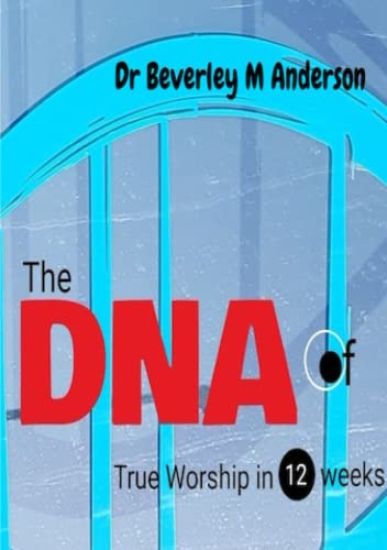
The DNA of True Worship in 12 weeks

The DNA of True Worship in 12 weeks

Beverley Anderson

Lulu.com
2018
pokkari
The DNA of True Worship is a Twelve week course that includes a 'Questions for You' section at the end of each week. The questions are designed to help you to capture, retain and internalise each lesson. This course is laid out in an easy-to-understand format that will show you how to live life governed by, The Law of the Temple, which is, ABSOLUTE HOLINESS
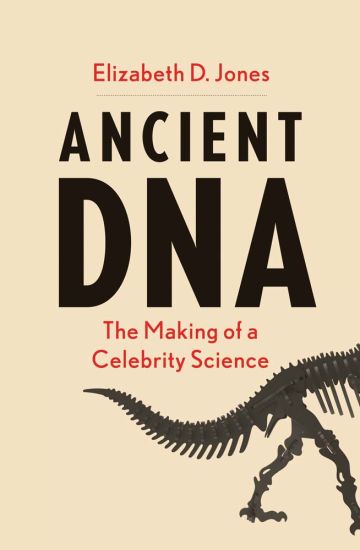
Ancient DNA

Ancient DNA

Elizabeth D Jones

Yale University Press
2022
sidottu
The untold story of the rise of the new scientific field of ancient DNA research, and how Jurassic Park and popular media influenced its development “Fun and thought-provoking. . . . Jones builds a wry, often wise, study of science as a very human endeavor. She makes a powerful case that ancient-DNA research feeds off media attention as much as the media feeds off it.”—Victoria L. Herridge, Nature Ancient DNA research—the recovery of genetic material from long-dead organisms—is a discipline that developed from science fiction into a reality between the 1980s and today. Drawing on scientific, historical, and archival material, as well as original interviews with more than fifty researchers worldwide, Elizabeth Jones explores the field’s formation and explains its relationship with the media by examining its close connection to de-extinction, the science and technology of resurrecting extinct species. She reveals how the search for DNA from fossils flourished under the influence of intense press and public interest, particularly as this new line of research coincided with the book and movie Jurassic Park. Ancient DNA is the first account to trace the historical and sociological interplay between science and celebrity in the rise of this new research field. In the process, Jones argues that ancient DNA research is more than a public-facing science: it is a celebrity science.
Synthetic DNA Delivery Systems

Synthetic DNA Delivery Systems

Kluwer Academic/Plenum Publishers
2003
sidottu
DNA delivery into cells is a rapidly developing area in gene therapy and biotechnology. Moreover, it is a powerful research tool to determine gene structure, regulation, and function. Viral methods of DNA delivery are well-characterized and efficient, but little is known about the toxicity and immunogenecity of viral vectors. As a result, non-viral, transfection methods of DNA delivery are of increasing interest. Synthetic DNA Delivery Systems is a comprehensive and current resource on DNA transfection. The use of histidine-rich peptides and polypeptides as DNA delivery systems and self-assembled delivery systems based on cationic lipids and polymers are discussed. Targeted delivery to organelles, tumor cells and dendritic cells comprise an important topic.
Eukaryotic DNA Damage Surveillance and Repair

Eukaryotic DNA Damage Surveillance and Repair

Kluwer Academic/Plenum Publishers
2004
sidottu
Eukaryotic DNA Damage Surveillance and Repair contains chapters from experts in the field of DNA damage detection, repair, and cell cycle control. The work reviews current understanding of how different types of DNA damage are detected and focuses on how these surveillance mechanisms are coupled to processes of DNA repair, cell cycle control, and apoptosis. The title will be of interest to undergraduate/postgraduate students and academics alike.
The DNA Replication-Repair Interface
Replication-Coupled Repair, Volume 661 in the Methods in Enzymology series, highlights new advances in the field, with this new volume presenting interesting chapters on a variety of timely topics, including the Repair of replication-born DNA breaks by sister chromatid recombination, High resolution and high throughput DNA cyclization measurements to interrogate DNA bendability, A programmable detection method for genomic signatures: from disease diagnosis to genome editing, Characterization of the telomerase modulating activities of yeast DNA helicases, Eukaryotic DNA replication with purified budding yeast proteins, Single molecule studies of yeast Rad51 paralogs, Light activation and deactivation of Cas9 for DNA repair studies, and more. Other chapters explore MIDAS: Direct sequencing to map mitotic DNA synthesis and common fragile sites at high precision, Studying the DNA damage response in embryonic systems, GLASS-ChIP to map Mre11 cleavage sites in the human genome, New chemical biology approaches to trap reaction intermediates in living cells, Single-molecule imaging approaches for monitoring replication fork conflicts at genomic DNA G4 structures and R-loops in human cells, Monitoring the replication of structured DNA through heritable epigenetic change, Visualizing replication fork encounters with DNA interstrand crosslinks, and much more.
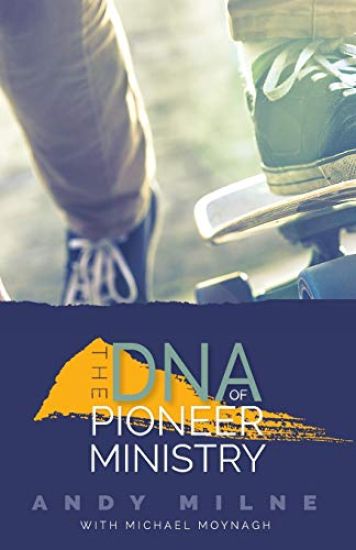
The DNA of Pioneer Ministry

The DNA of Pioneer Ministry

Andy Milne

SCM Press
2016
nidottu
Sorted is a successful Fresh Expression of church based in Bradford, which has now sent out pioneers using the lessons learnt to begin planting a fresh expression in Thamesmead, London and begin a pioneering project in Nairobi, Kenya. The Fresh Expressions story has been well-told, but there have been relatively few attempts to relate the experiences and methodologies the author and his team have learnt over 10 years of pioneering Sorted (3 fresh expressions of church), so that pioneers, missionaries and the wider Church may be better equipped and informed when pioneering fresh expressions, mission communities and church plants in a whole range of different contexts. Relevant and timely, this book aims to share these lessons and methodologies using the Sorted story.
Forensic DNA Profiling

Forensic DNA Profiling

Jo-Anne Bright; Michael Coble

CRC Press
2019
sidottu
DNA testing and its forensic analysis are recognized as the “gold standard” in forensic identification science methods. However, there is a great need for a hands-on step-by-step guide to teach the forensic DNA community how to interpret DNA mixtures, how to assign a likelihood ratio, and how to use the subsequent likelihood ratio when reporting interpretation conclusions.Forensic DNA Profiling: A Practical Guide to Assigning Likelihood Ratios will provide a roadmap for labs all over the world and the next generation of analysts who need this foundational understanding. The techniques used in forensic DNA analysis are based upon the accepted principles of molecular biology. The interpretation of a good-quality DNA profile generated from a crime scene stain from a single-source donor provides an unambiguous result when using the most modern forensic DNA methods. Unfortunately, many crime scene profiles are not single source. They are described as mixed since they contain DNA from two or more individuals.Interpretation of DNA mixtures represents one of the greatest challenges to the forensic DNA analyst. As such, the book introduces terms used to describe DNA profiles and profile interpretation. Chapters explain DNA extraction methods, the polymerase chain reaction (PCR), capillary electrophoresis (CE), likelihood ratios (LRs) and their interpretation, and population genetic models—including Mendelian inheritance and Hardy-Weinberg equilibrium. It is important that analysts understand how LRs are generated in a probabilistic framework, ideally with an appreciation of both semicontinuous and fully continuous probabilistic approaches. KEY FEATURES:• The first book to focus entirely on DNA mixtures and the complexities involved with interpreting the results • Takes a hands-on approach offering theory with worked examples and exercises to be easily understood and implementable by laboratory personnel • New methods, heretofore unpublished previously, provide a means to innovate deconvoluting a mixed DNA profile, assign an LR, and appropriately report the weight of evidence • Includes a chapter on assigning LRs for close relatives (i.e., “It’s not me, it was my brother”), and discusses strategies for the validation of probabilistic genotyping softwareForensic DNA Profiling fills the void for labs unfamiliar with LRs, and moving to probabilistic solutions, and for labs already familiar with LRs, but wishing to understand how they are calculated in more detail. The book will be a welcome read for lab professionals and technicians, students, and legal professionals seeking to understand and apply the techniques covered.
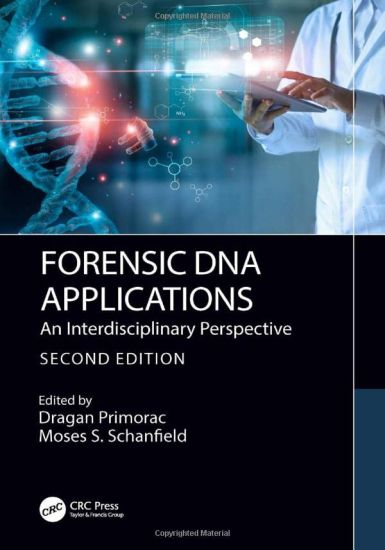
Forensic DNA Applications

Forensic DNA Applications

TAYLOR FRANCIS LTD
2023
sidottu
Forensic DNA Applications: An Interdisciplinary Perspective, Second Edition is fully updated to outline the latest advances in forensic DNA testing techniques and applications. It continues to fill the need for a reference book for people working in the field of forensic molecular biology testing and research as well as individuals investigating and adjudicating cases involving DNA evidence, whether they be civil or criminal cases. DNA techniques have greatly impacted obvious traditional forensic areas, but such advances have also positively affected myriad new areas of research and inquiry. It is possible today to think about solving forensic problems that were simply unheard of even a few years ago. As such, the book pulls all relevant research and applied science together into a detailed and comprehensive collection.Part I begins with the history and development of DNA typing and profiling for criminal and civil purposes. It discusses the statistical interpretation of results with case examples, mitochondrial DNA testing, Y single nucleotide polymorphisms (SNPs) and short tandem repeats (STRs), and X SNP and STR testing. It also explores low copy number DNA typing, mixtures, and quality assurance and control. Part II moves on to cover the various uses and applications of analyzing collected physical evidence, victim identification in mass disasters, analyzing animal DNA, forensic botany, and other unique applications. Part III is dedicated to the latest advances and developments in human molecular biology and Part IV looks at policies and laws and ethics governing DNA evidence, and its utilization in various cases and the courts. Forensic DNA Applications, Second Edition covers cutting-edge research and advancements in the field and is the most up-to-date reference available. Edited and contributed to by the world's foremost leaders in the field, it is a must-have reference for established professionals, and an essential resource to legal professionals—lawyers and judges dealing with civil and criminal cases involving DNA technology—as well as students entering the fields of genetics and forensic DNA analysis.
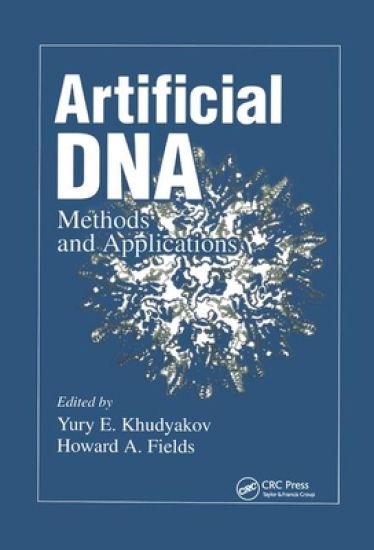
Artificial DNA
Combining elements of biochemistry, molecular biology, and immunology, artificial DNA can be employed in a number of scientific disciplines. Some of the varied applications include site-specific mutagenesis, hybridization, amplification, protein engineering, anti-sense technology, DNA vaccines, protein vaccines, recombinant antibodies, screening for genetic and pathogenic diseases, development of materials with new biochemical and structural properties, and many more. Artificial DNA: Methods and Applications introduces the concept of artificial DNA that has been rationally designed and explains how it may be exploited in order to develop products that will achieve your intended purpose. The first part of the book covers methods of oligonucleotide synthesis and direct applications of synthetic DNA. The second part describes methods of gene assembly from synthetic oligonucleotides and applications of synthetic genes. The authors also discuss the different trends and future developments within each application area . With state-of-the art research, the contributing authors describe how to engineer proteins using rational and semi-rational design to exhibit the desired traits and detail the various amplification reactions and hybridization techniques for modeling evolution and for use in basic research. The only text devoted to this subject, Artificial DNA offers a comprehensive review that allows you to understand the strategy, design, and applications of synthetic oligonucleotides.
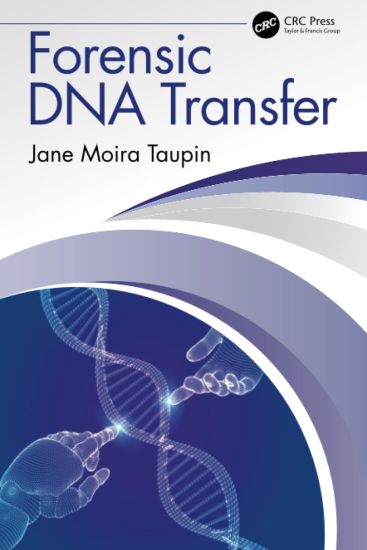
Forensic DNA Transfer

Forensic DNA Transfer

Jane Moira Taupin

TAYLOR FRANCIS LTD
2023
sidottu
Forensic DNA Transfer provides a guide to the recognition and current understanding of DNA transfer in forensic criminal investigations. Increased improvements in technology mean that it is now routinely possible to obtain DNA profiles from non-visible deposits. How or when the DNA in question was deposited may be an issue in the context of the case, especially if the donor of the DNA is not in dispute. A DNA profile alone cannot reveal when or how that DNA was deposited at a crime scene, nor can it reveal the body matter from which it originated. Issues of transfer associated with activities may be debated—which the traditional discrimination purpose of DNA profiling cannot address.DNA may be everywhere and anywhere—in homes, at workplaces, during transport, and on personal items including clothing. DNA from a person may be on an object they have never contacted or in a room they have never entered. Concepts discussed in the book include non-self DNA on hands through day-to-day activities, the prevalence of background DNA in the environment and perhaps on the exhibit, the persistence of any DNA transferred, and that a DNA result will depend on these variables as well as recovery techniques. Since DNA may be transferred to an exhibit: (a) during the commission of a crime, (b) before the crime, and/or (c) after the crime through handling, examination, and testing, this book covers various transfer pathways and sources of DNA. Documented cases of inadvertent transfer of DNA resulting in wrongful convictions or the misdirection of criminal investigations are discussed—with an emphasis on contamination mitigation throughout the entire process.Forensic DNA Transfer examines the additional complexity resulting from non-visible deposits of DNA that impact on sampling and testing regimes. The changing understanding of the composition of purported 'touch DNA' deposits from the skin, including extracellular DNA transported via body secretions, is described. Further, the newer focus on interpreting DNA evidence—using activity level propositions and the rationale and associated issues—is also discussed.
Forensic DNA Transfer

Forensic DNA Transfer

Jane Moira Taupin

TAYLOR FRANCIS LTD
2023
nidottu
Forensic DNA Transfer provides a guide to the recognition and current understanding of DNA transfer in forensic criminal investigations. Increased improvements in technology mean that it is now routinely possible to obtain DNA profiles from non-visible deposits. How or when the DNA in question was deposited may be an issue in the context of the case, especially if the donor of the DNA is not in dispute. A DNA profile alone cannot reveal when or how that DNA was deposited at a crime scene, nor can it reveal the body matter from which it originated. Issues of transfer associated with activities may be debated—which the traditional discrimination purpose of DNA profiling cannot address.DNA may be everywhere and anywhere—in homes, at workplaces, during transport, and on personal items including clothing. DNA from a person may be on an object they have never contacted or in a room they have never entered. Concepts discussed in the book include non-self DNA on hands through day-to-day activities, the prevalence of background DNA in the environment and perhaps on the exhibit, the persistence of any DNA transferred, and that a DNA result will depend on these variables as well as recovery techniques. Since DNA may be transferred to an exhibit: (a) during the commission of a crime, (b) before the crime, and/or (c) after the crime through handling, examination, and testing, this book covers various transfer pathways and sources of DNA. Documented cases of inadvertent transfer of DNA resulting in wrongful convictions or the misdirection of criminal investigations are discussed—with an emphasis on contamination mitigation throughout the entire process.Forensic DNA Transfer examines the additional complexity resulting from non-visible deposits of DNA that impact on sampling and testing regimes. The changing understanding of the composition of purported 'touch DNA' deposits from the skin, including extracellular DNA transported via body secretions, is described. Further, the newer focus on interpreting DNA evidence—using activity level propositions and the rationale and associated issues—is also discussed.