Kirjahaku
Etsi kirjoja tekijän nimen, kirjan nimen tai ISBN:n perusteella.
75 tulosta hakusanalla Pushkar Kumar
Psychokinesis is a mystic capacity that is otherwise called supernatural power. This one thought about one of the further developed mystic capacities. A psychokinetic clairvoyant can move questions voluntarily by utilizing their brain to control their general surroundings. This is finished by bowing their general surroundings to move and control objects.
A clairvoyant is a man who is accepted to have additional tactile observation and is viewed as a very natural person. A clairvoyant is utilized as a source to help give data about what's to come. A visionary is a man who is accepted to be able to plainly observe items or occasions that can't be seen by the faculties. A visionary can enable you to increase point of view so you will have the capacity to see and think things through more plainly.
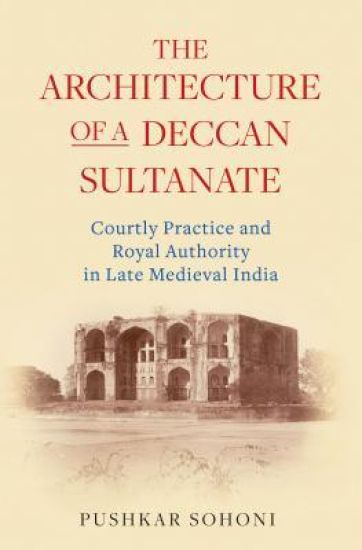
The Deccan sultans left a grand architectural and artistic legacy. They commissioned palaces, mosques, gardens and tombs as well as decorative paintings and coins. Of these sultanates, the Nizam Shahs (r. 1490-1636) were particularly significant, being one of the first to emerge from the crumbling edifice of the Bahmani Empire (c. 1347-1527). Yet their rich material record remains largely unstudied in the scholarly literature, obscuring their cultural and historical importance. This book provides the first analysis of the architecture of the Nizam Shahs. Pushkar Sohoni examines the critical relationship between architectural production, courtly practice and royal authority in a period when the aspirations and politics of the kingdom were articulated through architectural expression. Based on new primary research from key sites including the urban settlements of Ahmadnagar, Daulatabad, Aurangabad, Junnar and the port city of Chaul, Sohoni sheds light on broader Islamicate ideas of kingship and shows how this was embodied by material artefacts such as buildings and sites, paintings, gardens, guns and coins.As well as offering a vivid depiction of sixteenth-century South Asia, this book revises understanding of the cultural importance of the Nizam Shahs and their place in the Indian Ocean world. It will be a vital primary resource for scholars researching the history of the medieval and early modern Deccan and relevant for those working in Art History, Islamic Studies, South Asian Studies and Archaeology.
Ever thought about how to be content and upbeat without giving others a chance to influence you? How is it conceivable? Is it at all conceivable? Let others' quality not trouble you. You do your stuff without anyone else whatever you can. On the off chance that you require co-appointment or help, request it. In break time, have a ton of fun and cut jokes and be glad. When you come back to your work, do it coolly and be upbeat. You will cover numerous achievements along these lines. Remain in gradual mode - all things considered, you are the individual who will succeed at it. Constancy and assurance dependably tally.
Progress in Drug Research
Pushkar N. Kaul; Balawant S. Joshi; E. Domingo; A. Mas; E. Yuste; N. Pariente; S. Sierra; M. Gutiérrez-Rivas; L. Menéndez-Arias; Doreen Ma; Chaman Lal Kaul; Poduri Ramarao; Jay A. Glasel
Springer Basel
2012
nidottu
Progress in Drug Research
Pushkar N. Kaul; Gillian Edwards; Arthur H. Weston; Michel Rohmer; Robin W. Rockhold; T. David Johnson; Joseph M. Colacino; Kirk A. Staschke
Springer Basel
2012
nidottu
Tantalum Oxide Thin Films for Embedded Capacitors
Pushkar Jain
VDM Verlag Dr. Mueller E.K.
2008
pokkari
Metody Otsenki Kachestva Informatsionnykh Sistem Predpriyatiy
Pushkar' Aleksandr
LAP Lambert Academic Publishing
2014
pokkari
Impact of Photographs and its Placement in News Articles on Readers
Pushkar V
LAP Lambert Academic Publishing
2012
pokkari
The United Nations define adolescents as persons aged between 10-19 yearsfor statistical purposes. Between puberty and maturity, adolescence is a phase oftransition and development. There is approximately 1198.7 million adolescentworldwide (the United Nations' World Population Prospects: The 2012 Revision, June 2013) and as per census 2011, ―India comprises 253.2 million adolescentsconstituting 20.9% of the total population of the country which estimates that everyfifth person in India is an adolescent‖. The number of Adolescents living in ruralareas was 180.7 million as per census 2011 accounting for 72% of the total adolescentpopulation of the nation. While ―Uttar Pradesh ranks first with the maximum numberof adolescents comprising 24.8% of the total population of the state‖, Uttarakhand, the carved state of Uttar Pradesh (since 2000) on the other hand comprises a total of23% of adolescents In rural areas of its total population (Census. 2011).Adolescents learn from their peers' social behaviour and the environment inwhich they live during this time. (Ramadass. et.al., 2017). It is also a span of theirgrowth extending from the immaturity of childhood to the physical and psychologicalmaturity of adulthood. (WHO,1989). Around the age of 10-13, girls begin toexperience physical growth spurts. They usually begin breast development in theirtenth year, genital growth in their eleventh year, and menstruation in their twelfthyear. For the next three years, the growing process continues, and all secondarysexual traits emerge (Petterson & Hale, 1985). Sexual development often occurs inthree stages-pre-pubescence, pubescence and post-pubescence. Prepubescence ischaracterised by increased bodily growth, particularly of the reproductive organs, aswell as the emergence of secondary sex traits, including menstruation.Menstruation is a natural physical process that occurs as a by-product of abiological event. It is the visible manifestation of periodic uterine bleeding sloughedfrom the endometrium. In other words, It is the monthly bleeding of non-pregnantwomen of childbearing age (Chawla, 1992). Although menstrual bleeding is a re
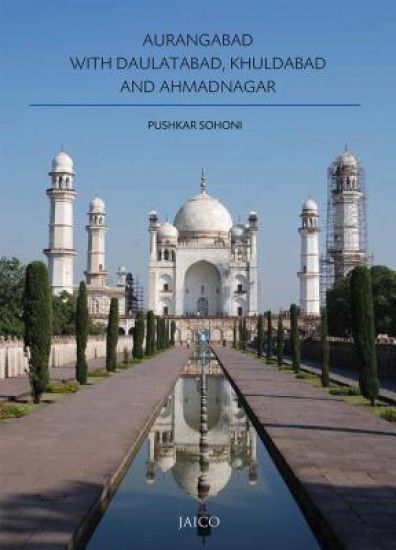
Aurangabad with Daulatabad, Khuldabad and Ahmadnagar
Pushkar Sohoni
Jaico Publishing House
2015
pokkari
This guidebook focuses on four cities and sites in Maharashtra of exceptional historical importance and architectural interest. While Aurangabad is well known as a convenient base from which to reach the celebrated cave-temples at Ajanta and Ellora, the city's tombs and mosques are hardly ever visited. Many of these were built during the 17th century, when the city served as the second capital of the Mughal Empire, taking its name from the emperor Aurangzeb who spent many years here. A short distance from Aurangabad is Daulatabad. This citadel is dominated by a rugged basalt hill, the sides of which have been artificially scooped into vertical faces, beneath which are situated a number of palaces and mosques dating back to the 13th-14th centuries. The nearby small walled town of Khuldabad is celebrated for its holy Sufi shrines, inside one of which Aurangzeb himself is buried. The city of Ahmadnagar, a day trip from Aurangabad, was capital of the Nizam Shahi sultans in the 16th century. From their era date a number of impressive mosques, tombs and palaces, also well worth visiting. All these buildings and more are described and profusely illustrated in this guidebook, the first ever published for this region.
Thin-Film Capacitors for Packaged Electronics
Jain Pushkar; Eugene J. Rymaszewski
Springer-Verlag New York Inc.
2003
sidottu
Thin-Film Capacitors for Packaged Electronics deals with the capacitors of a wanted kind, still needed and capable of keeping pace with the demands posed by ever greater levels of integration. It spans a wide range of topics, from materials properties to limits of what's the best one can achieve in capacitor properties to process modeling to application examples. Some of the topics covered are the following: -Novel insights into fundamental relationships between dielectric constant and the breakdown field of materials and related capacitance density and breakdown voltage of capacitor structures, -Electrical characterization techniques for a wide range of frequencies (1 kHz to 20 GHz),-Process modeling to determine stable operating points, -Prevention of metal (Cu) diffusion into the dielectric, -Measurements and modeling of the dielectric micro-roughness.
Thin-Film Capacitors for Packaged Electronics
Jain Pushkar; Eugene J. Rymaszewski
Springer-Verlag New York Inc.
2014
nidottu
Thin-Film Capacitors for Packaged Electronics deals with the capacitors of a wanted kind, still needed and capable of keeping pace with the demands posed by ever greater levels of integration. It spans a wide range of topics, from materials properties to limits of what's the best one can achieve in capacitor properties to process modeling to application examples. Some of the topics covered are the following: -Novel insights into fundamental relationships between dielectric constant and the breakdown field of materials and related capacitance density and breakdown voltage of capacitor structures, -Electrical characterization techniques for a wide range of frequencies (1 kHz to 20 GHz),-Process modeling to determine stable operating points, -Prevention of metal (Cu) diffusion into the dielectric, -Measurements and modeling of the dielectric micro-roughness.
What Philosophers Say Compared with What Psychologists Find in Discerning Values
Dolores Pushkar; Sarah Etezadi; Tracy Lyster
Nova Science Publishers Inc
2010
nidottu
Psychologists and philosophers have both asked a fundamental question about the human experience -- what is the best way to live -- but have employed different methods of inquiry. Psychological research into this question has taken the form of empirical investigations in three main domains: (1) how wise and competent people live their lives; (2) the values that are embodied in the actions of wise people; and (3) the psychological benefits that come from following different values. Philosophical methods of inquiry, based on appeals to lived experience as presented anecdotally, through literature, and through analysis at the conceptual level, provide complementary ways of understanding wisdom and the values embedded therein. This chapter provides an integrative review combining empirical research related to wisdom and its inherent values with an analysis of wisdom and values from the philosophical tradition with a focus on Aristotelian virtue theory. The content includes both reviews of relevant literature and results from original data sets, illustrates the values inherent in both the psychological and philosophical approaches, and highlights the commonalities as well as current differences between these two methods of inquiry.
Politics and economics go hand in hand. The approach of a government towards implementing an economic agenda is based on the political ideology it follows. The world has seen and experienced a number of such ideologies that has formed the basis of that nation's economic policy. The rise of Lenin's views in Russia, Mao's Cultural Revolution in China, division of Germany, communist rule in many European nations, economic supremacy of USA and Great Britain's strength in almost half of the world is all result of the political thinking. But the author wonders what should be the objective of a political ideology when a nation decides to embrace it. The core objective that the author feels is the betterment of the general mass. But there are divergent beliefs about how that objective can be achieved; thus different nations today follow different ideologies. Communism is one such political concept that attribute to the equality of all citizens- so far the definition is concerned. The author has inevitable questions in his mind. Is the communist society free, Liberal, Fraternal? Has it grown a contributing mass or demanding? Does the nation value aspirations of common man? Are the people devoted for national cause? And above all, do they embrace changes, or does the nation allow them to change them with the changing world? The author has huge interest to investigate these questions and contemplate ways to improve life of people living in communist nations. All his unanswered queries, ideologies has given birth to this book.