Women clergy now account for approximately 10 percent of religious leaders in the United States. As their numbers grow, so too does their political influence. This book examines the effects of gender, professional experience, and religious belief on the political attitudes and activism of clergywomen. Based on qualitative analysis of Interviews with 54 women ministers and rabbis in four different American cities (Washington, D.C., Milwaukee, Omaha, and Indianapolis) and quantitative analysis of a national survey of other clergy, this study breaks new ground in specifically addressing the political priorities, agendas, strategies, and actions of clergywomen. The authors' research probes beyond the traditional stereotypes of women clergy as either a silent, oppressed minority or the cutting edge of an elite feminist vanguard. Though women ministers and rabbis face professional and political restraints that stem from long-standing religious norms about gender roles, in many circumstances their gender can be an asset. Though the same constraints make it risky for some clergywomen to assume visible roles on divisive cultural and political issues, many do, even on controversial issues, such as gay rights and abortion. Women with a Mission also sheds light on the broader phenomenon of the political mobilization of professionals in general: how the idiosyncrasies of one's profession affect political attitudes and actions. In this way, it contributes to a national, rather than a regional or denominational, discussion of gender and politics.
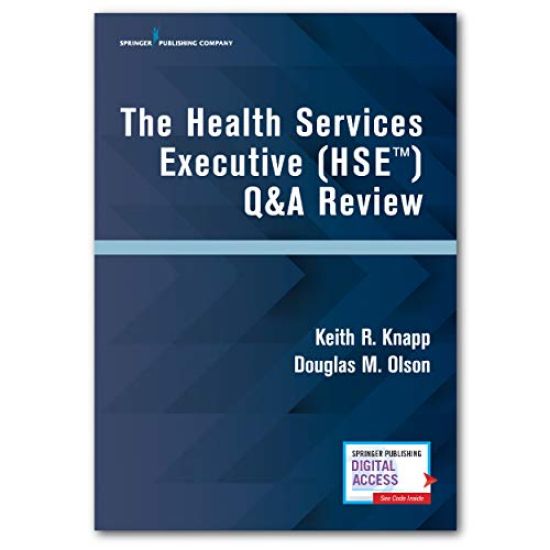
Contains more than 470 practice questions and answers! The Health Services Executive (HSE) Q&A Exam Review provides a comprehensive and practical study tool for all students and professionals seeking HSE qualification. Divided into three parts, this resource allows readers to test their knowledge in each area covered by the HSE exam established by the National Association of Long-Term Care Administrator Boards (NAB). Part I chapters feature multiple-choice, single-best-answer questions grouped by domain – Customer Care, Supports, and Services; Human Resources; Finance; Environment; and Management and Leadership – with detailed rationales accompanying each answer. Part II simulates the exam, offering practice exams on the Core of Knowledge Examination and on each of the three lines of service – Nursing Home Administration (NHA), Residential Care/Assisted Living (RC/AL), and Home- and Community-Based Services (HCBS). These exams are structured to model the content blueprint of the licensure exams. Part III includes the practice exam answers with rationales, featured separately for self-assessment and further learning. Written by leading experts in long-term care administration and containing over 470 questions with rationales, this Q&A review is the most authoritative and comprehensive in the market. It is a must-have resource for long-term care administrators, whether taking their initial licensure exam or completing the remaining lines of service exams. Key Features: Over 470 multiple choice, single-best answer questions with answers and detailed rationales Extensive coverage of the Health Service Executive (HSE) exam and the individual lines of service exams (NHA, RC/AL, HCBS) Written by leading experts and educators in long-term care administration and leadership Purchase includes digital access for use on most mobile devices or computers
Note to Readers: Publisher does not guarantee quality or access to any included digital components if book is purchased through a third-party seller. The Health Services Executive (HSE™): Tools for Leading Long-Term Care and Senior Living Organizations serves as a contemporary and comprehensive resource that addresses each of the core professional domains of practice and leadership essentials for long-term care administration students and professionals. With sections dedicated to postacute care settings, operations, leadership and management, this textbook covers information pertinent to the spectrum of senior living service lines – from inpatient rehab facilities, long-term acute care hospitals, nursing homes, assisted living, and residential care communities to home- and community-based services. It is a practical reference for both undergraduate and graduate students preparing to enter the field of long-term care administration and leadership, as well as for professionals transitioning to another line of postacute service. The textbook begins with a thorough history of the field, including the development of senior services in the United States. Section I then describes the components of customer care, supports, and services before transitioning into Section II, which addresses operations, including the core practice domains of effectively managing human resources, finances, and the environment. Section III offers a framework for leadership, covering strategic thinking and innovation, marketing and public relations, critical thinking and operation practice, customer service, and personal development. Case problems, discussion questions, leadership roles, high-impact practices, key points, and National Association of Long Term Care Administrator Boards (NAB) domain competencies conclude each chapter. Written by two highly experienced long-term care administrators, this textbook is intended for those preparing for the examinations administered by the NAB for the HSE™ qualification or licensure for individual lines of service, such as for Nursing Home Administration (NHA), Residential Care and Assisted Living (RC/AL) and Home- and Community-Based Services (HCBS). Key Features:Provides best practices for leadership and management across the continuum of long-term care and senior living services Covers all five NAB professional practice domains: Customer Care, Supports and Services; Human Resources; Finance; Environment; and Leadership and Management Includes case problems, discussion questions, and more to foster critical thinking and decision-making skills Offers coverage of the most unique differences among service lines that are part of the HSE™ initiative Weaves insightful quotes from industry leaders throughout chapters for practical tips and words of wisdom Comes with digital access for use on most mobile devices or computers, as well as a full suite of instructor resources including an Instructor's Manual, PowerPoints, and a test bank
This major publication considers the Renaissance Society’s first hundred years. The volume features contributions from Davarian L. Baldwin, Susan Bielstein, Bruce Jenkins, Pamela M. Lee, Nina Möntmann, Liesl Olson, R.H. Quaytman, Anne Rorimer, and Aoibheann Sweeney. It also includes an interview between Susanne Ghez, Solveig Øvstebø, and Hamza Walker, and a comprehensive timeline of the institution’s programming over 100 years.
Integrate spiritual traditions with psychological healing!In this fascinating volume, clinical practitioners of different religious traditions examine the same clinical case, offering insights, interventions, and explanations of transformation and healing. This practical approach allows them to explore broader issues of personality theory and psychology from the perspectives of various spiritual traditions: Hinduism, Buddhism, Taoism, Judaism, Christianity, and Islam. Religious Theories of Personality and Psychotherapy addresses both the practical issues of doing psychotherapy and the deeper need to relate psychology and theology. After providing a thorough introduction to the spiritual tradition, each author presents a critical psychological theory of personality and psychotherapy grounded in that tradition. The authors address the questions of what it means to be a person, what causes human distress, and how individuals experience healing. Religious Theories of Personality and Psychotherapy offers profound insights into the urgent issues of human suffering and psychological transformation, including: theories of personality structure and human motivation the nature of experience and processes of change the dialectical relation of theology and psychology convergences and difference among the religious psychologiesMarrying theory and practice, spirit and psyche, Religious Theories of Personality and Psychotherapy offers profound insights and effective interventions. Mental health professionals, clergy, and scholars in religion, cross-cultural studies, personality, counseling, and psychotherapy will find this breakthrough book a life-changing experience and an invaluable resource.
What, precisely, is a primitive fish? Most biologists would agree that the living cyclostomes, selachians, crossopterygians, etc. cannot be considered truly primitive. However, they and the fossil record have served to provide the information which forms the basis for speculation concerning the nature of the original vertebrates. This symposium of biologists from a variety of disciplines was called together to create collectively, from the best available current evidence, a picture of the probable line of evolution of the prototype primitive fishes. The symposium was designed to follow one that took place in Stockholm in 1967, convened for a similar purpose, with about the same number of participants. It is a matter of interest that almost the entire 1967 symposium (Nobel Symposium 4) dealt only with the hard tissues, whether fossil or modern. In charting the course of the present symposium it was felt that the intervening years have produced numerous lines of new evidence that could be employed in the same way that a navigator determines his position. Each field, be it adult morphology, geology, ecology, biochemistry, development or physiology, generates evidence that can be extrapolated backward from existing vertebrate forms and forward from invertebrate forms. If the intersect of only two lines of evidence produces a navigational "fix" of rather low reliability, then an intersect, however unfocussed, of multiple guidelines from more numerous disciplines might provide a better position from which to judge early vertebrate history.
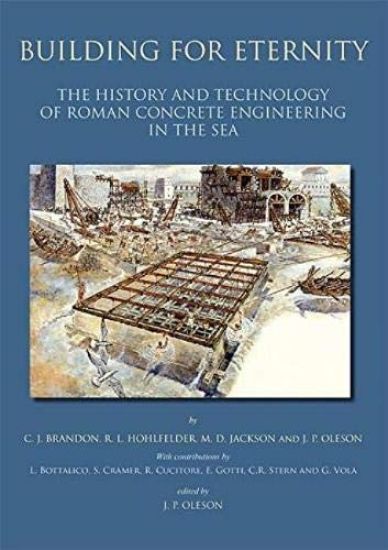
One marker of the majesty of ancient Rome is its surviving architectural legacy, the stunning remains of which are scattered throughout the circum-Mediterranean landscape. Surprisingly, one truly remarkable aspect of this heritage remains relatively unknown. There exists beneath the waters of the Mediterranean the physical remnants of a vast maritime infrastructure that sustained and connected the western world’s first global empire and economy. The key to this incredible accomplishment and to the survival of structures in the hostile environment of the sea for two thousand years was maritime concrete, a building material invented and then employed by Roman builders on a grand scale to construct harbor installations anywhere they were needed, rather than only in locations with advantageous geography or topography.This book explains how the Romans built so successfully in the sea with their new invention. The story is a stimulating mix of archaeological, geological, historical and chemical research, with relevance to both ancient and modern technology. It also breaks new ground in bridging the gap between science and the humanities by integrating analytical materials science, history, and archaeology, along with underwater exploration. The book will be of interest to anyone interested in Roman architecture and engineering, and it will hold special interest for geologists and mineralogists studying the material characteristics of pyroclastic volcanic rocks and their alteration in seawater brines. The demonstrable durability and longevity of Roman maritime concrete structures may be of special interest to engineers working on cementing materials appropriate for the long-term storage of hazardous substances such as radioactive waste.A pioneering methodology was used to bore into maritime structures both on land and in the sea to collect concrete cores for testing in the research laboratories of the CTG Italcementi Group, a leading cement producer in Italy, the University of Berkeley, and elsewhere. The resulting mechanical, chemical and physical analysis of 36 concrete samples taken from 11 sites in Italy and the eastern Mediterranean have helped fill many gaps in our knowledge of how the Romans built in the sea. To gain even more knowledge of the ancient maritime technology, the directors of the Roman Maritime Concrete Study (ROMACONS) engaged in an ambitious and unique experimental archaeological project – the construction underwater of a reproduction of a Roman concrete pier or pila. The same raw materials and tools available to the ancient builders were employed to produce a reproduction concrete structure that appears to be remarkably similar to the ancient one studied during ROMACON’s fieldwork between 2002-2009.This volume reveals a remarkable and unique archaeological project that highlights the synergy that now exists between the humanities and science in our continuing efforts to understand the past. It will quickly become a standard research tool for all interested in Roman building both in the sea and on land, and in the history and chemistry of marine concrete. The authors also hope that the data and observations it presents will stimulate further research by scholars and students into related topics, since we have so much more to learn in the years ahead.
Fifty years ago, Royal Mail Ship Nascopie ended a life full of adventure on an unmarked reef in Hudson's Strait. Launched by the Hudson's Bay Company in 1911, her main mission was to supply the Company's far-flung posts in Canada's North. Alone and without any of today's navigation and communications equipment, she battled ice and icebergs, fog, storms, and uncharted waters to delivery everything the posts needed to survive and trade. Few ships played such a prolonged role in developing Canada's North and maintaining her presence there. Nascopie was a strong ship sailed by strong men. She played a historic role for Canada and this is her story.
One night, soon after we entered the tropics, an awful storm burst upon our ship. The first squall of wind carried away two of our masts, and left only the foremast standing. There was no room for me upon the lifeboat; but being left behind saved my life -- and the lives of Peterkin and Jack Martin, my two companions. "Come, boys," said Jack Martin in a grave tone as we stood on the quarterdeck awaiting our fate -- "You see it is impossible that the little boat can reach the shore, crowded with men." He had us take hold of a loose oar, and guided us to shelter on a deserted coral isle. . . . . . . and that is the beginning of my harrowing tale.
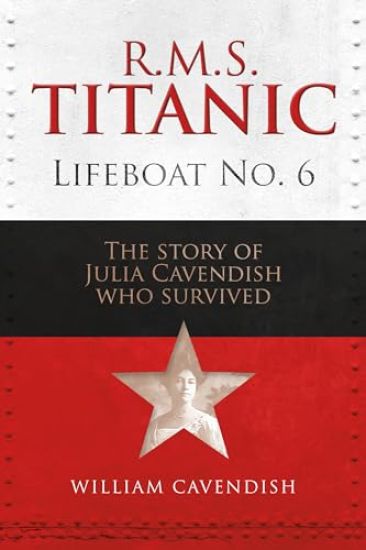
Tyrell and Julia booked to travel on the Titanic with their two sons to introduce them to their American grandfather, but the children were too ill to travel. Julia persisted in going without them. The fatal and tragic decision not only led to the unnecessary loss of her husband, it was to haunt her for the next fifty years. Why was she so determined to go? In a letter written to her sons, as her death approached, she claimed the purpose of the visit was ‘to gain her wealthy father’s support for his son-in-law’s ambition to stand as a Member of Parliament.’ Yet Tyrell had shown no enthusiasm for making the journey, as Julia had already made the trip alone, the previous year quite safely. From the Carpathia Julia cabled her father, Henry Siegel, to have clothes from his department stores ready for the Titanic’s survivors. In 1992 and 2002 her son and grandson learnt from chance encounters with New Yorkers of Julia’s father’s shocking fall from grace, the grandfather who owned a famous department store with a ‘soda fountain meeting place’. Now can be revealed the true reason for her mission.
R.M.Ballantyne is possibly the greatest writer of children's adventure stories. He is most famous for his work "The Coral Island", but wrote more than a hundred stories. Because of a mistake he made in The Coral Island, in which he gave an incorrect thickness of coconut shells, he subsequently travelled all over the world to gain ensure his stories were accurate and carefully researched. For example, he served for as a London fireman while researching "Fighting the Flames" and for "Deep Down" he spent time with the tin miners of Cornwall. In this Collection, ten of his best known and loved stories are included, complete and unabridged. They are: Hudson Bay, The Coral Island (illustrated), The Dog Crusoe and his Master, Away in the Wilderness, Fast in the Ice, The Lifeboat, Post Haste, My Doggie and I, The Madman and the Pirate and The Pirate City