Kirjojen hintavertailu. Mukana 11 244 527 kirjaa ja 12 kauppaa.

Kirjahaku

Etsi kirjoja tekijän nimen, kirjan nimen tai ISBN:n perusteella.

1000 tulosta hakusanalla RENE' VINCENT

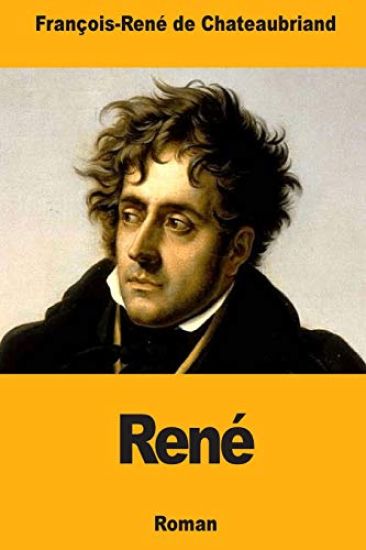
René

René

Francois-Rene De Chateaubriand

Createspace Independent Publishing Platform
2015
nidottu
"Ren " de Fran ois-Ren de Chateaubriand. Ecrivain romantique et homme politique fran ais (1768-1848).
René

René

François-René de Chateaubriand

Createspace Independent Publishing Platform
2018
nidottu
Ren , victime du mal romantique, a voyag sans enthousiasme en Italie et en Gr ce puis en Angleterre, cherchant r veiller un int r t languissant pour la vie. En vain. Par ses efforts m me, le poids de sa tristesse s'est alourdi. Revenu en France o il retrouve sa soeur, l' trange comportement de celle-ci, qui se r fugie dans un couvent, lui fait d couvrir le drame qu'elle a v cu...
Abrégé de la Vie de St René, Évêque d'Angers
Abrege de la vie de St Rene, eveque d'Angers; par l'abbe ReneDate de l'edition originale: 1857Sujet de l'ouvrage: Rene, SaintCe livre est la reproduction fidele d'une oeuvre publiee avant 1920 et fait partie d'une collection de livres reimprimes a la demande editee par Hachette Livre, dans le cadre d'un partenariat avec la Bibliotheque nationale de France, offrant l'opportunite d'acceder a des ouvrages anciens et souvent rares issus des fonds patrimoniaux de la BnF.Les oeuvres faisant partie de cette collection ont ete numerisees par la BnF et sont presentes sur Gallica, sa bibliotheque numerique.En entreprenant de redonner vie a ces ouvrages au travers d'une collection de livres reimprimes a la demande, nous leur donnons la possibilite de rencontrer un public elargi et participons a la transmission de connaissances et de savoirs parfois difficilement accessibles.Nous avons cherche a concilier la reproduction fidele d'un livre ancien a partir de sa version numerisee avec le souci d'un confort de lecture optimal. Nous esperons que les ouvrages de cette nouvelle collection vous apporteront entiere satisfaction.Pour plus d'informations, rendez-vous sur www.hachettebnf.fr
René

René

François-René de Chateaubriand

Faros-kustannus
2018
nidottu
François-René de Chateaubriandin (1768-1848) René oli aikansa kulttiteos, elämänväsymyksen ja tunteiden häilyvyyden kuvaus. Se toi kirjailijalle maineen modernin melankolian isänä.René on Chateaubriandin esikoisromaanin Atala (Faros-kustannus 2003, toinen painos 2018) rinnakkaisteos.Teoksen on suomentanut ja selityksin varustanut Antti Nylén. Toinen, pehmeäkantinen painos.
René Blum and The Ballets Russes

René Blum and The Ballets Russes

Chazin-Bennahum Judith

Oxford University Press Inc
2011
sidottu
The biography of a fascinating cultural hero, René Blum and the Ballets Russes uncovers the events in the life of the enigmatic and brilliant writer and producer who perished in the Holocaust. Brother of Léon Blum, the first socialist prime minister of France, René Blum was a passionate and prominent littérateur. He was the editor of the chic literary journal Gil Blas where he met such celebrated figures as Claude Debussy, Pierre Bonnard, Edouard Vuillard, André Gide, and Paul Valéry. As author Judith Chazin-Bennahum's research illustrates, Blum actually arranged for the publication of Proust's Swann's Way. But Blum's accomplishments and legacy do not end there: after enlisting in World War I, he won the Croix de Guerre and became a national hero. And Blum resurrected the Ballets Russes de Monte Carlo after Diaghilev's death. Tragically, he was arrested in 1941 during a roundup of Jewish intellectuals and ultimately sent to Auschwitz. Based on a treasure trove of previously undiscovered letters and documents, this thoroughly researched narrative not only tells the poignant story of Blum's life but also illustrates Blum's central role in the development of dance in the United States. Indeed, Blum's efforts to save his ballet company eventually helped to bring many of the world's greatest dancers and choreographers — among them Fokine, Balanchine, and Nijinska — to American ballet stages, shaping the path of dance in the United States for years to come.
René Descartes: The Complete Correspondence in English Translation, Volume I
René Descartes: The Complete Correspondence in English Translation is the first complete English translation of the extant correspondence of the polymath René Descartes, who excelled in all areas of philosophy, the sciences, and mathematics. The translation is based on the best available editions, modified by several other sources. It is accompanied by an editorial apparatus consisting of cross-references and brief biographies of the correspondents. Descartes' correspondence elaborates his views, providing a crucial resource for students, teachers, and scholars in philosophy, history of philosophy, and history of science and mathematics. Volume I presents correspondence from the period 1619 to 1638. The letters begin with exchanges between Descartes and the physico-mathematician Isaac Beeckman, the essayist Guez de Balzac, the lens maker Jean Ferrier, and Descartes' future primary correspondent Marin Mersenne. It includes letters to high ranking Oratorians. One can also see the beginnings of Descartes' relations with Constantijn Huygens, who will be Descartes' other chief correspondent. One can also trace the developments of Descartes' early unpublished works on metaphysics, physics, and human biology, together with his reaction to the condemnation of Galileo by the Catholic Church. The letters show developments in Descartes' construction and publication of the Discourse on Method, together with the essays Dioptrics, Meteors, and Geometry. This results in an explosion of letters from and to various critics such as the professor of medicine Vopiscus Fortunatus Plemp, the astrologer Jean Baptiste Morin, the mathematicians Pierre Petit, Gilles Personne de Roberval, Pierre de Fermat, and many others.
René Descartes: Regulae ad directionem ingenii
René Descartes's Regulae ad directionem ingenii ('Rules for the Direction of the Understanding') is his earliest surviving philosophical treatise, and in many respects his most puzzling text. It is a profoundly original work with few intellectual precursors, and offers the fullest account anywhere in Descartes's work of his theory of method. Yet Descartes left it unfinished, and unpublished, at his death in 1650. The versions currently known to modern readers are all posthumous: a manuscript copied for Leibniz in the late seventeenth century, a Dutch translation of 1684, and the version printed in 1701 in Amsterdam. As a result, the details and date of its composition, its fragmentary, unfinished state, and its philosophical content have long puzzled scholars. The discovery by Richard Serjeantson in 2011 of a previously unknown, early manuscript draft of the Regulae in Cambridge University Library was a hugely significant event in Cartesian scholarship. This edition presents the Cambridge manuscript of the Regulae alongside the 1701 Amsterdam version of the text to allow comparison between the early manuscript draft and the version best-known to modern readers, together with a full English translations of both texts. It is also the first critical edition of the Regulae to take into account the full range of textual witnesses to the text, both manuscript and printed. The new Cambridge manuscript sheds important light on the composition, date, and philosophical content of the Regulae, and will provoke scholars to rethink key questions about Descartes's early philosophical development.
The Correspondence between Princess Elisabeth of Bohemia and René Descartes
Between the years 1643 and 1649, Princess Elisabeth of Bohemia (1618-80) and Rene Descartes (1596-1650) exchanged fifty-eight letters - thirty-two from Descartes and twenty-six from Elisabeth. Their correspondence contains the only known extant philosophical writings by Elisabeth and reveals her mastery of metaphysics, analytic geometry, and moral philosophy, as well as her keen interest in natural philosophy. The letters are essential reading for anyone interested in Descartes' philosophy, in particular his account of the human being as a union of mind and body, as well as his ethics. They also provide a unique insight into the character of their authors and the way ideas develop through intellectual collaboration. Philosophers have long been familiar with Descartes' side of the correspondence. Now Elisabeth's letters - never before available in translation in their entirety - emerge in this volume, adding much-needed context and depth both to Descartes' ideas and the legacy of the princess. Lisa Shapiro's annotated edition, which also includes Elisabeth's correspondence with the Quakers William Penn and Robert Barclay, will be heralded by students of philosophy, feminist theorists, and historians of the early modern period.
Rene- De wraak van een sergeant

Rene- De wraak van een sergeant

Freddy Van Schil

Lulu.com
2018
pokkari
Ren een dokwerker wordt tegen zijn zin opgeroepen om het land te verdedigen. Na de capitulatie loopt het fout tussen hem en zijn sergeant . Die werkt nu voor Duitsland en wil allen uitschakelen die weten van zijn laf gedrag tijdens de strijd. Ren krijgt de hulp van het plaatselijk verzet om uit de handen van de Gestapo te blijven. Toch zijn al die helpende handen niet genoeg om hem uit de hel te houden. Tot na de vrede beslist hij om wraak te nemen op al zijn belagers . De wraak van een sergeant.
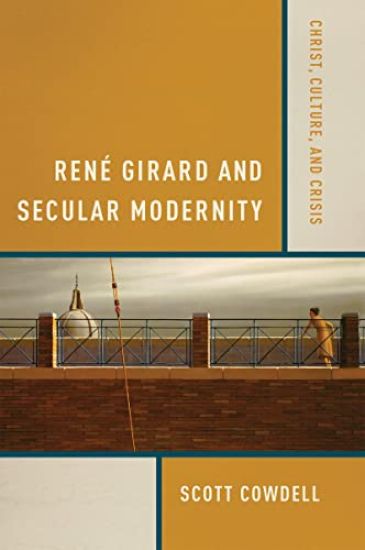
René Girard and Secular Modernity

René Girard and Secular Modernity

Scott Cowdell

University of Notre Dame Press
2013
nidottu
In René Girard and Secular Modernity: Christ, Culture, and Crisis, Scott Cowdell provides the first systematic interpretation of René Girard's controversial approach to secular modernity. Cowdell identifies the scope, development, and implications of Girard's thought, the centrality of Christ in Girard's thinking, and, in particular, Girard's distinctive take on the uniqueness and finality of Christ in terms of his impact on Western culture. In Girard's singular vision, according to Cowdell, secular modernity has emerged thanks to the Bible's exposure of the cathartic violence that is at the root of religious prohibitions, myths, and rituals. In the literature, the psychology, and most recently the military history of modernity, Girard discerns a consistent slide into an apocalypse that challenges modern ideas of romanticism, individualism, and progressivism. In the first three chapters, Cowdell examines the three elements of Girard's basic intellectual vision (mimesis, sacrifice, biblical hermeneutics) and brings this vision to a constructive interpretation of "secularization" and "modernity," as these terms are understood in the broadest sense today. Chapter 4 focuses on modern institutions, chiefly the nation state and the market, that function to restrain the outbreak of violence. And finally, Cowdell discusses the apocalyptic dimension of Girard's theory in relation to modern warfare and terrorism. Here, Cowdell engages with the most recent writings of Girard (particularly his Battling to the End) and applies them to further conversations in cultural theology, political science, and philosophy. Cowdell takes up and extends Girard's own warning concerning an alternative to a future apocalypse: "What sort of conversion must humans undergo, before it is too late?"
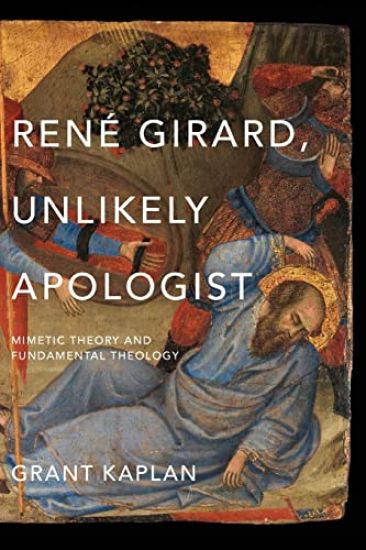
René Girard, Unlikely Apologist

René Girard, Unlikely Apologist

Grant Kaplan

University of Notre Dame Press
2016
sidottu
Since the late 1970s, theologians have been attempting to integrate mimetic theory into different fields of theology, yet a distrust of mimetic theory persists in some theological camps. In René Girard, Unlikely Apologist: Mimetic Theory and Fundamental Theology, Grant Kaplan brings mimetic theory into conversation with theology both to elucidate the relevance of mimetic theory for the discipline of fundamental theology and to understand the work of René Girard within a theological framework. Rather than focus on Christology or atonement theory as the locus of interaction between Girard and theology, Kaplan centers his discussion on the apologetic quality of mimetic theory and the impact of mimetic theory on fundamental theology, the subdiscipline that grew to replace apologetics. His book explores the relation between Girard and fundamental theology in several keys. In one, it understands mimetic theory as a heuristic device that allows theological narratives and positions to become more intelligible and, by so doing, makes theology more persuasive. In another key, Kaplan shows how mimetic theory, when placed in dialogue with particular theologians, can advance theological discussion in areas where mimetic theory has seldom been invoked. On this level the book performs a dialogue with theology that both revisits earlier theological efforts and also demonstrates how mimetic theory brings valuable dimensions to questions of fundamental theology.
René Girard, Unlikely Apologist

René Girard, Unlikely Apologist

Grant Kaplan

UNIVERSITY OF NOTRE DAME PRESS
2022
nidottu
Since the late 1970s, theologians have been attempting to integrate mimetic theory into different fields of theology, yet a distrust of mimetic theory persists in some theological camps. In René Girard, Unlikely Apologist: Mimetic Theory and Fundamental Theology, Grant Kaplan brings mimetic theory into conversation with theology both to elucidate the relevance of mimetic theory for the discipline of fundamental theology and to understand the work of René Girard within a theological framework. Rather than focus on Christology or atonement theory as the locus of interaction between Girard and theology, Kaplan centers his discussion on the apologetic quality of mimetic theory and the impact of mimetic theory on fundamental theology, the subdiscipline that grew to replace apologetics. His book explores the relation between Girard and fundamental theology in several keys. In one, it understands mimetic theory as a heuristic device that allows theological narratives and positions to become more intelligible and, by so doing, makes theology more persuasive. In another key, Kaplan shows how mimetic theory, when placed in dialogue with particular theologians, can advance theological discussion in areas where mimetic theory has seldom been invoked. On this level the book performs a dialogue with theology that both revisits earlier theological efforts and also demonstrates how mimetic theory brings valuable dimensions to questions of fundamental theology.
René Girard and the Nonviolent God

René Girard and the Nonviolent God

Scott Cowdell

University of Notre Dame Press
2018
sidottu
In his latest book on the ground-breaking work of René Girard (1923–2015), Scott Cowdell sets out a new perspective on mimetic theory and theology: he develops the proposed connection between Girardian thought and theological dramatic theory in new directions, engaging with issues of evolutionary suffering and divine providence, inclusive Christian uniqueness, God's judgment, nonviolent atonement, and the spiritual life. Cowdell reveals a powerful, illuminating, and life-enhancing synergy between mimetic theory and Christianity at its best. With religion widely seen as increasingly violent and intransigent, the true Christian emphasis on divine solidarity, mercy, and healing is in danger of being lost. René Girard provides a countervailing voice. He emerges from Cowdell's study not only as a necessary dialogue partner for theology today, but as a global prophet offering hope and challenge in equal measure. René Girard was a Catholic cultural theorist whose mimetic theory achieved a powerful symbiosis of social science with scripture and theology, yielding a unique perspective on humanity's origins, violent history, and future prospects. Cowdell maps this synergy, revealing theological themes present from Girard's earliest writings to the latest, less-familiar publications. He resolves a number of theological challenges to Girard's work, engaging mimetic theory in fruitful dialogue with key themes, movements, and thinkers in theology today. Bringing a distinctive Anglican voice to a largely Catholic debate, Cowdell gives an orthodox theological account of Girard's intellectual achievement, bearing witness to Christianity's nonviolent God. This book will be of great interest to theologians, seminarians and clergy of all traditions, Girardians, and Christian peace activists.
René Girard and Secular Modernity

René Girard and Secular Modernity

Scott Cowdell

UNIVERSITY OF NOTRE DAME PRESS
2024
sidottu
In René Girard and Secular Modernity: Christ, Culture, and Crisis, Scott Cowdell provides the first systematic interpretation of René Girard's controversial approach to secular modernity. Cowdell identifies the scope, development, and implications of Girard's thought, the centrality of Christ in Girard's thinking, and, in particular, Girard's distinctive take on the uniqueness and finality of Christ in terms of his impact on Western culture. In Girard's singular vision, according to Cowdell, secular modernity has emerged thanks to the Bible's exposure of the cathartic violence that is at the root of religious prohibitions, myths, and rituals. In the literature, the psychology, and most recently the military history of modernity, Girard discerns a consistent slide into an apocalypse that challenges modern ideas of romanticism, individualism, and progressivism. In the first three chapters, Cowdell examines the three elements of Girard's basic intellectual vision (mimesis, sacrifice, biblical hermeneutics) and brings this vision to a constructive interpretation of "secularization" and "modernity," as these terms are understood in the broadest sense today. Chapter 4 focuses on modern institutions, chiefly the nation state and the market, that function to restrain the outbreak of violence. And finally, Cowdell discusses the apocalyptic dimension of Girard's theory in relation to modern warfare and terrorism. Here, Cowdell engages with the most recent writings of Girard (particularly his Battling to the End) and applies them to further conversations in cultural theology, political science, and philosophy. Cowdell takes up and extends Girard's own warning concerning an alternative to a future apocalypse: "What sort of conversion must humans undergo, before it is too late?"

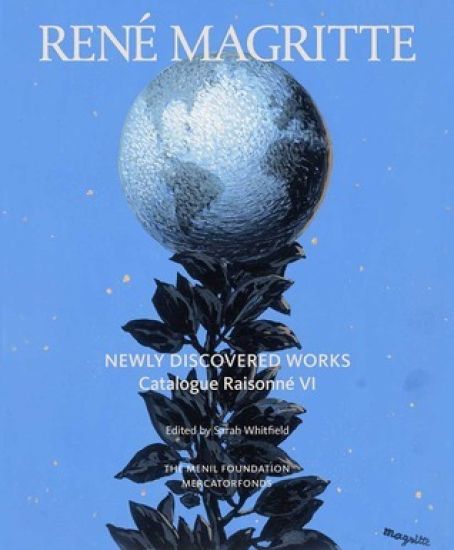
René Magritte: Newly Discovered Works
René Magritte (1898–1967) was a surrealist artist whose thought-provoking works used ordinary objects to challenge how viewers perceived reality. His extensive oeuvre was documented in a comprehensive five-volume project, led by distinguished art critic and writer David Sylvester. In the years that followed the publication of the final volume in 1997, numerous works purporting to be by Magritte appeared on the art market. Under the auspices of the Fondation Magritte, a committee was established to verify the authenticity of newly discovered works as well as those previously recorded as "whereabouts unknown" or listed as appendix items in the original volumes of the René Magritte Catalogue Raisonné.René Magritte: Newly Discovered Works includes color illustrations of 130 previously unpublished or unknown works authenticated by the committee between September 2000 and March 2010. Like its predecessors, this volume is the culmination of years of research, which synthesizes new discoveries about the artworks and details of the life of Magritte himself. Accompanying text and comparative documentation provide a wealth of complementary information, including the circumstances of a work's discovery, references to letters, quotations in their original languages, and citations from previous volumes.Distributed for Mercatorfonds
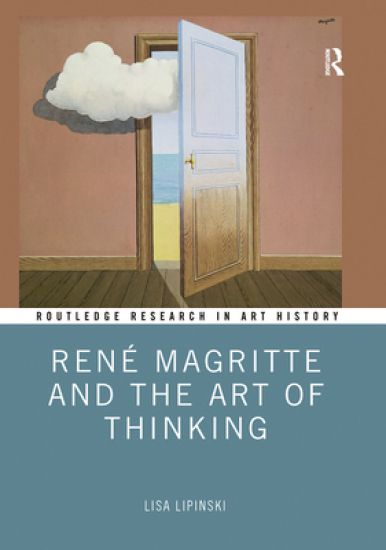
René Magritte and the Art of Thinking
For René Magritte, painting was a form of thinking. Through paintings of ordinary objects rendered with illusionism, Magritte probed the limits of our perception—what we see and cannot see, the nature of representation—as a philosophical system for presenting ideas, and explored perspective as a method of visual argumentation. This book makes the claim that Magritte’s painting is about vision and the act of viewing, of perception itself, and the process of how we see and experience things in the world, including paintings as things.
Rene Descartes
A collection of the most significant contributions to Cartesian scholarship. Nearly 120 articles are brought together on Cartesian method, epistemology, metaphysics and Descartes' contributions to mathematics and science
Rene Descartes' Meditations on First Philosophy in Focus
This volume presents the excellent and popular translation by Haldane and Ross of Descartes' Meditations on First Philosophy, an introduction by Stanley Tweyman which explores the relevance of Descartes' Regulae and his method of analysis in the Meditations, and six articles which indicate the diversity of scholarly opinion on the topic of method in Descartes' philosopy.