Kirjojen hintavertailu. Mukana 11 238 394 kirjaa ja 12 kauppaa.

Kirjahaku

Etsi kirjoja tekijän nimen, kirjan nimen tai ISBN:n perusteella.

1000 tulosta hakusanalla RICHARD EDW DENNETT

Richard II: Argo Classics

Richard II: Argo Classics

William Shakespeare

HarperCollins UK
2021
cd
William Collins Books and Decca Records are proud to present Argo Classics, a historic catalogue of classic prose and verse read by some of the world's most renowned voices. Originally released as vinyl records, these expertly remastered stories are now available to download for the first time.Bear you well in this new spring of time, Lest you be cropp'd before you come to prime.King Richard II rules England in a wasteful and short-sighted way, spending money unwisely and selecting his counsellors foolishly. His manner ostracises him from his people and his country, and it's not long before both commoners and noblemen feel Richard has gone too far.When Richard seizes land that rightfully belongs to his cousin Henry Bolingbroke, Bolingbroke retaliates by invading England while Richard is at war in Ireland. More popular with the commoners, Henry is eventually crowned King Henry IV.All of the Shakespeare plays within the Argo Classics catalogue are performed by the Marlowe Dramatic Society and Professional Players. The Marlowe was founded in 1907 with a mission to focus on effective delivery of verse, respect the integrity of texts and rescue neglected plays by Shakespeare's contemporaries and the less performed plays of Shakespeare himself. The Marlowe has performed annually at Cambridge Arts Theatre since its opening in 1936 and continues to produce some of the finest actors of their generations.Thurston Dart, professor of music at London University and a fellow of Jesus College Cambridge, directed the music for this production.The full cast includes: Richard Pasco, William Devlin, Cyril Luckham, Timothy West, Roy Spencer, John Shrapnel, Peter Jeffrey, Sidney Bromley, George Rylands, Gary Watson, Peter Orr, David King, Gordon Gardner, Harvey Hall, Denis McCarthy, Frank Duncan, Dudley Jones, Barbara Leigh-Hunt, Beatrix Lehmann, Peter Woodthorpe, Clive Swift, Alaric Cotter, Norman Mitchell.
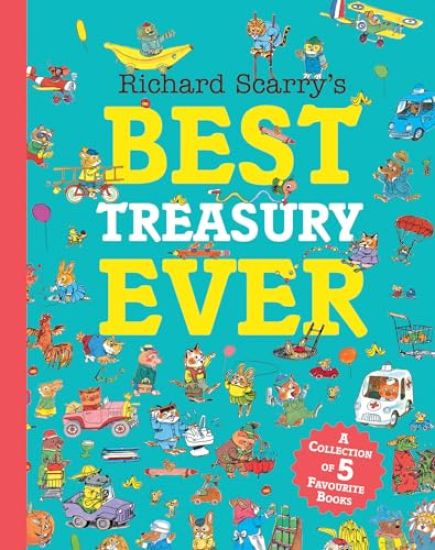
Richard Scarry’s Best Treasury Ever

Richard Scarry’s Best Treasury Ever

Richard Scarry

HARPERCOLLINS PUBLISHERS
2025
sidottu
A stunning hardback treasury of five of Richard Scarry’s best-loved stories – the perfect gift for Scarry fans, young and old! It’s another fun-filled day in Richard Scarry’s Busytown! Pay a visit to Lowly Worm and all your favourite characters in this fabulous collection of Scarry’s best-loved stories. Packed full of cars and trucks, planes and trains, houses, shops and busy streets, it will keep curious minds occupied for hours on end. Richard Scarry’s fun-filled stories have been delighting children the world over for more than 50 years. This beautiful hardback book is the perfect bedtime companion and a must for Scarry fans aged three and up. Includes:GREAT BIG MYSTERY BOOKBUSIEST PEOPLE EVERGREAT BIG SCHOOLHOUSECARS AND TRUCKS AND THINGS THAT GOBEST LOWLY WORM BOOK EVER
Collected Stories of Richard Yates
Whether addressing the smothered desire of suburban housewives, the white-collar despair of Manhattan office workers or the heartbreak of a single mother with artistic pretensions, Yates ruthlessly examines the hopes and disappointments of ordinary people with empathy and humour.
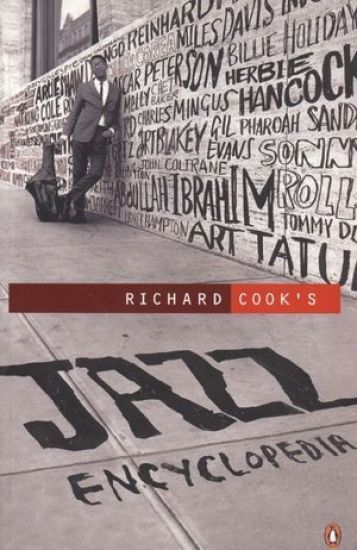
Richard Cook's Jazz Encyclopedia

Richard Cook's Jazz Encyclopedia

Richard Cook

Penguin Books Ltd
2007
pokkari
Richard Cook’s Jazz Encyclopedia is not merely an A-Z guide to the artists and bands who have shaped jazz, but it also tracks the history of jazz and its changing styles. This is a wonderfully accessible work. Richard Cook's passion for jazz and his strongly held opinions make this the liveliest and most trenchantly witty encyclopedia you'll have read. Whether you're trying to find out why Louis Armstrong was called Satchmo (his nickname as a kid was Satchelmouth), what bebop is, or the difference between Gil Evans and Bill Evans – this book has all the answers.
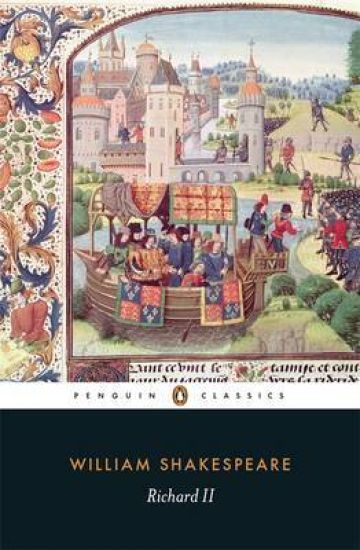
Richard II

Richard II

William Shakespeare

Penguin Classics
2015
pokkari
'Not all the water in the rough rude sea Can wash the balm off from an anointed king'Richard, a vain, despotic ruler, listens only to his flatterers. When his cousin Bolingbroke, previously banished, returns to seize the crown, Richard discovers that the throne given to him by God can be taken from him by men. Depicting a tortured and morally ambivalent soul wearing the 'hollow crown', whose illusions are brutally shattered, this tragic history play unravels the idea of kingship. It is also a work of epic lyricism, filled with some of Shakespeare's most intoxicating poetry. Used and Recommended by the National TheatreGeneral Editor Stanley WellsEdited by Stanley Wells Introduction by Paul Edmondson
Richard III

Richard III

William Shakespeare

Penguin Classics
2015
pokkari
'Now is the winter of our discontent Made glorious summer by this sun of York'Shakespeare's final drama of the Wars of the Roses cycle begins as the dust settles on England after bloody civil war, and the bitter hunchback Richard, brother of the king, secretly plots to seize the throne. Charming and duplicitous, powerfully eloquent and viciously cruel, he is prepared to go to any lengths to achieve his goal. Richard III shows a man who, in his skilful manipulation of events and people, is a chilling incarnation of the temptations of power in a land shocked by war.Used and Recommended by the National TheatreGeneral Editor Stanley WellsEdited by E. A. J. HonigmannIntroduction by Michael Taylor
Richard I (Penguin Monarchs)

Richard I (Penguin Monarchs)

Thomas Asbridge

Penguin Books Ltd
2019
nidottu
'Here is the English sovereign as a crusader, battling on the fringes of the known world; the warrior-king ... imbued with the heart of a lion'Even within his own lifetime Richard I, dubbed the 'Lionheart', attained a kind of semi-mythical status as a paragon of chivalry, yet his reign is both controversial and full of contradictions. Seeking to reconcile the conflicting evidence, Thomas Asbridge's incisive reappraisal of Richard I's career questions how the memory of his life came to be interwoven with myth.
The Best of Richard Matheson

The Best of Richard Matheson

Richard Matheson

Penguin Classics
2017
pokkari
Among the greats of twentieth century horror and fantasy, few names stand above Richard Matheson. Though known by many for novels like I Am Legend and his sixteen Twilight Zone episodes, Matheson truly shines in his chilling, masterful short stories. Matheson revolutionized horror by taking it out of Gothic castles and strange cosmos and into the darkened streets and suburbs we recognize as our own. He infuses tales of the fantastic and supernatural with dark explorations of human nature, delving deep into the universal dread of feeling alone and threatened in a dangerous world.
Richard Ii

Richard Ii

William Shakespeare

Plume
2017
nidottu
The acclaimed Pelican Shakespeare series, now in a dazzling new series design The Pelican Shakespeare series features authoritative and meticulously researched texts paired with scholarship by renowned Shakespeareans. Each book includes an essay on the theatrical world of Shakespeare's time, an introduction to the individual play, and a detailed note on the text used. Updated by general editors Stephen Orgel and A. R. Braunmuller, these easy-to-read editions incorporate over thirty years of Shakespeare scholarship undertaken since the original series, edited by Alfred Harbage, appeared between 1956 and 1967. With stunning new covers designed by Manuja Waldia, definitive texts, and illuminating essays, the Pelican Shakespeare will remain a valued resource for students, teachers, and theater professionals for many years to come. This edition of Richard II is edited with an introduction by Francis E. Dolan. For more than seventy years, Penguin has been the leading publisher of classic literature in the English-speaking world. With more than 1,700 titles, Penguin Classics represents a global bookshelf of the best works throughout history and across genres and disciplines. Readers trust the series to provide authoritative texts enhanced by introductions and notes by distinguished scholars and contemporary authors, as well as up-to-date translations by award-winning translators.
Richard III

Richard III

William Shakespeare

Penguin USA
2017
pokkari
The acclaimed Pelican Shakespeare series edition of Richard III edited by A. R. Braunmuller and Stephen Orgel. The legendary Pelican Shakespeare series features authoritative and meticulously researched texts paired with scholarship by renowned Shakespeareans. Each book includes an essay on the theatrical world of Shakespeare’s time, an introduction to the individual play, and a detailed note on the text used. Updated by general editors Stephen Orgel and A. R. Braunmuller, these easy-to-read editions incorporate over thirty years of Shakespeare scholarship undertaken since the original series, edited by Alfred Harbage, appeared between 1956 and 1967. With definitive texts and illuminating essays, the Pelican Shakespeare will remain a valued resource for students, teachers, and theater professionals for many years to come. For more than seventy years, Penguin has been the leading publisher of classic literature in the English-speaking world. With more than 1,700 titles, Penguin Classics represents a global bookshelf of the best works throughout history and across genres and disciplines. Readers trust the series to provide authoritative texts enhanced by introductions and notes by distinguished scholars and contemporary authors, as well as up-to-date translations by award-winning translators.
Richard Baxter and the Mechanical Philosophers

Richard Baxter and the Mechanical Philosophers

David S. Sytsma

Oxford University Press Inc
2017
sidottu
Richard Baxter, one of the most famous Puritans of the seventeenth century, is generally known as a writer of practical and devotional literature. But he also excelled in knowledge of medieval and early modern scholastic theology, and was conversant with a wide variety of seventeenth-century philosophies. Baxter was among the early English polemicists to write against the mechanical philosophy of René Descartes and Pierre Gassendi in the years immediately following the establishment of the Royal Society. At the same time, he was friends with Robert Boyle and Matthew Hale, corresponded with Joseph Glanvill, and engaged in philosophical controversy with Henry More. In this book, David Sytsma presents a chronological and thematic account of Baxter's relation to the people and concepts involved in the rise of mechanical philosophy in late-seventeenth-century England. Drawing on largely unexamined works, including Baxter's Methodus Theologiae Christianae (1681) and manuscript treatises and correspondence, Sytsma discusses Baxter's response to mechanical philosophers on the nature of substance, laws of motion, the soul, and ethics. Analysis of these topics is framed by a consideration of the growth of Christian Epicureanism in England, Baxter's overall approach to reason and philosophy, and his attempt to understand creation as an analogical reflection of God's power, wisdom, and goodness, understood as vestigia Trinitatis. Baxter's views on reason, analogical knowledge of God, and vestigia Trinitatis draw on medieval precedents and directly inform a largely hostile, though partially accommodating, response to mechanical philosophy.
Richard Wagner

Richard Wagner

Borchmeyer Dieter

Clarendon Press
1991
sidottu
Richard Wagner has come to be seen as the quintessential artist of the nineteenth century, whose work embraces all the arts of the period. Dieter Borchmeyer here provides the first systematic and comprehensive account of Wagner's aesthetic theory, examining his hitherto neglected prose writings and his ideas on music drama from the various standpoints of literature, the linking of ideas, and the sociology of art. The pre-eminent importance for Wagner of classical Greek art and mythology emerges with particular clarity, while his links with the great figures and forms of world theatre - Shakespeare, the commedia dell'arte, the popular theatre, and the puppet theatre - are traced in detail. The influence on Wagner of the historical and social novel is also discussed. The author provides the first comprehensive analysis of Cosima Wagner's Diaries, and throws unexpected sidelights on Wagner's relationship with Nietzsche, in particular his important contribution to Nietzsche's The Birth of Tragedy. Central to the present study are Wagner's music dramas from Die Feen to Parsifal. These are examined in their literary, ideological, and socio-political contexts (including the problem of anti-Semitism). First published in German in 1982, this book has become established as a standard work of Wagner scholarship, and now appears for the first time in English in a completely revised edition incorporating a number of new chapters on the music dramas.
Richard Wright's Black Boy (American Hunger)
This casebook gathers together the most important critical responses to Richard Wright's autobiography. It includes a 1945 interview with Richard Wright, contemporary reviews of Black Boy written by W.E.B. Du Bois, Lionel Trilling, Mary McCarthy, and Ralph Ellison, and eight critical essays. These essays address a range of topics including the circumstances of the book's original publication in 1945; the relationship between the novel and Wright's actual biography; the African-American autobiographical tradition; the influences of various writers and literary movements on Black Boy; and the impact of African-American vernacular and oral performance on Wright's autobiography.
Richard Rolle

Richard Rolle

Oxford University Press
1988
sidottu
The Yorkshireman Richard Rolle (c. 1300-1349) was the first and most immediately influential of the English medieval mystics. His writings, including the Latin, remain extant in more than four hundred manuscripts, mainly of the fifteenth century. His passionate insistence on an personal communion between Creator and created was to affect the development of pre-Reformation religious thought, and his ultimate choice of English as the vehicle in which to express his teaching, at a time when it was still a secondary language, rekindled in a modern idiom the tradition of vernacular devotional prose. This is the first full critical edition of Rolle's major English writings, excepting only his glossed Psalter. Although the manuscript chosen as a base text is not in the original Northern dialect, it is of sufficient authority to restore many readings hitherto lost or corrupt, and its inclusion of two texts outside the established canon suggests that this should now be reappraised. The introduction extends the researches of H. E. Allen on Rolle manuscripts, discusses their relationships, and examines methods of textual transmission. In the notes, much of Rolle's possible source material is cited, and the edition concludes with a select glossary.
Richard Rufus of Cornwall

Richard Rufus of Cornwall

Richard Rufus of Cornwall

Oxford University Press
2004
sidottu
As one of the earliest Western physics teachers, Richard Rufus of Cornwall helped transform Western natural philosophy in the 13th century. But despite the importance of Rufus's works, they were effectively lost for 500 years, and the Physics commentary is the first complete work of his ever to be printed. Rufus taught at the Universities of Paris and Oxford from 1231 to 1256, at the very time when exposure to Aristotle's ibri naturales was revolutionizing the academic curriculum; indeed Rufus gave the earliest surviving lectures on physics and metaphysics. Rufus not only expounded the views of Aristotle and the commentator Averroes, but he also challenged them, and this lively discussion proved to be enormously influential. Rufus rejected Aristotle's theory of projectile motion, and this rival view was later adopted by Franciscus de Marchia. His revised account of the place of the heavens was taken up by Roger Bacon and Thomas Aquinas; and his defence of creation, still considered a cogent reply to Aristotle's claims for a beginningless universe, was to be embraced by both Bacon and Bonaventure. Professor Wood's meticulous edition sheds light on that Crucial period when the medieval West for the first time acquired a comprehensive scientific account of the cosmos.
Richard Rufus of Cornwall: In Aristotelis De generatione et corruptione
Richard Rufus of Cornwall was an early Scholastic philosopher-theologian who taught at the Universities of Paris and Oxford between 1231 and 1255. In those years he played a vital part in the transformation of philosophy and theology in early thirteenth-century Western Europe. He pioneered the teaching of metaphysics, physics, chemistry, psychology, and ethics. At Paris Rufus gave the earliest lectures on Aristotelian physics and metaphysics of which a record survives. Although acknowledged as a great scholar in his lifetime, his devotion to the Franciscan ideal of humility led him deliberately to seek obscurity and for 500 years his work was lost or misattributed. This is the second volume of Richard Rufus's writings in the Auctores Britannici Medii Aevi series, a companion to In Physicam Aristotelis also edited by Professor Rega Wood. De Generatione et corruptione is particularly notable for its accounts of divisibility, growth and Aristotelian mixture. This transforms our understanding of the introduction of Aristotelian natural philosophy to the West and provides insight into the early history and prehistory of chemistry.
Richard Rufus

Richard Rufus

Oxford University Press
2018
sidottu
This is the first great commentary in the Western European tradition of expounding Aristotle's On the Soul. Dated about 1235, this work by Richard Rufus of Cornwall is a major contribution to the history of Western philosophy and the study of Aristotle. Indeed, no future account of thirteenth century philosophical psychology will be able to ignore the contribution of Richard Rufus. Following Aristotle, Rufus addresses questions as diverse as 'how do we reproduce and grow', 'how do we see and hear', 'how do we understand ourselves', and 'how is our immortal soul united with our body?' Its exposition and its questions date from about 35 years before Thomas Aquinas wrote his commentary on On the Soul, so its publication will prompt a re-evaluation of Aquinas's theory of the soul. As the copious notes to this edition indicate, not only is this the earliest surviving commentary on Aristotle's On the Soul taught at a Western University, but it was read by most of Rufus's early successors. Part of this commentary was published in 1952 but this is the first complete edition of a work that disappeared from the historical record 700 years ago. In addition to the text itself, this edition features an extensive introduction which presents the reader with the subsequent tradition, both published and unpublished.
Richard Rufus of Cornwall

Richard Rufus of Cornwall

Oxford University Press
2022
sidottu
This is the first great commentary in the Western European tradition of expounding Aristotle's Metaphysics. Dated about 1238, this work by Richard Rufus of Cornwall is a major contribution to the history of Western philosophy and the study of Aristotle. No future account of thirteenth-century metaphysics will be able to ignore its contribution. Rufus addresses questions as diverse as 'what is truth?', 'are there many eternal truths?', 'what is prime matter?', and 'how do corruptible and incorruptible substances differ?'. Rufus' views on the nature of truth were strongly influenced by Anselm, while his treatment of the problem of the eternal truths was influenced by his contemporary, Robert Grosseteste. But his views on prime matter owe more to his reading of Averroes and Averroes' understanding of the Aristotelian tradition, as well as to the influence of Augustine. Even so, while deeply indebted to the Aristotelian tradition, Rufus displays an independence and originality of thought throughout the Scriptum. The Scriptum's exposition of Aristotle and its exciting questions date from about 35 years before Thomas Aquinas wrote his commentary on the Metaphysics. Its publication will prompt a re-evaluation of the development of metaphysics in the Latin West. As the copious notes to this edition indicate, it was a very influential work that had a significant impact on the views of the two most popular early Aristotle commentators, Adam Buckfield and Albert the Great.
Richard Rufus of Cornwall: Scriptum in Metaphysicam Aristotelis II
This is the editio princeps of the first major scholastic commentary on Aristotle'sMetaphysics, edited with features that make the work accessible. A doctrinal index summarizes many of Rufus' principal theses. An index to all the works cited by Rufus includes his many references to Averroes, whom Rufus regarded as his principal guide to the literal meaning of the text. The index generalis lists the principal questions in which Rufus states his more original positions. The extensive footnotes include many references to Rufus' predecessors and contemporaries, which allows readers to contextualize Rufus' interpretation. Finally, the introductions discuss some technical issues and introduce the reader to a few important topics in Rufus' philosophy.
The Poems and Translations of Sir Richard Fanshawe: The Poems and Translations of Sir Richard Fanshawe Volume I
This is the first full collected edition of the works of the seventeenth-century poet and translator Sir Richard Fanshawe, an exceptionally gifted linguist, recognized in his won life-time as a fine Latinist and renowned for his verse translations from Latin, Italian, Spanish, and Portugese, as well as from English into Latin. The vitality of Fanshawe's translations evokes a sense of genuine passion felt by the translator and communicated through his re-working of the texts, in addition to providing more mechanical evidence of his linguistic and poetic competence. This volume contains a thorough commentary, containing a significant amount of new information and providing and acute and sympathetic critical assessment of Fanshawe's work. Much of the material in this edition appears in print for the first time and is base on a completely new corpus of authoritative printed material in Britain, America, and Portugal. In many cases, the text is drawn from printed texts marked up by Fanshawe or his immediate family, or from manuscripts originating close to the poet himself, thus representing his works in the form in which they were known in Fanshawe's family and immediate circle. Original spelling and punctuation are, similarly, closely adhered to throughout. Davidson also provides a full and detailed commentary on Fanshaw's less-familiar original poems and incorporates a chronology of Fanshawe's life and works, thus setting his translations in the context of the political realities and quotidian existence of seventeenth-century England.