Kirjojen hintavertailu. Mukana 11 244 527 kirjaa ja 12 kauppaa.

Kirjahaku

Etsi kirjoja tekijän nimen, kirjan nimen tai ISBN:n perusteella.

1000 tulosta hakusanalla Rahul

Survival of the Misfit: Ragging, Romance, Revenge
Neel and Ram were more excited than ever to finally be in the medical college. However, they soon realized things weren't as they had imagined. Nothing was like the previous 18 years of their existence, be it the food, language, climate, or the crowd. They were misfits. Enduring the ordeal of ragging was one of the many challenges they would face amidst exciting moments of a romantic flair(s). Will they be able to survive the cultural shock away from the comfort of their homes, or will they give up? Let's sail with them through their unique and adventurous journey and find out what happens as they face their first year of hostel life.
What a 25-Year-Old Wants!

What a 25-Year-Old Wants!

Rahul

Notion Press
2020
pokkari
Today, in the constantly evolving world, opinions have become noise, propaganda is at its peak, expectations are soaring through rooftops and time, as usual, is a constraint. To know what u really want has become the most difficult question and keeping up to speed with the life around u has become exhausting. We all have learnt to build a public image for ourselves and our opinions are based on social media timelines. Nothing seems right and nothing makes sense Look I know it's a questioning phase of ur life at this point in time. M not being a hypocrite here and M a 25-year-old too. So let me take u on a journey and let's discover what a 25-year-old really wants We will look into the life journey of imminent personalities and see what they were doing when they were 25. I will walk u through the 9 gems that I have discovered in my life while navigating my 25th year on a sea of chaos, uncertainty and confusion. So bear with me and talk to me about What a 25-year-Old Wants
Quarantine

Quarantine

Rahul Mehta

HARPERCOLLINS PUBLISHERS INC
2011
pokkari
"An extraordinary book that transcends gender and race and culture and sexual identity to speak to our universal humanity and the quest we all share for a self." -- Robert Olen ButlerReminiscent of Jhumpa Lahiri's Interpreter of Maladies and the work of Michael Cunningham, Rahul Mehta's debut short story collection is an emotionally arresting exploration of the lives of Indian-American gay men and their families. With buoyant humor and incisive, cunning prose, Mehta sets off into uncharted literary territory. The characters in Quarantine are Westernized in some ways, with cosmopolitan views on friendship and sex, while struggling to maintain relationships with their families and cultural traditions. Grappling with the issues that concern all gay men--social acceptance, the right to pursue happiness, and the heavy toll of listening to their hearts and bodies--they confront an elder generation's attachment to old-country ways. Estranged from their cultural in-group and still set apart from larger society, the young men in these lyrical, provocative, emotionally wrenching, yet frequently funny stories find themselves quarantined.
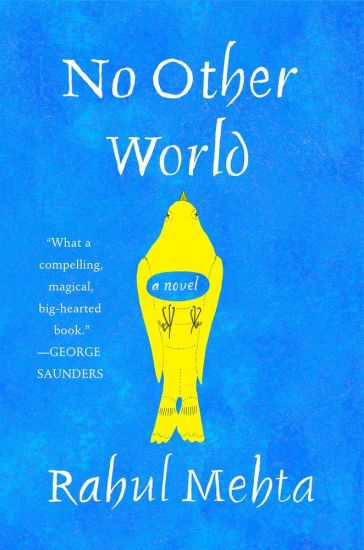
No Other World

No Other World

Rahul Mehta

Harper
2017
sidottu
From the author of the prize-winning collection Quarantine, an insightful, compelling debut novel set in rural America and India in the 1980s and '90s, part coming-of-age story about a gay Indian American boy, part family saga about an immigrant family's struggles to find a sense of belonging, identity, and hope.In a rural community in Western New York, twelve-year-old Kiran Shah, the American-born son of Indian immigrants, longingly observes his prototypically American neighbors, the Bells. He attends school with Kelly Bell, but he's powerfully drawn--in a way he does not yet understand--to her charismatic father, Chris.Kiran's yearnings echo his parents' bewilderment as they try to adjust to a new world. His father, Nishit Shah, a successful doctor, is haunted by thoughts of the brother he left behind. His mother, Shanti, struggles to accept a life with a man she did not choose--her marriage to Nishit was arranged--and her growing attachment to an American man. Kiran is close to his older sister, Preeti--until an unexpected threat and an unfathomable betrayal drive a wedge between them that will reverberate through their lives.As he leaves childhood behind, Kiran finds himself perpetually on the outside--as an Indian American torn between two cultures and as a gay man in a homophobic society. In the wake of an emotional breakdown, he travels to India, where he forms an intense bond with a teenage hijra, a member of India's ancient transgender community. With her help, Kiran begins to pull together the pieces of his broken past.Sweeping and emotionally complex, No Other World is a haunting meditation on love, belonging, and forgiveness that explores the line between our responsibilities to our families and to ourselves, the difficult choices we make, and the painful cost of claiming our true selves.
No Other World

No Other World

Rahul Mehta

HarperPerennial
2018
nidottu
Western New York, 1985: Twelve-year-old Kiran Shah stands longingly outside the window of the Bell household, secretly observing the movements of the prototypically American family. He attends school with Kelly Bell, but he’s powerfully drawn, in a way he does not yet quite understand, to her charismatic father, Chris. Kiran is the American-born son of Indian immigrants struggling to adjust to life in a new world. His father, Dr. Nishit Shah, is a successful doctor haunted by the brother he left behind in India. His mother, Shanti, tries to settle into the life that was chosen for her—Nishit and Shanti’s was an arranged marriage—even as she develops romantic feelings for handsome local Chris Bell. And Kiran is close to his beloved older sister, Preeti—until one summer afternoon, when an unexpected threat and an unfathomable betrayal drive a wedge between the two, with repercussions that stretch far into their futures. As Kiran grows and enters young adulthood, he finds himself perpetually on the outside—not just as an Indian-American torn between two cultures, but as a gay man in a time and place where homosexuality is not tolerated. In the wake of an emotional breakdown, Kiran travels to India, where he forms an intense bond with a teenage hijra, a member of India’s ancient transgender community. With her help, Kiran will attempt to pull together the pieces of his broken past. With a large cast of complex characters and a narrative that shifts between rural America and small-town India, NO OTHER WORLD is a haunting meditation on our responsibilities to our families and to ourselves, the difficult choices we make and the people we hurt in our efforts to claim the lives that belong to us.
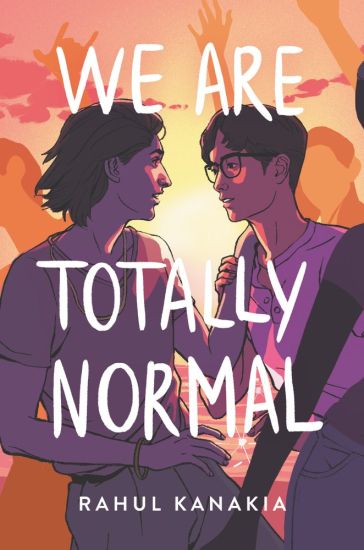
We Are Totally Normal

We Are Totally Normal

Rahul Kanakia

HarperCollins
2020
sidottu
In this queer contemporary YA, perfect for fans of Becky Albertalli and This Is Kind of an Epic Love Story, Nandan’s perfect plan for junior year goes awry after he hooks up with a guy for the first time.Nandan’s got a plan to make his junior year perfect, but hooking up with his friend Dave isn’t part of it—especially because Nandan has never been into guys.Still, Nandan’s willing to give a relationship with him a shot. But the more his anxiety grows about what his sexuality means for himself, his friends, and his social life, the more he wonders whether he can just take it all back.Is breaking up with Dave—the only person who’s ever really gotten him—worth feeling “normal” again?
We Are Totally Normal

We Are Totally Normal

Rahul Kanakia

HarperCollins
2021
nidottu
In this queer contemporary YA, perfect for fans of Becky Albertalli and This Is Kind of an Epic Love Story, Nandan’s perfect plan for junior year goes awry after he hooks up with a guy for the first time.Nandan’s got a plan to make his junior year perfect, but hooking up with his friend Dave isn’t part of it—especially because Nandan has never been into guys.Still, Nandan’s willing to give a relationship with him a shot. But the more his anxiety grows about what his sexuality means for himself, his friends, and his social life, the more he wonders whether he can just take it all back.Is breaking up with Dave—the only person who’s ever really gotten him—worth feeling “normal” again?
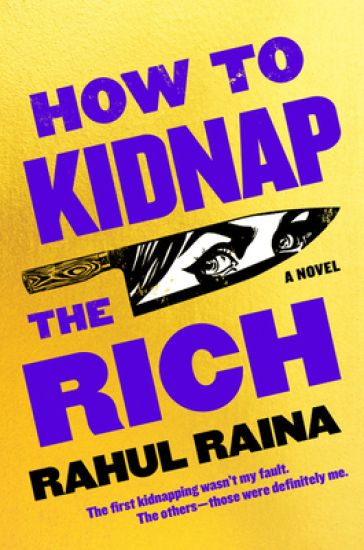
How to Kidnap the Rich

How to Kidnap the Rich

Rahul Raina

HARPER PERENNIAL
2021
nidottu
"A raucous novel, narrated in deadpan voice-over by Ramesh, a self-described 'lower lower middle class' 24-year-old scammer. . . . His perspective is a delight. . . . a tartly entertaining novel, a potential summer blockbuster." --New York Times Book ReviewA fresh look at modern-day India hailed as "a monstrously funny and unpredictable wild ride" by Kevin Kwan, New York Times bestselling author of the Crazy Rich Asians trilogy The first kidnapping wasn't my fault. The others--those were definitely me.Brilliant yet poor, Ramesh Kumar grew up working at his father's tea stall in the Old City of Delhi. Now, he makes a lucrative living taking tests for the sons of India's elite--a situation that becomes complicated when one of his clients, the sweet but hapless eighteen-year-old Rudi Saxena, places first in the All Indias, the national university entrance exams, thanks to him.Ramesh sees an opportunity--perhaps even an obligation--to cash in on Rudi's newfound celebrity, not knowing that Rudi's role on a game show will lead to unexpected love, followed by wild trouble when both young men are kidnapped. But Ramesh outwits the criminals who've abducted them, turning the tables and becoming a kidnapper himself. As he leads Rudi through a maze of crimes both large and small, their dizzying journey reveals an India in all its complexity, beauty, and squalor, moving from the bottom rungs to the circles inhabited by the ultra-rich and everywhere in between.A caper, social satire, and love story rolled into one, How to Kidnap the Rich is a wild ride told by a mesmerizing new talent with an electric voice.
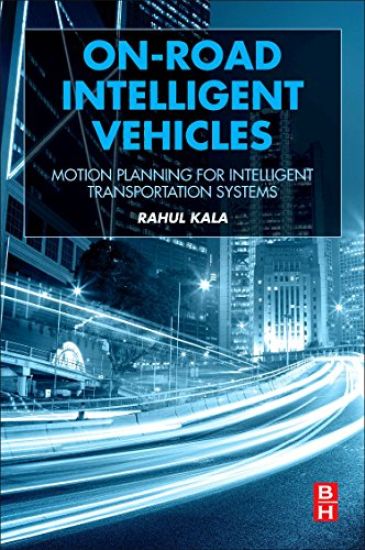
On-Road Intelligent Vehicles

On-Road Intelligent Vehicles

Rahul Kala

Butterworth-Heinemann Inc
2016
nidottu
On-Road Intelligent Vehicles: Motion Planning for Intelligent Transportation Systems deals with the technology of autonomous vehicles, with a special focus on the navigation and planning aspects, presenting the information in three parts. Part One deals with the use of different sensors to perceive the environment, thereafter mapping the multi-domain senses to make a map of the operational scenario, including topics such as proximity sensors which give distances to obstacles, vision cameras, and computer vision techniques that may be used to pre-process the image, extract relevant features, and use classification techniques like neural networks and support vector machines for the identification of roads, lanes, vehicles, obstacles, traffic lights, signs, and pedestrians. With a detailed insight into the technology behind the vehicle, Part Two of the book focuses on the problem of motion planning. Numerous planning techniques are discussed and adapted to work for multi-vehicle traffic scenarios, including the use of sampling based approaches comprised of Genetic Algorithm and Rapidly-exploring Random Trees and Graph search based approaches, including a hierarchical decomposition of the algorithm and heuristic selection of nodes for limited exploration, Reactive Planning based approaches, including Fuzzy based planning, Potential Field based planning, and Elastic Strip and logic based planning. Part Three of the book covers the macroscopic concepts related to Intelligent Transportation Systems with a discussion of various topics and concepts related to transportation systems, including a description of traffic flow, the basic theory behind transportation systems, and generation of shock waves.
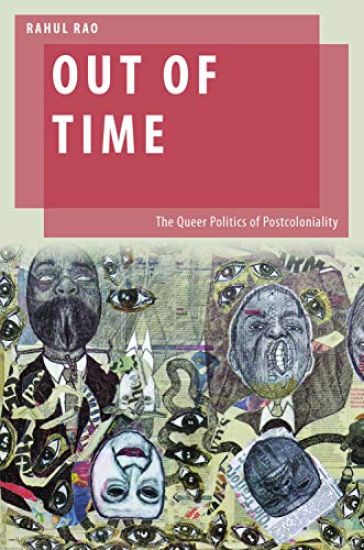
Out of Time

Out of Time

Rahul Rao

Oxford University Press Inc
2020
sidottu
Between 2009 and 2014, an anti-homosexuality law circulating in the Ugandan parliament came to be the focus of a global conversation about queer rights. The law attracted attention for the draconian nature of its provisions and for the involvement of US evangelical Christian activists who were said to have lobbied for its passage. Focusing on the Ugandan case, this book seeks to understand the encounters and entanglements across geopolitical divides that produce and contest contemporary queerphobias. It investigates the impact and memory of the colonial encounter on the politics of sexuality, the politics of religiosity of different Christian denominations, and the political economy of contemporary homophobic moral panics. In addition, Out of Time places the Ugandan experience in conversation with contemporaneous developments in India and Britain--three locations that are yoked together by the experience of British imperialism and its afterlives. Intervening in a queer theoretical literature on temporality, Rahul Rao argues that time and space matter differently in the queer politics of postcolonial countries. By employing an intersectional analysis and drawing on a range of sources, Rao offers an original interpretation of why queerness mutates to become a metonym for categories such as nationality, religiosity, race, class, and caste. The book argues that these mutations reveal the deep grammars forged in the violence that founds and reproduces the social institutions in which queer difference struggles to make space for itself.
Out of Time

Out of Time

Rahul Rao

Oxford University Press Inc
2020
nidottu
Between 2009 and 2014, an anti-homosexuality law circulating in the Ugandan parliament came to be the focus of a global conversation about queer rights. The law attracted attention for the draconian nature of its provisions and for the involvement of US evangelical Christian activists who were said to have lobbied for its passage. Focusing on the Ugandan case, this book seeks to understand the encounters and entanglements across geopolitical divides that produce and contest contemporary queerphobias. It investigates the impact and memory of the colonial encounter on the politics of sexuality, the politics of religiosity of different Christian denominations, and the political economy of contemporary homophobic moral panics. In addition, Out of Time places the Ugandan experience in conversation with contemporaneous developments in India and Britain--three locations that are yoked together by the experience of British imperialism and its afterlives. Intervening in a queer theoretical literature on temporality, Rahul Rao argues that time and space matter differently in the queer politics of postcolonial countries. By employing an intersectional analysis and drawing on a range of sources, Rao offers an original interpretation of why queerness mutates to become a metonym for categories such as nationality, religiosity, race, class, and caste. The book argues that these mutations reveal the deep grammars forged in the violence that founds and reproduces the social institutions in which queer difference struggles to make space for itself.
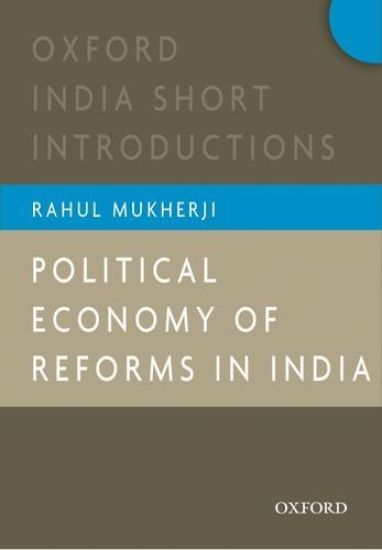
Political Economy of Reforms in India
Political Economy of Reforms in India discusses the political economy of the country's growth, globalization, and welfare. It finds that the political economy of growth and globalization are intimately connected. And, the political economy of welfare, though dependent to a much greater extent on state intervention than growth, is critically dependent on the growth process. Governments and markets can both fail to deliver. Understanding the political process of economic change is critical for evolving a view about the importance of governments and markets in economic activity. This book highlights the critical importance of political economy during the course of development. Economic ideas about growth, globalization, and welfare have to traverse a political distance before citizens can benefit from economic institutions and policies. Mukherji reviews the importance of various factors that affect economic change in India and finds that the way the government, especially its technocrats, think is important for producing change.
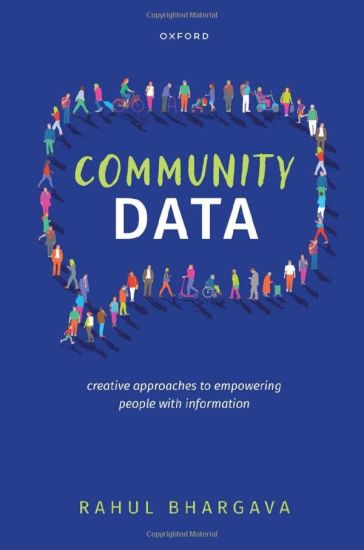
Community Data

Community Data

Rahul Bhargava

Oxford University Press
2024
sidottu
Community Data offers a new toolkit for data storytelling in community settings, one purpose-built for goals like inclusion, empowerment, and impact. Data science and visualization has spread into new domains it was designed for - community organizing, education, journalism, civic governance, and more. The dominant computational methods and processes, which have not changed in response, are causing significant discriminatory and harmful impacts, documented by leading scholars across a variety of populations. Informed by 15 years of collaborations in academic and professional settings with nonprofits and marginalized populations, the book articulates a new approach for aligning the processes and media of data work with social good outcomes, learning from the practices of newspapers, museums, community groups, artists, and libraries. This book introduces a community-driven framework as a response to the urgent need to realign data theories and methods around justice and empowerment to avoid further replicating harmful power dynamics and ensure everyone has a seat at the table in data-centered community processes. It offers a broader toolbox for working with data and presenting it, pushing beyond the limited vocabulary of surveys, spreadsheets, charts and graphs.
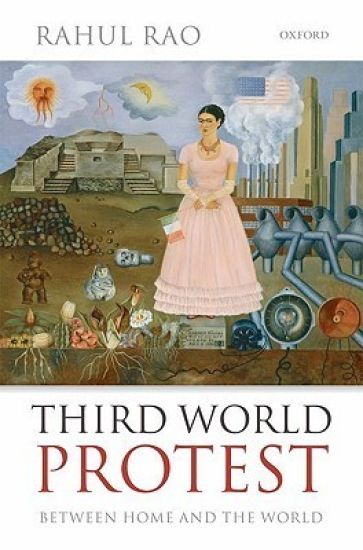
Third World Protest

Third World Protest

Rahul Rao

Oxford University Press
2010
sidottu
If boundaries protect us from threats, how should we think about the boundaries of states in a world where threats to human rights emanate from both outside the state and the state itself? Arguing that attitudes towards boundaries are premised on assumptions about the locus of threats to vital interests, Rahul Rao digs beneath two major normative orientations towards boundaries-cosmopolitanism and nationalism-which structure thinking on questions of public policy and identity. Insofar as the Third World is concerned, hegemonic versions of both orientations are underpinned by simplistic imageries of threat. In the cosmopolitan gaze, political and economic crises in the Third World are attributed mainly to factors internal to the Third World state with the international playing the role of heroic saviour. In Third World nationalist imagery, the international is portrayed as a realm of neo-imperialist predation from which the domestic has to be secured. Both images capture widely held intuitions about the sources of threats to human rights, but each by itself provides a resolutely partial inventory of these threats. By juxtaposing critical accounts of both discourses, Rao argues that protest sensibilities in the current conjuncture must be critical of hegemonic variants of both cosmopolitanism and nationalism. The second half of the book illustrates what such a critique might look like. Journeying through the writings of James Joyce, Rabindranath Tagore, Edward Said and Frantz Fanon, the activism of 'anti-globalisation' protesters, and the dilemmas of queer rights activists, Rao demonstrates that important currents of Third World protest have long battled against both the international and the domestic, in a manner that combines nationalist and cosmopolitan sensibilities.
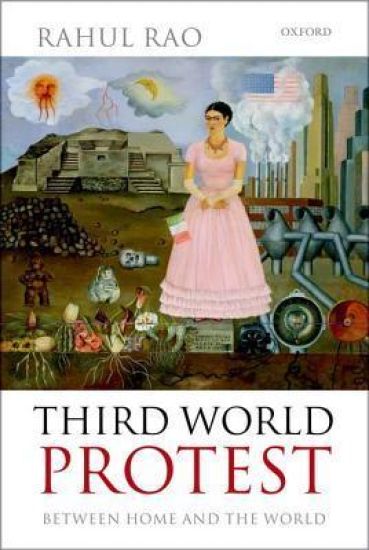
Third World Protest

Third World Protest

Rahul Rao

Oxford University Press
2012
nidottu
If boundaries protect us from threats, how should we think about the boundaries of states in a world where threats to human rights emanate from both outside the state and the state itself? Arguing that attitudes towards boundaries are premised on assumptions about the locus of threats to vital interests, Rahul Rao digs beneath two major normative orientations towards boundaries-cosmopolitanism and nationalism-which structure thinking on questions of public policy and identity. Insofar as the Third World is concerned, hegemonic versions of both orientations are underpinned by simplistic imageries of threat. In the cosmopolitan gaze, political and economic crises in the Third World are attributed mainly to factors internal to the Third World state with the international playing the role of heroic saviour. In Third World nationalist imagery, the international is portrayed as a realm of neo-imperialist predation from which the domestic has to be secured. Both images capture widely held intuitions about the sources of threats to human rights, but each by itself provides a resolutely partial inventory of these threats. By juxtaposing critical accounts of both discourses, Rao argues that protest sensibilities in the current conjuncture must be critical of hegemonic variants of both cosmopolitanism and nationalism. The second half of the book illustrates what such a critique might look like. Journeying through the writings of James Joyce, Rabindranath Tagore, Edward Said and Frantz Fanon, the activism of 'anti-globalisation' protesters, and the dilemmas of queer rights activists, Rao demonstrates that important currents of Third World protest have long battled against both the international and the domestic, in a manner that combines nationalist and cosmopolitan sensibilities.
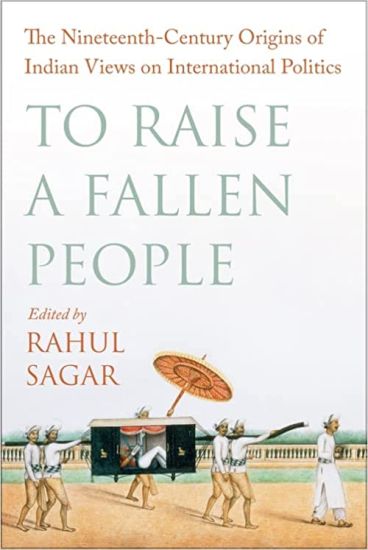
To Raise a Fallen People

To Raise a Fallen People

Rahul Sagar

Columbia University Press
2022
sidottu
To Raise a Fallen People brings to light pioneering writing on international politics from nineteenth-century India. Drawing on extensive archival research, it unearths essays, speeches, and pamphlets that address fundamental questions about India’s place in the world. In these texts, prominent public figures urge their compatriots to learn English and travel abroad to study, debate whether to boycott foreign goods, differ over British imperialism in Afghanistan and China, demand that foreign policy toward the Middle East and South Africa account for religious and ethnic bonds, and query whether to adopt Western values or champion their own civilizational ethos.Rahul Sagar’s detailed introduction contextualizes these documents and shows how they fostered competing visions of the role that India ought to play on the world stage. This landmark book is essential reading for anyone interested in understanding the sources of Indian conduct in international politics.
To Raise a Fallen People

To Raise a Fallen People

Rahul Sagar

Columbia University Press
2022
pokkari
To Raise a Fallen People brings to light pioneering writing on international politics from nineteenth-century India. Drawing on extensive archival research, it unearths essays, speeches, and pamphlets that address fundamental questions about India’s place in the world. In these texts, prominent public figures urge their compatriots to learn English and travel abroad to study, debate whether to boycott foreign goods, differ over British imperialism in Afghanistan and China, demand that foreign policy toward the Middle East and South Africa account for religious and ethnic bonds, and query whether to adopt Western values or champion their own civilizational ethos.Rahul Sagar’s detailed introduction contextualizes these documents and shows how they fostered competing visions of the role that India ought to play on the world stage. This landmark book is essential reading for anyone interested in understanding the sources of Indian conduct in international politics.