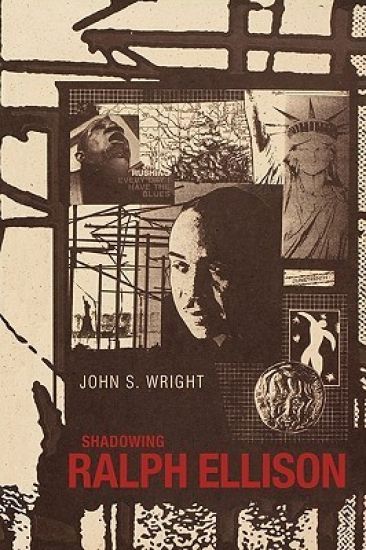
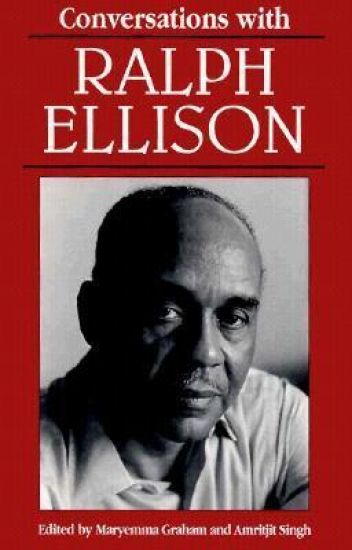
In 1952, Ralph Ellison (1914-1994) published his novel Invisible Man, which transformed the dynamics of American literature. The novel won the National Book Award, extended the themes of his early short stories, and dramatized in fictional form the cultural theories expressed in his later essay collections Shadow & Act and Going to the Territory. In Shadowing Ralph Ellison, John Wright traces Ellison's intellectual and aesthetic development and the evolution of his cultural philosophy throughout his long career. The book explores Ellison's published fiction, his criticism and correspondence, and his passionate exchanges with--and impact on--other literary intellectuals during the Cold War 1950s and during the culture wars of the 1960s, 1970s, and 1980s. Wright examines Ellison's body of work through the lens of Ellison's cosmopolitan philosophy of art and culture, which the writer began to construct during the late 1930s. Ellison, Wright argues, eschewed orthodoxy in both political and cultural discourse, maintaining that to achieve the highest cultural awareness and the greatest personal integrity, the individual must cultivate forms of thinking and acting that are fluid, improvisational, and vitalistic--like the blues and jazz. Accordingly, Ellison elaborated throughout his body of work the innumerable ways that rigid cultural labels, categories, and concepts--from racial stereotypes and fashionable academic theories to conventional political doctrines--fail to capture the full potential of human consciousness. Instead, Ellison advocated forms of consciousness and culture akin to what the blues and jazz reveal, and he portrayed those musical traditions as the best embodiment of the evolving American spirit.
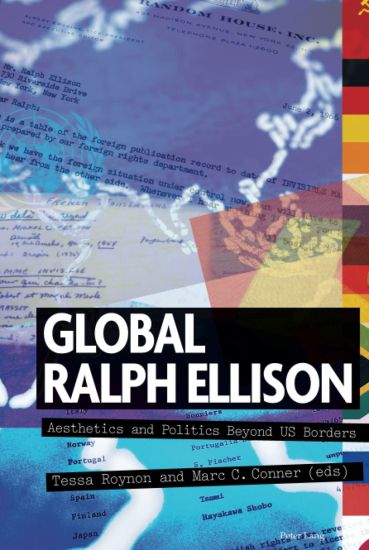
This essay collection begins the vast project that is the global history of Ralph Ellison’s life and work. It examines how and why this avowedly «American» author read literature and scholarship from across the world and has in turn been widely read outside the borders of the USA. How did Ellison’s encounters with the «international» Henry James, the Cambridge Ritualists, the Roman poet Ovid and with Dostoevsky shape both the aesthetics and the politics of his own work? And what is the relationship between Invisible Man and the complex and always evolving political and cultural contexts of South Africa, the USSR and Russia, Germany and Japan since World War II? Contributors from seven different countries – based in Asia, Africa, Europe and the USA – deploy significant archival research both in Ellison’s personal library and in the translation and reception histories of his iconic first novel. This study of «the world in Ellison and Ellison in the world» initiates an important new approach in Ellison studies, illuminating hitherto hidden dimensions of the man and his writings.
The essays in this collection treat the whole of Ralph Ellison's body of work, including his famous novel Invisible Man. The volume confronts Ellison the man of ideas, essayist, and short story writer, as well as the material in his posthumously published novel Juneteenth, in order to provide contemporary readers and critics with a comprehensive examination of Ellison.
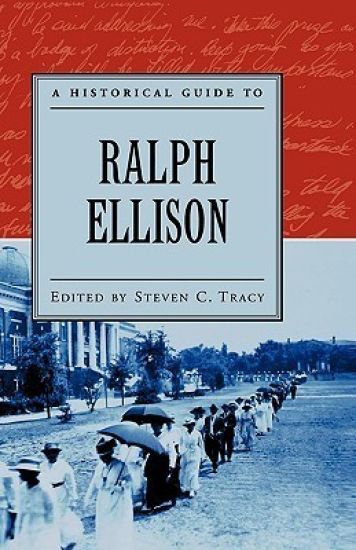
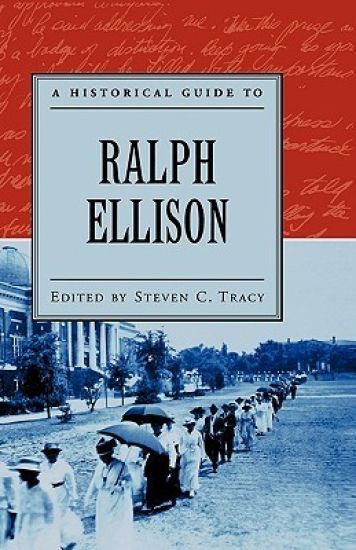
Ralph Ellison has been a controversial figure, both lionized and vilified, since he seemed to burst fully formed on to the national literary scene in 1952 with the publication of Invisible Man. In this volume Steven C. Tracy has gathered a broad range of critics who look not only at Ellison's seminal novel but also at the fiction and nonfiction work that both preceded and followed it, focusing on important historical and cultural influences that help contextualize Ellison's thematic concerns and artistic aesthetic. These essays, all previously unpublished, explore how Ellison's various apprenciceships--in politics as a Black radical; in music as an admirer and practioner of European, American, and African-American music; and in literature as heir to his realist, naturalist, and modernist forebears--affected his mature literary productions, including his own careful molding of his literary reputation. They present us with a man negotiating the difficult sociopolitical, intellectual, and artistic terrain facing African Americans as America was increasingly forced to confront its own failures with regard to the promise of the American dream to its diverse populations. These wide-ranging historical essays, along with a brief biography and an illustrated chronology, provide a concise yet authoritative discussion of a twentieth-century American writer whose continued presence on the stage of American and world literature and culture is now assured.
Ralph Ellison's literary career began in 1937 with the publication of his review of Waters Edward Turpin's These Low Grounds. Over the next 15 years he published 10 short stories and 37 essays on literary, cultural, and political topics. But when Invisible Man was published in 1952, Ellison received immediate acclaim from a wide variety of critics, scholars, and novelists. While his novel emerged as a major work of African American literature, it also engaged the European literary tradition and influenced an entire generation of post-World War II writers. Ellison is now one of the most studied African American writers, and the posthumous publication of his second novel, Juneteenth, in 1999 has drawn even more attention to his contribution.Through previously published reviews and essays, and original material, this book charts the response to Ellison's writings. While the bulk of the volume focuses on Invisible Man, the book also includes sections devoted to Ellison's short fiction and nonfiction, as well as posthumous estimates of his work. A chronology highlights the most important events in his life and career, while an introductory essay overviews the broad trends in Ellison scholarship. The volume concludes with a selected bibliography of primary and secondary works.
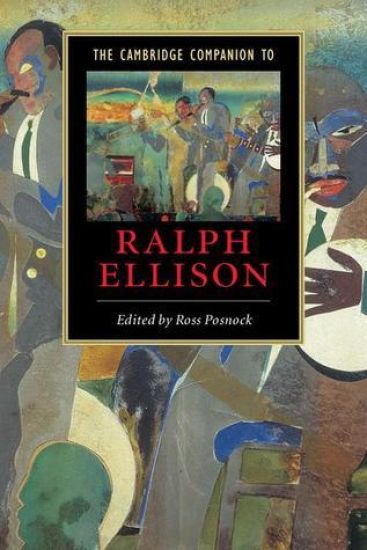
Ralph Ellison's classic 1952 novel Invisible Man is one of the most important and controversial novels in the American canon and remains widely read and studied. This Companion provides an introduction to this influential and significant novelist and critic and to his masterpiece. It features essays by leading scholars, a chronology and a guide to further reading. The essays reveal alternative dimensions of Ellison's art radiating out from Invisible Man into other domains - technology, political theory, law, photography, music, religion - and recover the compelling urgency and relevance of Ellison's political and artistic vision. Since Ellison's death his published oeuvre has been expanded by several major volumes - his collected essays, the fragment of a novel, Juneteenth (1999), letters and short stories - examined here in the context of his life and work. Students and scholars of Ellison and of American and African-American literature will find this an invaluable and accessible guide.
Ralph Ellison's classic 1952 novel Invisible Man is one of the most important and controversial novels in the American canon and remains widely read and studied. This Companion provides an introduction to this influential and significant novelist and critic and to his masterpiece. It features essays by leading scholars, a chronology and a guide to further reading. The essays reveal alternative dimensions of Ellison's art radiating out from Invisible Man into other domains - technology, political theory, law, photography, music, religion - and recover the compelling urgency and relevance of Ellison's political and artistic vision. Since Ellison's death his published oeuvre has been expanded by several major volumes - his collected essays, the fragment of a novel, Juneteenth (1999), letters and short stories - examined here in the context of his life and work. Students and scholars of Ellison and of American and African-American literature will find this an invaluable and accessible guide.
Everyone knows who MLK was. Hardly anyone knows that MLK was the creation of the breakaway American followers of the modern mystic G.I. Gurdjieff. Led by A.R. Orage, a large group of highly accomplished Americans intervened in history by creating a modern civil messiah. To do this they followed a plan laid down four thousand years ago by the priests of Horus and two thousand years ago by the Essene community. Orage's group of self-appointed spiritual supermen began in the early 1930s, and twice they failed. The third time they changed their strategy and the result was the charismatic civil rights activist, MLK. Ralph Ellison's unpublished second novel Three Days Before the Shooting hides an account of this daring scheme beneath layers of ciphers, myth, and literary dazzle. Concealed within the American Communist Party and other groups, a cadre of writers, intellectuals, editors, lawyers, artists, and publishers staged an Objective Drama that made MLK a towering moral leader. Only in the disordered pages of Ellison's esoteric, experimental novel is there a full account of this monumental project. Building on a decades-long course of research beginning with an audacious dissertation on Melvin B. Tolson, Jon Woodson has revealed the contents of Ellison's fascinating and profound work of genius. Jon Woodson's investigation of Ralph Ellison's second novel marks an important departure from the former approaches to Ellison's fiction. Previous scholarship on Ellison was grounded in either Ellison's own comments or derived from speculations that disguised their provisional nature through jargon, volume, and theory. Woodson argues that Ellison's surface text is always deceptive, so using Ellison's essays and notes to explicate his fiction is fruitless. Woodson has produced a reading of Three Days Before the Shooting that accounts for everything in the text by turning in each case to the texts that Ellison consulted in the writing of his novel. Woodson shows how Ellison invented new modes of encryption that surpassed those devices used in such indecipherable texts as Djuna Barnes's, Nightwood, William Faulkner's Pylon, and Mina Loy's Insel-novels with a deep kinship to Ellison's Three Days. Woodson's six notes address the materials at the core of Ellison's novel: Objective Art, Alchemical Cabala, Roman Clef, Modern Civil Messiahs, Ancient Egypt, and Pseudo-Communism. Woodson provides the name of a real person for every character in Three Days Before the Shooting. This is all the more astonishing against the fact that no other scholar has discussed the novel as a one-for-one roman clef. Jon Woodson's insights establish an entirely new understanding not only of Three Days Before the Shooting but for the complete Ellison oeuvre. Reviews of previous books: "Jon Woodson's Anthems, Sonnets, and Chants is a thoroughly engaging work. This is a major work of scholarship which genuinely breaks new ground in the field." -James A. Miller, professor of English and American studies, The George Washington University. Woodson has proven to be a scholar of immense originality in his choice of methods, topics and analyses. His dedication to mining and interpreting evidence is never in doubt, nor is his willingness to resist what he views as conventional academic readings. He is a 'critic's critic', who boldly follows paths of inquiry leading to fresh understandings. Lauri Ramey, Professor of English, California State University, Los Angeles. Review of Anthems] Wasafiri, 2015.
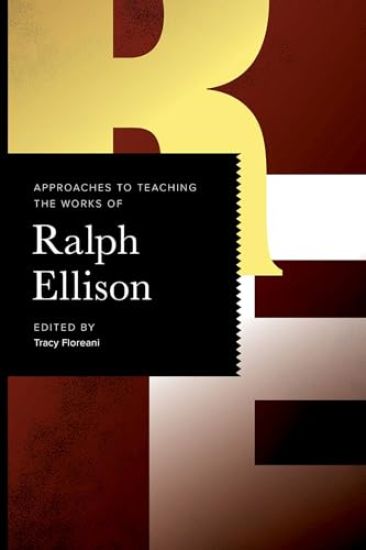
Unsparingly honest writings about America and raceOne of the most important American authors and public intellectuals of the twentieth century, Ralph Ellison had a keen and unsentimental understanding of the relationship between race, art, and activism in American life. He contended with other writers of his day in his examination of the entrenched racism in society, and his writing continues to inform national conversations in letters and culture.The essays in Approaches to Teaching the Works of Ralph Ellison will help instructors in colleges, high schools, and prisons teach not only the indispensable Invisible Man but also Ellison's short stories, his essays, and the two editions of his second, unfinished novel, Juneteenth and Three Days before the Shooting . . . . In considering Ellison's works in relation to jazz, technology, humor, politics, queerness, and disability, this volume mirrors the breadth of Ellison's own life, which extended from the Jim Crow era through the Black Power movement.This volume contains discussion of Ellison's "What America Would Be Like without Blacks," "Flying Home," "Cadillac Flambé," and "An Extravagance of Laughter" as well as works by James Baldwin, Amiri Baraka, Toni Morrison, and Richard Wright.
Unsparingly honest writings about America and raceOne of the most important American authors and public intellectuals of the twentieth century, Ralph Ellison had a keen and unsentimental understanding of the relationship between race, art, and activism in American life. He contended with other writers of his day in his examination of the entrenched racism in society, and his writing continues to inform national conversations in letters and culture.The essays in Approaches to Teaching the Works of Ralph Ellison will help instructors in colleges, high schools, and prisons teach not only the indispensable Invisible Man but also Ellison's short stories, his essays, and the two editions of his second, unfinished novel, Juneteenth and Three Days before the Shooting . . . . In considering Ellison's works in relation to jazz, technology, humor, politics, queerness, and disability, this volume mirrors the breadth of Ellison's own life, which extended from the Jim Crow era through the Black Power movement.This volume contains discussion of Ellison's "What America Would Be Like without Blacks," "Flying Home," "Cadillac Flambé," and "An Extravagance of Laughter" as well as works by James Baldwin, Amiri Baraka, Toni Morrison, and Richard Wright.