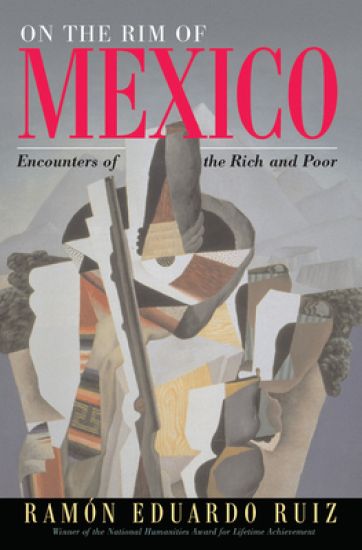
The vast stretch of mostly arid lands and deserts that makes up the border between Mexico and the United States is not only one of the longest international boundaries in the world, setting apart two entirely different countries for more than two thousand miles, it is the backdrop for a seemingly endless series of major binational news stories. Witness the headline-grabbing attention garnered by NAFTA and the global economy; the assembly plants labeled saviors of the Mexican poor; the accounts applauding the capture of Mexican drug lords; and the columns upon columns devoted to stories about illegal immigration. Nowhere else does a poor, Third World country, like Mexico, share a common border with a wealthy, powerful neighbor del otro lado (on the other side). Here, as one goes, so goes the other.On the Rim of Mexico: Encounters of the Rich and Poor addresses the ties and asymmetries across the Mexico-U.S. border, from Tijuana/San Diego to Matamoros/Brownsville. Based on author Ram-duardo Ruiz's extensive research, travels, remembrances, and first-hand interviews with the people on the Mexican side, the book probes the history, economics, and customs which have shaped this region today. While the author considers many timely issues (the impact of drug trafficking, legal and illegal immigration, assembly plants and the global economy, and the ecological disaster in the making), the book is also an examination of the borderlands themselves: what they are, how they came to be, and salient aspects of life in this region of the world. Moreover, it is an exploration of binational themes. For Mexicans who live and die next door to the almighty Uncle Sam, nearly everything has a binational ring?even personal identity. On the Rim of Mexico is a moving portrait of the people, places, and issues which make-up border life today.
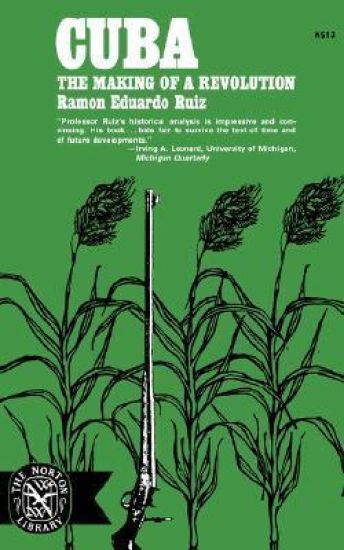
Professor Ruiz's analysis begins with Cuba's historic relationship with the United States, examining the effect of the sugar industry and U.S. foreign policy on Cuba's economy, social structure, and political development. He shows how the lack of cohesion in Cuban society affected the courses of events, and analyzes the sources of Cuban nationalism and anti-Americanism. Focusing on issues of economic development and social justice in Cuban history, he traces Cuba's revolutionary tradition and leaders, from the struggle for independence from Spain in the 1890's, through the revolution led by José Marti in 1933, up to Fidel Castro. He takes up the question why--and when--Castro turned to Communism, and discusses the ideology of the Revolution in the perspective of the history of socialist ideas in Cuba. By placing the events of 1959 in the context of Cuban history, Cuba: The Making of a Revolution meets the need for an authoritative analysis of the background of the Revolution, and sheds new light on its causes and outcome.
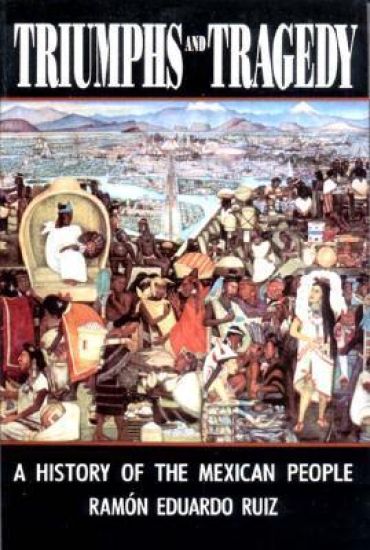
Chronicles the history of Mexico from the Olmec, Mayan, and Aztec civilizations through the arrival of the Spanish in the sixteenth century and their subsequent domination of the Indians, to the religious transformations and the revolutions that laid thefoundations of modern Mexico
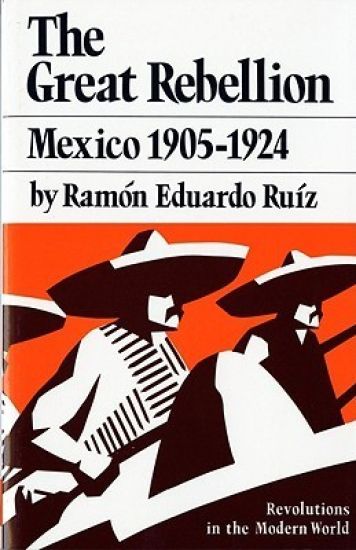
It is widely held that the struggle to overthrow the corrupt regime of Porfirio Diaz fundamentally transformed the structure of Mexican society, bringing social justice for downtrodden peasants and workers. Ramón Eduardo Ruíz refutes the traditional view. Drawing on numerous archival sources, he carefully examines the economic consequences of the Diaz regime and traces the growth of widespread social discontent. He describes the backgrounds and professed aims of the Revolution's colorful leaders—Madero, Venustiano Carranza, Pancho Villa, Alvaro Obregón, and Emiliano Zapata—and then sets out to discover what, behind the superficial paper changes and the rhetoric, they actually did. He concludes that the so-called Revolution was led by elements of the dissatisfied middle class whose goals were narrow and bourgeois in character. Despite important paper reforms, many of the old political, economic, and social injustices and inequalities survived.
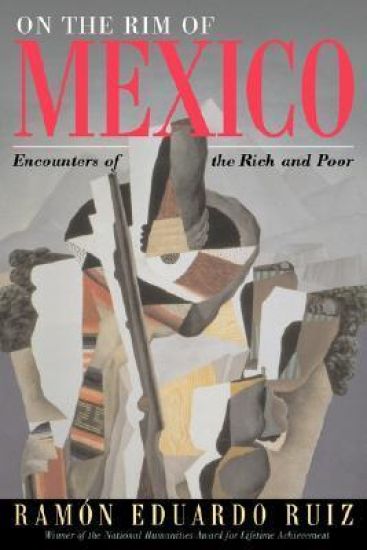
The vast stretch of mostly arid lands and deserts that makes up the border between Mexico and the United States is not only one of the longest international boundaries in the world, setting apart two entirely different countries for more than two thousand miles, it is the backdrop for a seemingly endless series of major binational news stories. Witness the headline-grabbing attention garnered by NAFTA and the global economy; the assembly plants labeled saviors of the Mexican poor; the accounts applauding the capture of Mexican drug lords; and the columns upon columns devoted to stories about illegal immigration. Nowhere else does a poor, Third World country, like Mexico, share a common border with a wealthy, powerful neighbor del otro lado (on the other side). Here, as one goes, so goes the other.On the Rim of Mexico: Encounters of the Rich and Poor addresses the ties and asymmetries across the Mexico-U.S. border, from Tijuana/San Diego to Matamoros/Brownsville. Based on author Ram-duardo Ruiz's extensive research, travels, remembrances, and first-hand interviews with the people on the Mexican side, the book probes the history, economics, and customs which have shaped this region today. While the author considers many timely issues (the impact of drug trafficking, legal and illegal immigration, assembly plants and the global economy, and the ecological disaster in the making), the book is also an examination of the borderlands themselves: what they are, how they came to be, and salient aspects of life in this region of the world. Moreover, it is an exploration of binational themes. For Mexicans who live and die next door to the almighty Uncle Sam, nearly everything has a binational ring?even personal identity. On the Rim of Mexico is a moving portrait of the people, places, and issues which make-up border life today.
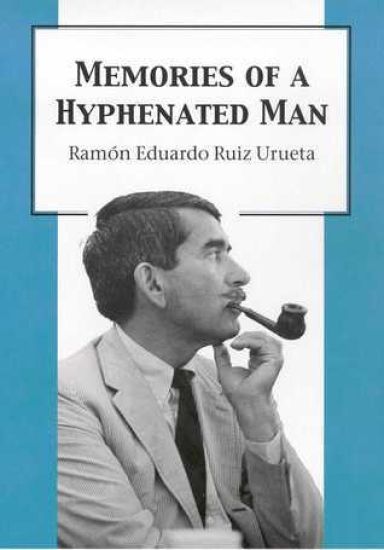
Ramon Eduardo Ruiz would be the first to admit that he is not your typical Mexican American. But he has always known who he is. Historian, author, and intellectual, Ruiz has established himself through such books as Triumphs and Tragedy: A History of the Mexican People and Cuba: The Making of a Revolution, and in 1998 he was awarded the National Humanities Medal by President Clinton. Now he turns his pen on his own life to offer a personal look at what it really means to be American by birth but Mexican by culture. Little has been written by or about persons of Mexican origin who have achieved the academic stature of Ruiz, and his memoir provides insights not found in the more common biographies of labor leaders and civil rights activists. His early life straddled the social worlds of his parent's Mexico and semi-rural America, where his father's success as an entrepreneur and property owner set his family's experiences apart from those of most other Mexican Americans at the time. His parents reinforced in their children an identity as mexicanos, and that connection with his ancestral roots was for Ruiz a lifejacket in the days of acute bigotry in America. In making an early, self-conscious commitment to a life of the mind, Ruiz became aware of his unique nature, and while not immune to prejudice he was able to make a name for himself in several endeavors. As a student, he attended college when few Mexican Americans were given that opportunity, and he was one of the first of his generation to earn a Ph.D. As an Army Air Force officer during World War II, he served as a pilot in the Pacific theatre. And as an intellectual, he navigated the currents of the historical profession and charted new directions in Latin American research through his prolific writing. Ruiz's career teaching took him to Mexico, Massachusetts, Texas, Oregon—often as the lone ""Mexican professor,"" and ultimately back to his native California. While teaching at Smith, he exulted in being ""free to interpret Spanish American life and culture to my heart's content,"" and at the University of California, San Diego, he saw the era of campus racial barrier give way to the birth of affirmative action. While at UCSD, he taught hundreds of Chicanos and trained one of the largest groups of Chicano Ph.D's. Memories of a Hyphenated Man is the story of a unique individual who, while shaped by his upbringing and drawing on deep cultural roots, steadfastly followed his own compass in life. It tells of a singular man who beat the odds as it poignantly addresses the ambiguities associated with race, class, citizenship, and nationality for Mexicans and Mexican Americans.
Capitalism, the economic system of Western Europe and the United States at the turn of the century, had a major impact on every country of the Third World. In the Western Hemisphere, no country escaped its influence, particularly the North American version, increasingly omnipotent. Mexico, next door to the powerful colossus, often felt the brunt of that impact. The People of Sonora and Yankee Capitalists examines how the advent of North American dollars between 1882 and 1910 helped reshape the economic, social, and political contours of a Mexican province on the border of Arizona. The activity of Yankee promoters, particularly miners, land speculators, and cattle barons, altered dramatically the colonial structure left behind by its former Spanish masters. Even the psychology of the inhabitants of Sonora underwent a kind of metamorphosis. This book, in short, explains what happened to Mexico’s traditional society when Yankee capitalists made their appearance.
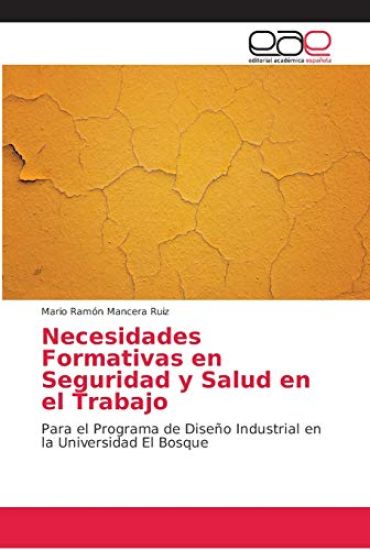
Necesidades Formativas en Seguridad y Salud en el Trabajo, corresponde a una investigaci n realizada durante dos a os, basada en la voz de los participantes, conformada por estudiantes, docentes y expertos; la voz de la teor a y la voz del investigador, quien a trav s de la triangulaci n de las tres voces, analiz los resultados, determin conclusiones y recomendaciones, enfocadas a mejorar el contexto en el cual se desarrollan las clases y los talleres donde los estudiantes desarrollan sus proyectos. Se sugiere el perfil de los docentes y la importancia que ellos acompa en a los estudiantes en los procesos en los talleres. Se aconseja tambi n revisar los temas tratados en seguridad y salud en el trabajo, a fin de determinar su pertinencia y profundidad, con la intensi n de hacer modificaciones en el curr culo y micro curr culo.
This issue bridges neurosurgery and oral and maxillofacial surgery, and this collaboration between disciplines has produced a unique issue. Articles will include coronal scalp flap, craniosynostosis techniques, monobloc and facial bipartition procedures, encephalocele management, reconstruction of skull defects, transoral approaches to the clivus and high cevical spine, fronto-basilar fractures, and more.
El trabajo analiza los basamentos te ricos metodol gicos sobre la tem tica y a ade una propuesta de talleres metodol gicos para preparar a los docentes, para que a su vez, contribuyan en la formaci n de sus educandos en aras de contribuir con el proceso de ense anza - aprendizaje y en la formaci n de la educaci n ambiental. La propuesta fue aplicada en la Universidad M ximo G mez B ez de Ciego de vila, donde se obtuvieron resultados satisfactorios con impacto de relevancia en el territorio.
El trabajo analiza los basamentos te ricos metodol gicos sobre la tem tica y a ade una propuesta de talleres metodol gicos para preparar a los docentes, para que a su vez, contribuyan en la formaci n de sus educandos en aras de contribuir con el proceso de ense anza - aprendizaje y en la formaci n de la educaci n ambiental. La propuesta fue aplicada en la Universidad M ximo G mez B ez de Ciego de vila, donde se obtuvieron resultados satisfactorios con impacto de relevancia en el territorio.
Die Arbeit analysiert die theoretischen und methodischen Grundlagen des Faches und f gt einen Vorschlag f r methodische Workshops zur Vorbereitung von Lehrern hinzu, damit diese ihrerseits zur Ausbildung ihrer Sch ler beitragen, um einen Beitrag zum Lehr-Lern-Prozess und zur Bildung der Umweltbildung zu leisten. Der Vorschlag wurde an der Universidad M ximo G mez B ez de Ciego de vila angewendet, wo zufriedenstellende Ergebnisse mit einer relevanten Auswirkung auf das Gebiet erzielt wurden.
The work analyzes the theoretical and methodological foundations of the subject and adds a proposal for methodological workshops to prepare teachers, so that they in turn contribute to the training of their students in order to contribute to the teaching-learning process and to the formation of environmental education. The proposal was applied at the Universidad M ximo G mez B ez de Ciego de vila, where satisfactory results were obtained with a relevant impact on the territory.
L'ouvrage analyse les fondements th oriques et m thodologiques de la mati re et ajoute une proposition d'ateliers m thodologiques pour pr parer les enseignants, afin qu'ils contribuent leur tour la formation de leurs l ves pour contribuer au processus d'enseignement-apprentissage et la formation de l' ducation environnementale. La proposition a t appliqu e l'Universit M ximo G mez B ez de Ciego de vila, o des r sultats satisfaisants ont t obtenus avec un impact pertinent sur le territoire.
Il lavoro analizza i fondamenti teorici e metodologici della materia e aggiunge una proposta di laboratori metodologici per la preparazione degli insegnanti, in modo che essi contribuiscano a loro volta alla formazione dei loro studenti per contribuire al processo di insegnamento-apprendimento e alla formazione dell'educazione ambientale. La proposta stata applicata presso l'Universidad M ximo G mez B ez de Ciego de vila, dove sono stati ottenuti risultati soddisfacenti con un impatto rilevante sul territorio.