This book proposes a selection model for explaining cross-national variation in economic voting: Rational voters condition the economic vote on whether incumbents are responsible for economic outcomes, because this is the optimal way to identify and elect competent economic managers under conditions of uncertainty. This model explores how political and economic institutions alter the quality of the signal that the previous economy provides about the competence of candidates. The rational economic voter is also attentive to strategic cues regarding the responsibility of parties for economic outcomes and their electoral competitiveness. Theoretical propositions are derived, linking variation in economic and political institutions to variability in economic voting. The authors demonstrate that there is economic voting, and that it varies significantly across political contexts. The data consist of 165 election studies conducted in 19 different countries over a 20-year time period.
This book proposes a selection model for explaining cross-national variation in economic voting: Rational voters condition the economic vote on whether incumbents are responsible for economic outcomes, because this is the optimal way to identify and elect competent economic managers under conditions of uncertainty. This model explores how political and economic institutions alter the quality of the signal that the previous economy provides about the competence of candidates. The rational economic voter is also attentive to strategic cues regarding the responsibility of parties for economic outcomes and their electoral competitiveness. Theoretical propositions are derived, linking variation in economic and political institutions to variability in economic voting. The authors demonstrate that there is economic voting, and that it varies significantly across political contexts. The data consist of 165 election studies conducted in 19 different countries over a 20-year time period.
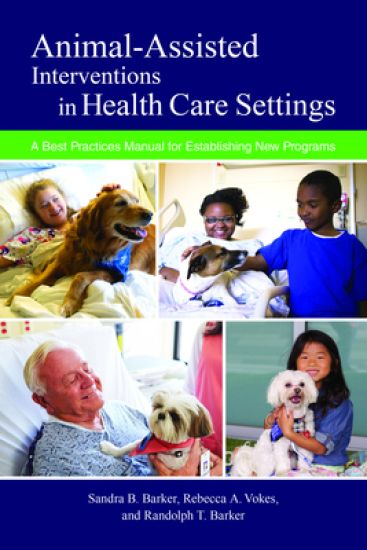
Growing literature around the benefits ofanimal-assisted intervention (AAI) spurs health care professionals andadministrators to start new programs. Yet the trend also raises questions ofhow best to begin and run successful AAI programs—under what circumstances,with what staff, and within what guidelines. Animal-Assisted Interventions in Health Care Settings: A BestPractices Manual for Establishing New Programs succinctly outlines how best to develop, implement, run, andevaluate AAI programs. Drawing on extensive professional experiences andresearch from more than fifteen years leading the Center for Human-AnimalInteraction in the Virginia Commonwealth University School of Medicine, theauthors discuss both best practices and best reasons for establishing AAIprograms. For thorough consideration, the text explores benefits from a varietyof perspectives, including how AAI can improve patient experience, provideadditional career development for staff, and contribute favorably toorganizational culture as well as to the reputation of the facility in thesurrounding community.Developed for administrators as well as forvolunteers and staff, Animal-AssistedInterventions in Health Care Settings includes practical, case-basedexamples for easy comprehension and offers user-friendly templates that can beadapted to develop practice-specific training, evaluation, and proceduremanuals.
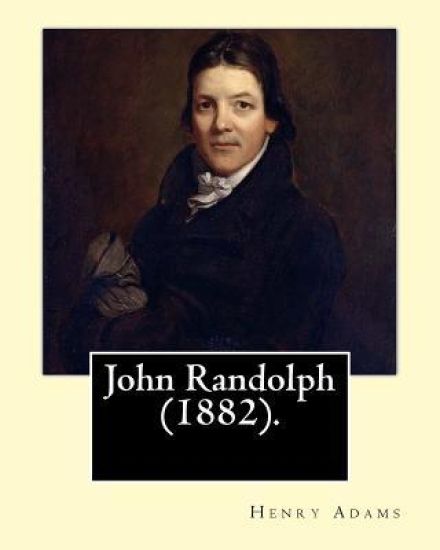
John Randolph (June 2, 1773 - May 24, 1833), known as John Randolph of Roanoke, was a planter, and a Congressman from Virginia, serving in the House of Representatives at various times between 1799 and 1833, the Senate (1825-1827), and also as Minister to Russia (1830). After serving as President Thomas Jefferson's spokesman in the House, he broke with the president in 1805 as a result of what he saw as the dilution of traditional Jeffersonian principles as well as perceived mistreatment during the impeachment of Samuel Chase, in which Randolph served as chief prosecutor. 1] Following this split, Randolph proclaimed himself the leader of the "Old Republicans" or "Tertium Quids", an arch-conservative wing of the Democratic-Republican Party who wanted to restrict the role of the federal government. Specifically, Randolph promoted the Principles of '98, which said that individual states could judge the constitutionality of central government laws and decrees, and could refuse to enforce laws deemed unconstitutional.... John Torrey Morse (1840-1937) was an American historian and biographer. He was born in Boston, Massachusetts on Jan. 9, 1840, and lived in that city as a lawyer. Morse was the editor of the 'American Statesmen Series, ' and published biographies of Alexander Hamilton in two volumes, considered his most significant work, He also wrote biographies on John and J. Q. Adams, Jefferson, Lincoln, Franklin, and Dr. Holmes. Morse also authored 'Banks and Banking', 'Arbitration and Award' and 'Famous Trials.'... Henry Brooks Adams (February 16, 1838 - March 27, 1918) was an American historian and member of the Adams political family, being descended from two U.S. Presidents. As a young Harvard graduate, he was secretary to his father, Charles Francis Adams, Abraham Lincoln's ambassador in London, a posting that had much influence on the younger man, both through experience of wartime diplomacy and absorption in English culture, especially the works of John Stuart Mill. After the American Civil War, he became a noted political journalist who entertained America's foremost intellectuals at his homes in Washington and Boston. In his lifetime, he was best known for his History of the United States During the Administrations of Thomas Jefferson and James Madison, a 9-volume work, praised for its literary style. His posthumously published memoirs, The Education of Henry Adams, won the Pulitzer Prize and went on to be named by the Modern Library as the top English-language nonfiction book of the 20th century.
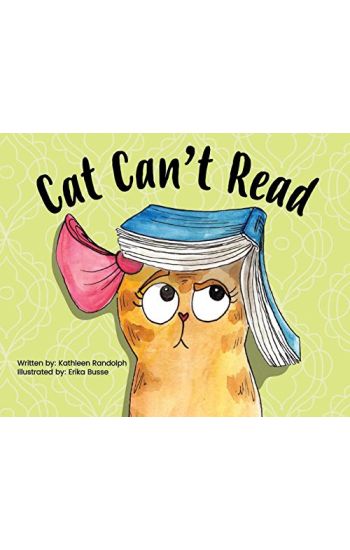
Cat says, "I want to be a teacher some day because when I was young. I could not read. Not being able to read made me feel bad. I wish I could find a way to make the hurt go away. I call trying to make something good out of a tough situation, making stars from scars Instead of giving up, I would find a way to work it out." In her debut Children's Book, destined to become a classic, Author Kathleen Randolph tells the story of CAT to inspire kids everywhere to learn to love reading. UPCOMING BOOKS: DOG CAN'T ADD MOUSE GETS BULLIED
Cat says, "I want to be a teacher some day because when I was young. I could not read. Not being able to read made me feel bad. I wish I could find a way to make the hurt go away. I call trying to make something good out of a tough situation, making stars from scars Instead of giving up, I would find a way to work it out." In her debut Children's Book, destined to become a classic, Author Kathleen Randolph tells the story of CAT to inspire kids everywhere to learn to love reading. UPCOMING BOOKS: DOG CAN'T ADD MOUSE GETS BULLIED
This book will show you how to fly high in life. I've seen so many people blinded by the resources of life, worrying and not relying on the real Source; the Creator of their Life. I will show you how to Fly High with hope not dope through the galaxies of life, throw away the low life thinking and living. There will always be Seasons of sunshine, rain, pain, Seasons of sunlight, starlight, and moonlights. This book will take you on an adventure of mastering and overcoming the fears of heights and flights of the low life, believing and knowing as long as Christ is in your life no challenge is to fierce that we can't get the victory over. Janice Graham-Randolph
Evie is a fourteen-year-old girl who comes to the realization that she is extremely overweight following a number of events in her life that cause her to admit that she is unable to fit into the clothes she loved to wear. With the encouragement and support of her family, she begins to change her eating habits and is transformed from being extremely overweight and self-conscious to a normal-sized girl who blossoms into a confident and outgoing high school student.As a result of her determination, change in diet, exercise, and hard work, Evie enters high school a new person with confidence and a greater positive self-image.
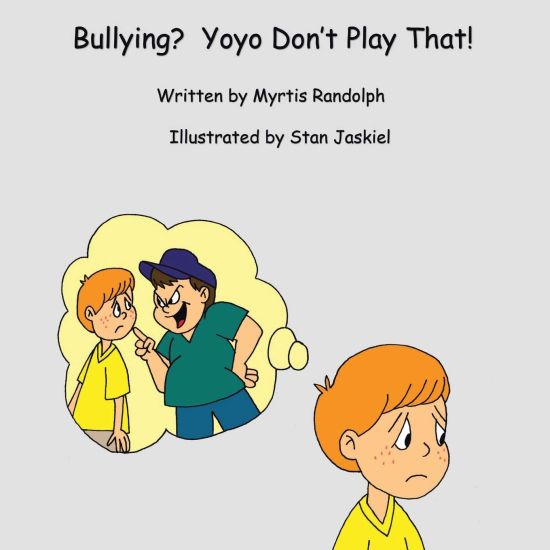
Randi's friend Charly is being bullied at school, and he has not told his parents. But when the bully is invited to his birthday party, he has a decision to make. When Randi and her friends don't know what to do, her special yoyo always comes through
Randi's friend Jessica is afraid to sing at church, and she doesn't know how to tell her parents. When Randi and her friends don't know what to do, her special yoyo always come through www.yoyodontplaythat.com
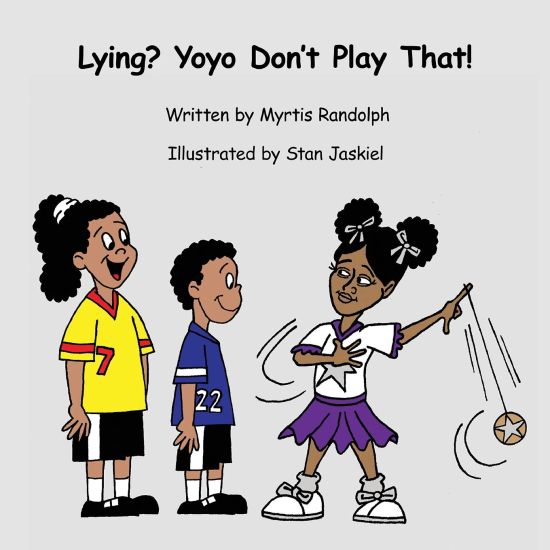
Randi's friends, Maria and Jose, disobeyed their parents and broke their mother's vase. They were afraid of getting in trouble and considered lying to their parents. Worried and afraid, Maria discusses her thoughts with Randi."When Randi and her friends don't know what to do, her special yo-yo always come through "
Randi's friend Jessica is afraid to sing at church and she doesn't know how to tell her parents. When Randi and her friends don't know what to do, her special yoyo always come through






![The Muses Looking-Glasse. [A Comedy in Five Acts and in Verse.] by T[homas] R[andolph].](/covers/9781241245320.jpg)