Kirjojen hintavertailu. Mukana 11 424 304 kirjaa ja 12 kauppaa.

Kirjahaku

Etsi kirjoja tekijän nimen, kirjan nimen tai ISBN:n perusteella.

1000 tulosta hakusanalla Rashed Hasan Faap

Environmental Accounting in Action

Environmental Accounting in Action

Glenn-Marie Lange; Rashid Hassan; Kirk Hamilton; Moortaza Jiwanji

Edward Elgar Publishing Ltd
2003
sidottu
Environmental accounts bring together economic and environmental information in a common framework to measure the contribution of the environment to the economy and the impact of the economy on the environment. They enable governments to set priorities, monitor economic policies more precisely, enact more effective environmental regulations and resource management strategies, and design more efficient market instruments for environmental policies. Many industrialized countries compile environmental accounts, but progress in developing countries has been limited - even though the need for environmental accounts is perhaps more acute in these regions. Environmental Accounting in Action studies the experiences of Namibia, Botswana and South Africa, the core countries of a unique, regional environmental accounting programme in Southern Africa. Covering minerals, forestry, fisheries and water, each chapter provides important lessons about sustainable resource management. As a whole, the case studies demonstrate how to overcome the many challenges of constructing environmental accounts and the mechanics of successful implementation. By providing a transparent system of information about the relationship between human activities and the environment, the accounts have improved policy dialogue among different stakeholders and have played a significant role in environmental policy design.This book advances a powerful argument for the use of environmental accounts and is a major contribution to the environmental literature on developing countries. Environmental and ecological economists, resource managers, policymakers, NGOs and anyone concerned with sustainable development will find this an informative and valuable read.
The Economics of Water Management in Southern Africa

The Economics of Water Management in Southern Africa

Glenn-Marie Lange; Rashid Hassan

Edward Elgar Publishing Ltd
2006
sidottu
This book presents a valuable new tool for water management - water resource accounting - which significantly advances the economic analysis of water. Water resource accounts integrate detailed information about water supply and use with national income accounts to show the economic use of water, costs and tariffs paid, and the economic value of water for different economic uses.Based on the UN's handbook for environmental accounting, this book describes the implementation and policy application of water accounts in three African countries - Botswana, Namibia and South Africa - and discusses how they have been used by water managers. The book compares water use across the three countries, explaining the differences in water resources and water policy. In addition to the comprehensive outline of physical and monetary water accounts for each country, the authors provide an extensive discussion of water valuation as well as addressing a number of issues of regional importance, including water accounting for an international river basin and the impact of trade on each country's water use.By demonstrating the usefulness of water resource accounts, this book makes a major contribution to the literature on water economics and management, sustainable development, and to the development of environmental accounting in general. The Economics of Water Management in Southern Africa will appeal to a wide readership including:environmental and development economistsNGOs concerned with sustainable developmentenvironmental advocacy groupsprofessionals (economists and environmentalists) working in Africa on water and sustainable development issueswater professionalsnational accounts experts and statisticians.
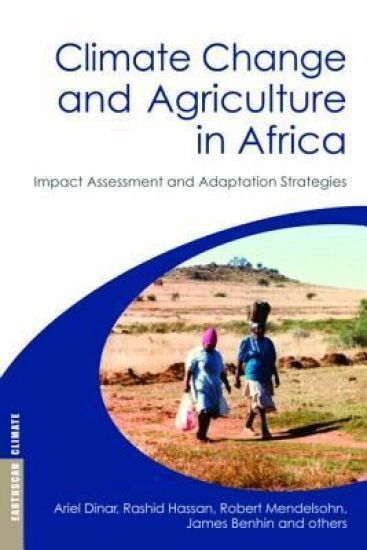
Climate Change and Agriculture in Africa

Climate Change and Agriculture in Africa

Ariel Dinar; Rashid Hassan; Robert Mendelsohn; James Benhin; et al

Earthscan Ltd
2008
sidottu
'This is a well researched, thorough and impressive work on climate change and agriculture in Africa. I recommend it to students, researchers and practitioners working on climate change issues' Jabavu Clifford Nkomo, senior programme specialist, IDRC This landmark book encompasses a comprehensive assessment of the potential economic impacts of future climate change, and the value of adaptation measures in Africa for different zones, regions, countries and farm types. Researchers developed and applied multiple analytical procedures to assess quantitatively how climate affects current agricultural systems in Africa, enabling them to predict how these systems may be affected in the future by climate change under various global warming scenarios, and suggesting what role adaptation could play. The study is the first to combine spatially referenced household survey data with climatic data at both national and international levels. This book provides vital knowledge about the impacts of climate change on Africa, serving as a guide to policy intervention strategies and investment in adaptation measures. It makes a major contribution to the analysis of climate change impacts and developing adaptation strategies, especially in the highly vulnerable farming communities in the developing world. Published with CEEPA and supported by the World Bank.
The Camel's Hoof

The Camel's Hoof

Hassan Rasheed

Lulu.com
2018
pokkari
The Camel's Hoof is about Earth. Most of us know we are doing damage to our environment and this book explains the origins and the extant of that damage through the fictional life of Maggie Smith. Maggie's story contrasts the industrial world's environment to that of the Amazon jungle as a backdrop to her struggles to find peace in her life. A peace that reconciles the modern with the primitive. It sets rules as what to and what not to do with focus always being the protection of a flourishing Earth.
Olon's Story

Olon's Story

Hassan Rasheed

Lulu.com
2019
pokkari
Olon's story is about the survival struggles of primitive people in a vastly modern ecologically unsound world that wealds temporary powers over them. In more detail it is about the struggles of the Taglusi Capybara to survive as a food source for the Bantulo tribe of the Amazon river basin. Olon was chosen by fate to be the person who carries the battle of the Bantulo tribe through the Brazilian government courts. It's a story full of intrigue, murder, court battles and adventures in and out of the Amazonian jungles with many cliffhangers.
Amazon

Amazon

Hassan Rasheed

Lulu.com
2019
nidottu
Rich with intrigue, court battles and murder the novel Amazon is about the perils facing the future of the Amazonian river basin. It explains the effects of logging, mining and conservation efforts on the local indigenous populations that have lived there forever. The main characters are Maggie and her adopted daughter Olon who attempt to save the forests and their inhabitants from these modern forces that lack long range sightedness of the irreversible damage they are doing.
The Modest Proposal

The Modest Proposal

Hassan Rasheed

Lulu.com
2021
pokkari
The Amazon is burning because we are not good stewards of the land. The seas and oceans are becoming depleted of life because we are not good stewards of them. The air we breathe is becoming polluted because we are not good stewards of the air. In the past 540 million years it has been estimated that there have been five major extinctions when over 50% of animal species died. Humans have been indiscriminately and arrogantly consuming the Earth's life sustaining habitats for the past 150 years or so and it is time to pay the Earth back.
How to Apocalypse

How to Apocalypse

Hassan Rasheed

Lulu.com
2021
pokkari
Contrary to popular belief we are on the cusp of a major extinction event that is totally within the laws of nature. There is no question human activity is driving this event by exhuming ancient remains and resurrecting the conditions in existence back 600 million years ago. It is as if nature is saying the current conditions are not sustainable and Earth needs to reset and return to a previous point in time. Life after all is the process of a chemical compound toppling other structures in order to build up its own. This toppling and building process requires energy and on Earth this energy comes mostly from the Sun. So, sit back and enjoy the ride with music, song and dance for we are on a rudderless ship and mother nature holds the secret to where we are going.
The Grand Experiment

The Grand Experiment

Hassan Rasheed

Lulu.com
2021
pokkari
Ard is the third planet orbiting the star QRT103 in the Rusty Riggins galaxy which is 300 million light years away from our Milky Way. It is a sterile planet which was exactly what the federation wanted. As QRT103 rose in the sky warming up two aliens, they started to move around and stumbled upon a plaque with the following inscription: (--- The High Command of the Zulficar Federation's Right of Passage Instructions for Citizenship: You are to bring forth one billion species to a state of stability on this barren planet. Only then will you be allowed to be citizens of the federation and return to the planet Zanab where you will choose a mate and have the opportunity to prosper and pursue happiness. ---) And so, the battle lines were drawn between those of the forces of nature and the intelligentsia in determining the future of life on the planet Ard. On the one hand nature wanted to start out simple and let life evolve more complex as it gained a footing in the intricate environment. But the intelligentsia wanted to start out at an advanced and involved level and create a superior design that was spawned from its Idealism.
Globus: The Economic Bases for Cooperation
Human life arose on Earth more than three million years ago. How the first human cooperative systems emerged from seemingly selfish origins is an area of intense research, spanning biology, game theory and economics. Globus: The Economic Bases for Cooperation is a ground breaking book that reveals in 26 chapters paradigm busting ways on how to think about cooperating human groups in terms of efficiency of work and ultimately of reproduction. It represents the thinking of a leading philosopher/scientist on questions that engage us all on what cooperation is and how it evolves. Hassan Rasheed brings his ideas of cooperation through a shift of thinking to a wider audience of general readers by conveying clear science in an engaging narrative, explaining it in a way that isn't overwhelming for non-science majors and adds questions for the student to prompt critical thinking.
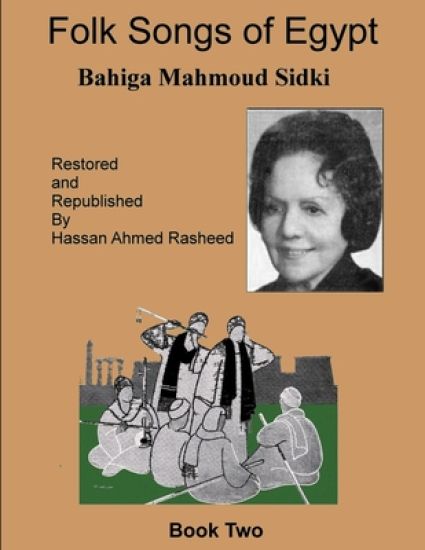
Folk Songs of Egypt 2

Folk Songs of Egypt 2

Hassan Rasheed

Lulu.com
2013
nidottu
Book two is a compilation of Egyptian folk songs and games. All collected from the streets of Cairo and villages of Egypt around 1940's, 50's and 60's, most put to music and translated by Bahiga Mahmoud Sidki.
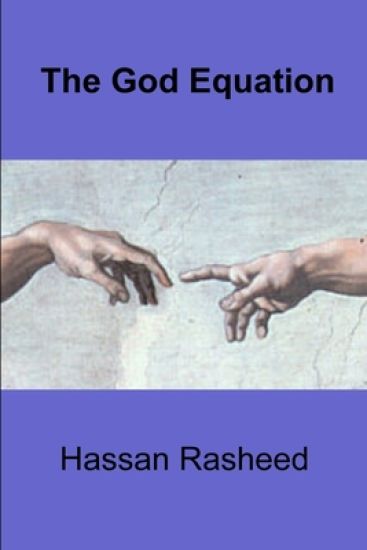
The God Equation

The God Equation

Hassan Rasheed

Lulu.com
2012
nidottu
It has long been the desire of philosophers to have a way to express their ideas in terms of mathematical equations. "The God Equation" attempts to do just that. It starts out analyzing the philosophical question in biological terms of survival and evolutionary trends. It then proposes an equation for the concept of a God based on the ability of humans to cooperate or compete. In doing so, Hassan Rasheed has been able to bridge the long standing gap between evolution and religion. It is hoped these two subjects of study and worship can now coexist in harmony; a long lasting desire of many. Hassan Rasheed brings his ideas of God through a shift of thinking to a wider audience by conveying clear science in an engaging narrative for non-science majors and adds questions for the student to prompt critical analysis.
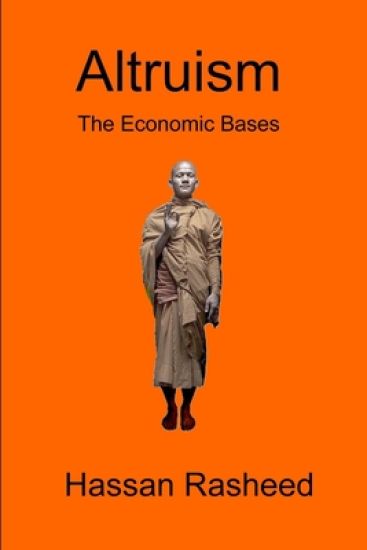
Altruism: the Economic Bases

Altruism: the Economic Bases

Hassan Rasheed

Lulu.com
2014
nidottu
Altruism: The Economic Bases uncovers why we have not been able crack open the reason for its existence in economic and biological terms. In addition it proposes a way to look at altruism visa vie the population in which it exists with economic formulas that show altruism as a profitable mode of behavior contrary to popular belief. The book then concludes with an experiment in which the evolution of altruism is shown to be possible and sustainable in the computer laboratory. Hassan Rasheed brings his philosophy of life through a shift from traditional thinking to a wider audience by conveying clear science in an engaging narrative and adds questions to prompt critical analysis.