Kirjojen hintavertailu. Mukana 12 390 323 kirjaa ja 12 kauppaa.

Kirjahaku

Etsi kirjoja tekijän nimen, kirjan nimen tai ISBN:n perusteella.

1000 tulosta hakusanalla Rashid Bashir

Rashid, Jumalan taistelija

Rashid, Jumalan taistelija

Danielle Miettinen

Uusi Tie
2012
nidottu
Nykyisin Alankomaissa asuva Rashid vietti värikkään lapsuuden Kabulissa ja Karachissa. Nuorena miehenä hän osallistui Neuvostoliiton vastaiseen jihadiin, pyhään sotaan. Hyvin nuorena hän kiinnostui kristinuskon ja islamin eroista.On surullista, että elämäntarinan kertominen voi olla hengenvaarallista. Vaikka kirjan nimistä osa on muutettua, on Rashid itse valmis kertomaan tarinansa omilla kasvoillaan.Rashid on rehellisyydellään houkutellut monia hyväksymään omaa murtuneisuuttaan ja elämänsä surullisia vaiheita. Hän on auttanut kuulijoitaan luottamaan siihen, että Jumala on heidän kanssaan silloinkin, kun he luulevat olevansa yksin.
Rashid al-Ghannushi?¯

Rashid al-Ghannushi?¯

Mohammad Dawood Sofi

Springer Verlag, Singapore
2018
sidottu
This book discusses various dynamic facets of the life of Rashid al-Ghannushi?¯, a distinguished Islamic thinker and activist not only in Tunisia and North Africa, but in the entire Muslim world. It especially focuses on those aspects related to his intellectual understanding and response to a number of critical contemporary issues. In the 21st Century, Rashid al-Ghannushi?¯ is considered as the most moderate among the Muslim thinkers and intellectuals, particularly when it comes to the question of Islam-democracy compatibility and power sharing theory. This book also offers an account of a previously little known, yet much talked about Muslim voice in the post-Arab Spring era. It further shows how the intellectual Muslim thinkers’ own perspectives and expectations from Islamic movement(s) and their interaction with the ‘western oriented local leadership’, as well as their (secular) policies color their understanding of Islam and various other major issues.
Rashid Karami

Rashid Karami

VDM Publishing House
2010
nidottu
Observera att förlaget som ger ut denna produkt baserar innehållet i sina produkter på fria källor som Wikipedia. Boken är med stor sannolikhet endast ett utdrag ur dessa informationskällor, alltså inte en vanlig bok i den bemärkelsen.
Rashid Sunyaev

Rashid Sunyaev

VDM Publishing House
2010
nidottu
Observera att förlaget som ger ut denna produkt baserar innehållet i sina produkter på fria källor som Wikipedia. Boken är med stor sannolikhet endast ett utdrag ur dessa informationskällor, alltså inte en vanlig bok i den bemärkelsen.
Rashid-al-Din Hamadani

Rashid-al-Din Hamadani

VDM Publishing House
2010
nidottu
Observera att förlaget som ger ut denna produkt baserar innehållet i sina produkter på fria källor som Wikipedia. Boken är med stor sannolikhet endast ett utdrag ur dessa informationskällor, alltså inte en vanlig bok i den bemärkelsen.
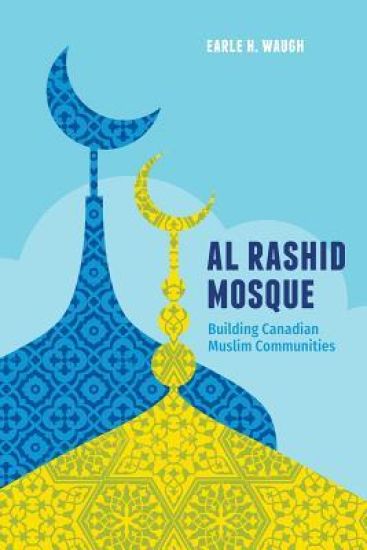
Al Rashid Mosque

Al Rashid Mosque

Earle H. Waugh

University of Alberta Press
2018
pokkari
Forty years ago, as a young scholar in Islamic Studies at the University of Alberta, Al Rashid's Muslims welcomed my queries, tolerated my ignorance, and joyfully opened their homes and their hearts. Edmonton's Al Rashid Mosque has played a key role in Islam's Canadian development. Founded by Muslims from Lebanon, it has grown into a vibrant community fully integrated into Canada's cultural mosaic. The mosque continues to be a concrete expression of social good, a symbol of a proud Muslim-Canadian identity. Al Rashid Mosque provides a welcome introduction to the ethics and values of homegrown Muslims. The book traces the mosque's role in education and community leadership, and celebrates the numerous contributions of Muslim Canadians in Edmonton and across Canada. Written to mark the 75th anniversary of the mosque's opening in 1938, Al Rashid Mosque is a timely and important volume of Islamic and Canadian history.
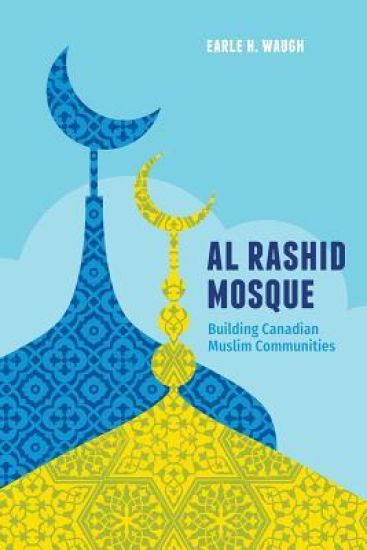
Al Rashid Mosque

Al Rashid Mosque

Earle H. Waugh

University of Alberta Press (CA)
2018
sidottu
Al Rashid Mosque, Canada’s first and one of the earliest in North America, was erected in Edmonton in the depth of the Depression of the 1930s. Over time, the story of this first mosque, which served as a magnet for more Lebanese Muslim immigrants to Edmonton, was woven into the folklore of the local community. —Baha Abu-Laban, Foreword Edmonton’s Al Rashid Mosque has played a key role in Islam’s Canadian development. Founded by Muslims from Lebanon, it has grown into a vibrant community fully integrated into Canada’s cultural mosaic. The mosque continues to be a concrete expression of social good, a symbol of a proud Muslim Canadian identity. Al Rashid Mosque provides a welcome introduction to the ethics and values of homegrown Muslims. The book traces the mosque’s role in education and community leadership and celebrates the numerous contributions of Muslim Canadians in Edmonton and across Canada. Al Rashid Mosque is a timely and important volume of Islamic and Canadian history. "Forty years ago, as a young scholar in Islamic Studies at the University of Alberta, Al Rashid’s Muslims welcomed my queries, tolerated my ignorance, and joyfully opened their homes and their hearts." —Earle H. Waugh Earle H. Waugh has studied Islam in Canada and the Middle East for most of his adult life. He is Professor Emeritus at the University of Alberta and a senior scholar in the areas of religious studies, health and culture, and Indigenous language maintenance.
Battle of Malibu (in Three Parts) 1795: Part One, See Battle. Little Red Corvette.: Umar Rashid 1,000 Piece Puzzle
Did the Battle of Malibu actually happen? Probably not. Ok, definitely not. But also maybe it did? LA based artist Umar Rashid has given the question a lot of thought and decided that it would be cool if it had happened so for all intents and purposes it did. And if the Chumash, Tongva, Gabrielino, and other indigenous LA types had in fact gone on to fight the Spanish, armed with a little red Corvette driven by Black Jesus, then, well, we'd have liked to see that. So here it is. It happened. Included in the puzzle is an interview with Umar Rashid along with additional images of his most recent work. Product Information: * 1,000 piece puzzle * Four page color insert included in box * Completed puzzle size: 26.5x19.25 in (67.30x48.90 cm) * Box size: 10x8x2in (25x20x5cm) * Designed in Brooklyn, NY Printed, assembled, and packed in the USA. * Made with 100% recyclable materials
Al Rashid

Al Rashid

VDM Publishing House
2010
nidottu
Observera att förlaget som ger ut denna produkt baserar innehållet i sina produkter på fria källor som Wikipedia. Boken är med stor sannolikhet endast ett utdrag ur dessa informationskällor, alltså inte en vanlig bok i den bemärkelsen.
Zainal Rashid III of Kedah

Zainal Rashid III of Kedah

VDM Publishing House
2010
nidottu
Observera att förlaget som ger ut denna produkt baserar innehållet i sina produkter på fria källor som Wikipedia. Boken är med stor sannolikhet endast ett utdrag ur dessa informationskällor, alltså inte en vanlig bok i den bemärkelsen.
Saeed Rashid

Saeed Rashid

VDM Publishing House
2010
nidottu
Observera att förlaget som ger ut denna produkt baserar innehållet i sina produkter på fria källor som Wikipedia. Boken är med stor sannolikhet endast ett utdrag ur dessa informationskällor, alltså inte en vanlig bok i den bemärkelsen.
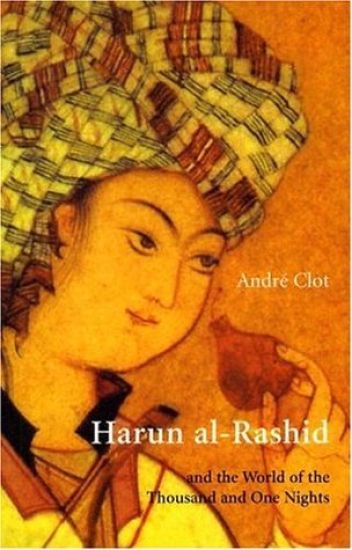
Harun al-Rashid & The World Of 1001 Nights
Harun al-Rashid, the legendary caliph portrayed in The Thousand and One Nights, was the son of a Yemenite slave who cleared Harun's path to power, very probably by poisoning her eldest son. Harun reigned for a quarter of a century, his empire spreading over south-west Asia and into north Africa. He waged war on the Byzantine Empire, and dealt ruthlessly with the religious and social insurrections which threatened his kingdom, executing almost the entire Barmakid family when they threatened to become too powerful. As well as being a ruthless soldier and politician Harun was also a great patron of the arts, and highly esteemed by Charlemagne. He turned Baghdad into a brilliant centre of culture and learning, which witnessed unprecedented economic development, its merchants and navigators carrying the caliph's renown to the farthest corners of the known world. Surrounded by his wives, concubines, musicians and learned men in his palace in Baghdad, 'Harun the Good' remains a potent symbol of the fabled Orient. In this remarkable account Andre Clot explores the man behind the legend, revealing his development as a ruler of an empire that was shaken to the core by religious and social revolt.
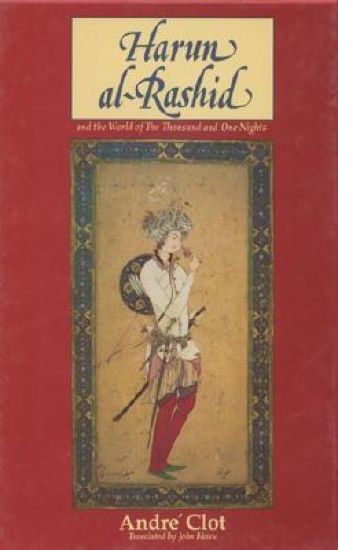
Harun al-Rashid and the World of The Thousand and One Nights
A symbol of the fabled Orient, Harun al Rashid, the caliph portrayed in The Thousand and One Nights, where we see him living grandly his palace in Baghdad, surrounded by his wives, his concubines, musicians, and learned men, is not merely a figure of legend. He was the son of a Yemenite slave who cleared his path to power, very probably by poisoning the reigning caliph, her older son. Harun reigned for a quarter-century, and was the most famous caliph of the Abbasid dynasty. Through Arab chronicles, the author corrects our vision of Harun the Good', and gives a remarkable account of his development as a ruler. Though in Western countries he is remembered for the presents he sent to Charlemagne–notably the famous elephant, Abul Abbas–he was first and foremost a successful soldier who made war on the Byzantines. His empire was shaken by religious and social insurrections, and he did not shrink from annihilating the Barmecides, a powerful family whose wealth and influence he finally found unbearable. As a patron of pets and intellectuals, Harun contributed greatly to the cultural supremacy of Baghdad, whose merchants and navigators spread the name of the caliph throughout the world.
Harun al-Rashid: The Life and Legacy of the Abbasid Caliph during the Islamic Golden Age
*Includes pictures*Includes medieval accounts*Includes online resources and a bibliography for further readingLike many historical figures, Harun al-Rashid's biography has become part reality and part myth. A real individual and the fourth caliph of the Abbasid Caliphate, Harun al-Rashid is best known to many individuals because of his role in famous literature like One Thousand and One Nights, not necessarily because of his policy decisions. This is unusual because Harun al-Rashid was perhaps the most influential of the Abbasid caliphs due to his role in bringing economic prosperity, destroying one of the most powerful Islamic families of the 9th century CE, and ending the Abbasid Dynasty for good.The reputation of Harun al-Rashid is a controversial one over 1,000 years later. Although historians are often loathe to admit it, they understand that history, like other social and cultural subjects, is subject to the opinions and influences of the society in which it was written, and for centuries, numerous cultures in the Western world (primarily Europe, Australasia, North America, and sometimes Latin and South America) insisted that Islamic societies could not possess the intellectual progress and discourse Western society attributed to itself. According to Amira Bennison, "It was a commonplace of the European imperial age that the Islamic world was intellectually backward and that Muslims not only could not have produced the Enlightenment and Industrial Evolution but also required European tutelage." In short, European intellectuals believed Muslims, due to their religious, cultural, and ethnic backgrounds, lacked the capacity to be progressive - as determined by European standards - and were thus intellectually and culturally backwards.This interpretation of Islamic culture and society transcended intellectual barriers and seeped into the history and literature produced by scholars of the Western world, and in time, Harun al-Rashid became the figure through which the Western world applied its ideas of Arabian culture, Islam, and the power of the caliphates. The difficulty for historians and modern audiences, then, is trying to determine what about Harun al-Rashid is fact and what is fiction, produced over time by biased sources or legends. By the 21st century, much of the historical information about him has been distorted by folk tales and the exaggerations of medieval historians of all religions and walks of life. Even with numerous pop culture appearances, the actual history of the Abbasid caliph is difficult to determine because of the wealth of misinformation throughout Eastern and Western media alike. When Harun al-Rashid died in the early 9th century, the Abbasid Caliphate fell into civil war. Harun al-Rashid had chosen his son al-Amin to be the new caliph, but his other son, al-Ma'mun, had similar ambitions. Al-Ma'mun would receive the support of some of the noble families and make a claim for the throne, and after a two-year siege of the capital in Baghdad, al-Amin perished and al-Ma'mun took the throne in 813. He ruled for the following 20 years in relative peace though he was forced to put down local rebellions spurred by the Byzantines. Al-Ma'mun, to repay his allies, would create an autonomous Khorasan region in northeast Persia filled with Persian noble families. While scholars can still debate his legacy, none can argue that while Harun al-Rashid did not politically advance the Abbasid Caliphate and may actually be blamed for its eventual destruction, his emphasis on arts and culture brought the caliphate into the Islamic Golden Age and created the romanticized image of the Arab ruler in folk tales throughout Eastern and Western cultures.
Harun al-Rashid: The Life and Legacy of the Abbasid Caliph during the Islamic Golden Age
*Includes pictures*Includes medieval accounts*Includes online resources and a bibliography for further readingLike many historical figures, Harun al-Rashid's biography has become part reality and part myth. A real individual and the fourth caliph of the Abbasid Caliphate, Harun al-Rashid is best known to many individuals because of his role in famous literature like One Thousand and One Nights, not necessarily because of his policy decisions. This is unusual because Harun al-Rashid was perhaps the most influential of the Abbasid caliphs due to his role in bringing economic prosperity, destroying one of the most powerful Islamic families of the 9th century CE, and ending the Abbasid Dynasty for good.The reputation of Harun al-Rashid is a controversial one over 1,000 years later. Although historians are often loathe to admit it, they understand that history, like other social and cultural subjects, is subject to the opinions and influences of the society in which it was written, and for centuries, numerous cultures in the Western world (primarily Europe, Australasia, North America, and sometimes Latin and South America) insisted that Islamic societies could not possess the intellectual progress and discourse Western society attributed to itself. According to Amira Bennison, "It was a commonplace of the European imperial age that the Islamic world was intellectually backward and that Muslims not only could not have produced the Enlightenment and Industrial Evolution but also required European tutelage." In short, European intellectuals believed Muslims, due to their religious, cultural, and ethnic backgrounds, lacked the capacity to be progressive - as determined by European standards - and were thus intellectually and culturally backwards.This interpretation of Islamic culture and society transcended intellectual barriers and seeped into the history and literature produced by scholars of the Western world, and in time, Harun al-Rashid became the figure through which the Western world applied its ideas of Arabian culture, Islam, and the power of the caliphates. The difficulty for historians and modern audiences, then, is trying to determine what about Harun al-Rashid is fact and what is fiction, produced over time by biased sources or legends. By the 21st century, much of the historical information about him has been distorted by folk tales and the exaggerations of medieval historians of all religions and walks of life. Even with numerous pop culture appearances, the actual history of the Abbasid caliph is difficult to determine because of the wealth of misinformation throughout Eastern and Western media alike. When Harun al-Rashid died in the early 9th century, the Abbasid Caliphate fell into civil war. Harun al-Rashid had chosen his son al-Amin to be the new caliph, but his other son, al-Ma'mun, had similar ambitions. Al-Ma'mun would receive the support of some of the noble families and make a claim for the throne, and after a two-year siege of the capital in Baghdad, al-Amin perished and al-Ma'mun took the throne in 813. He ruled for the following 20 years in relative peace though he was forced to put down local rebellions spurred by the Byzantines. Al-Ma'mun, to repay his allies, would create an autonomous Khorasan region in northeast Persia filled with Persian noble families. While scholars can still debate his legacy, none can argue that while Harun al-Rashid did not politically advance the Abbasid Caliphate and may actually be blamed for its eventual destruction, his emphasis on arts and culture brought the caliphate into the Islamic Golden Age and created the romanticized image of the Arab ruler in folk tales throughout Eastern and Western cultures.
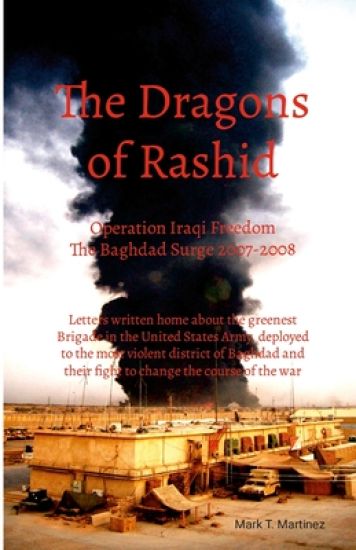
Dragons of Rashid

Dragons of Rashid

Mark T Martinez

Lulu.com
2023
pokkari
"Operation Iraqi Freedom." Letters written home about the greenest Brigade in the United States Army, deployed to the most violent district of Baghdad, and their fight to change the course of the war. In February of 2007, the 4th Brigade (Dragon Brigade) of the 1st Infantry Division was deployed to Baghdad, Iraq as part of the five U.S. "Surge" Brigades. The Dragon Brigade was assigned to the most violent sector of Baghdad known as the Rashid (Rasheed) District, a 68 square mile sector in Southern Baghdad. When the Dragon Brigade returned home after 15 months in combat, the ultimate cost of securing Rashid and re-establishing prosperity was 102 Soldiers KIA and over 700 WIA. This book and these letters written home are a testament to their sacrifices. God Bless everyone of them.
The Abbey: An Ash Rashid Novel

The Abbey: An Ash Rashid Novel

Chris Culver

Grand Central Publishing
2013
nidottu
In this New York Times bestseller with over 1M copies sold, a Muslim detective struggling with sobriety and the violence of his job on the Indianapolis force must solve the murder of his teenage niece. Ash Rashid is a former homicide detective who can't stand the thought of handling another death investigation. In another year, he'll be out of the Indianapolis Metropolitan Police Department completely. That's the plan, at least, until his niece's body is found in the guest home of one of his city's most wealthy citizens. The coroner calls it an overdose, but the case doesn't add up. Against orders, Ash launches an investigation to find his niece's murderer, but the longer he searches, the more entangled he becomes in a case that hits increasingly close to home. If he doesn't solve it fast, his niece won't be the only family member he has to bury.