Kirjojen hintavertailu. Mukana 11 244 527 kirjaa ja 12 kauppaa.

Kirjahaku

Etsi kirjoja tekijän nimen, kirjan nimen tai ISBN:n perusteella.

1000 tulosta hakusanalla Rashid Ergener

Harun al-Rashid: The Life and Legacy of the Abbasid Caliph during the Islamic Golden Age
*Includes pictures*Includes medieval accounts*Includes online resources and a bibliography for further readingLike many historical figures, Harun al-Rashid's biography has become part reality and part myth. A real individual and the fourth caliph of the Abbasid Caliphate, Harun al-Rashid is best known to many individuals because of his role in famous literature like One Thousand and One Nights, not necessarily because of his policy decisions. This is unusual because Harun al-Rashid was perhaps the most influential of the Abbasid caliphs due to his role in bringing economic prosperity, destroying one of the most powerful Islamic families of the 9th century CE, and ending the Abbasid Dynasty for good.The reputation of Harun al-Rashid is a controversial one over 1,000 years later. Although historians are often loathe to admit it, they understand that history, like other social and cultural subjects, is subject to the opinions and influences of the society in which it was written, and for centuries, numerous cultures in the Western world (primarily Europe, Australasia, North America, and sometimes Latin and South America) insisted that Islamic societies could not possess the intellectual progress and discourse Western society attributed to itself. According to Amira Bennison, "It was a commonplace of the European imperial age that the Islamic world was intellectually backward and that Muslims not only could not have produced the Enlightenment and Industrial Evolution but also required European tutelage." In short, European intellectuals believed Muslims, due to their religious, cultural, and ethnic backgrounds, lacked the capacity to be progressive - as determined by European standards - and were thus intellectually and culturally backwards.This interpretation of Islamic culture and society transcended intellectual barriers and seeped into the history and literature produced by scholars of the Western world, and in time, Harun al-Rashid became the figure through which the Western world applied its ideas of Arabian culture, Islam, and the power of the caliphates. The difficulty for historians and modern audiences, then, is trying to determine what about Harun al-Rashid is fact and what is fiction, produced over time by biased sources or legends. By the 21st century, much of the historical information about him has been distorted by folk tales and the exaggerations of medieval historians of all religions and walks of life. Even with numerous pop culture appearances, the actual history of the Abbasid caliph is difficult to determine because of the wealth of misinformation throughout Eastern and Western media alike. When Harun al-Rashid died in the early 9th century, the Abbasid Caliphate fell into civil war. Harun al-Rashid had chosen his son al-Amin to be the new caliph, but his other son, al-Ma'mun, had similar ambitions. Al-Ma'mun would receive the support of some of the noble families and make a claim for the throne, and after a two-year siege of the capital in Baghdad, al-Amin perished and al-Ma'mun took the throne in 813. He ruled for the following 20 years in relative peace though he was forced to put down local rebellions spurred by the Byzantines. Al-Ma'mun, to repay his allies, would create an autonomous Khorasan region in northeast Persia filled with Persian noble families. While scholars can still debate his legacy, none can argue that while Harun al-Rashid did not politically advance the Abbasid Caliphate and may actually be blamed for its eventual destruction, his emphasis on arts and culture brought the caliphate into the Islamic Golden Age and created the romanticized image of the Arab ruler in folk tales throughout Eastern and Western cultures.

Harun al-Rashid: The Life and Legacy of the Abbasid Caliph during the Islamic Golden Age
*Includes pictures*Includes medieval accounts*Includes online resources and a bibliography for further readingLike many historical figures, Harun al-Rashid's biography has become part reality and part myth. A real individual and the fourth caliph of the Abbasid Caliphate, Harun al-Rashid is best known to many individuals because of his role in famous literature like One Thousand and One Nights, not necessarily because of his policy decisions. This is unusual because Harun al-Rashid was perhaps the most influential of the Abbasid caliphs due to his role in bringing economic prosperity, destroying one of the most powerful Islamic families of the 9th century CE, and ending the Abbasid Dynasty for good.The reputation of Harun al-Rashid is a controversial one over 1,000 years later. Although historians are often loathe to admit it, they understand that history, like other social and cultural subjects, is subject to the opinions and influences of the society in which it was written, and for centuries, numerous cultures in the Western world (primarily Europe, Australasia, North America, and sometimes Latin and South America) insisted that Islamic societies could not possess the intellectual progress and discourse Western society attributed to itself. According to Amira Bennison, "It was a commonplace of the European imperial age that the Islamic world was intellectually backward and that Muslims not only could not have produced the Enlightenment and Industrial Evolution but also required European tutelage." In short, European intellectuals believed Muslims, due to their religious, cultural, and ethnic backgrounds, lacked the capacity to be progressive - as determined by European standards - and were thus intellectually and culturally backwards.This interpretation of Islamic culture and society transcended intellectual barriers and seeped into the history and literature produced by scholars of the Western world, and in time, Harun al-Rashid became the figure through which the Western world applied its ideas of Arabian culture, Islam, and the power of the caliphates. The difficulty for historians and modern audiences, then, is trying to determine what about Harun al-Rashid is fact and what is fiction, produced over time by biased sources or legends. By the 21st century, much of the historical information about him has been distorted by folk tales and the exaggerations of medieval historians of all religions and walks of life. Even with numerous pop culture appearances, the actual history of the Abbasid caliph is difficult to determine because of the wealth of misinformation throughout Eastern and Western media alike. When Harun al-Rashid died in the early 9th century, the Abbasid Caliphate fell into civil war. Harun al-Rashid had chosen his son al-Amin to be the new caliph, but his other son, al-Ma'mun, had similar ambitions. Al-Ma'mun would receive the support of some of the noble families and make a claim for the throne, and after a two-year siege of the capital in Baghdad, al-Amin perished and al-Ma'mun took the throne in 813. He ruled for the following 20 years in relative peace though he was forced to put down local rebellions spurred by the Byzantines. Al-Ma'mun, to repay his allies, would create an autonomous Khorasan region in northeast Persia filled with Persian noble families. While scholars can still debate his legacy, none can argue that while Harun al-Rashid did not politically advance the Abbasid Caliphate and may actually be blamed for its eventual destruction, his emphasis on arts and culture brought the caliphate into the Islamic Golden Age and created the romanticized image of the Arab ruler in folk tales throughout Eastern and Western cultures.

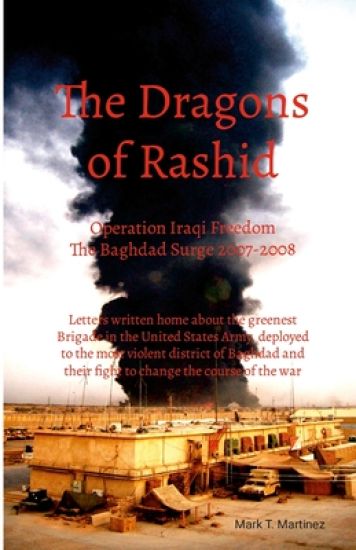
Dragons of Rashid

Dragons of Rashid

Mark T Martinez

Lulu.com
2023
pokkari
"Operation Iraqi Freedom." Letters written home about the greenest Brigade in the United States Army, deployed to the most violent district of Baghdad, and their fight to change the course of the war. In February of 2007, the 4th Brigade (Dragon Brigade) of the 1st Infantry Division was deployed to Baghdad, Iraq as part of the five U.S. "Surge" Brigades. The Dragon Brigade was assigned to the most violent sector of Baghdad known as the Rashid (Rasheed) District, a 68 square mile sector in Southern Baghdad. When the Dragon Brigade returned home after 15 months in combat, the ultimate cost of securing Rashid and re-establishing prosperity was 102 Soldiers KIA and over 700 WIA. This book and these letters written home are a testament to their sacrifices. God Bless everyone of them.
The Abbey: An Ash Rashid Novel

The Abbey: An Ash Rashid Novel

Chris Culver

Grand Central Publishing
2013
nidottu
In this New York Times bestseller with over 1M copies sold, a Muslim detective struggling with sobriety and the violence of his job on the Indianapolis force must solve the murder of his teenage niece. Ash Rashid is a former homicide detective who can't stand the thought of handling another death investigation. In another year, he'll be out of the Indianapolis Metropolitan Police Department completely. That's the plan, at least, until his niece's body is found in the guest home of one of his city's most wealthy citizens. The coroner calls it an overdose, but the case doesn't add up. Against orders, Ash launches an investigation to find his niece's murderer, but the longer he searches, the more entangled he becomes in a case that hits increasingly close to home. If he doesn't solve it fast, his niece won't be the only family member he has to bury.
The Dragons of Rashid

The Dragons of Rashid

Mark Martinez

Lulu.com
2017
sidottu
"Operation Iraqi Freedom." Letters written home about the greenest Brigade in the United States Army, deployed to the most violent district of Baghdad and their fight to change the course of the war. In February of 2007, the 4th Brigade (Dragon Brigade) of the 1st Infantry Division was deployed to Baghdad, Iraq as part of the five U.S. "Surge" Brigades. The Dragon Brigade was assigned to the most violent sector of Baghdad known as the Rashid (Rasheed) District, a 68 square mile sector in Southern Baghdad. When the Dragon Brigade returned home after 15 months in combat, the ultimate cost of securing Rashid and re-establishing prosperity was 102 Soldiers KIA and over 700 WIA. This book and these letters written home are a testament to their sacrifices. God Bless everyone of them.
Greatest Cricket Stars: Rashid Khan

Greatest Cricket Stars: Rashid Khan

Thomas Scoble

Sweet Cherry Publishing
2026
pokkari
Rashid Khan is one of Afghanistan’s best bowlers, joining the team when he was just seventeen years old. Known for his leg-spinning ability, he can outsmart even the cleverest batsmen. No matter where or who he plays for, he takes every league and every competition by storm. He’s broken countless records, including being the youngest man to captain an international side aged nineteen. There’s no stopping Rashid once he gets started. About the Greatest Cricket Stars Series: Follow the journeys of the best batters and bowlers in cricket! From playing with friends to competing against the biggest teams in the world. Whether they’re playing for their domestic team or for their country, these inspiring players give their all in every game to find success after success!
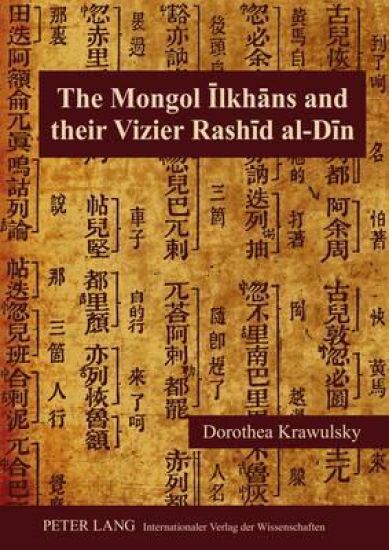
The Mongol Ilkhans and Their Vizier Rashid al-Din
The descendents of Cingiz Khan, ‘the World Conqueror’, founded a number of dynasties from Siberia to the Russian steppes. In 656 AH/1258 AD his grandson Hülegü destroyed the Caliphate in Baghdad and established the Mongol Ilkhanate in Iran with the centres Tabriz and Maragheh. To rule over an old Islamic civilization with a city culture and to cope with the Islamic enemy at their western border beyond the Euphrates, became a great challenge for the Mongols. Several changes of politics and their conversion to the majority’s creed, the Sunna, and later to the Shia testify to their endeavour to stabilize their rule and find a new identity. Their conversion to Islam had a great, positive impact on Islamic culture and the sciences. This volume casts a light upon the historical events, in search of the reasons for the Ilkhans’ changes of politics and religion.
Introduction à l’Histoire des Mongols de Fadl Allah Rashid ed-din

Introduction à l’Histoire des Mongols de Fadl Allah Rashid ed-din

Edgard Blochet; Charles Melville

Gibb Memorial Trust
2017
nidottu
Edgard Blochet (1870-1937), the French orientalist, left his mark in several areas of Middle Eastern and Asian studies. In 1910 his introduction to Rashid al-Din’s Jami‘ al-tawarikh was published as volume XII in the E.J.W. Gibb Memorial Series. The Jami‘ al-tawarikh has been described as the first ‘world history’; written at the start of the fourteenth century, in the Mongol Ilkhanate in Persia, it describes cultures and major events in world history from China to Europe and in addition, it covers Mongol history.Introduction à l’Histoire des Mongols is a rich and complex work, and one that has been unduly lost sight of in more recent scholarship. Blochet is concerned chiefly with the transformation of the Mongol Empire from the death of its founder into a Chinese dynasty with complex relations with its former constituent territories in Transoxania, Russia and Iran in the period covered by the portion of the Jami‘ al-tawarikh that he was editing. This introductory volume does not offer conclusions, but it provides a valuable survey of the place of Rashid al-Din’s chronicle in the historical literature of the time and its impact on later historiography. Despite the very considerable body of work dedicated to Rashid al-Din, his chronicle, the history of Ilkhanid Iran and Yuan China and the linguistic analysis of the primary sources since Blochet’s time, this reprint of a work that has long been unavailable aims to encourage a re-evaluation of his pioneering contributions to the field. The original French text is re-published here, accompanied by a new preface by Charles Melville.
Introduction À l'Histoire Des Mongols de Fadl Allah Rashid Ed-Din
Introduction a l'Histoire des mongols de Fadl Allah Rashid ed-Din / par E. BlochetDate de l'edition originale: 1910Collection: E. J. W. Gibb Memorial Series; Vol. XIICe livre est la reproduction fidele d'une oeuvre publiee avant 1920 et fait partie d'une collection de livres reimprimes a la demande editee par Hachette Livre, dans le cadre d'un partenariat avec la Bibliotheque nationale de France, offrant l'opportunite d'acceder a des ouvrages anciens et souvent rares issus des fonds patrimoniaux de la BnF.Les oeuvres faisant partie de cette collection ont ete numerisees par la BnF et sont presentes sur Gallica, sa bibliotheque numerique.En entreprenant de redonner vie a ces ouvrages au travers d'une collection de livres reimprimes a la demande, nous leur donnons la possibilite de rencontrer un public elargi et participons a la transmission de connaissances et de savoirs parfois difficilement accessibles.Nous avons cherche a concilier la reproduction fidele d'un livre ancien a partir de sa version numerisee avec le souci d'un confort de lecture optimal. Nous esperons que les ouvrages de cette nouvelle collection vous apporteront entiere satisfaction.Pour plus d'informations, rendez-vous sur www.hachettebnf.fr
Al-?Tabari: Volume 2, The Son and Grandsons of al-Man?sur: The Reigns of al-Mahdi, al-Hadi and Harun al-Rashid
This 1989 second volume of Professor Williams' translation of al-Tabari's account of the early 'Abbasi empire focuses on the reigns of the son - al-Mahdi - and grandsons - al-Hadi and Harun al-Rashid - of Caliph al-Mansur, the subject of the first volume. This was the 'Golden Prime' of the empire, before the civil war between the sons of al-Rashid and the movement of the capital away from Baghdad. Also considered is the story of the Persian aristocratic family, the Barmakis, who became the real rulers under the indolent al-Rashid, until he destroyed them in a rage which astonished his contemporaries. The events are narrated through the reminiscences of eyewitnesses, woven together by the great historiographer al-Tabari (d. 923). The translator of the volume is an Islamicist who has lived many years in the Arab world and has a rare knowledge of its culture and literature.
Nanostructured Nonlinear Optical Materials

Nanostructured Nonlinear Optical Materials

Rashid A. Ganeev

Elsevier Science Publishing Co Inc
2018
nidottu
Nanostructured Nonlinear Optical Materials: Formation and Fabrication covers the analysis of the formation, characterization and optical nonlinearities of various nanostructures using different methods. It addresses many areas of research in the field, including the modification of the surfaces of materials for the formation of various nanostructures, transmission electron microscopy and time-of-flight mass spectroscopy studies of ablated bulk and nanoparticle targets, the low-order nonlinearities of metal and semiconductor nanoparticles, the nonlinear refraction and nonlinear absorption of carbon-contained nanoparticles, and low- and high-order harmonic generation in nanoparticle-contained plasmas, amongst other topics. The book is an essential reference for all nanomaterials researchers in the fields of photonics, materials, physics, chemistry and nanotechnology.
Descent into Chaos

Descent into Chaos

Rashid Ahmed

Penguin Books Ltd
2009
pokkari
In Descent Into Chaos: Pakistan, Afghanistan and the Threat to Global Security Ahmed Rashid explores the most volatile and dangerous region in the world. The war on terror is being lost - but not just in Iraq. As this devastating book shows, the real crisis zone now lies in central Asia. Veteran reporter Ahmed Rashid has unparalleled access to the region and knows its leading players, from presidents to warlords. Here he documents how closely Pakistan's US-backed regime is linked with extremists; how broken promises in Afghanistan have led to a resurgent Taliban fed by drugs money; and how the largest landmass in the world is now a breeding ground for terrorism. In this story of squandered opportunities, misguided alliances and double-dealing, Rashid pinpoints with chilling accuracy where the true threat to our global security comes from. 'Compulsively readable' Justin Marozzi, Evening Standard Profound and lively ... it reads like a thriller ... graphic, detailed and worrying' Michael Fathers, New Statesman 'Gripping ... a major contribution to understanding the region and the events of recent years ... thought-provoking and important' Jason Burke, Observer 'His knowledge of events and people there is second to none and the information he has gathered, often at great personal risk, makes alarming reading' Kim Sengupta, Independent 'A superbly researched account of post-9/11 Asia ... outstanding' Sameer Rahim, Daily Telegraph Ahmed Rashid is Pakistan's premiere journalist, an expert on Central Asia, on jihad and Muslim extremists movements, on the Taliban and Al Qaeda, on insurgency, and on the catastrophe of US policy in this region, on which he has reported for 25 years. Author of three books, his work Taliban was a huge international bestseller, widely recognized as the definitive account.
Under Siege

Under Siege

Rashid Khalidi

Columbia University Press
1985
sidottu
A fascinating and often terrifying firsthand account of the 1982 war in Lebanon, Under Siege vividly reveals the complex negotiations and military maneuvers which ended with the evacuation of the P.L.O. from Beirut. Rashid Khalidi, a Palestinian, lived with his family in Beirut during the siege and ensuing massacres. Using many usually inaccessible sources, such as P.L.O. telexes and government messages, and interviews with key military officials and diplomats, he tells the story from the compelling viewpoint of those living amid the fighting. Khalidi provides a carefully detailed picture of the P.L.O. from within, the local Lebanese environment, the military pressure on the P.L.O. and Palestinian and Lebanese civilians, and of U.S. diplomacy during the crisis. While focusing primarily on the inner workings of the P.L.O., the author also addresses various aspects of Lebanese and inter-Arab politics and examines the military and diplomatic behavior of involved outside parties such as the United States, France, and the former Soviet Union. Offering a totally new perspective on the longest Arab-Israeli war since 1948, Under Siege will have broad appeal to those in international relations, Middle East studies, the Arab-Israeli conflict, and the general reader interested in American foreign relations and the Middle East.
Palestinian Identity

Palestinian Identity

Rashid Khalidi

Columbia University Press
2009
sidottu
This foundational text now features a new introduction by Rashid Khalidi reflecting on the significance of his work over the past decade and its relationship to the struggle for Palestinian nationhood. Khalidi also casts an eye to the future, noting the strength of Palestinian identity and social solidarity yet wondering whether current trends will lead to Palestinian statehood and independence.
Palestinian Identity

Palestinian Identity

Rashid Khalidi

Columbia University Press
2009
pokkari
This foundational text now features a new introduction by Rashid Khalidi reflecting on the significance of his work over the past decade and its relationship to the struggle for Palestinian nationhood. Khalidi also casts an eye to the future, noting the strength of Palestinian identity and social solidarity yet wondering whether current trends will lead to Palestinian statehood and independence.
Under Siege

Under Siege

Rashid Khalidi

Columbia University Press
2014
pokkari
Under Siege is Rashid Khalidi's firsthand account of the 1982 Lebanon War and the complex negotiations for the evacuation of the P.L.O. from Beirut. Utilizing unconventional sources and interviews with key officials and diplomats, Khalidi paints a detailed portrait of the siege and ensuing massacres, providing insight into the military pressure experienced by the P.L.O., the war's impact on Palestinian and Lebanese civilians, and diplomatic efforts by the United States. A new preface by Khalidi considers developments across the Middle East in the thirty years since the conflict. The preface also cites recently declassified Israeli documents to offer surprising new revelations about the roles and responsibilities of both Israeli leaders and American diplomats in the tragic coda to the war, the Sabra and Shatila massacres.